
A broiler pan might sound simple, but it plays a bigger role in home cooking than many people realize. If you have ever baked chicken, roasted vegetables, or wanted crispy fish at home, you have probably used a broiler pan—maybe without even knowing its name.
But what exactly is a broiler pan? How does it work, and why do so many recipes call for it?
Many home cooks are unsure how to use or clean a broiler pan. Some do not realize the difference between a broiler pan and a baking sheet. Knowing these differences can help you cook better, safer, and more efficiently. In this article, you will learn everything you need to know about broiler pans: their design, uses, materials, how to choose one, and even how to clean and maintain them. You will also see examples, practical tips, and answers to common questions.
What Is A Broiler Pan?
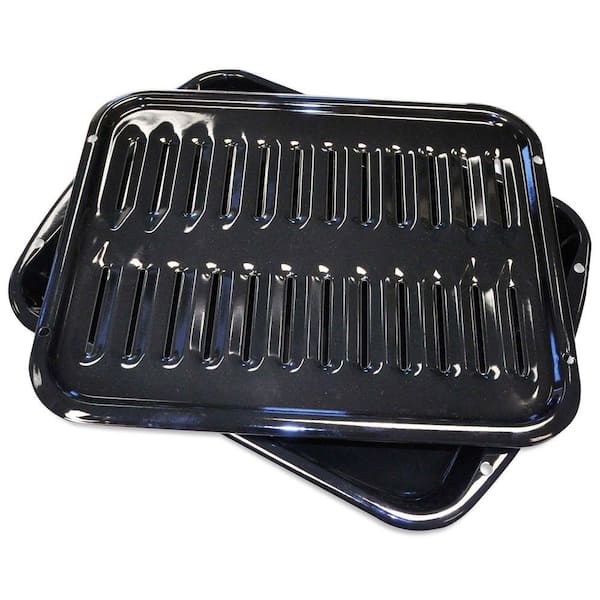
A broiler pan is a special piece of cookware designed for high-heat cooking, especially in the oven’s broiler setting. It usually consists of two parts:
- A slotted upper tray (sometimes called a grill pan or grate)
- A solid lower tray (the drip pan)
The upper tray holds the food and lets fat and juices drip down into the lower tray. This helps the food cook evenly and get crisp on the outside without sitting in its own grease.
Most broiler pans are made from heavy steel or porcelain-coated metal. These materials can handle very high temperatures. The pans come in different sizes to fit various ovens.
Unlike a regular baking sheet, a broiler pan is made to stand up to direct heat from the oven’s top element. This is why it’s perfect for broiling meat, fish, and vegetables.
How Does A Broiler Pan Work?
Broiling is a method that uses very high, direct heat from above. It is similar to grilling, but the heat comes from the top instead of below. When you put food on the broiler pan’s upper tray, the intense heat quickly cooks the surface, making it brown and crispy.
The slots in the top tray let fat and juices escape. This prevents the food from becoming soggy or greasy. The lower tray catches these drippings, making cleanup easier and reducing smoke in the oven.
For example, when you broil a steak, the fat melts and drips away, but the meat gets a nice charred crust. Vegetables broil quickly and stay crisp.
Credit: www.nordicware.com
Broiler Pan Vs. Other Ovenware
People often confuse broiler pans with other common pans, such as baking sheets, roasting pans, and grill pans. Here is a comparison to help you see the differences:
| Feature | Broiler Pan | Baking Sheet | Roasting Pan | Grill Pan (Stovetop) |
|---|---|---|---|---|
| Main Use | Broiling under direct heat | Baking cookies, breads | Roasting meats, poultry | Grilling on stovetop |
| Design | Two-piece, slotted top | Flat, rimmed or rimless | Deep, often with rack | Ridges, single piece |
| Material | Heavy steel or enamel | Aluminum, steel | Steel, aluminum, glass | Cast iron, steel |
| Heat Tolerance | Very high (broiler safe) | Medium-high | High | High (stovetop) |
One non-obvious insight: Baking sheets can warp under the broiler’s intense heat. Broiler pans are designed to stay flat and safe even with extreme temperatures.
Another insight: Roasting pans are deep, which is good for large cuts of meat but not ideal for getting a crispy surface. The broiler pan’s design exposes more food surface to direct heat.
Common Uses For A Broiler Pan
Broiler pans are very flexible and useful for cooking foods that need high, direct heat. Here are some common ways to use them:
1. Broiling Steaks And Chops
Steaks, pork chops, and lamb chops cook quickly under the broiler. The pan’s slots allow fat to drain, and the intense heat creates a nice crust without overcooking the inside.
2. Cooking Fish And Seafood
Fish fillets, shrimp, and scallops benefit from the broiler’s quick heat. The broiler pan keeps them from swimming in their juices, so they stay firm and flavorful.
3. Roasting Vegetables
Vegetables like bell peppers, zucchini, or asparagus become crisp-tender and caramelized. The slots let moisture escape, giving better browning.
4. Crisping Bacon
Lay bacon strips on the slotted tray, and the fat drips below. You get crispy bacon without standing over a hot pan.
5. Making Garlic Bread Or Melting Cheese
The broiler’s high heat melts cheese and toasts bread in seconds. A broiler pan gives even results and prevents burning.
6. Broiling Burgers
Burgers broiled on a pan cook quickly, and the drippings collect below, so the patties are less greasy.
7. Browning Casseroles
Sometimes you want to add a golden crust to a casserole or mac and cheese. A quick broil at the end does the trick.
8. Reheating Pizza
A broiler pan can make leftover pizza crispy again. The heat comes from above, and the bottom tray keeps drips off the oven floor.

Credit: www.certifiedaccessories.com
Key Parts And Features Of A Broiler Pan
A broiler pan looks simple, but its design is important. Let’s look at the key parts:
- Slotted Upper Tray: This piece has holes or slits that let fat, juices, and oil drip down. It is usually slightly raised to allow air to circulate.
- Solid Lower Tray: This catches all the drippings, preventing mess in your oven and making cleanup easier. Sometimes, you can add a bit of water to the bottom tray to reduce smoke.
- Material: Most broiler pans are made from enameled steel or stainless steel. Some are nonstick, but these should only be used at lower temperatures.
- Size: Broiler pans come in various sizes. Many are designed to fit standard ovens, but you can also find larger or smaller pans for bigger or smaller ovens.
- Handles or Grips: Some broiler pans have handles to help with lifting, especially when hot.
Types Of Broiler Pans
Not all broiler pans are the same. Here are the main types you will find:
Standard Oven Broiler Pan
Most ovens come with a standard broiler pan. These are usually made of heavy steel and fit perfectly in the oven’s broiler compartment. They are durable and can handle years of use.
Porcelain-coated Broiler Pan
Some pans have a porcelain coating. This makes them easier to clean and helps prevent rust. They are also less likely to stick, but you should avoid using metal utensils to prevent scratching.
Stainless Steel Broiler Pan
Stainless steel pans are popular because they do not rust or react with food. They can be a bit harder to clean if food gets stuck, but they last a long time.
Nonstick Broiler Pan
A nonstick broiler pan is easy to clean, but not all nonstick coatings are safe at high broiler temperatures. Always check the manufacturer’s instructions before using a nonstick pan under the broiler.
Disposable Aluminum Broiler Pan
For convenience, there are disposable aluminum pans. These are good for one-time use, such as at a picnic or when you do not want to clean up. However, they are not as strong and may bend under heavy food.
Materials Used In Broiler Pans
The material of a broiler pan affects how it cooks, how long it lasts, and how easy it is to clean.
| Material | Heat Resistance | Durability | Ease of Cleaning | Notes |
|---|---|---|---|---|
| Enameled Steel | Very high | High | Easy (nonstick) | Resists rust, common in many ovens |
| Stainless Steel | Very high | Very high | Medium | Does not rust, needs scrubbing |
| Nonstick Coated | Medium-high | Medium | Very easy | Use only if broiler-safe |
| Aluminum (Disposable) | Medium | Low (single use) | Disposable | Good for picnics, not heavy food |
A useful tip: If you use a nonstick pan, never heat it empty under the broiler. Nonstick coatings can break down at very high temperatures.
How To Choose The Right Broiler Pan
Choosing a broiler pan depends on your oven, your cooking style, and your cleaning preferences. Here are factors to consider:
1. Size And Fit
Measure your oven’s broiler compartment. Most standard broiler pans are about 16 x 12 inches, but double-check before buying.
2. Material
If you want something that will last, choose enameled steel or stainless steel. If you prefer easy cleanup, a porcelain-coated or nonstick pan might be better, but watch for heat limits.
3. Handles
Pans with side handles are safer and easier to move, especially when hot.
4. Depth Of Lower Tray
A deeper bottom tray means it can catch more fat and juices. This is helpful when broiling fatty foods like burgers or chicken.
5. Ease Of Cleaning
Some pans are dishwasher-safe, but others require hand-washing. Consider how much time you want to spend cleaning.
6. Cost
Broiler pans range from about $10 for simple aluminum ones to $50 or more for high-quality steel pans.
7. Replacement
If your oven did not come with a broiler pan, you can buy a universal one that fits most ovens.
A common mistake: Some people use glass or ceramic dishes to broil food. Most glass and ceramic are not broiler-safe and can crack or shatter under high heat.
How To Use A Broiler Pan (step-by-step)
Using a broiler pan is simple, but there are steps to get the best results:
1. Preheat The Broiler
Always let your oven heat up for 5-10 minutes before broiling. This ensures even cooking.
2. Prepare The Pan
Spray the slotted tray with oil or line it with foil (poke holes in the foil to match the slots). This helps prevent sticking.
3. Add Water To Drip Tray (optional)
A small amount of water in the lower tray helps reduce smoke, especially for fatty foods.
4. Place Food On Top Tray
Arrange the food in a single layer. Do not overcrowd or the food will steam instead of broil.
5. Position The Pan In The Oven
Place the broiler pan 3-5 inches below the broiler element. Closer gives more browning, farther gives gentler cooking.
6. Broil And Watch Closely
Broiling is fast. Most foods take only 5-10 minutes. Stay nearby to avoid burning.
7. Flip If Needed
For even cooking, flip thicker cuts halfway through.
8. Remove And Let Rest
Use oven mitts to take out the pan. Let meat rest a few minutes for juices to settle.
9. Clean Up
Let the pan cool, then wash with warm soapy water. Soak if needed to remove stuck-on bits.
A practical tip: Using water in the lower tray is especially helpful with fatty foods like burgers or chicken thighs. It prevents burning and reduces oven smoke.
Cleaning And Maintenance
Cleaning a broiler pan can be tricky because fat can bake on at high heat. Here’s how to make it easier:
- Soak Immediately
After use, let the pan cool slightly, then fill with warm water and a bit of dish soap. Let it soak for 20-30 minutes.
- Use a Non-Scratch Scrubber
Scrub with a non-abrasive pad to avoid damaging the surface. For stubborn spots, sprinkle baking soda and scrub again.
- Dishwasher Safe?
Some broiler pans are dishwasher-safe, but many perform better with hand-washing.
- Avoid Steel Wool
Steel wool can scratch enamel or nonstick coatings. Use a plastic scraper instead.
- Dry Thoroughly
Dry the pan completely before storing to prevent rust.
- Check for Cracks or Chips
If the enamel is chipped, rust can form. Replace the pan if you see damage.
A non-obvious insight: Leaving fat or juices on the pan overnight makes cleaning much harder. Soak or rinse the broiler pan soon after cooking, even if you cannot wash it right away.
Safety Tips For Broiler Pans
Broiler pans make cooking easier, but using them safely is important:
- Never Use Glass Under the Broiler
Even “oven-safe” glass can shatter with direct broiler heat.
- Handle with Oven Mitts
Broiler pans get extremely hot. Always use thick mitts or gloves.
- Watch for Smoke
Fat and juices hitting the hot pan can smoke. Adding water to the bottom tray can help.
- Position Food Properly
Keep food at least 2-3 inches from the broiler element to prevent burning.
- Clean Regularly
Built-up grease can catch fire. Clean your broiler pan after every use.
- Do Not Overload the Pan
Too much food can block airflow, leading to uneven cooking.
- Check Oven Instructions
Some ovens have special racks or settings for broiling. Always read your manual.
Examples Of Foods Best Cooked On A Broiler Pan
Here are some foods that come out great when cooked on a broiler pan:
- Steak: Ribeye, sirloin, or strip steaks get a restaurant-style crust.
- Fish: Salmon, tilapia, or swordfish steaks broil quickly and stay moist.
- Vegetables: Eggplant slices, asparagus, and mushrooms caramelize well.
- Burgers: Juicy and less greasy than pan-frying.
- Chicken: Bone-in or boneless pieces brown beautifully.
- Sausages: Cooks through without splitting.
- Garlic Bread: Crispy with melted butter and cheese.
A practical example: Broiling asparagus on a broiler pan gives a smoky flavor and crisp texture, much like grilling outdoors.
How To Make A Diy Broiler Pan
If your oven did not come with a broiler pan, you can make a simple version at home:
1. Use A Baking Sheet And Wire Rack
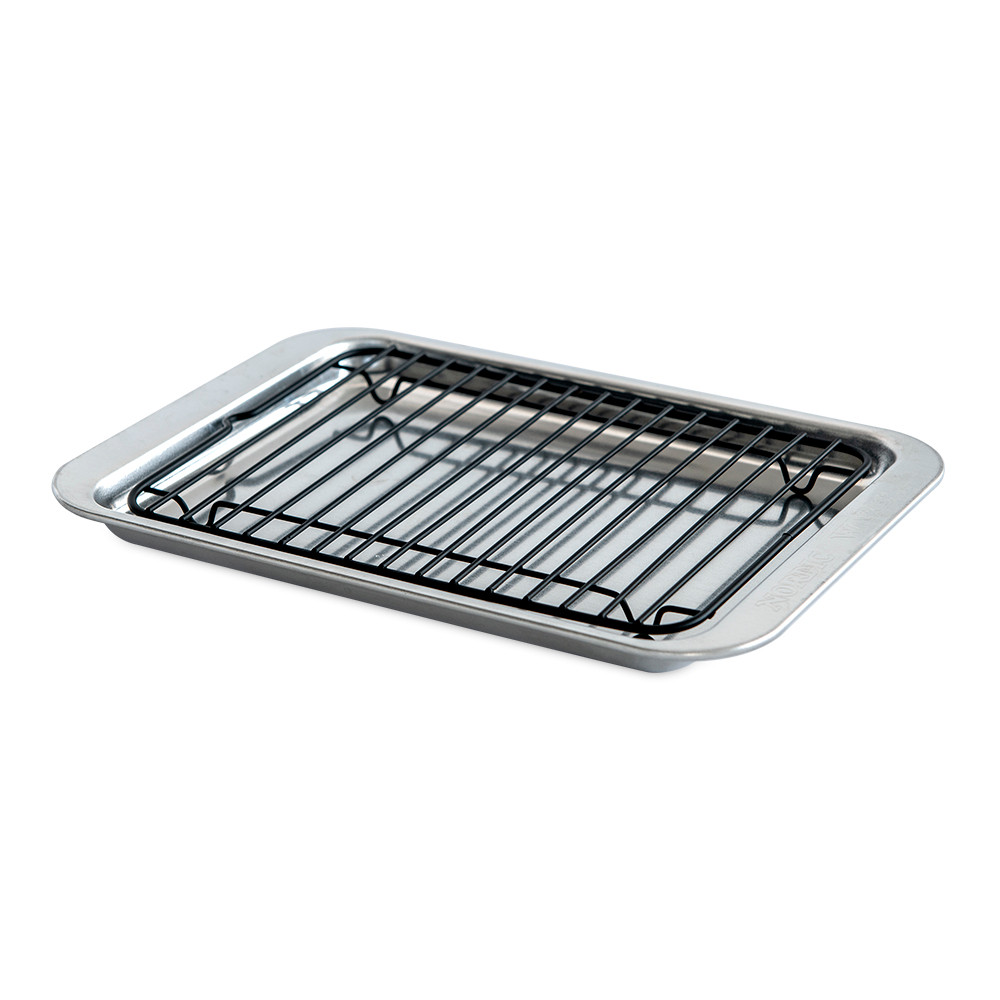
Place a metal cooling rack on a rimmed baking sheet. The rack lets fat drip below, like the slotted tray on a real broiler pan.
2. Check For Broiler Safety
Only use racks and sheets labeled as broiler-safe. Many racks are for cooling only and can melt or warp.
3. Line The Baking Sheet With Foil
This catches drips and makes cleaning easier.
This DIY method works for many foods, but a real broiler pan is safer and more reliable for frequent use.
Broiler Pan Myths And Mistakes
Some home cooks make mistakes with broiler pans. Let’s clear up a few myths:
- Myth: You can use any pan under the broiler.
Truth: Only pans labeled as broiler-safe can handle direct heat. Others can warp or break.
- Myth: Broiler pans are only for meat.
Truth: Vegetables, bread, and even fruit (like broiled grapefruit) can be cooked on a broiler pan.
- Mistake: Forgetting to add water to the drip tray.
This causes burning and lots of smoke.
- Mistake: Using abrasive cleaners.
This scratches the surface and leads to rust.
- Myth: Broiler pans are hard to clean.
Truth: Soaking right away and using a nonstick spray makes cleaning much easier.
Broiler Pan Care For Longevity
Taking care of your broiler pan helps it last longer:
- Season Steel Pans
Like a cast iron skillet, seasoning steel pans can prevent rust and sticking.
- Avoid Sudden Temperature Changes
Do not put a hot broiler pan in cold water. This can warp the metal or crack enamel.
- Store Dry
Always dry completely before storing. Moisture causes rust.
- Inspect Regularly
Small chips or cracks can get worse with high heat. Replace pans if you see damage.
Environmental Impact And Broiler Pans
Broiler pans made from steel and enamel last many years, reducing waste compared to disposable foil pans. When possible, choose reusable pans over single-use options. Stainless steel is recyclable, and high-quality pans can last decades.
Credit: www.homedepot.com
Where To Buy Broiler Pans
You can find broiler pans at most kitchen stores, department stores, or online retailers. Some ovens include a broiler pan, but many do not. If you lose your original, look for “universal broiler pan” options.
Good brands include GE, Whirlpool, Frigidaire, and Nordic Ware. Prices range from $10 to $50, depending on size and material.
For more details on broiler pans and oven broiling, you can visit Wikipedia’s broiler page.
Frequently Asked Questions
What Is The Main Purpose Of A Broiler Pan?
The main purpose of a broiler pan is to cook food under high, direct heat from the oven’s broiler element. The slotted design lets fat and juices drip away, giving food a crispy outside and less grease.
Can I Use A Baking Sheet Instead Of A Broiler Pan?
A baking sheet can be used in some cases, but it may warp or get damaged under high broiler heat. Baking sheets also do not drain fat as well, so food can become greasy or soggy. For the best results, use a true broiler pan.
How Do I Clean A Broiler Pan With Baked-on Grease?
Soak the pan in warm, soapy water as soon as it cools. Use a non-abrasive scrubber and, if needed, sprinkle baking soda to help remove stuck-on grease. Avoid steel wool, which can scratch the surface.
Are Broiler Pans Dishwasher Safe?
Some broiler pans are dishwasher safe, especially those with enamel or stainless steel. Check your pan’s instructions. Hand-washing is best for pans with nonstick coatings.
What Foods Should Not Be Cooked On A Broiler Pan?
Avoid very delicate foods that could fall through the slots, like small shrimp or loose vegetables. Also, do not use glass or ceramic dishes as a substitute for a broiler pan—they can break under broiler heat.
A broiler pan is a simple tool, but it makes a big difference in your kitchen. It helps you cook healthier, crispier, and more delicious food with less mess. Whether you are searing steaks or roasting vegetables, understanding how to use and care for your broiler pan will improve your cooking results and keep your kitchen safe.