
Choosing the right cookware is not just about making food—it’s about making your everyday cooking easier, healthier, and even more enjoyable. When you walk down the cookware aisle or shop online, you’ll find a huge range of pans and pots. But most kitchens today use three main types: stainless steel, nonstick, and ceramic. Each has its own benefits, drawbacks, and best uses. Whether you are a beginner or someone who cooks daily, understanding these differences can save you time, money, and frustration.
You may have heard that stainless steel is “professional,” nonstick is “easy,” and ceramic is “eco-friendly. ” But what does that really mean for your eggs, your health, and your wallet? In this article, we’ll break down how these cookware types work, compare their performance, safety, durability, and cost, and help you decide which is right for your kitchen.
You’ll also discover some less obvious details—like why some pans warp, how to avoid common mistakes, and what manufacturers don’t always tell you.
Let’s dive into the world of cookware and see which option stands out for your needs.
What Is Stainless Steel Cookware?
Stainless steel cookware is made from an alloy of iron, chromium, and sometimes nickel. The chromium makes it resistant to rust and staining, while the nickel increases its shine and durability. Most cookware uses “18/10” or “18/8” stainless steel, meaning it contains 18% chromium and 10% or 8% nickel.
Some stainless steel pans have an aluminum or copper core, sandwiched between layers of steel. This core helps spread heat more evenly, reducing hotspots and burning.
Stainless steel is popular in professional kitchens because it’s durable, can handle high heat, and is non-reactive (it won’t change the taste of acidic foods like tomato sauce). You can use it for everything from searing steak to boiling pasta.
Key Features
- Durability: Can last decades if maintained well.
- Non-reactive: Safe for acidic foods.
- Oven and dishwasher safe: Most can go from stovetop to oven and into the dishwasher.
- No coating to wear off: You don’t have to worry about flakes or peeling.
Common Misconceptions
Many think stainless steel is hard to clean or that food always sticks. In reality, with proper preheating and enough oil, food can release easily. Also, discoloration (rainbow stains) is normal and doesn’t affect performance.
What Is Nonstick Cookware?
Nonstick cookware usually refers to pans coated with a synthetic material called PTFE (the most famous brand is Teflon). This coating creates a slick surface, so food like eggs or pancakes won’t stick.
Nonstick pans are very easy to clean, and you can often use less oil or butter. But the coating can be sensitive to high heat, metal utensils, and certain cleaning methods.
Key Features
- Easy food release: Great for eggs, pancakes, and delicate foods.
- Quick cleanup: Most food wipes right off.
- Requires less fat: Good for those trying to reduce oil.
Common Misconceptions
Some believe all nonstick coatings are toxic. Modern PTFE coatings are considered safe under normal cooking conditions (below 500°F/260°C). However, overheating or scratching the coating can release fumes or cause flakes.
What Is Ceramic Cookware?
Ceramic cookware can mean two things: pans made from actual ceramic (clay, baked at high temperatures) or more commonly, metal pans with a ceramic nonstick coating. This coating is made from silica (the main component in sand) and is applied as a slick, glass-like layer.
Ceramic-coated pans are often marketed as “greener” or safer than traditional nonstick because they don’t use PTFE or PFOA (a chemical formerly used in some nonstick coatings).
Key Features
- Nonstick surface: Like Teflon, but made from minerals.
- No PTFE or PFOA: Often marketed as “toxin-free.”
- Usually lightweight: Easy to handle.
Common Misconceptions
It’s a myth that ceramic lasts forever. In fact, ceramic coatings can wear out faster than stainless steel or high-quality PTFE coatings. Also, “green” doesn’t always mean safer or better-performing.
Comparing Cooking Performance
When it comes to actual cooking, the differences between stainless steel, nonstick, and ceramic can affect every meal.
Heat Distribution And Retention
- Stainless Steel: Excellent at holding heat, especially if it has an aluminum or copper core. Provides even browning and searing.
- Nonstick: Heats up quickly, but thinner pans can have hot spots. Best for low to medium heat.
- Ceramic: Similar to nonstick, but some ceramic pans lose heat faster and may not brown food as evenly.
Versatility
- Stainless Steel: Can handle all cooking tasks—searing, deglazing, simmering, oven-roasting.
- Nonstick: Best for gentle cooking—eggs, crepes, fish. Not ideal for browning or high-heat recipes.
- Ceramic: Also best for low-fat, gentle recipes. Not great for long, high-heat cooking.
Practical Example
If you want to get a golden crust on a steak, stainless steel is the top choice. For making an omelet, nonstick or ceramic will give you the easiest release.
Table: Cooking Performance Comparison
| Cookware Type | Heat Tolerance | Best For | Not Recommended For |
|---|---|---|---|
| Stainless Steel | Up to 600°F (315°C) | Searing, browning, all-purpose | Sticky foods without oil |
| Nonstick | Up to 500°F (260°C) | Eggs, pancakes, delicate fish | Searing, oven use above 500°F |
| Ceramic | Usually up to 450°F (230°C) | Eggs, vegetables, light sautéing | High-heat searing, broiling |
Safety And Health: What You Need To Know
Many people worry about cookware safety. Here’s how each type stacks up.
Stainless Steel
- Non-reactive: Safe for all foods, including acidic.
- Nickel sensitivity: Rare, but some people with nickel allergies may notice skin reactions. Most people are unaffected.
- No coating to chip: Nothing to flake into your food.
Nonstick
- PTFE safety: Safe at normal cooking temperatures. Overheating (above 500°F/260°C) can cause PTFE to break down and release fumes.
- PFOA: Was used in older nonstick pans but is now banned in most countries.
- Bird safety: PTFE fumes can be deadly to pet birds, even at lower temperatures.
Ceramic
- No PTFE/PFOA: Marketed as a safer alternative.
- Lead and cadmium: Some low-quality ceramic coatings may contain heavy metals. Reputable brands meet safety standards, but it’s smart to check certifications.
- Coating wear: Chips or scratches may reduce nonstick ability but are not usually toxic.
Practical Tips
- Never heat nonstick or ceramic pans while empty.
- Always use wood, silicone, or plastic utensils with coated pans.
- Avoid abrasive cleaners to keep coatings intact.
Durability And Longevity
Cookware is an investment. Here’s what to expect for each type.
Stainless Steel
- Can last a lifetime with proper care.
- Handles rough use, metal utensils, and high heat.
- May discolor or stain, but performance is not affected.
Nonstick
- Most coatings last 1–5 years, depending on quality and use.
- Scratches, chips, and overheating reduce lifespan.
- Not recommended for dishwasher use, despite some claims.
Ceramic
- Coatings usually last 1–3 years with regular use.
- Sensitive to scratching and sudden temperature changes.
- Performance drops as coating wears.
Table: Average Lifespan
| Cookware Type | Average Lifespan (Years) | Care Required |
|---|---|---|
| Stainless Steel | 10–30+ | Minimal |
| Nonstick | 1–5 | Medium |
| Ceramic | 1–3 | High |
Cleaning And Maintenance
How easy is it to keep each type of pan looking and working like new?
Stainless Steel
- Can go in the dishwasher, but hand washing keeps it shiny.
- Stains can be removed with baking soda or a cleaner like Bar Keepers Friend.
- To prevent sticking, preheat the pan and use enough oil.
Nonstick
- Hand washing is best; dishwashers can damage the coating over time.
- Avoid steel wool or abrasive sponges.
- Don’t stack heavy pans on top of nonstick surfaces.
Ceramic
- Hand wash only, even if labeled “dishwasher safe.”
- Avoid sudden temperature changes (don’t run a hot pan under cold water).
- Use soft sponges and avoid metal utensils.
Non-obvious Insight
Most people don’t realize that even “dishwasher safe” nonstick or ceramic pans can lose their nonstick ability faster if washed in the dishwasher often. The harsh detergents and high heat can weaken the coating.
Cost And Value
How much should you spend? Does price always mean better performance?
Stainless Steel
- Entry-level sets can start around $50, but high-quality brands (like All-Clad) cost several hundred dollars.
- A good stainless steel pan can last decades, making it a strong long-term value.
Nonstick
- Prices range from $20 for a single pan to $200+ for a set.
- Even expensive nonstick pans need replacing every few years.
Ceramic
- Typically mid-range: $25–$150 per pan or set.
- You pay for eco-friendly marketing but may not get longer life.
Table: Price Range Comparison
| Cookware Type | Typical Price (Single Pan) | Value for Money |
|---|---|---|
| Stainless Steel | $30–$200 | Excellent (long lifespan) |
| Nonstick | $15–$100 | Good (short-term use) |
| Ceramic | $20–$120 | Fair (short to medium life) |
Non-obvious Insight
Some brands offer “lifetime warranties,” but these often exclude nonstick coatings or only cover manufacturing defects. Always read the fine print before relying on a warranty claim.
Credit: recipegear.com
Environmental Impact
With more focus on eco-friendly products, it’s smart to consider the environmental effects.
Stainless Steel
- Highly recyclable—old pans can be melted down and reused.
- Long lifespan reduces waste.
- Production uses a lot of energy and mining.
Nonstick
- PTFE is not biodegradable and difficult to recycle.
- Worn-out pans usually end up in landfills.
- Manufacturing uses chemicals, but modern processes are much safer than in the past.
Ceramic
- Ceramic coatings are usually made from minerals, but the production still uses energy.
- Worn coatings can’t be recycled.
- Some brands use eco-friendly packaging and processes.
Practical Example
If you want cookware that’s both eco-friendly and long-lasting, stainless steel is the best choice. Ceramic is a step up from PTFE nonstick, but still has a shorter lifespan.
Everyday Use And Cooking Styles
Your cooking habits should guide your choice.
For Beginners
Nonstick or ceramic pans are easiest for learning to cook. Eggs, pancakes, and other tricky foods slide off easily. There’s less need to worry about sticking or burning.
For Experienced Cooks
Stainless steel offers more control and flexibility. You can develop a fond (the browned bits on the pan) for sauces and get better flavor. It takes practice, but the results are rewarding.
For Busy Families
Nonstick or ceramic pans save time on cleanup, which is valuable for busy mornings or when cooking for kids.
For Health-conscious Cooks
All three can be used for healthy meals. Nonstick and ceramic let you cook with less oil. Stainless steel is safest for high-heat and acidic foods.

Credit: www.360cookware.com
Common Mistakes And How To Avoid Them
- Overheating nonstick or ceramic pans: Heat on medium or lower.
- Using metal utensils on coated pans: Always use wood, silicone, or plastic.
- Not preheating stainless steel: Cold pans stick more.
- Putting hot ceramic pans in cold water: Causes cracking.
- Stacking pans without protection: Use cloth or paper between pans.
Which Should You Choose? Decision Guide
Choosing between stainless steel, nonstick, and ceramic depends on your needs. Here’s a quick guide to help you decide.
- Choose stainless steel if:
- You want maximum durability.
- You cook a wide range of foods.
- You don’t mind a bit more cleanup.
- You care about long-term value.
- Choose nonstick if:
- You cook mostly eggs, pancakes, or delicate foods.
- You want quick, easy cleanup.
- You’re okay with replacing pans every few years.
- Choose ceramic if:
- You want a nonstick surface without PTFE/PFOA.
- You cook at low or medium heat.
- You prefer lighter pans.
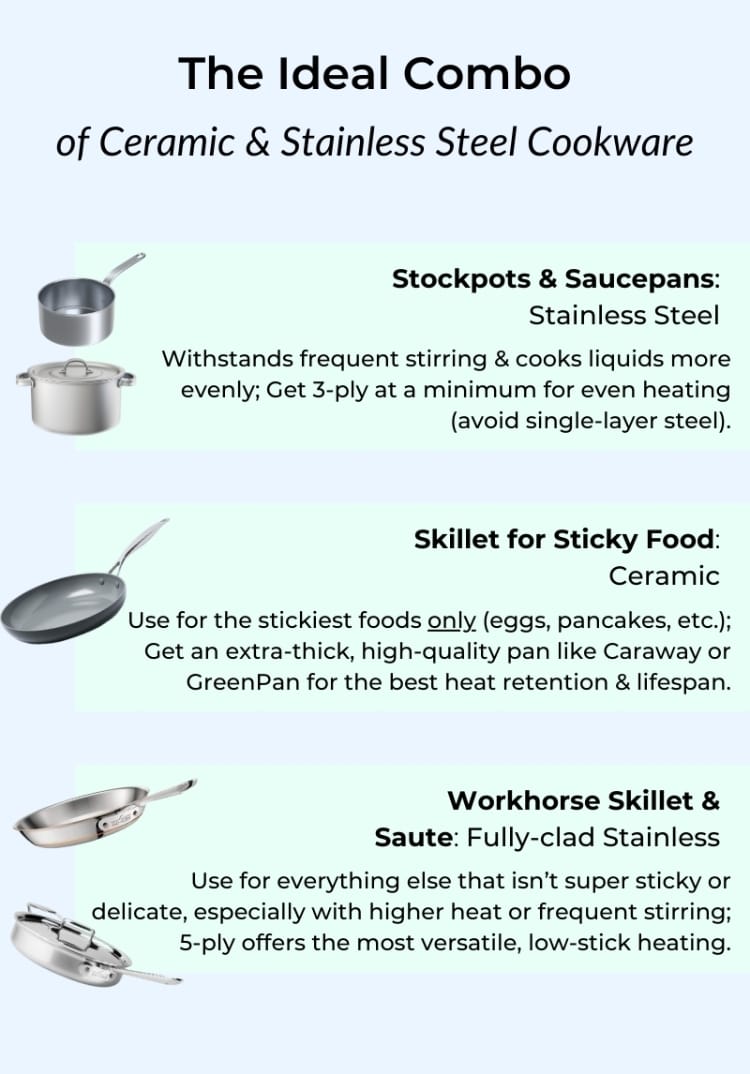
Remember, most kitchens use a mix. For example, a stainless steel skillet for searing and a nonstick or ceramic pan for eggs.

Credit: www.youtube.com
Real-world Examples
- Professional chefs use stainless steel for almost everything except eggs or very sticky foods.
- Home cooks often use nonstick for breakfast and stainless steel for dinner.
- Eco-focused buyers may try ceramic but still keep a stainless steel pan for tough jobs.
What Most Buyers Overlook
Many people buy a full set of one type, expecting it to cover all needs. In reality, a small collection—one stainless steel skillet, one nonstick or ceramic pan, and a large stainless steel pot—covers most cooking.
Also, not all nonstick or ceramic pans perform the same. Some cheap ceramic pans lose their coating quickly, while premium nonstick can last longer with care.
For more in-depth cookware safety research, you can check the Wikipedia page on cookware and bakeware.
Frequently Asked Questions
What Is The Safest Cookware For Everyday Use?
Stainless steel is widely considered the safest option for most people because it doesn’t react with food and has no coating to wear off. High-quality ceramic pans from reputable brands are also safe, but always check for certifications.
Can I Use Metal Utensils With Nonstick Or Ceramic Pans?
It’s best to avoid metal utensils on both nonstick and ceramic pans. Metal can scratch and damage the coating, reducing nonstick performance and pan lifespan. Use wood, silicone, or plastic utensils instead.
Why Does My Stainless Steel Pan Turn Rainbow Colored?
Rainbow stains are common on stainless steel after heating. They are caused by a thin oxide layer and are harmless. You can remove these stains with vinegar or a stainless steel cleaner if you wish, but they don’t affect cooking.
How Do I Make My Nonstick Or Ceramic Pan Last Longer?
Use low to medium heat, avoid preheating empty pans, and always wash by hand with a soft sponge. Never use abrasive cleaners or metal utensils. Storing pans with a towel between them also helps prevent scratches.
Do Ceramic Pans Really Last Longer Than Nonstick Pans?
In most cases, ceramic coatings have a similar or even shorter lifespan compared to high-quality nonstick coatings. Both types tend to lose their nonstick ability after a few years of regular use. Stainless steel, with no coating to wear out, lasts much longer.
Choosing between stainless steel, nonstick, and ceramic cookware doesn’t have to be confusing. By understanding the strengths and weaknesses of each type, you can build a kitchen setup that matches your cooking style, health needs, and budget. A few smart choices now can make your meals tastier and your kitchen time more enjoyable for years to come.