
Finding space for an air fryer in a small kitchen can feel like solving a puzzle. You want your air fryer close enough to use often, but it should not get in your way. Many people with small kitchens worry about safety, heat, and keeping their kitchen tidy.
The right spot can make cooking easier and even help your kitchen look better. With a bit of planning, you can fit an air fryer into almost any space—even if your kitchen feels crowded.
The best place depends on your kitchen layout, how much you cook, and what other appliances you use. There are also safety rules you should follow. Some people put their air fryer in a cabinet, while others keep it on the counter or use a special cart.
Each option has pros and cons. If you are not careful, you might block outlets or risk overheating. This guide will help you decide exactly where to put your air fryer in a small kitchen. You will get practical advice, real examples, and solutions to common problems.
Why Air Fryer Placement Matters In Small Kitchens
Small kitchens are all about smart use of space. Every inch counts. Placing your air fryer in the right place has several benefits:
- Safety: Air fryers get hot. Placing them near flammable items or under cabinets can be dangerous.
- Convenience: If your air fryer is easy to reach, you will use it more often.
- Kitchen flow: The right spot keeps your cooking routine smooth.
- Aesthetics: Good placement makes your kitchen look organized, not crowded.
- Maintenance: Easy access helps with cleaning and care.
Many beginners think any flat surface is fine. But heat, steam, and power needs mean you must plan. For example, placing an air fryer under a low-hanging shelf can trap heat, which is risky. Some people also forget to leave enough space behind the machine for air to move.
Key Factors To Consider Before Choosing A Spot
Before moving your air fryer, answer these questions:
- How big is your air fryer? Measure height, width, and depth. Some models are much taller or deeper than others.
- How often will you use it? Daily users need the fryer handy. Occasional users can store it away.
- Where are your outlets? Air fryers use a lot of power. Avoid extension cords if possible.
- How much counter space do you have? If your counters are full, you may need creative solutions.
- What is above and around the spot? Cabinets, shelves, and walls can block heat or steam.
- Do you need to move it often? Lighter models are easier to store and pull out.
- Is there airflow? Most air fryers need space around them—usually 4-5 inches on each side and behind.
Ignoring these factors can lead to problems. For example, using an air fryer under a low-hanging cabinet can cause damage from steam. Or, plugging it into a crowded outlet can trip your circuit breaker.
Best Locations To Place Your Air Fryer In A Small Kitchen
Every kitchen is unique, but here are the most practical locations for your air fryer. Each has advantages and challenges.
1. Main Kitchen Countertop
The main countertop is the most common place for an air fryer. It’s convenient and usually close to outlets and other cooking tools.
Pros:
- Easy to reach and monitor food while cooking
- Close to sink and prep areas
- Safe if you leave space for heat to escape
Cons:
- Takes up valuable counter space
- May look cluttered in a small kitchen
Tips:
- Place the air fryer at the end of the counter, not in the middle.
- Leave at least 5 inches of space behind for airflow.
- Avoid putting it under cabinets unless you can pull it forward during use.
Example: In a kitchen with only 3 feet of counter space, put the air fryer near the sink for easy cleaning. Move it back when not in use.
2. Rolling Cart Or Utility Cart
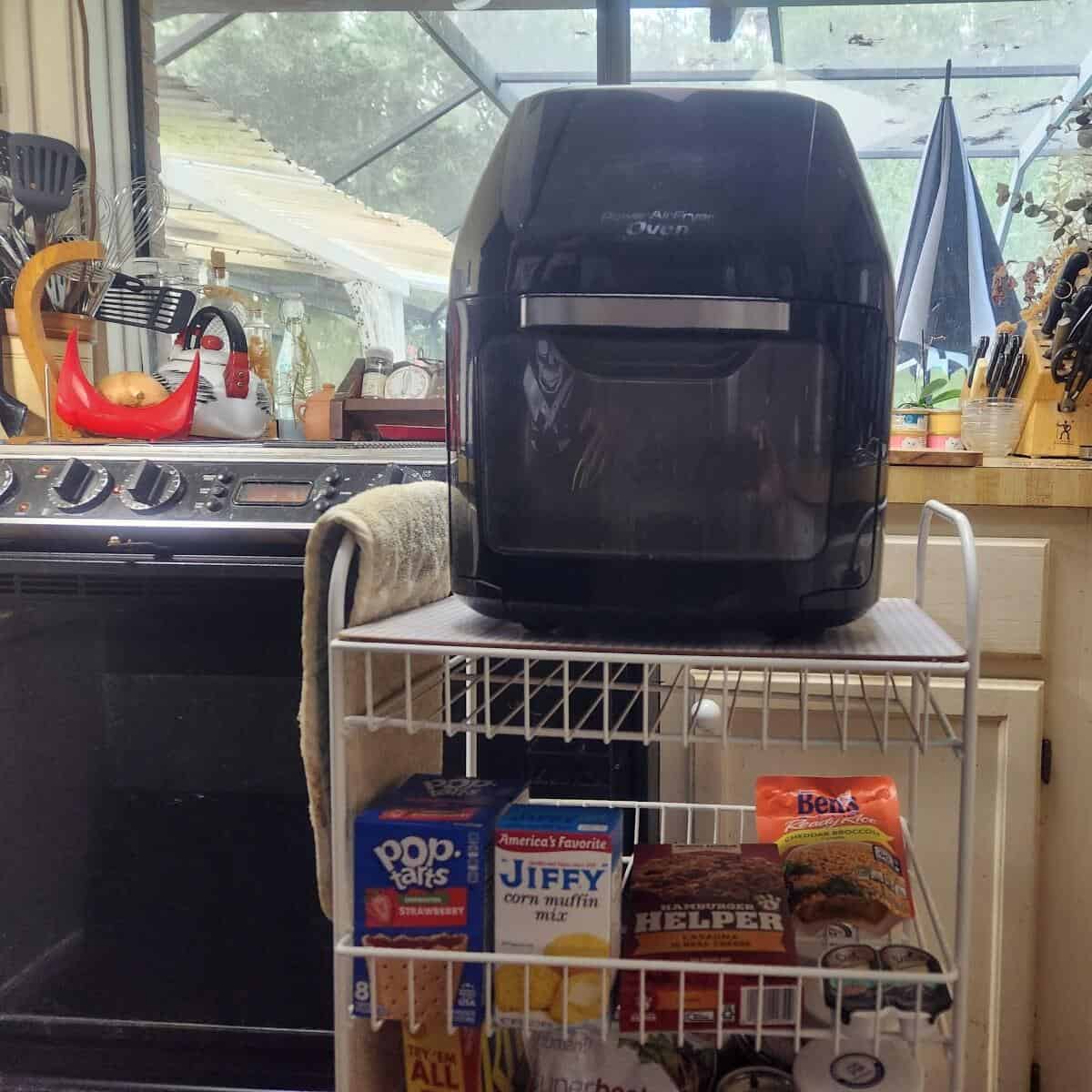
A rolling cart is a great solution if your counters are full. Many carts fit even in tight spaces and can be moved as needed.
Pros:
- Frees up counter space
- Can be rolled out when you need it, stored when you don’t
- Some carts have shelves for accessories
Cons:
- Needs floor space for the cart
- Must be careful with power cords
Tips:
- Choose a sturdy cart that can handle the weight and heat.
- Make sure the top is heat resistant (metal or thick wood).
- Use the lower shelves for air fryer baskets, trays, or cookbooks.
Non-obvious insight: Many people forget to lock the wheels when cooking, which can be a safety hazard. Always use carts with locking wheels.
3. Inside A Lower Cabinet (for Storage)
Some people put their air fryer inside a lower cabinet when not in use. This keeps counters clear.
Pros:
- Hidden from view, so kitchen looks tidy
- Protects air fryer from dust
Cons:
- Must lift it out every time you use it
- Can be heavy or awkward for large models
- Not safe to use the air fryer inside a closed cabinet
Tips:
- Only store, never use, the air fryer in the cabinet.
- Choose a cabinet near an outlet for easy transfer.
- Put a mat or towel under the air fryer to catch drips.
Example: Store the air fryer under the sink if there’s no plumbing in the way, but only use it on the counter.
4. Open Shelf Or Floating Shelf
Using an open shelf or floating shelf can save counter space if the shelf is strong enough.
Pros:
- Easy to grab and put away
- Looks organized if the shelf is neat
Cons:
- Shelf must hold the weight of the air fryer
- Not safe for heavy or large models
- Must be careful with heat—never cook on the shelf
Tips:
- Use only for storage, not for cooking.
- Make sure the shelf is at a safe height to lift the fryer.
5. Pull-out Drawer Or Appliance Garage
Some modern kitchens have a pull-out drawer or special “appliance garage” for small appliances. These are shelves that slide out from a cabinet.
Pros:
- Hides the air fryer when not in use
- Can be pulled out to use (if there’s enough space)
Cons:
- Not all drawers are strong or heat-safe
- Must check for good ventilation
Tips:
- Only use the air fryer on a drawer if the manufacturer says it’s safe.
- Always pull the drawer out fully before cooking.
Non-obvious insight: Many people forget to check if the drawer has a power outlet. Using an extension cord inside a closed drawer is a fire risk.
6. Kitchen Island (if Available)
If your small kitchen has a kitchen island, this can be a good home for an air fryer.
Pros:
- Central location for cooking
- Usually has lots of prep space
- Some islands have built-in outlets
Cons:
- Not all small kitchens have islands
- Can crowd the island if you use it for other things
Tips:
- Dedicate a corner of the island for the air fryer.
- Make sure there’s a power outlet nearby.
7. Over-the-counter Shelf
Some kitchens have a shelf above the counter, but not directly under cabinets. This can work for storing the air fryer.
Pros:
- Saves counter space
- Easy to reach
Cons:
- Only for storage, not for cooking
- Must be careful with lifting up or down
Tips:
- Use for smaller air fryers only.
- Make sure shelf is sturdy.
8. Wall-mounted Shelf With Power Outlet
If you have a wall-mounted shelf near a power outlet, it could be a creative solution.
Pros:
- Keeps the air fryer off the counter
- Can be used for both storage and cooking if the shelf is strong and heat-safe
Cons:
- Needs professional installation
- Not all shelves can handle the heat
Tips:
- Check the shelf’s weight and heat limits.
- Make sure the power cord can reach safely.
9. Unused Corner Of The Kitchen
Many small kitchens have an unused corner. Sometimes, this is the best spot for an air fryer.
Pros:
- Uses “dead” space
- Out of the way
Cons:
- May be hard to reach or see food
- Must check for outlets
Tips:
- Add a corner shelf or small table for the air fryer.
- Use a mirror behind the fryer to see the display if the angle is tight.
10. On Top Of Microwave Or Other Appliances
Some people put their air fryer on top of the microwave or other appliances to save space.
Pros:
- Uses vertical space
- Keeps counters clear
Cons:
- Not always safe—air fryers get hot
- Can be hard to move for cleaning
Tips:
- Only do this if the microwave is sturdy and can handle the weight and heat.
- Never use the air fryer and microwave at the same time, as this may overload your circuit.
Non-obvious insight: Some microwaves have vents on top. Blocking these can damage the microwave or your air fryer.
Comparing Location Options: Pros And Cons
To help you see the differences, here’s a summary comparing the top choices.
| Location | Convenience | Safety | Space Saving | Best For |
|---|---|---|---|---|
| Main Countertop | High | High (if spaced well) | Low | Frequent users |
| Rolling Cart | Medium | High | High | Small kitchens with floor space |
| Lower Cabinet | Low | High (for storage) | High | Occasional users |
| Open Shelf | Medium | Medium | Medium | Light air fryers |
| Microwave Top | Medium | Low | High | Very tight kitchens |
Safety Tips For Air Fryer Placement
Safety is more important than saving space. Here are key rules:
- Leave space around the air fryer. Most brands need at least 4-5 inches on all sides for ventilation.
- Never use under low cabinets. Steam and heat can damage wood or cause a fire.
- Keep away from curtains or flammable materials.
- Plug directly into a wall outlet. Avoid extension cords, which can overheat.
- Check the surface. Use only heat-proof surfaces (stone, metal, thick wood). Thin plastic can melt.
- Unplug after use. Air fryers can draw power even when off.
- Don’t block vents. Both the air fryer and nearby appliances need ventilation.
- Supervise while cooking. Never leave the air fryer running unattended in a cramped spot.
Common mistake: Some people put their air fryer right against the wall. This can cause overheating and shorten the machine’s life.
Creative Air Fryer Storage Solutions
If your kitchen is really tight, get creative with these ideas:
- Under-shelf baskets: Hang a basket under a sturdy shelf to store accessories.
- Stackable bins: Use bins to organize air fryer tools and recipes nearby.
- Hooks for cords: Mount a hook to wrap up the power cord when not in use.
- Custom slide-out trays: Install a pull-out tray in a cabinet just for your air fryer.
- Fold-down shelf: Add a fold-down shelf to use when cooking, then fold away.
Non-obvious insight: Use a silicone mat under your air fryer, both for heat protection and to catch crumbs. Many people forget this simple trick, which makes cleaning much easier.
How To Measure And Plan Your Space
Before you pick a spot, measure your air fryer and the target space carefully.
- Measure your air fryer: Height, width, depth, and weight.
- Check your outlet: Is it nearby? Can you reach it without stretching the cord?
- Test the fit: Place the air fryer (or a box the same size) in your chosen spot. Open the basket fully—does it fit?
- Check for heat and steam: Make sure nothing above or around can be damaged.
- Leave room for airflow: Don’t crowd the air fryer.
Here’s a sample table to help you compare possible spots:
| Spot | Distance to Outlet | Airflow Space (inches) | Heat-Safe Surface | Notes |
|---|---|---|---|---|
| Countertop | 1 ft | 5 | Yes | Under cabinet, pull forward to use |
| Rolling Cart | 2 ft | 6 | Yes | Lock wheels for safety |
| Microwave Top | 1 ft | 3 | Depends | Don’t block microwave vents |
Mistakes To Avoid When Placing Your Air Fryer
Many air fryer owners make the same errors. Here’s how to avoid them:
- Placing under low cabinets: Steam rises and can warp or stain wood.
- Blocking the back or sides: Air fryers need airflow for cooling.
- Using on weak shelves: Some shelves can’t hold the weight or get too hot.
- Ignoring power needs: Air fryers use a lot of electricity. Overloading outlets or using cheap extension cords is risky.
- Forgetting about cleaning: Placing the fryer in a hard-to-clean corner means grease builds up.
- Storing while hot: Never put a hot air fryer away immediately after cooking.
- Not checking the manufacturer’s advice: Some brands have special rules for placement.
Pro tip: Put a small thermometer near your air fryer the first few times you use it. Check if nearby surfaces get too hot.

Credit: www.reddit.com
Using Multi-purpose Furniture For Your Air Fryer
If you have a small kitchen, multi-purpose furniture can save space. For example:
- Microwave carts often have an outlet and space for other appliances.
- Drop-leaf tables can be expanded for cooking, folded down afterward.
- Stackable racks let you store your air fryer above or below other tools.
Example: A small rolling kitchen island with a butcher block top can hold your air fryer, give you extra prep space, and be moved when you need more room.
Non-obvious insight: Some people use a cutting board as a heat shield on top of a washing machine or dryer in their kitchen (if allowed). Always check appliance manuals before doing this.
Cleaning And Maintenance Access
Where you put your air fryer affects how easy it is to clean and maintain.
- Leave space to remove the basket and trays.
- Keep near a sink if possible—makes cleaning easier.
- Don’t block access to the back—you may need to wipe down vents.
- Store cleaning supplies nearby for quick wipe-downs.
Common mistake: Putting the air fryer in a tight spot means you skip cleaning, which leads to smells or smoke.
Organizing Your Small Kitchen Around The Air Fryer
If your air fryer is your main cooking tool, you may want to organize your kitchen around it.
- Keep oil spray, tongs, and liners in a small bin next to the fryer.
- Store recipes in a folder or magnet on the fridge.
- Hang a cleaning brush nearby.
- Label drawers or bins for easy access.
Non-obvious insight: Some people keep a “cooking station” by grouping their air fryer, spices, and utensils on one cart. This reduces steps and keeps the kitchen tidy.
What If You Have No Counter Space At All?
Even the smallest kitchens have options. If you truly have zero counter space:
- Use a fold-down wall table for temporary cooking.
- Place the air fryer on the stove top (when the stove is off and cool)—then move it when you need the stove.
- Use a portable outdoor table for cooking, then bring the air fryer inside after.
Important: Never use your air fryer on the stove if the burners are hot or could turn on.
Real-life Examples From Small Kitchen Owners
Example 1: Jenny, who lives in a studio, uses a small rolling cart for her air fryer. She rolls it out from under her table to the middle of the kitchen when cooking, then stores it away. She keeps all her air fryer tools on the bottom shelf for easy access.
Example 2: Mark’s apartment has no free counters, so he installed a floating shelf near his fridge. He only stores the air fryer there, then cooks on a small folding table. He uses a silicone mat to protect the table from heat.
Example 3: Sarah has a galley kitchen with one outlet. She keeps her air fryer on top of her microwave but only uses one appliance at a time. She checks the microwave vents every month for dust.
These real-life solutions show that creativity and planning can help any small kitchen fit an air fryer safely and neatly.
When To Rethink Your Air Fryer Placement
You may need to move your air fryer if:
- You notice heat damage to cabinets or walls
- The circuit breaker trips when using other appliances
- The air fryer is hard to reach or clean
- It blocks your main kitchen work area
- You use it less because it’s not convenient
If any of these happen, review your options above and try a different spot.

Credit: www.reddit.com
Air Fryer Placement And Kitchen Design Trends
Many kitchen designers now plan for small appliances like air fryers. Some trends include:
- Appliance garages with built-in outlets and ventilation
- Pull-out shelves in lower cabinets
- Open shelving for display and storage
- Multi-use islands with power for cooking
If you’re remodeling, ask your designer about special storage for your air fryer and other small tools.
Final Thoughts
Finding the right place for your air fryer in a small kitchen takes some thought, but it’s worth the effort. The best spot is safe, easy to reach, and fits your cooking style. Always check for enough space, good ventilation, and a sturdy surface.
Get creative with carts, shelves, and multi-purpose furniture. Remember, safety is always more important than saving a few inches of space. With a smart plan, you can enjoy crispy, delicious air fryer meals—even in the smallest kitchen.
If you want to learn more about kitchen organization, check out this helpful guide from the New York Times Wirecutter.
Credit: www.alsothecrumbsplease.com
Frequently Asked Questions
How Much Space Does An Air Fryer Need For Ventilation?
Most air fryers need at least 4-5 inches of space on all sides and behind for good airflow. Always check your model’s manual for exact rules. Good ventilation keeps your air fryer safe and working well.
Can I Use My Air Fryer Under A Cabinet?
It’s usually not safe to use an air fryer under a low cabinet. Steam and heat can damage the wood or paint, and may even cause a fire. If you have to use it there, always pull the fryer forward so steam can escape.
Is It Safe To Use An Air Fryer On Top Of The Microwave?
It can be safe if your microwave is sturdy and there’s enough airflow. Never block microwave vents, and never use both appliances at the same time. Always check both manuals before placing one on top of the other.
What Should I Put Under My Air Fryer To Protect The Counter?
Use a heat-resistant mat (like silicone or thick wood) under your air fryer. This protects your counter from heat and catches crumbs or oil. Do not use thin plastic or cloth mats, as they can melt or catch fire.
Where Should I Store My Air Fryer If I Don’t Use It Every Day?
Store your air fryer in a lower cabinet, open shelf, or on a rolling cart. Make sure it’s cool and clean before storing. Always move the fryer to a safe, open surface before using it again.