
A pull out spray kitchen faucet can make your daily kitchen tasks faster and more comfortable. You can easily switch between stream and spray, move the hose around, and clean every corner of your sink. But what happens when your pull out faucet starts causing problems?
Many homeowners are surprised when a once-smooth faucet suddenly leaks, sprays in strange directions, or refuses to retract. Some issues are annoying but minor; others can lead to water damage or expensive repairs if ignored.
This article explains the most common pull out spray kitchen faucet problems. You’ll find practical solutions for each issue, learn how to prevent future headaches, and discover when it’s time to call a plumber. Along the way, you’ll see real-life examples, data, and comparisons to help you make confident decisions. If you want your kitchen faucet to work reliably for years, this guide is for you.
Why Pull Out Spray Faucets Are Popular (and Complex)
Pull out spray faucets have become a kitchen favorite. Their flexibility, easy cleaning, and modern look attract many buyers. But their design is more complicated than a traditional faucet. Inside, there are extra hoses, check valves, switches, and connectors. This complexity creates more opportunities for things to go wrong.
Real-world statistics: According to the Plumbing Manufacturers International, about 60% of kitchen faucets sold in the US now feature some kind of pull out or pull down spray function. As these models spread, reports of related problems have also increased.
Non-obvious insight: Many problems come not from the faucet itself, but from the way it’s installed or maintained. Understanding the main issues helps you troubleshoot smarter and avoid common mistakes.
Most Common Pull Out Spray Kitchen Faucet Problems
What problems do homeowners face with pull out spray faucets? Let’s look at the main issues and their causes.
1. Hose Retraction Failure
One of the main attractions of a pull out faucet is the smooth retraction of the spray hose. Over time, you may notice the hose does not pull back fully, or gets stuck under the sink.
Causes:
- The counterweight or retraction mechanism is blocked by cleaning products, pipes, or trash.
- Hose is twisted or kinked.
- Counterweight is missing or installed incorrectly.
- The hose material has stiffened.
Practical solution: Check under your sink. Move any stored items away from the hose path. Make sure the counterweight moves freely and is at the correct spot. If the hose feels stiff, replacing it with a flexible model may help.
Pro tip: Mark the ideal position of the counterweight with tape before adjusting, so you don’t forget where it works best.
2. Spray Head Leaks
A dripping or spraying faucet head wastes water and can make a mess.
Causes:
- Worn-out O-rings or seals.
- Loose spray head connection.
- Cracks in the spray head or hose.
- Mineral buildup around the nozzle.
How to fix: Tighten the spray head by hand. If the leak continues, unscrew the head and check for worn or damaged O-rings. Clean out any mineral deposits. For cracks, you’ll need a replacement spray head.
Beginner mistake: Using pliers on the spray head can scratch or break it. Always use your hands and a soft cloth.
3. Water Pressure Drops When Switching Modes
Many pull out faucets let you change from a steady stream to a spray. If water pressure drops sharply, or the spray is weak, something is wrong.
Main reasons:
- Clogged aerator or spray face.
- Blocked diverter valve.
- Build-up of sediment in the faucet hose.
Solution steps:
- Unscrew the aerator and soak it in vinegar to dissolve minerals.
- Remove the spray face (if possible) and clean the holes.
- Flush the hose with water.
- If pressure remains low, the diverter valve may need cleaning or replacement.
Non-obvious insight: Hard water areas see this problem more often. If your region has high mineral content, clean the aerator and spray head every few months.
4. Faucet Hose Leaks
Leaks under the sink are often caused by the pull out hose. These can lead to water damage if not fixed quickly.
Causes:
- Hose worn out by friction against cabinet or pipes.
- Loose or faulty connection at either end.
- Damaged hose due to age or poor materials.
How to repair: Dry the hose and run the water to find the leak. Tighten all connections. If the hose is damaged, replace it with a reinforced model. Many brands offer kits for easy replacement.
Safety tip: Place a bucket under the sink when checking for leaks to avoid water spreading.
5. Diverter Valve Problems
The diverter valve is what sends water from the main spout to the spray head. If it fails, you may lose spray function, or both outlets may run weakly.
Common issues:
- Diverter stuck due to mineral deposits.
- Valve worn out or jammed.
- Poor installation or cheap materials.
DIY fix: Remove the spray head and run water. If the flow is normal, the diverter is probably blocked. Soak the valve in vinegar or replace it if cleaning doesn’t help.
Pro insight: Low-cost faucets often use plastic diverters, which fail sooner than brass types.
6. Spray Head Won’t Switch Modes
Some faucets get stuck in spray or stream mode. The button or switch may not respond.
Why this happens:
- Button jammed by grime or minerals.
- Faulty internal switch mechanism.
- Broken spring or plastic part inside.
What to do: Remove and clean the spray head. Press the button repeatedly under running water. If it still won’t switch, replace the spray head.
7. Noisy Faucet Operation
A pull out faucet should operate quietly. Squeaks, rattles, or clunks mean something’s wrong.
Typical causes:
- Loose mounting hardware.
- Counterweight hitting pipes or cabinet walls.
- Hose rubbing against sharp edges.
Quick check: Grab the faucet base and wiggle gently. If it moves, tighten the mounting nut. Adjust the counterweight or add felt padding where the hose contacts other surfaces.
Practical tip: Silicone lubricant on the hose can reduce noise and prevent wear.
8. Faucet Base Leaks
Water pooling around the base of your faucet is a sign of a serious problem.
Root causes:
- Failed O-rings or seals inside the faucet body.
- Loose mounting nut.
- Internal corrosion.
Solution: Turn off water supply, remove the handle and spout, and check the O-rings. Replace any that are brittle or worn. Tighten the mounting hardware.
Beginner mistake: Ignoring base leaks can damage your countertop or cabinet over time.
9. Spray Hose Gets Stuck Or Twisted
A smooth, flexible hose is essential for easy use. If your hose feels stiff, or gets tangled under the sink, it’s time to act.
Why it happens:
- Hose too long or too short for your cabinet.
- Counterweight is the wrong size or placed incorrectly.
- Hose material has aged or dried out.
How to solve: Replace old hoses with braided or reinforced models. Adjust the counterweight for best movement. Clear the area under your sink for a smooth hose path.
Expert tip: Some brands offer anti-twist hoses that reduce tangling and improve durability.
10. Water Backflow Or Cross-contamination
Occasionally, water from the spray head can be sucked back into your home’s water supply. This is rare, but can be dangerous.
Causes:
- Missing or faulty check valve in the hose.
- Improper installation.
- Sudden drop in water supply pressure.
Prevention: Make sure your faucet has a working check valve. If unsure, have a plumber check your installation. This is especially important in homes with well water or old plumbing.
11. Sprayer Head Dripping After Use
Some users notice a few drops come out of the spray head after turning off the tap.
Why this happens:
- Residual water left in the hose.
- Worn check valve.
- Poor spray head design.
Is it a problem? Usually, a few drops are normal due to gravity. If the drip continues for more than a few seconds, check the spray head and valve for wear.
12. Faucet Handle Issues
Pull out spray faucets often use single handles for both temperature and flow. If the handle feels loose, stiff, or leaks, it can affect the whole system.
Usual causes:
- Worn cartridge inside the handle.
- Loose set screw.
- Build-up of minerals or debris.
Repair steps: Tighten the set screw under the handle. If the problem persists, replace the cartridge. Clean any visible buildup.
Pro tip: Regularly moving the handle through its full range keeps the cartridge working smoothly.
13. Unstable Faucet Movement
A wobbly faucet feels cheap and can damage your sink over time.
Causes:
- Mounting hardware has loosened.
- Sink material is weak or cracked.
- Heavy hose or spray head pulls the faucet off balance.
Fix: Tighten the mounting nut under the sink. If the sink is thin or damaged, reinforce it with a faucet support plate.
14. Poor Spray Pattern
If your spray head sends water sideways, splashes, or misses spots, cleaning is needed.
Causes:
- Clogged spray holes.
- Damaged spray head.
- Poor design for your water pressure.
Simple fix: Soak the spray head in vinegar and scrub the holes with a toothbrush. Replace if the problem remains.
15. Difficult Installation
Many problems start with installation errors. Pull out faucets are trickier than standard ones.
Common mistakes:
- Hose or counterweight installed backward.
- Not enough clearance under the sink.
- Skipping plumber’s tape on threads.
How to avoid: Read the manual carefully. Watch the manufacturer’s video if available. Double-check all connections before turning on the water.
16. Handle Hits Backsplash Or Wall
Some pull out faucets have handles that swing backward. If your sink is close to the wall, the handle may bump into it.
Result: You can’t get full hot or cold water, or the handle gets damaged.
Solution: Choose a faucet with a forward-only handle motion, or one with adjustable handle stops. Check clearance before buying.
17. Sprayer Hose Detaches Suddenly
A rare but serious problem is the hose popping off under pressure, spraying water everywhere.
Why this happens:
- Connection not tightened fully during installation.
- Low-quality quick-connect fittings.
- Hose worn out at the connection point.
Prevention: Always double-check connections after installation. Replace worn or cracked hoses as soon as you notice.
Comparing Pull Out Spray Faucets With Standard Faucets
Is a pull out faucet more likely to have problems than a classic model? Here’s a quick comparison:
| Feature | Pull Out Spray Faucet | Standard Faucet |
|---|---|---|
| Flexibility | High | Low |
| Number of Parts | Many | Few |
| Leak Risk | Medium-High | Low |
| Ease of Use | Easy | Moderate |
| Maintenance Needed | Regular | Rare |
Non-obvious insight: The extra features of a pull out faucet bring both convenience and complexity. Regular checks and cleaning prevent most issues.
How To Troubleshoot Pull Out Spray Faucet Problems
Fixing a faucet does not always require a plumber. Here’s a practical troubleshooting guide:
| Problem | Possible Cause | Quick Fix | When to Call a Plumber |
|---|---|---|---|
| Hose won’t retract | Obstructed counterweight | Clear path, adjust weight | If hose is torn or stuck inside |
| Low spray pressure | Clogged aerator | Clean aerator, soak in vinegar | If pressure is low throughout home |
| Spray head leaks | Worn O-ring | Replace O-ring | If leak continues after repair |
| Base leak | Loose mounting nut | Tighten nut, replace seals | If leak damages cabinet or persists |
| Handle stiff | Dirty cartridge | Clean or replace cartridge | If handle breaks or leaks heavily |

Credit: horow.com
Preventing Problems: Maintenance Tips
A well-maintained faucet lasts longer and works better. Here are proven ways to prevent problems:
- Clean the spray head every month, especially in areas with hard water.
- Check under the sink regularly for leaks or hose tangles.
- Move the hose in and out fully every week to keep it flexible.
- Tighten mounting hardware once a year, or if you notice wobbling.
- Replace O-rings and washers every few years to avoid leaks.
- Use gentle cleaners—harsh chemicals can damage internal parts.
Bonus tip: Take a photo of your faucet setup under the sink. This helps if you ever need to reassemble it or ask for parts.
When To Repair And When To Replace
Sometimes, fixing an old or cheap faucet is not worth the time or money. How do you decide?
- Repair if: The problem is minor (like cleaning the aerator or tightening connections). The faucet is high quality and less than 7 years old.
- Replace if: The faucet has repeated leaks, corrosion, or plastic parts breaking. Repairs cost over half the price of a new faucet.
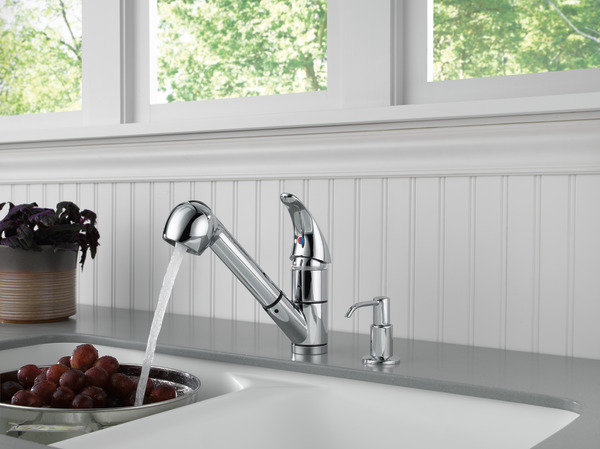
Example: If your 10-year-old faucet needs a new hose, spray head, and diverter, replacing the whole unit may be smarter. New models use less water and are easier to maintain.
Credit: www.peerlessfaucet.com
Choosing A Reliable Pull Out Spray Faucet
To avoid future problems, pick a faucet with these features:
- Braided stainless steel hoses (not cheap plastic)
- Brass or metal diverter valves
- Easy-clean spray heads
- Clear installation instructions
- Long warranty (at least 5 years)
Check reviews and buy from trusted brands. Avoid very low-priced models, as these often cut corners on internal parts.
Buyer’s mistake to avoid: Choosing a faucet based only on looks, not the quality of moving parts inside.
Real-life Examples Of Faucet Problems
Case 1: Sarah bought a budget pull out faucet online. Within six months, the hose began to leak, and the spray head dripped constantly. The store did not offer replacement parts. She replaced the faucet with a well-known brand and has not had issues since.
Case 2: John’s spray hose got stuck every time he used it. He found that a box of dishwasher soap under the sink blocked the counterweight. After clearing the space, the hose retracted smoothly.
Case 3: Maria’s water pressure dropped after switching to spray mode. Cleaning the aerator and spray head fixed the problem—she discovered her home has hard water and now cleans monthly.
Cost Of Repairs And Replacement
How much will you spend fixing or replacing a pull out spray faucet?
- Replacing O-rings or seals: $5–$20 for parts, 30 minutes work
- New spray head: $20–$60, easy to install
- New hose: $15–$40, 30–45 minutes work
- Plumber visit: $100–$250 for diagnosis and repair
- New faucet: $80–$400 (plus installation if needed)
Money-saving tip: Most brands sell repair kits with all needed seals and washers. Doing small repairs yourself is much cheaper than hiring a pro.
The Future Of Pull Out Spray Faucets
Modern faucets are adding features like touch activation, LED temperature indicators, and water-saving flow restrictors. While these add convenience, they also introduce new possible problems—especially with electronics.
If you choose a smart faucet, make sure there’s strong customer support and clear instructions. More features mean more parts that can fail, so regular cleaning and careful use are even more important.
For more on faucet technologies and maintenance, you can explore resources like Wikipedia.
Credit: www.youtube.com
Frequently Asked Questions
What Is The Best Way To Clean A Pull Out Spray Faucet Spray Head?
The best way is to unscrew the spray head and soak it in white vinegar for 30 minutes. Scrub the holes gently with a toothbrush, rinse, and reattach. This removes mineral deposits and keeps the spray even.
Why Does My Pull Out Spray Faucet Hose Keep Getting Stuck?
Usually, the hose is blocked by items under the sink, or the counterweight is not installed correctly. Clear a path for the hose, check the weight, and make sure the hose is not twisted or too stiff.
Can I Replace The Spray Hose Myself, Or Do I Need A Plumber?
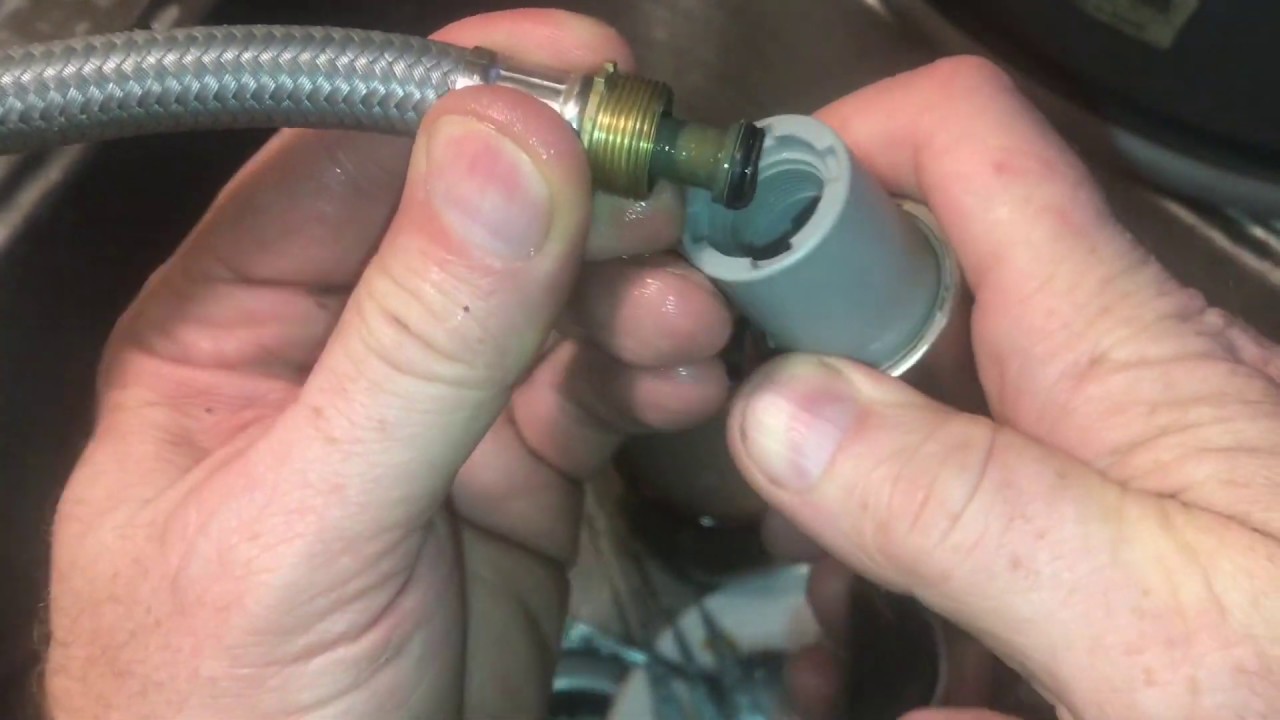
Most hoses are designed for easy DIY replacement. Turn off the water, unscrew the old hose, and install the new one following the manufacturer’s instructions. If connections are hard to reach or leak afterward, call a plumber.
How Long Do Pull Out Spray Kitchen Faucets Usually Last?
A good quality faucet should last 7–10 years with regular care. Cheaper models or those with lots of plastic parts may need replacement sooner, especially if used heavily.
Is It Normal For Water To Drip From The Spray Head After Turning Off The Faucet?
A few drops are normal due to gravity and leftover water in the hose. If dripping continues for more than a few seconds, check the spray head and internal valves for wear.
Pull out spray kitchen faucets make life easier—until they don’t. Knowing the main problems and solutions helps you keep your kitchen running smoothly. With regular care, smart troubleshooting, and quality parts, your faucet can serve you well for years. If in doubt, don’t hesitate to ask a professional or contact the manufacturer for help.