
Why Is My Gas Stove Not Clicking?
A gas stove is a central part of many kitchens. It helps you cook meals quickly and easily. But what happens when you turn the knob and there’s no clicking sound? For most people, that clicking means the stove is trying to light. If your gas stove is not clicking, it can be frustrating and even a little worrying. You might wonder if it’s broken or if there’s a safety risk.
This article will guide you through all possible reasons why your gas stove might stop clicking. You will find clear explanations, practical advice, and simple troubleshooting steps. Whether you’re a homeowner, renter, or just curious, you’ll learn how these stoves work, what can go wrong, and when to call a professional.
We’ll cover hidden details many people miss and help you solve the problem safely.
How A Gas Stove Ignition Works
Before you can fix a problem, it helps to understand how the ignition system in a gas stove is supposed to work. When you turn the knob, you usually hear a quick, repetitive “click-click-click. ” This is the sound of the igniter.
The igniter creates a small electrical spark that lights the gas coming from the burner.
The main parts involved are:
- Igniter switch: Sends a signal to start the spark.
- Spark module: Generates the electricity needed.
- Wires: Carry the electricity to the igniter.
- Igniter electrode: The part you see near the burner that makes the spark.
- Gas valve: Opens to let gas flow.
When everything works, you hear clicking, see a spark, and the burner lights up.
Why The Clicking Sound Matters
The clicking sound is a clear sign your stove is trying to ignite. If you don’t hear it, something has interrupted the ignition process. This can be simple (like a loose knob) or more serious (like an electrical problem).
Common Causes Of A Gas Stove Not Clicking
Most gas stove ignition problems come from a small set of causes. Let’s look at each one in detail.
1. Power Problems
Gas stoves often need electricity for the igniter, even though they use gas for cooking. If there’s no power, the igniter won’t work.
- Unplugged stove: Sometimes the plug gets loose or pulled out.
- Tripped circuit breaker: The kitchen outlet may be off due to a tripped breaker.
- Blown fuse: Older homes may have a fuse that controls the kitchen outlets.
Tip: Always check that your stove is plugged in and the outlet has power. Try plugging another device into the outlet to test it.
2. Faulty Igniter Switch
Each burner has a small switch under the knob. When you turn the knob, the switch closes and tells the spark module to fire. Over time, switches can wear out.
- Signs of a bad switch: One burner won’t click, or none of them do.
- Testing: Try all the burners. If only one doesn’t click, its switch may be faulty.
Hidden insight: Sometimes, a spill or grease can get into the switch and stop it from working.
3. Defective Spark Module
The spark module is the heart of the ignition system. It takes low voltage from your house and boosts it to make a spark.
- Failure signs: No clicking on any burner.
- Causes: Power surges, water damage, or age can ruin the module.
Practical note: Some stoves use one spark module for all burners, while others have a separate module for each. If all burners stop clicking, the main module is likely the problem.
4. Worn Or Disconnected Wires
Wires connect the spark module to each igniter. If a wire is loose, broken, or burned, there will be no click.
- Common causes: Rodents, heat damage, or poor connections.
- What to look for: Burn marks or disconnected wires under the cooktop.
Non-obvious tip: Wires inside stoves can look fine but be broken inside the insulation. Gently wiggle wires to check for hidden breaks.
5. Dirty Or Clogged Igniter
Cooking can create grease, food spills, and grime. If the igniter gets dirty, it might not work.
- How dirt affects it: The spark can’t jump from the igniter to the burner head.
- Symptoms: Clicking is faint or missing, or only one burner is affected.
Maintenance tip: Cleaning the igniter regularly can prevent this problem.
6. Misaligned Burner Cap
Burner caps must sit flat and in the correct position. If a cap is crooked, the spark can’t reach the gas.
- Common mistake: After cleaning, people replace the cap incorrectly.
- How to check: Make sure the cap sits flat and matches the burner shape.
7. Moisture In The Igniter System
Water can get into the igniter area after cleaning or from spills.
- Effect: Wet parts can block the electrical spark.
- Solution: Let the stove dry for several hours, or use a hair dryer on a low setting.
Beginner insight: Even a small amount of moisture can block the spark, so avoid using too much water when cleaning.
8. Failed Control Board
Modern stoves sometimes use a control board (like a small computer) to run the ignition.
- Failure signs: No clicking, display lights not working, or strange stove behavior.
- Causes: Power surges, age, or manufacturing defects.
Note: Control board failure is rare but can happen, especially after a storm or power outage.
9. Gas Supply Issues
If there’s no gas, the igniter may not click. Some stoves have sensors that detect gas flow.
- Check: Is the gas valve open? Is your gas bill paid? Any recent work on the gas line?
- Other clues: The stove may click but not light, or it may not click at all.
Insight: If you smell gas or suspect a leak, turn off the stove and call your gas company immediately.
10. Knob Or Switch Alignment Problems
Knobs must be connected to the switches under the cooktop. If a knob slips or breaks, it may not press the switch.
- Symptoms: Turning the knob feels loose, or nothing happens.
- Fix: Remove the knob and check for damage.
11. Child Lock Or Safety Feature Activated
Many modern stoves have a child lock or safety mode. This can stop the ignition from working.
- How to check: Look for a lock symbol on the display or read the manual.
- How to reset: Usually, press and hold a button for a few seconds.
Tip: Always check for safety features before assuming something is broken.
How To Troubleshoot A Gas Stove That Won’t Click
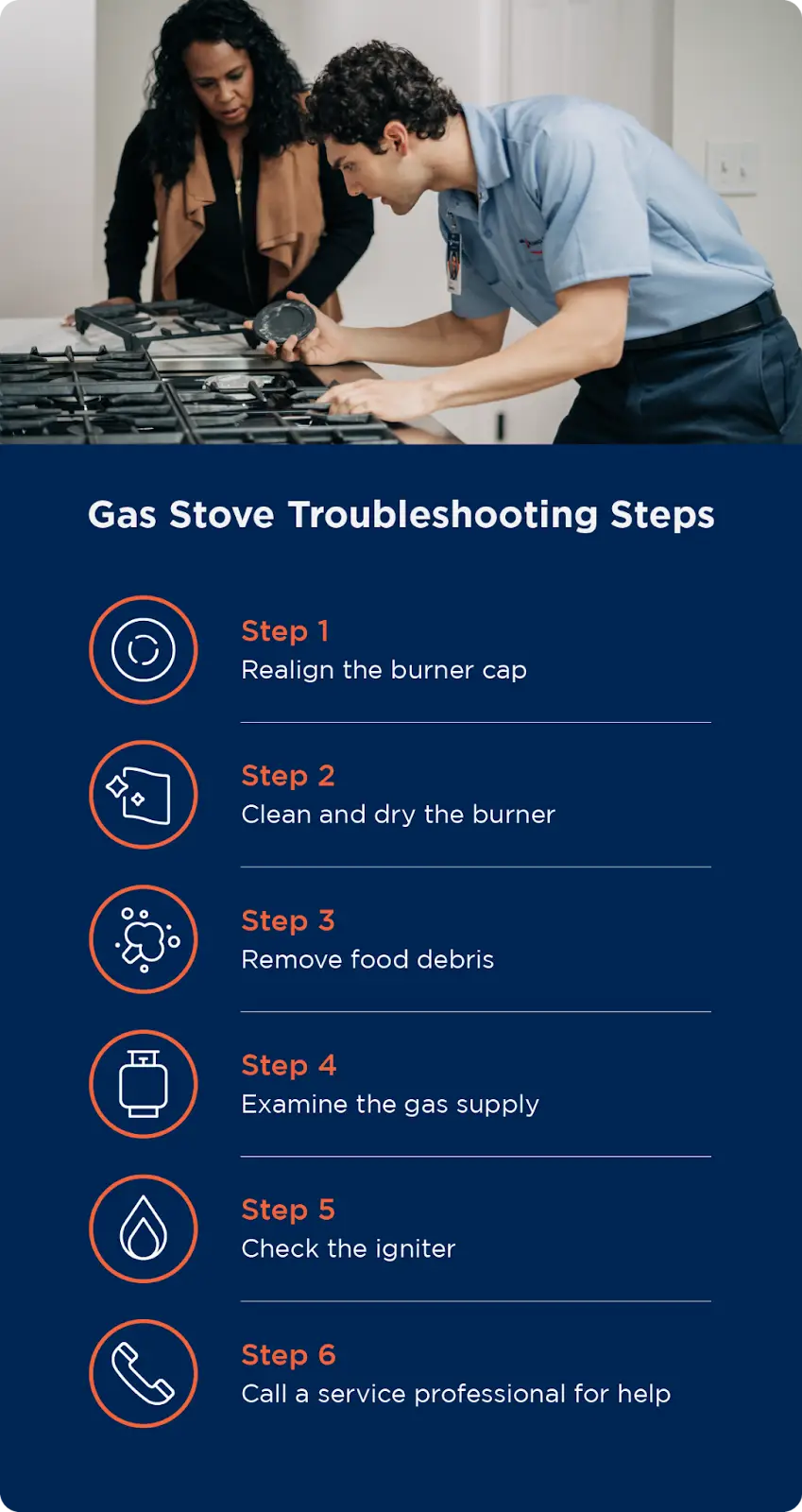
Finding the real cause can feel overwhelming. Here’s a step-by-step process to help you narrow down the problem safely.
Step 1: Check The Basics
- Is the stove plugged in?
- Is the outlet working?
- Is the gas valve open?
- Are the knobs attached properly?
Step 2: Test All Burners
Try each burner. Does only one fail to click, or all of them? This helps you know if it’s a single part or a system-wide issue.
Step 3: Look For Obvious Issues
- Is there moisture, food, or grease on the igniter?
- Are the burner caps sitting flat?
- Are the knobs damaged or loose?
Step 4: Let The Stove Dry
If you recently cleaned the stove, let it dry for several hours. Moisture is a common reason for no click.
Step 5: Listen And Observe
When you turn the knob, do you hear any faint clicks or see a weak spark? This can help you decide if it’s a power or part issue.
Step 6: Check For Power Issues
- Test the outlet with another device.
- Check the circuit breaker or fuse box.
Step 7: Inspect Under The Cooktop
If you are comfortable, lift the cooktop (with the stove unplugged). Look for:
- Loose or burned wires
- Signs of water damage
- Rodent activity
Warning: Never touch wires while the stove is plugged in.
Step 8: Consider Professional Help
If all burners fail and none of the above steps fix the issue, the spark module or control board may have failed. These parts usually need a trained technician to replace.
Comparing Common Gas Stove Ignition Problems
Here is a quick comparison of the most frequent reasons for a gas stove not clicking and their typical solutions:
| Problem | How to Identify | DIY Fix? | When to Call a Pro |
|---|---|---|---|
| Power issue | No lights, no click, other appliances dead | Yes (check outlet, breaker, plug) | If wiring problem in wall |
| Dirty igniter | Visible grease, only one burner fails | Yes (clean with brush) | If cleaning doesn’t help |
| Loose wire | One or more burners dead, visible wire damage | Maybe (reconnect wire) | If unsure or wires are burned |
| Bad spark module | No burners click, stove has power | No | Yes (replace module) |
| Wet igniter | Click stopped after cleaning or spill | Yes (dry thoroughly) | If problem continues |
What You Should Never Do
When your gas stove isn’t clicking, it’s tempting to try anything to get it working. However, some actions can be dangerous or make the problem worse.
- Never use a metal tool to poke the igniter while the stove is plugged in.
- Don’t force the knobs if they feel stuck.
- Avoid spraying water or cleaner directly onto the igniter.
- Don’t try to bypass safety features like child locks.
- Never work on electrical parts unless the stove is unplugged.
Beginner mistake: Many people try to clean the igniter with a wet rag while the stove is on. This can cause electric shock or damage the part.
How To Clean And Maintain Gas Stove Igniters
Regular cleaning and care can prevent most ignition problems. Here’s how to do it safely:
- Unplug the stove or turn off power at the breaker.
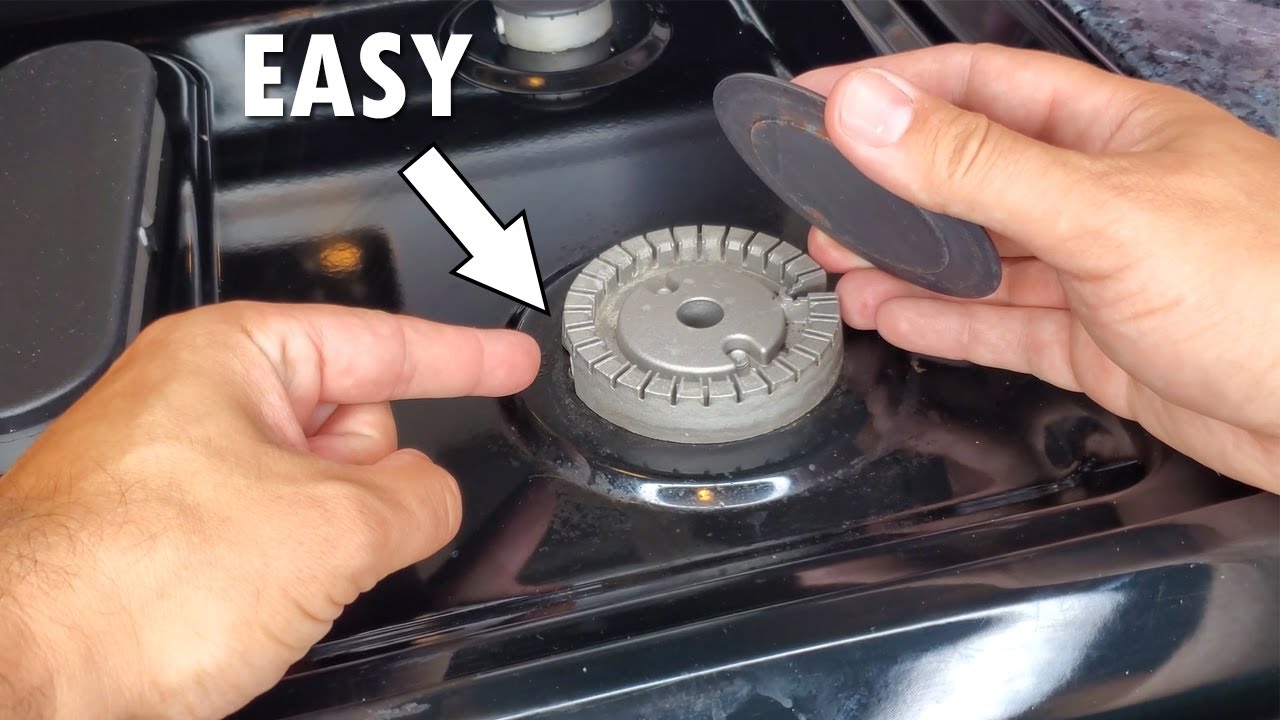
- Remove burner grates and caps gently.
- Use a dry toothbrush to brush away crumbs and grease from the igniter and burner area.
- Wipe with a slightly damp cloth (never wet) for stubborn stains.
- Let everything dry completely before reassembling.
- Replace burner caps carefully so they sit flat.
Pro tip: Clean the igniter area once a week if you cook often, and after big spills right away.
Credit: www.youtube.com
When To Replace Gas Stove Parts
Sometimes, cleaning and basic checks aren’t enough. Here’s when you may need to replace parts:
Igniter Switch
- Only one burner never clicks.
- The switch feels loose or broken.
Spark Module
- No burners click, but the stove has power.
- Replacement usually needs a technician.
Knobs
- They spin freely or won’t turn the burner on.
Wires
- Visible damage or burning.
- Replacing wires is best done by a professional.
Money-saving tip: If your stove is under warranty, contact the manufacturer before trying repairs yourself.
The True Cost Of Ignition Repairs
People often worry about repair costs. Here’s a comparison of common repair prices (in the US):
| Part/Repair | DIY Cost | Professional Cost | Time Needed |
|---|---|---|---|
| Igniter cleaning | Free | $50–$100 | 15–30 min |
| Igniter switch | $10–$40 | $90–$150 | 30–60 min |
| Spark module | $40–$80 | $120–$250 | 1–2 hours |
| Knob replacement | $5–$25 | $50–$80 | 10–15 min |
| Wire repair | $10–$25 | $100–$200 | 1–2 hours |
Non-obvious insight: Cleaning and basic checks can solve 60–70% of ignition problems for free.
Signs You Need A Professional
Not every stove problem is a DIY fix. Here’s when it’s smart to call in an expert:
- You smell gas and can’t find the source.
- No burners light, and you’ve tried all the steps above.
- Wires are burned or melted under the cooktop.
- The control board or spark module is suspected.
- You’re not comfortable working with electricity or gas.
Safety reminder: Gas and electricity are dangerous. If you have doubts, always call a professional.
How To Prevent Future Ignition Problems
A few simple habits can keep your gas stove working reliably for years.
- Clean up spills quickly before they dry and block the igniter.
- Check burner caps after cleaning to be sure they’re aligned.
- Avoid using too much water when cleaning near the igniter.
- Inspect knobs and switches regularly for looseness or wear.
- Test each burner once a week to catch problems early.
- Don’t overload the stovetop with heavy pots that might damage parts.
- Have a technician inspect your stove every few years, especially in older homes.
Extra tip: If your area has many power surges, use a surge protector for your stove if the manufacturer allows it.
Credit: www.mrappliance.com
What If Only One Burner Doesn’t Click?
If just one burner is silent, the problem is usually local, not system-wide.
- Dirty igniter: Clean it gently.
- Loose wire under that burner: Needs checking (stove unplugged).
- Burner cap misaligned: Adjust the cap.
- Bad switch for that burner: May need replacing.
Example: If the front-left burner won’t click but others do, focus your troubleshooting on just that part.
Are Some Stove Brands More Reliable?
People often wonder if certain brands have fewer ignition problems. Here’s a look at reliability based on customer reviews and service data.
| Brand | Ignition Reliability | Average Repair Frequency |
|---|---|---|
| GE | High | Low |
| Whirlpool | Medium | Medium |
| Frigidaire | Medium | Medium |
| Samsung | Medium | Medium |
| LG | Medium-High | Low |
| Bosch | High | Low |
Note: Even the best brands can have ignition problems if not cleaned and maintained properly.
What About Older Gas Stoves?
Older stoves (made before the 1990s) may have a pilot light instead of an electric igniter. If there’s no clicking and the burners won’t light, the pilot light may have gone out.
- How to check: Look for a small flame under the cooktop.
- How to relight: Follow the instructions in your manual. Usually, hold a match near the pilot while pressing the knob.
Warning: Always turn off the gas and wait if you smell gas before trying to relight.
Environmental And Safety Considerations
A gas stove that won’t click isn’t just annoying. It can also be a safety risk.
- Unlit gas can fill the kitchen and cause health problems or explosions.
- Electric sparks near gas can be dangerous if you try to bypass safety features.
- Proper ventilation is important, especially if you have to use matches to light burners.
Safety tip: If you ever smell a strong gas odor, leave the home and call your gas company immediately.
For more about gas safety, see the U.S. Consumer Product Safety Commission’s guide: CPSC Gas Appliance Safety.
Credit: www.mrappliance.com
Frequently Asked Questions
Why Does My Gas Stove Click But Not Light?
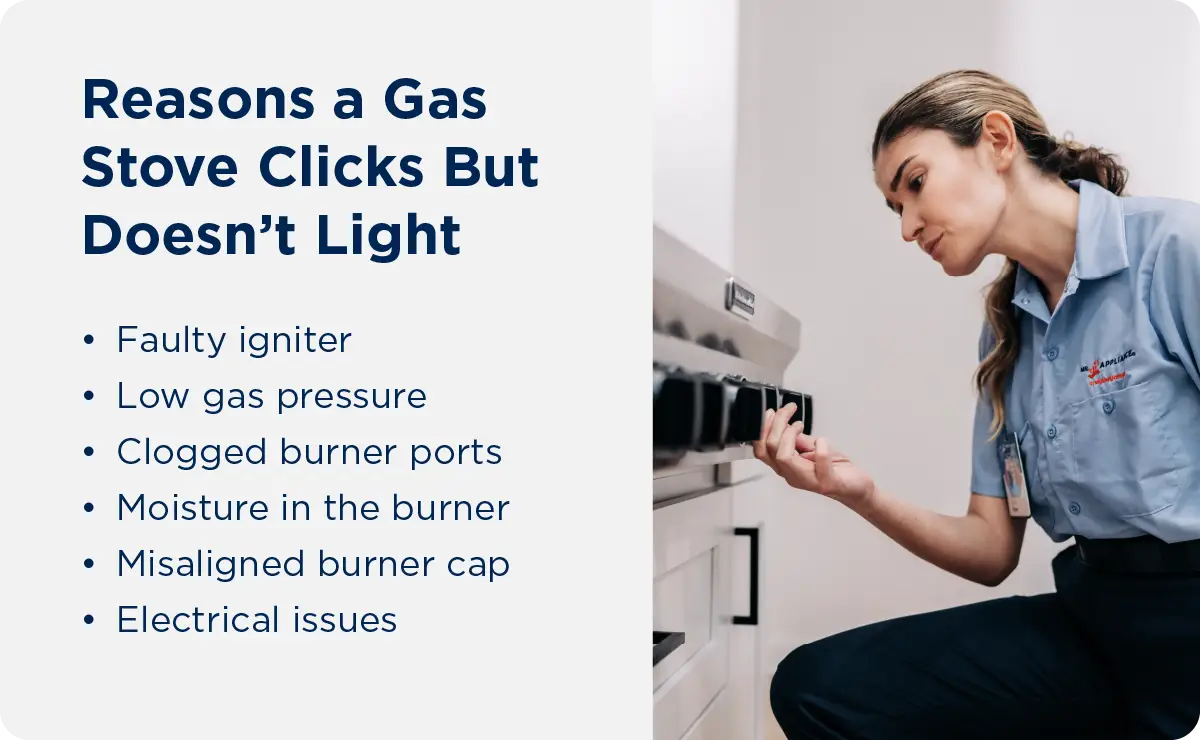
Usually, this means the igniter works, but the gas isn’t reaching the burner. Check if the gas valve is open, the burner cap is aligned, or if the burner holes are blocked by grease or food.
Can I Light My Gas Stove With A Match If It’s Not Clicking?
Yes, if the stove has no other electrical or gas issues. Turn the knob to “light,” hold a long match or lighter near the burner, and the gas should ignite. If it doesn’t, turn off the gas and check for other problems.
Is It Dangerous If My Gas Stove Isn’t Clicking?
It can be, especially if you smell gas. Never try to fix electrical or gas problems unless the stove is unplugged and the gas is off. If you’re unsure, call a professional.
How Often Should I Clean The Igniter?
Clean the igniter area at least once a week if you cook daily, and after any large spills. This helps prevent grease and crumbs from blocking the spark.
My Stove Clicks Even After Lighting. What Does That Mean?
This usually means moisture or dirt is keeping the igniter switch stuck. Dry the area thoroughly and clean around the knob and igniter. If it continues, the switch may need repair.
A gas stove not clicking doesn’t always mean a big repair bill. With basic knowledge, safe troubleshooting, and regular care, you can solve most problems yourself. If in doubt, always put safety first and call a professional. With a little attention, your gas stove can last many years and keep your kitchen running smoothly.