
Washing cashmere socks can feel a little intimidating. After all, cashmere is famous for its softness, warmth, and luxury—but also for being delicate. Many people love wearing cashmere socks for their comfort but worry that washing will shrink, stretch, or damage them.
The truth is, with the right knowledge and techniques, you can keep your cashmere socks feeling new for years. This guide will show you exactly how to wash cashmere socks, avoid common mistakes, and help them last longer.
Cashmere comes from the undercoat of cashmere goats, mostly raised in Mongolia, China, and Iran. It’s prized because the fibers are extremely fine—about 14–19 microns in diameter, much thinner than human hair. This makes cashmere warm, soft, but also more sensitive than other materials.
Even a small mistake in washing can ruin its texture or shape. If you’ve ever wondered why your cashmere socks lost their softness or became itchy, the answer often lies in the way they were washed or dried.
Learning how to care for cashmere socks isn’t just about keeping them clean. It’s about protecting your investment, enjoying comfort, and even saving money by making them last longer. Let’s dive into every detail you need to know, from preparation to drying, with practical tips and examples.
Why Cashmere Needs Special Care
Cashmere is not like cotton or synthetic fibers. Its structure is sensitive to heat, agitation, and harsh chemicals. Unlike regular wool, cashmere fibers are less scaly, so they feel softer but are more likely to pill or shrink if washed incorrectly.
Cashmere socks are often blended with a little nylon or spandex for stretch, but they’re still delicate.
When washed the wrong way, cashmere can:
- Lose its softness
- Shrink or become misshapen
- Develop fuzz or pills
- Feel rough or itchy
Proper washing techniques protect the unique qualities that make cashmere socks so comfortable.
Preparing To Wash Cashmere Socks
Before you wash, preparation is key. Rushing or skipping steps can cause damage that’s hard to fix.
Check The Care Label
Always start by reading the care label on your socks. Brands may use different blends and recommend specific washing temperatures or detergents. Some cashmere socks can be machine washed on gentle cycles, while others require hand washing. Following the label instructions is the safest route.
Separate Colors
Wash light and dark cashmere socks separately. Cashmere can bleed color, especially the first few washes. Mixing colors risks fading or staining.
Inspect For Damage
Check your socks for:
- Holes or thin spots
- Loose threads
- Stains
If you find any, address them before washing. Washing can make small holes larger and set stains permanently.
Remove Excess Dirt
Shake out your socks or gently brush off dust and debris. For mud or heavy dirt, let it dry and then shake or brush off gently.
Hand Washing Cashmere Socks
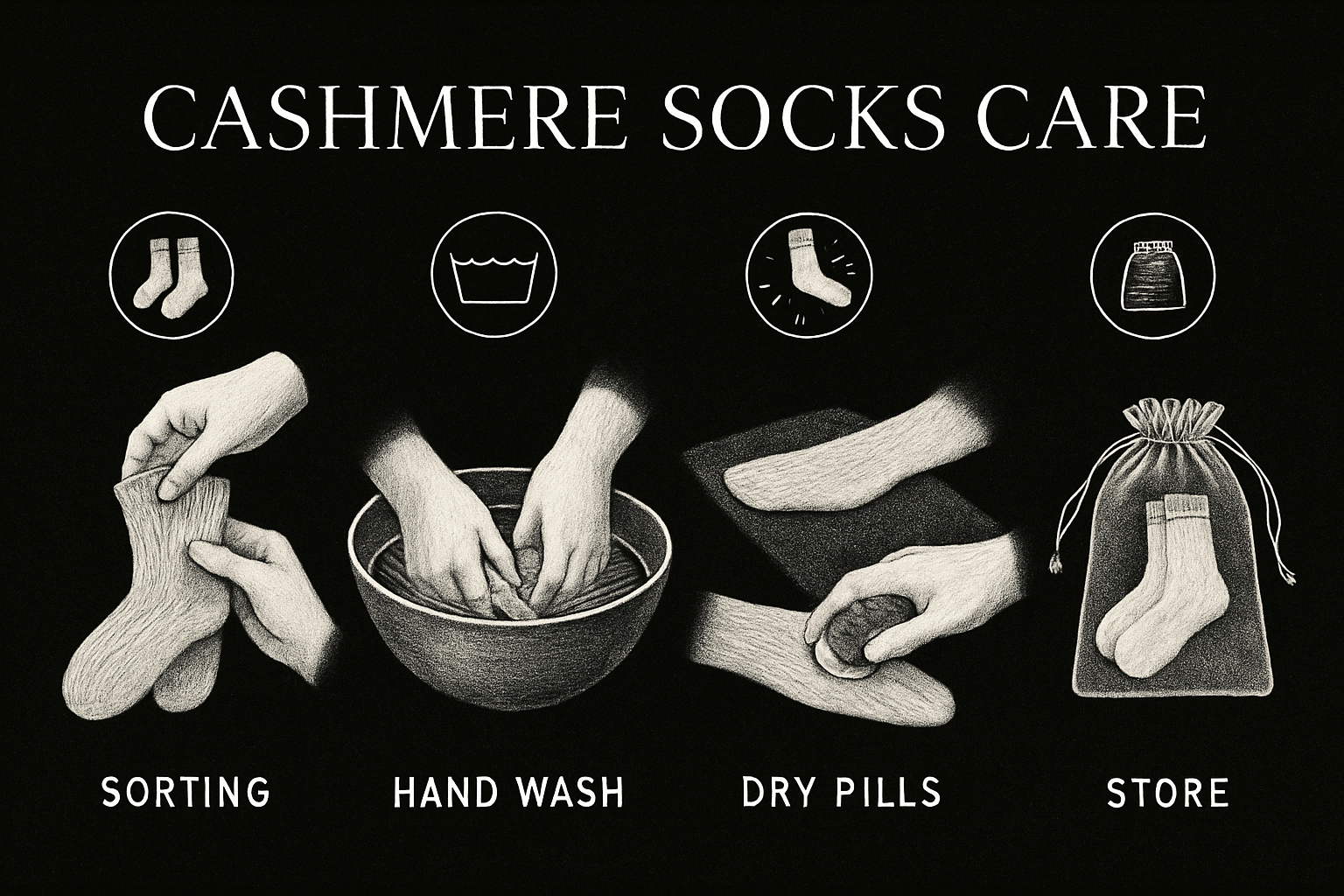
Hand washing is the safest and most recommended method for cashmere. It gives you full control and reduces the risk of stretching or felting.
What You’ll Need
- A clean sink or basin
- Lukewarm water (not hot)
- A gentle detergent (wool/cashmere specific or baby shampoo)
- A towel
Step-by-step Instructions
- Fill the Basin: Add enough lukewarm water to submerge your socks. Water temperature should be around 80–90°F (27–32°C). Hot water can shrink cashmere.
- Add Detergent: Use a small amount of gentle detergent—about a teaspoon for two pairs. More detergent doesn’t mean cleaner socks.
- Submerge and Soak: Place the socks in the water. Swirl gently with your hands. Do not rub or wring. Let them soak for 5–10 minutes.
- Lightly Agitate: Gently squeeze (don’t twist) the socks in the water to release dirt. Focus on the foot area where sweat and oils build up.
- Rinse Thoroughly: Drain the soapy water. Refill the basin with clean lukewarm water. Swish the socks to rinse out all detergent. You may need to rinse twice.
- Remove Excess Water: Lay the socks flat on a towel. Roll up the towel with the socks inside and press gently to absorb water. Do not wring or twist.
Pro Tips For Hand Washing
- Never use fabric softener or bleach. These can damage cashmere fibers.
- Always rinse until no soap bubbles appear.
- If you’re washing multiple pairs, wash similar colors together and avoid overcrowding.
Machine Washing Cashmere Socks
Some modern washing machines have gentle cycles suitable for delicate fabrics. However, machine washing always carries more risk than hand washing.
Is Machine Washing Safe?
Check the care label. If it says “machine washable,” use the following guidelines.
How To Machine Wash Cashmere Socks
- Use a Mesh Bag: Place your socks in a mesh laundry bag. This protects them from stretching and snagging.
- Select the Delicate Cycle: Use cold or lukewarm water and the shortest, gentlest cycle.
- Use the Right Detergent: Choose a detergent formulated for wool or cashmere.
- Skip the Spin: If possible, reduce the spin speed. High-speed spinning can stretch the socks.
- No Fabric Softener: Like hand washing, never add softener or bleach.
Machine Vs. Hand Washing: A Quick Comparison
Here’s a side-by-side look at the pros and cons:
| Aspect | Hand Washing | Machine Washing |
|---|---|---|
| Risk of Damage | Very Low | Medium |
| Time Required | 10–15 min | 5–10 min |
| Effort | Manual | Minimal |
| Best For | All cashmere | Machine-washable only |

Credit: stems.luxury
Drying Cashmere Socks
Drying is often where people make mistakes that ruin cashmere socks. The wrong method can shrink, stretch, or harden the fibers.
The Right Way To Dry
- Lay Flat to Dry: Place socks on a clean, dry towel in their natural shape. Do not hang or drape, as gravity can stretch them.
- Avoid Heat: Never use a dryer or place socks near radiators, heaters, or direct sunlight. High heat damages cashmere fibers.
- Air Circulation: If possible, dry socks in a well-ventilated room. You can gently turn them over after a few hours to speed up drying.
Drying Time
Cashmere socks usually take 12–24 hours to fully dry, depending on humidity and thickness.
Mistakes To Avoid
- Don’t hang socks—they will stretch and lose shape.
- Don’t wring out excess water—use a towel to blot instead.
- Don’t leave in a damp pile, which can cause mildew.
Removing Stains From Cashmere Socks
Stains need special attention. If you act quickly, many stains can be removed without harming your socks.
How To Treat Common Stains
- Food or Drink Stains: Blot gently with a clean cloth. Mix a small amount of gentle detergent with lukewarm water. Dab the stain with this solution using a soft cloth. Rinse and wash as usual.
- Oil or Grease: Sprinkle a little cornstarch or talcum powder on the stain. Let it sit for 30 minutes to absorb oil, then brush off and wash as usual.
- Mud: Let mud dry completely, then brush off before washing.
- Blood: Use cold water, not hot. Soak the area, then wash gently.
What To Avoid
- Never use hot water on stains—it can set them.
- Do not rub the stain harshly; this can damage the fibers.
Credit: thecambridgesockcompany.com
Dealing With Pilling And Fuzz
Cashmere pills naturally over time, especially in high-friction areas like the heel and toe.
How To Remove Pills
- Use a cashmere comb or fabric shaver designed for delicate knits. Lay the sock flat and gently comb in one direction.
- Avoid scissors or razors; these can cut the fibers.
Preventing Pilling
- Wash socks inside out to reduce friction.
- Avoid wearing cashmere socks in tight shoes or for heavy activity.
How Often Should You Wash Cashmere Socks?
Cashmere doesn’t need washing after every wear. In fact, washing too often can shorten its life.
General Guidelines
- Wash after 2–3 wears if worn with clean feet.
- Wash immediately if socks get sweaty, stained, or dirty.
Why Not Wash After Every Wear?
Cashmere is naturally odor-resistant. Overwashing removes natural oils, making the fibers dry and less soft.

Credit: www.reddit.com
Storing Cashmere Socks
Proper storage is essential to keep socks soft and fresh, and to protect them from moths.
How To Store Correctly
- Fold, Don’t Hang: Hanging stretches the fibers. Fold socks neatly.
- Store Clean: Moths are attracted to body oils and dirt.
- Use Breathable Bags: Cotton or linen bags allow air flow but keep out dust.
- Add Cedar: Cedar blocks or lavender sachets repel moths naturally.
Long-term Storage
If storing for the season, wash and dry socks first. Store in a sealed bag or container with cedar blocks.
Travel Tips For Cashmere Socks
Taking cashmere socks on a trip? Here’s how to keep them safe:
- Pack in a zippered fabric bag to prevent snagging.
- Bring a small bottle of wool detergent for hand washing in a hotel.
- Avoid packing with rough items like zippers or Velcro.
Common Mistakes To Avoid
Many people ruin cashmere socks by repeating the same errors. Here are mistakes to watch for:
- Using hot water—this shrinks and damages fibers.
- Wringing or twisting—this can stretch or tear the socks.
- Drying in a machine—heat and tumbling cause shrinkage.
- Using regular detergent—harsh chemicals strip natural oils.
- Ignoring care labels—not all cashmere blends are the same.
- Storing dirty—moths love sweat and body oils.
- Hanging to dry—weight stretches out the socks.
- Not rinsing well—detergent left in can irritate skin.
- Washing with jeans or towels—rough items cause pilling.
- Not using a mesh bag in the machine—leads to snagging.
Cashmere Sock Washing: At-a-glance Guide
For a quick reference, here’s a summary of washing methods:
| Action | Recommended? | Why |
|---|---|---|
| Hand Wash | Yes | Safest for all cashmere |
| Machine Wash (Gentle) | Sometimes | For labeled machine-washable blends |
| Hot Water | No | Causes shrinkage |
| Dryer | No | Damages fibers |
| Fabric Softener | No | Breaks down cashmere |
| Mesh Bag | Yes | Protects in machine |
How To Restore Softness To Cashmere Socks
Sometimes, cashmere socks lose their softness after washing. Here’s what to do:
- Rinse with Vinegar: Add one tablespoon of white vinegar to the final rinse water. This helps remove detergent residue that can make socks stiff.
- Use Hair Conditioner: Mix a tiny amount of unscented hair conditioner in the rinse water, then rinse again with plain water.
- Brush Gently: Use a soft clothes brush to gently fluff fibers once dry.
These methods restore the cashmere’s natural loft and softness.
Eco-friendly Tips For Washing Cashmere Socks
Cashmere is a sustainable luxury if cared for properly. Here’s how to keep your washing routine green:
- Use cold water to save energy.
- Wash less often—spot clean between washes.
- Use plant-based, biodegradable detergents.
- Air dry always—never use the dryer.
- Choose a basin instead of running water to save gallons each wash.
Caring for cashmere this way is gentle both on your socks and the environment.
Troubleshooting Common Problems
Cashmere socks sometimes develop issues even with good care. Here’s how to fix them:
Socks Feel Itchy
If your socks feel itchy after washing, residue from detergent is often the cause. Rinse thoroughly with clean water. If itching remains, soak in a mixture of water and a tablespoon of vinegar, then rinse.
Socks Shrunk
If your socks shrank, try soaking them in lukewarm water with a tablespoon of hair conditioner for 30 minutes. Gently stretch them back to shape while wet. This won’t work for severe shrinkage, but helps mild cases.
Persistent Odor
Odors usually mean bacteria survived washing. Soak socks in cold water with a teaspoon of baking soda before washing. Let air dry completely.
Color Faded
To prevent fading, always wash in cold water, keep socks out of sunlight, and avoid harsh detergents.
When To Replace Cashmere Socks
Even with perfect care, cashmere socks wear out eventually. Signs it’s time to replace:
- Large holes or thinning that can’t be mended
- Persistent roughness or loss of shape
- No longer feels soft after repeated restoration
High-quality cashmere socks, when cared for correctly, can last for years. Many people report wearing theirs for 3–5 years with regular use.
Is Professional Cleaning Worth It?
Dry cleaning is rarely needed for cashmere socks. Most dry cleaners use chemicals that can be harsh on cashmere. Home hand washing is safer and more effective for small items like socks. Professional cleaning may be useful for stubborn stains or if you’re unsure, but it’s not required for regular care.
Key Takeaways
Washing cashmere socks properly is simple but requires attention to detail. The main steps are:
- Hand wash in lukewarm water with gentle detergent
- Rinse well and never wring or twist
- Lay flat to dry away from heat
- Store clean, folded, and protected from moths
Avoiding shortcuts will keep your cashmere socks soft, warm, and beautiful for seasons to come.
Frequently Asked Questions
How Can I Tell If My Socks Are Real Cashmere?
Genuine cashmere feels softer and warmer than regular wool. Check the label for “100% cashmere” or “cashmere blend. ” Real cashmere will also pill with wear but remains soft. If unsure, look for trusted brands or ask for fiber content certification.
Can I Iron Cashmere Socks If They Get Wrinkled?
It’s best to avoid ironing. If you must, use the lowest heat setting and place a damp cloth between the iron and the socks. Never let the iron touch cashmere directly, as heat can scorch fibers.
Are Cashmere Socks Suitable For People With Sensitive Skin?
Yes, cashmere is hypoallergenic and less likely to irritate compared to wool. However, if washed with harsh detergents or not rinsed well, residue can cause irritation. Always use gentle, fragrance-free detergents.
What Should I Do If My Socks Develop A Smell?
Wash with a gentle detergent and rinse thoroughly. For persistent smells, soak in cold water with a teaspoon of baking soda, then wash as usual. Dry completely before storing.
Where Can I Find More Information About Cashmere Care?
For more on caring for cashmere, check out this resource from the Wikipedia Cashmere Wool page, which covers the history, properties, and handling of cashmere fibers.
Washing cashmere socks doesn’t have to be difficult or stressful. With a little care, you’ll keep enjoying their luxurious feel—every time you put them on.