
Curtains can completely change a room’s look. But hanging them well is not always simple, especially if you want to use curtain rings without clips. Many people think rings always need clips, but that’s not true. Using rings without clips gives a clean, elegant style and can make curtains move more smoothly. If you’ve ever wondered how designers get those perfect, even pleats or why some curtains hang so straight, you’re about to find out.
This guide explains everything about using curtain rings without clips. Whether you have pinch pleat, grommet, or rod pocket curtains, you’ll learn clear steps, smart tips, and solutions for common problems. You’ll also see some real comparisons between ring types and get advice on which method fits your curtain style.
By the end, you’ll know how to hang curtains like a pro—without clips, tangles, or extra costs.
Why Use Curtain Rings Without Clips?
There are clear reasons people choose curtain rings without clips. First, they create a sleek look. Clips can look messy or cheap, especially on formal drapes. Rings without clips allow the curtain fabric to show fully, without metal parts distracting the eye.
Second, this method gives better movement. Curtains glide smoothly when rings are attached directly. There’s less friction and less chance of curtains catching or tearing, which can happen with clips.
Third, rings without clips are often more durable. Clips can break or lose grip over time. With ring-only systems, the curtain is usually sewn or hooked in, making it more secure. Many high-end hotels and designers use this method for these reasons.
Lastly, some curtain styles—like pinch pleat or French pleat—are designed to be used this way. Clips simply don’t work for these. Using rings without clips is the professional’s choice for tailored, elegant window treatments.
Understanding Curtain Ring Systems
Curtain rings come in different types, sizes, and materials. When not using clips, it’s important to know what you’re working with. Here’s what matters:
Types Of Curtain Rings
- Sewn-in Eyelet Rings: These have a small eyelet or loop where you attach curtain hooks or sew the fabric directly.
- Split Rings: These open and close, allowing you to slide fabric or hooks in securely.
- Solid Rings: Classic rings with no opening; usually used with hooks or sewn tapes.
- Decorative Rings: These add a design element but work similarly to the basic types above.
Materials
- Metal: Strong, slides easily, usually in nickel, brass, or black finishes.
- Wood: Offers a warm, classic look, but may not glide as smoothly unless painted or lacquered.
- Plastic: Lightweight, less expensive, often used for lighter curtains.
Sizing
Curtain rings are measured by inner diameter. Most rods use rings from 1 inch (2.5 cm) to 2 inches (5 cm) in diameter. Choose rings that fit your rod snugly but move freely.
How Rings Attach To Curtains
There are three main ways:
- Hooks: Inserted into heading tape or pleats, then hooked onto the ring’s eyelet.
- Sewing: Curtain header is sewn directly onto the ring or through a loop.
- Built-in Tabs: Some rings have attached tabs that slip into sewn pockets on the curtain.
Choosing the right system depends on your curtain style and how permanent you want the setup to be.
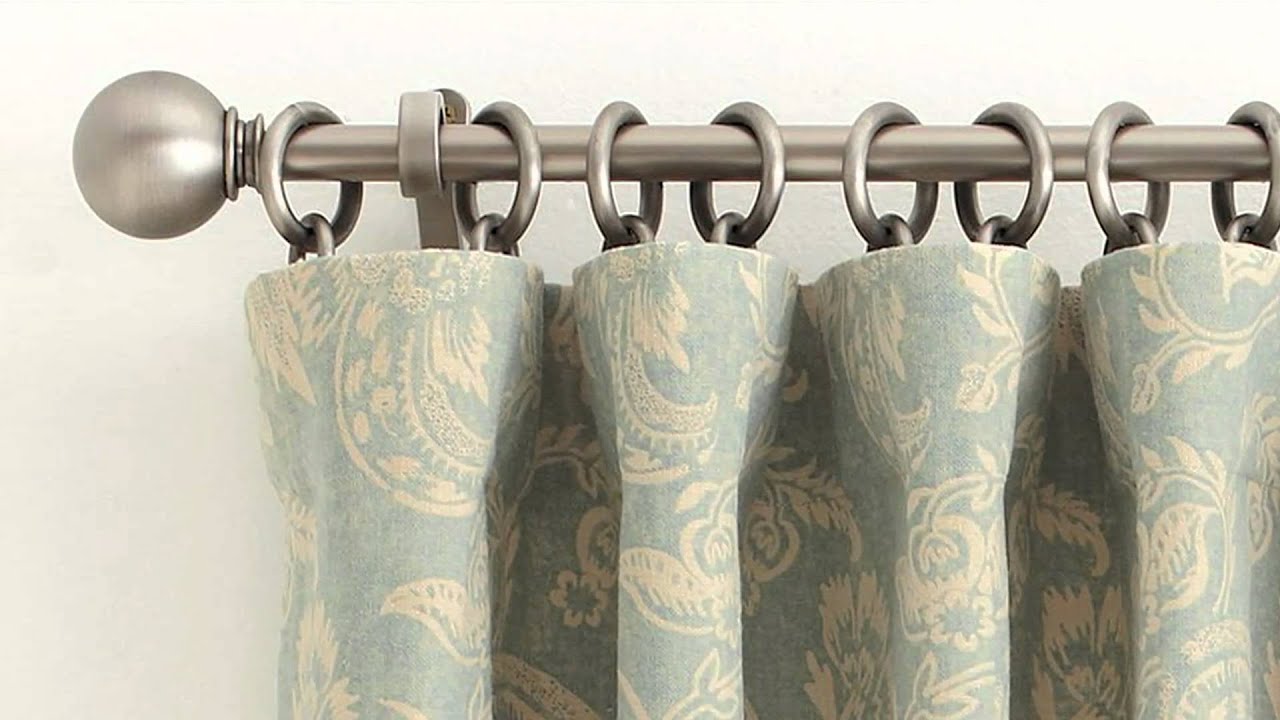
Credit: www.youtube.com
Common Curtain Header Styles For Ring-only Hanging
You can’t use every curtain with rings without clips. Some headers are perfect for this method, others are not. Here are the most compatible types:
1. Pinch Pleat Curtains
These have sewn-in pleats at the top, with small pockets or loops for hooks. The hooks then attach to the rings’ eyelets.
2. French Pleat (triple Pleat)
A more formal pleat, also with built-in hook pockets. Gives a classic, structured look.
3. Pencil Pleat
A gathered header that uses a heading tape. You insert hooks into the tape, then attach them to the rings.
4. Tab Top Curtains
Fabric loops at the top of the curtain slide directly onto the rings. No clips or hooks needed.
5. Grommet Top
Less common for ring systems, but possible with some adaptation.
6. Rod Pocket
Usually not used with rings, but you can convert them (explained later).
Each style needs a slightly different approach, but all can be used with curtain rings without clips if you follow the right steps.
Step-by-step: How To Use Curtain Rings Without Clips
Let’s get practical. Here’s a detailed guide for hanging curtains using rings, no clips required.
Step 1: Check Curtain Compatibility
Look at your curtain’s top edge. Does it have heading tape, sewn pleats, or loops? If yes, you’re ready to use rings. If not, you may need to sew on a tape or convert the header.
Step 2: Gather Your Materials
You’ll need:
- Curtain rings (number depends on curtain width, usually one ring every 4-6 inches)
- Curtain hooks (only for pleat or tape headers)
- Tape measure
- Pencil or chalk
- Curtain rod
- Optional: Needle and thread for modifications
Step 3: Measure And Mark Ring Placement
Lay your curtain flat and measure the width. Plan the number of rings: too few and the curtain will sag, too many and it may bunch up.
- For a standard look, use one ring every 4-6 inches.
- Mark with a pencil where each ring will go.
Step 4: Insert Hooks (for Pleated Or Tape Headers)
For pleated or tape curtains:
- Slide a curtain hook into each pocket or slot along the tape or pleat.
- Make sure hooks are even for a straight hang.
Step 5: Attach Rings
- Place each hook into the small eyelet on the bottom of a ring.
- For tab top: Thread each tab through a ring.
- For sewn-in: Sew or attach each marked spot to the ring.
Step 6: Hang On Rod
Slide all rings onto your curtain rod. Adjust the spacing so pleats or gathers fall evenly.
Step 7: Final Adjustments
- Open and close the curtain to check movement.
- Adjust ring placement if needed.
- Iron or steam the curtain for a crisp finish.

Credit: www.reddit.com
Adapting Other Curtain Types
Not all curtains come ready to use with rings. Here’s how to adapt other types:
Converting Rod Pocket Curtains
Rod pocket curtains are meant to slide directly onto the rod. But you can modify them:
- Sew heading tape to the back of the curtain top.
- Insert curtain hooks into the tape.
- Use hooks and rings as normal.
This method is great for giving rod pocket curtains a more tailored look.
Using Grommet Curtains With Rings
Grommet curtains have metal rings built into the fabric, usually for sliding directly on the rod. But if you want to use decorative rings:
- Sew small tabs or loops behind each grommet.
- Attach rings to the tabs, not the grommet itself.
This keeps the look but allows for smoother movement and more ring options.
Comparison: Curtain Rings Without Clips Vs With Clips
To help you decide, here’s a direct comparison of both systems.
| Feature | Rings Without Clips | Rings With Clips |
|---|---|---|
| Look | Sleek, tailored, no visible hardware | Casual, visible clips |
| Security | Very secure (sewn or hooked) | Clips can slip or break |
| Movement | Smooth, less friction | Clips may snag |
| Installation | May require hooks or sewing | Quick to attach |
| Durability | High | Lower, clips may weaken |
Choosing The Right Curtain Ring For Your Curtains
Not all curtain rings are created equal. Here’s how to pick what’s best for your needs:
- Material: Metal rings are best for heavy curtains. Wood and plastic are good for lighter fabrics or a softer look.
- Size: The ring’s inner diameter should be about 1/2 inch larger than your rod for easy sliding.
- Color/Finish: Match rings to your rod for a seamless look, or choose a contrasting color for a bold effect.
- Number of Rings: More rings give smoother folds, but too many can look crowded.
Here’s a quick comparison of popular ring materials:
| Material | Best For | Pros | Cons |
|---|---|---|---|
| Metal | Heavy curtains, modern rooms | Strong, smooth sliding | Can scratch rods if not lined |
| Wood | Traditional, cozy spaces | Warm look, quiet | May stick if not finished well |
| Plastic | Lightweight curtains, rentals | Cheap, no rust | Can look less classy, less durable |
Advanced Tips For Perfect Results
Even if you follow the basics, a few extra tips can make your curtains look truly professional.
Use Curtain Weights
Sew small curtain weights into the bottom hem. This helps the fabric hang straight and prevents flapping.
Steam Or Iron Curtains After Hanging
Wrinkles and packing folds can ruin the look. Always steam or iron after installation for crisp lines.
Use Enough Rings
One of the most common mistakes is not using enough rings. If your curtain sags between rings, add more. This is especially important for wide windows.
Hide The Top Hem
For a high-end look, set your hooks a little lower so the ring covers the top hem of the curtain.
Adjust Hook Height
Curtain hooks come in different shapes. Some sit higher, others lower. Adjust the height so the curtain “kisses” the floor, not puddle or float.
Test The Movement
Open and close the curtain a few times before finalizing the setup. It’s easier to fix spacing or add rings now than after everything is hung.
Consider Double Rods
If you want both sheer and blackout curtains, use double rods with rings for each layer. This gives flexibility and a layered look.

Credit: www.somuchtomake.com
Troubleshooting Common Problems
Even with the right tools, things can go wrong. Here’s how to solve typical issues:
Rings Don’t Slide Smoothly
- Check for burrs or rough spots on the rod or inside the ring.
- Wax the rod with a candle or use a little silicone spray.
Curtains Sag In The Middle
- Add more rings between the existing ones.
- Check that hooks are evenly spaced and inserted at the same height.
Curtain Header Shows Above The Rings
- Lower the hooks or use “deep” style hooks.
- Move the rings closer together to hide the header.
Rings Are Too Tight
- Make sure you bought the right size for your rod.
- Try a different material (metal glides best).
Curtain Doesn’t Reach The Floor
- Adjust hook height.
- Consider sewing a border or hem extender.
Real-world Examples
Here are some cases where people successfully used curtain rings without clips:
- Designer Living Room: A homeowner used pinch pleat velvet curtains with solid metal rings. They sewed heading tape to the curtain and used hooks. The result: even, crisp pleats and silent movement.
- Rental Apartment: Plastic rings and lightweight linen curtains with pencil pleat tape. Easy to install, and the curtains could be taken down without damage when moving out.
- Kids’ Room: Brightly colored wood rings with tab top cotton curtains. The tabs were simply threaded through the rings for a cheerful, easy look.
Curtain Ring Care And Maintenance
To keep your system working well:
- Wipe rings with a damp cloth to remove dust.
- For metal rings, check for rust if used in humid rooms.
- For wood, polish occasionally to keep sliding smooth.
- Check hooks and stitches every few months, especially if you open and close curtains often.
When Not To Use Curtain Rings Without Clips
This method doesn’t work for every situation:
- Very thin, delicate fabrics may tear if hooked directly.
- Extremely heavy drapes might need extra support.
- Rod pocket curtains without tape or modification.
- Unusual shapes (like arched or bay windows) may need special hardware.
If your curtains don’t fit these exceptions, you’re good to go.
Environmental Impact And Sustainability
Choosing rings without clips can be more eco-friendly. Clips are often made from mixed materials and break easily, meaning more waste. Metal or wood rings last longer and can be reused. If you want to be even more sustainable, look for recycled metal or FSC-certified wood rings.
Cost Comparison
You might wonder if this method is more expensive. Let’s see a quick cost breakdown:
| System | Average Price per Set (USD) | Replacement Frequency |
|---|---|---|
| Rings Without Clips (Metal) | $12–$25 (10 rings) | Rare, lasts years |
| Rings With Clips (Metal) | $10–$20 (10 rings + clips) | Clips may break in 1–2 years |
| Plastic Rings | $7–$15 (10 rings) | May crack, lasts 2–3 years |
While the upfront cost is similar, rings without clips tend to last longer, saving money over time.
Non-obvious Insights For Beginners
- Hooks Matter: Many beginners use the cheapest curtain hooks, but stronger, rust-resistant hooks make a big difference. Invest in quality hooks for heavy curtains or humid areas.
- Spacing Affects Light Control: Closer ring placement gives more folds, which can block more light at the edges and improve privacy.
- Upgrade with Lining: If your curtains are thin, consider adding a blackout or thermal lining before hanging. This upgrade is easiest to do before attaching rings and makes a big difference in comfort and energy savings.
Useful Resources
For more detailed information about curtain types, materials, and installation, check out this guide from the Wikipedia Curtain article.
Frequently Asked Questions
How Many Curtain Rings Do I Need For A Standard Window?
A good rule is one ring every 4 to 6 inches of curtain width. For a 60-inch curtain, use about 10–15 rings. More rings give more even folds, but don’t crowd them too close.
Can I Use Curtain Rings Without Clips On Any Type Of Curtain?
Not all curtains work without clips. Pinch pleat, pencil pleat, and tab top curtains are best. Rod pocket and grommet curtains need some modification, like adding heading tape or tabs.
Do Curtain Rings Without Clips Damage Fabric?
If used correctly (with hooks or sewn tapes), they do not damage fabric. Avoid using sharp hooks on delicate or lightweight curtains. Always check the curtain’s weight and fabric type before hanging.
What’s The Best Way To Make Curtains Slide Smoothly On Rings?
Use a rod that matches the ring material (metal with metal, wood with wood). Wax or polish the rod occasionally. Make sure the rings are the right size and not too tight for the rod.
How Can I Hide The Curtain Header For A More Elegant Look?
Set hooks slightly lower so the rings cover the top hem. Choose deep style hooks or rings with a larger eyelet. This hides the header and gives a clean, tailored finish.
Using curtain rings without clips is a simple way to create stylish, professional-looking curtains in any home. With the right rings, hooks, and a little careful installation, you can achieve a high-end result that lasts for years. Try these methods and see how your windows—and your whole room—can change for the better.