
Choosing cookware and outdoor gear can be a challenge, especially when you’re comparing hard anodized and titanium options. Both materials are popular for their unique strengths, but they serve different needs. If you want a pan for everyday cooking or a pot for camping, knowing the difference between hard anodized and titanium can help you buy smarter. This article gives you a complete look at both materials, so you can decide what’s best for your kitchen or outdoor adventures.
What Is Hard Anodized?
Hard anodized aluminum is aluminum that has gone through a special process. In this process, the metal is dipped in an acid and then exposed to electric current. This creates a tough, dark coating on the surface. The result is aluminum that is much harder than regular aluminum.
This hard surface is what gives hard anodized cookware its reputation. It is not only strong, but also naturally nonstick, scratch-resistant, and less likely to react with acidic foods. Most hard anodized cookware is made from aluminum, but the anodizing process changes the surface at a chemical level, making it more durable.
Key Features Of Hard Anodized
- Strength: The anodized layer is much harder than stainless steel.
- Scratch resistance: Less likely to scratch than regular aluminum.
- Nonstick: Naturally resists sticking, even without extra coatings.
- Lightweight: Keeps the lightness of aluminum.
- Non-reactive: Won’t react with foods like tomatoes or lemon.
- Heat distribution: Spreads heat evenly across the surface.
Common Uses
Hard anodized is used mostly for cookware like frying pans, pots, and saucepans. It’s also found in some bakeware and camping gear. Many home cooks choose it for its balance of durability, weight, and cooking performance.
What Is Titanium?
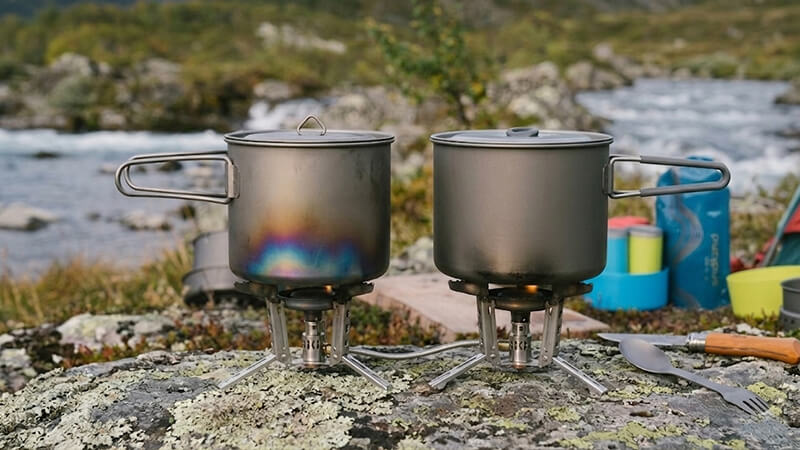
Titanium is a natural metal known for being very strong but extremely light. Pure titanium is silver-gray and has been used in airplanes, medical equipment, and even jewelry. When used for cookware or camping pots, titanium is usually in a pure or almost pure form, not mixed with many other metals.
Titanium’s strength-to-weight ratio is one of the best among metals. This means it can be very thin, but still strong enough to handle rough use. It also resists rust, corrosion, and does not react with foods.
Key Features Of Titanium
- Ultra-lightweight: Lighter than almost any other cookware material.
- Durability: Can survive drops, dents, and rough handling.
- Corrosion resistance: Won’t rust, even in wet conditions.
- Non-reactive: Safe with acidic and alkaline foods.
- No coating needed: Pure titanium pots don’t need nonstick or protective coatings.
Common Uses
Titanium is popular in camping cookware, backpacking gear, and sometimes high-end kitchenware. People who need to carry their gear over long distances or want something that lasts for years often choose titanium.
Hard Anodized Vs Titanium: Side-by-side Comparison
To help you see the main differences, here’s a comparison of hard anodized and titanium across key factors:
| Feature | Hard Anodized | Titanium |
|---|---|---|
| Weight | Light, but heavier than titanium | Ultra-lightweight |
| Durability | Very durable, scratch-resistant | Extremely durable, dent-resistant |
| Heat Distribution | Excellent, even heating | Poor, can cause hot spots |
| Nonstick | Good, even without coatings | Poor, unless coated |
| Reactivity | Non-reactive | Non-reactive |
| Cost | Mid-range | High-end |
| Maintenance | Easy, but avoid metal utensils | Very easy, almost no care needed |
Durability And Longevity
Durability is often a top concern for both home cooks and outdoor users. Both hard anodized and titanium are strong, but in different ways.
Hard Anodized Durability
The anodized coating on aluminum is extremely hard. In fact, it’s about twice as hard as stainless steel. This means it’s very resistant to scratches, dents, and chips. However, if you damage the anodized layer (for example, by using metal utensils or harsh scouring pads), the aluminum underneath can be exposed.
Once the layer is broken, it can wear out faster.
Titanium Durability
Titanium is naturally tough. Even thin titanium pots can survive drops, dents, and rough outdoor use. Unlike hard anodized, there is no coating to scratch off. This makes titanium a favorite for people who want gear that lasts for decades.
The only real weakness is that pure titanium is a bit brittle in very cold temperatures, but this is rarely an issue for normal use.
Which Lasts Longer?
Both can last for many years with proper care. If you want something that can handle the worst abuse, titanium wins. If you want a balance of strength, weight, and even heating, hard anodized is a strong choice.
Weight And Portability
Weight matters, especially if you’re hiking or camping. It also makes a difference in the kitchen, where heavy pans can be hard to handle.
Hard Anodized Weight
Hard anodized cookware is much lighter than cast iron or stainless steel. A typical 10-inch hard anodized frying pan weighs about 2 pounds. This makes it easy to lift, pour, and clean.
Titanium Weight
Titanium is famous for being ultra-light. A 1-liter titanium pot can weigh as little as 4–6 ounces. This is why so many backpackers choose titanium — every ounce counts when you’re carrying it on your back.
Everyday Impact
For home use, the weight difference isn’t huge. Both are easy to handle. But for outdoor gear, titanium is the clear winner for anyone who wants to travel light.
Heat Performance: Cooking Results
One of the biggest differences is how each material handles heat.
Hard Anodized Heat Performance
Hard anodized aluminum is an excellent heat conductor. It spreads heat evenly, so food cooks without hot spots. This means you get better browning, fewer burnt spots, and more predictable results. It’s great for everything from searing meat to simmering sauces.
Titanium Heat Performance
Titanium does not conduct heat well. It heats up fast, but the heat does not spread out. This can lead to hot spots, where one part of the pan is much hotter than another. For basic boiling or reheating, this is not a problem.
But for frying or delicate cooking, it can make food stick or burn unless you’re very careful.
Practical Tip
If you want to cook delicate foods (like eggs or fish), hard anodized is usually better. If you only need to boil water or reheat simple meals, titanium works fine.
Nonstick And Cleaning
Sticking and cleaning are big concerns for many cooks. No one wants to spend time scrubbing burnt food.
Hard Anodized Nonstick
The anodized layer is naturally nonstick. Many hard anodized pans have an extra nonstick coating, which makes them even easier to clean. You can often cook with less oil or butter, and food slides right out.
However, not all hard anodized pans are the same. Some brands add extra coatings that can wear out over time. Once the coating is gone, sticking can become a problem.
Titanium Nonstick
Pure titanium has almost no nonstick properties. Food can stick easily, especially if you cook at high heat. Some titanium cookware has a nonstick coating added, but this is not the same as the natural nonstick of hard anodized. If you want nonstick with titanium, look for a model with a ceramic or PTFE coating.
Cleaning Comparison
Hard anodized is usually easier to clean if you don’t scratch the surface. Titanium is easy to clean if you only boil water, but tough to clean if food sticks or burns.
Reactivity With Food
Some metals react with acidic or alkaline foods, changing the flavor or color of your meal. Both hard anodized and titanium are non-reactive, but there are some details to know.
- Hard anodized: The anodized layer blocks aluminum from touching your food. This means you can safely cook tomato sauce, lemon chicken, or other acidic foods.
- Titanium: Pure titanium is naturally non-reactive. It does not leach flavors or chemicals into food, even after years of use.
For people with allergies or who are sensitive to metals, both materials are very safe.
Credit: ridgestok.com
Maintenance And Care
No one wants cookware that is hard to care for. Here’s what you need to know:
Hard Anodized Care
- Wash by hand to avoid damaging the surface.
- Avoid metal utensils, which can scratch the anodized layer.
- Don’t use harsh scrubbers.
- Not always dishwasher safe (check your brand).
Titanium Care
- Super easy to clean, especially for simple meals.
- No risk of rust or corrosion.
- Can use metal utensils (unless there’s a nonstick coating).
- Most are dishwasher safe, but check if there’s a coating.
Long-term Care
Hard anodized needs a bit more attention to keep the surface smooth. Titanium is almost maintenance-free unless you buy a coated version.
Price And Value
Cost is a big factor for many buyers. Here’s how prices usually compare.
Hard Anodized Price
Most hard anodized cookware is in the mid-range. A quality 10-inch frying pan costs between $30 and $70. Full sets are $100–$300. The price is higher than basic aluminum, but much less than premium stainless steel or titanium.
Titanium Price
Titanium is expensive. A small camping pot can cost $40–$80. Full kitchen sets or large pots are often $200 or more. For many, the price is justified by the long life and light weight.
Value For Money
If you want the best price for everyday cooking, hard anodized gives the most value. If you want gear that will last a lifetime and save weight, titanium is worth the investment.

Credit: www.youtube.com
Safety: Health And Food Concerns
Many people worry about the safety of their cookware. Both hard anodized and titanium are considered safe, but there are some points to keep in mind.
Hard Anodized Safety
The anodized layer is stable and does not leach aluminum into food. However, if the surface is scratched deeply, aluminum could be exposed. Some health experts recommend avoiding damaged pans. Also, check if your pan has extra nonstick coatings, as these can wear out and release chemicals at high heat.
Titanium Safety
Pure titanium is one of the safest metals for food contact. It does not rust, react, or leach chemicals. Even if scratched, there is no coating to worry about. This makes titanium a top choice for people with allergies or chemical sensitivities.
Nonstick Coatings
Some titanium and hard anodized pans have extra nonstick layers. These can make cleaning easier, but may wear out over time. If you want to avoid all chemicals, choose uncoated versions.
Environmental Impact
Choosing eco-friendly cookware is important for many people. Here’s how each material compares:
Hard Anodized Environmental Footprint
- Aluminum production uses a lot of energy and can cause pollution. The anodizing process adds another step.
- Hard anodized pans last longer than basic aluminum, so they need replacing less often.
- Not usually recyclable in regular home recycling.
Titanium Environmental Footprint
- Titanium mining is energy-intensive, but the metal is very durable.
- Titanium cookware can last for decades, reducing waste.
- Pure titanium is fully recyclable, but not all recycling centers accept it.
Which Is Greener?
Titanium wins for long-term durability and recyclability, but both materials have an environmental cost at the mining stage.
Real-world Examples: When To Choose Each
Sometimes, a real-life example makes things clearer. Here are situations where each material shines.
- Hard Anodized for Daily Cooking
- You cook eggs, pancakes, and sauces.
- You want even heating and easy cleaning.
- You don’t want to spend too much.
- Example: A family frying pan used every morning.
- Titanium for Camping and Backpacking
- You need the lightest gear possible.
- You only boil water or heat simple meals.
- You want a pot that survives years of travel.
- Example: A backpacker’s 1-liter cooking pot for long hikes.
- Hard Anodized for Home Chefs
- You want a set of pans for sauces, frying, and sautéing.
- You want good results on gas or electric stoves.
- You don’t need ultra-light gear.
- Titanium for Allergy Sufferers
- You have allergies to nickel, aluminum, or other metals.
- You want the purest, most inert cookware.
Common Mistakes When Buying
Even experienced cooks can make mistakes when choosing between hard anodized and titanium.
1. Confusing Nonstick Properties
Many buyers think all titanium is nonstick. In reality, pure titanium is not nonstick unless coated. If nonstick cooking is important, check for coatings, but remember these can wear out.
2. Ignoring Heat Performance
Some people buy titanium for home cooking, expecting great results with delicate foods. Titanium’s poor heat distribution makes it a bad choice for frying or baking. Hard anodized is better for even, controlled cooking.
3. Overpaying For Outdoor Use
Titanium is expensive. If you only camp a few times a year, hard anodized outdoor pots can be lighter on your wallet and still work well.
4. Using Metal Utensils
Using metal spatulas or forks on hard anodized pans can scratch the surface and reduce the lifespan. Stick to wood, silicone, or nylon tools.
5. Not Checking For Coatings
Both types may have extra coatings. If you want pure metal (no chemicals), read the label or product description carefully.
Pros And Cons Summary
Here’s a quick overview of the main advantages and disadvantages:
| Hard Anodized | Titanium | |
|---|---|---|
| Pros | – Even heat – Natural nonstick – Good value – Durable | – Ultra-lightweight – Super strong – No rust – Safe for allergies |
| Cons | – Can scratch – Not always dishwasher safe – Not as light as titanium | – Expensive – Poor heat distribution – Not nonstick (unless coated) |
Buying Guide: How To Choose The Right One
If you’re still unsure, ask yourself these questions:
- What will you cook most often?
- For eggs, pancakes, sauces: Hard anodized is best.
- For boiling water or simple camping meals: Titanium is lighter.
- How much does weight matter?
- For home use, both are easy to handle.
- For backpacking, every ounce counts. Go titanium.
- Is price a concern?
- Hard anodized gives more value for most cooks.
- Titanium is an investment for specific needs.
- Do you need nonstick?
- Hard anodized is naturally nonstick.
- Titanium needs a coating for nonstick, which can wear out.
- Are you sensitive to metals or chemicals?
- Titanium is the safest bet for allergies or chemical concerns.

Credit: www.walmart.com
Two Insights Most People Miss
1. Heat Control Is Often Overlooked
Many buyers focus on weight and durability, but forget about heat control. Hard anodized aluminum makes cooking easier for most recipes because it spreads heat well. Titanium can cause food to burn if you’re not careful, so it’s best for simple tasks.
2. Not All “titanium” Cookware Is Pure
Some brands sell “titanium” pans that are actually aluminum with a thin titanium layer. This can be misleading. If you want real titanium benefits, check for pure or nearly pure titanium construction. Real titanium cookware will be lighter and more expensive.
Which Is Right For You?
There’s no one-size-fits-all answer. For most home cooks, hard anodized offers the best mix of price, performance, and ease of use. For serious backpackers, travelers, or those with special health needs, titanium is worth the extra cost.
If you want a pan that fries eggs perfectly and cleans up fast, choose hard anodized. If you need a pot for a mountain hike that won’t add weight to your pack, titanium is your friend.
For more on the science of these materials, visit the Wikipedia Anodizing page.
Frequently Asked Questions
What Is The Main Difference Between Hard Anodized And Titanium Cookware?
The main difference is the material and how it performs. Hard anodized is aluminum with a tough, nonstick layer, while titanium is a pure metal known for being very light and strong. Hard anodized spreads heat well and is naturally nonstick. Titanium is lighter but does not spread heat as evenly and is not nonstick unless coated.
Is Titanium Cookware Safe To Use?
Yes, pure titanium cookware is very safe. It does not react with food, rust, or leach chemicals. People with metal allergies often choose titanium because it is hypoallergenic. If the pan has a nonstick coating, check if it is PTFE or ceramic, as these coatings can wear out over time.
Can I Use Metal Utensils With Hard Anodized Or Titanium Cookware?
It is best to avoid metal utensils with hard anodized cookware, as they can scratch the anodized layer and reduce its life. With pure titanium, you can use metal utensils, but if there is a nonstick coating, use wood or silicone to avoid damage.
Which Is Better For Camping: Hard Anodized Or Titanium?
For most campers and backpackers, titanium is better because it is lighter and more durable. If you are car camping or don’t need to carry your gear far, hard anodized cookware offers better heat distribution and is more affordable.
Does Hard Anodized Cookware Last Longer Than Titanium?
Both can last for many years with proper care. Titanium often lasts longer because it has no coating that can scratch or wear out. Hard anodized is very durable, but if the anodized layer is damaged, its lifespan can be reduced.
Making the right choice between hard anodized and titanium comes down to your needs, budget, and how you plan to use your cookware. With the facts in this article, you can shop with confidence and pick the material that fits your lifestyle.