
Are Electric Stove Burners Interchangeable
Electric stoves are common in kitchens around the world. They’re reliable, easy to use, and cost-effective compared to gas stoves. But what happens when one of the burners stops working? Many people wonder if they can just swap out a broken burner with another one, either from the same stove or a different model. This question seems simple, but the answer is more complex than it appears. Understanding whether electric stove burners are interchangeable can save you time, money, and frustration. In this guide, we’ll dig deep into how electric stove burners work, what makes them unique, and whether you can swap them safely.
How Electric Stove Burners Work
Electric stove burners are more than just metal coils that get hot. They are designed to convert electrical energy into heat, which cooks your food. There are two main types of electric burners: coil burners and smooth-top radiant burners.
Coil burners are the classic spiral-shaped elements you see on older and budget-friendly stoves. Electricity flows through the coil, which then heats up and transfers that heat to your cookware.
Smooth-top radiant burners are found under a flat glass or ceramic surface. The heating element glows red when in use, but you can’t touch it directly. These are common in modern kitchens.
Both types rely on heating elements made from materials like nickel-chromium (nichrome) wire. This wire resists electrical flow, causing it to heat up.
Burners also have connectors, insulators, and sometimes sensors or thermostats that help regulate temperature. Each part has a specific function. If a part fails or is incompatible, the burner may not work, or it can even be dangerous.
One non-obvious detail: the wattage rating of the burner matters. Higher wattage burners heat up faster and reach higher temperatures. Swapping a 1500-watt burner for a 2500-watt one can cause uneven cooking or trip your circuit breaker.
Types Of Electric Stove Burners
Not all electric burners are built the same. Understanding the types is important before considering interchangeability.
Coil Burners
These are the most recognizable and often the easiest to replace. They come in several sizes, usually 6-inch and 8-inch diameters. The ends plug into a receptacle under the stove top.
Radiant Burners (smooth-top)
Located under a glass or ceramic surface, these burners come in different shapes and sizes. Replacement is more complicated because you can’t just unplug and plug a new one.
Induction Burners
These are a different technology. They use electromagnetic fields to heat compatible cookware directly. Induction burners are not interchangeable with coil or radiant types.
Modular Burners
Some modern stoves offer modular units that let you swap between a grill, griddle, or regular burner. These are designed to be interchangeable, but only with matching modules from the same manufacturer.
A key insight: Even within the same type (for example, coil burners), there are many variations in how they connect, their wattage, and their fit.
Factors That Affect Interchangeability
Before swapping out a burner, you need to consider several factors. Ignoring these can lead to electrical hazards or poor cooking results.
1. Size And Shape
Burners must physically fit into the designated space. For example, a 6-inch coil won’t fit in an 8-inch opening. Also, the support brackets and drip pans must align for stability.
2. Electrical Rating
Each burner has a wattage rating (e.g., 1250W, 2100W). This must match your stove’s specifications. Using a mismatched wattage can cause overheating, electrical damage, or tripped breakers.
3. Connection Type
Burners connect to the stove via prongs or plug-ins. These connectors come in different lengths, shapes, and configurations. Even if a burner looks similar, the connection might not fit.
4. Brand And Model Compatibility
Manufacturers often design burners specifically for their stoves. GE burners may not fit a Whirlpool stove, even if they look alike. Always check the model number and manufacturer’s compatibility chart before buying a replacement.
5. Mounting Brackets
Some burners are held in place by specific brackets or clips. If these don’t match, the burner may not sit correctly, causing uneven heating or safety issues.
6. Sensor And Safety Features
Modern burners sometimes have built-in sensors or safety cutoffs. These features might not work if you swap in an incompatible burner, leading to malfunction or even fire risk.
A detail many people miss: Even burners from the same brand but different years may not be compatible due to design updates.
When Are Electric Stove Burners Interchangeable?
There are cases where you can safely swap burners:
- Same Model, Same Size: If you have two identical stoves, or two burners from the same model, they are usually interchangeable.
- Universal Replacement Parts: Some third-party companies make “universal” burners that fit many popular models. Check the product details carefully.
- Same Brand and Series: Sometimes, stoves within the same brand and product series use the same parts.
Here’s a quick comparison for clarity:
| Scenario | Interchangeable? | Notes |
|---|---|---|
| Same model, same size | Yes | Usually direct swap |
| Universal coil burners | Sometimes | Check fit and wattage |
| Different brands | Rarely | Connectors and ratings may differ |
| Induction to coil/radiant | No | Different technology |
But even in these cases, always double-check before installation.
Dangers Of Swapping Incompatible Burners
Switching burners without checking compatibility can be risky. Here are the main dangers:
- Electrical short circuits: If the connectors don’t match, you could cause a short, damaging the stove or even starting a fire.
- Overheating: Using a higher wattage burner than recommended can overheat the wiring, creating a burn or fire hazard.
- Uneven cooking: An ill-fitting burner may not heat pans evenly, making cooking frustrating and unpredictable.
- Void warranty: Installing non-approved parts can void your stove’s warranty, leaving you with costly repairs.
- Sensor malfunction: Modern stoves rely on sensors for safety. An incompatible burner may bypass these, which is dangerous.
A common mistake is assuming any coil of the same size will work. Even if it fits, electrical ratings and connections matter.
How To Identify The Right Replacement Burner
Finding the right replacement burner isn’t just about size. Here’s how you can make sure you get the correct part:
1. Check The Stove’s Model Number
This is usually found under the cooktop, on the back, or in the manual. The model number lets you search for compatible parts.
2. Read The Burner Label
Many burners have a sticker or engraving with the part number and electrical rating. Write these down before shopping.
3. Consult Manufacturer Resources
Most major stove brands have online guides or customer service lines to help you find the right part. Use these resources.
4. Compare The Connection Type
Look at the prongs and connectors. Take a clear photo or bring the old burner with you to the store for comparison.
5. Confirm Wattage
The new burner must have the same wattage as the old one (or as recommended by the manufacturer).
6. Measure The Physical Size
Double-check the diameter and the length of the connecting arms or prongs.
7. Buy From Reputable Sellers
Avoid generic or off-brand parts unless they’re specifically marked as compatible with your stove’s model.

Credit: us.amazon.com
Installation: Swapping Electric Stove Burners
If you’ve confirmed compatibility, swapping a coil burner is usually simple. Here’s a step-by-step guide:
- Turn off power: Unplug the stove or switch off the circuit breaker.
- Remove the old burner: Gently lift the burner up and pull it out of the receptacle.
- Inspect the connections: Look for any signs of corrosion, burning, or loose wires.
- Clean the area: Wipe away any debris from the burner socket and drip pan.
- Insert the new burner: Align the prongs and push the new burner firmly into place.
- Test the burner: Restore power and turn on the burner to check for proper heating.
If you’re replacing a smooth-top or induction burner, the process is much more complex. It usually involves removing the glass top and accessing the element from underneath. In these cases, it’s best to call a professional.
A tip many people miss: If one burner fails, check the receptacle as well. Sometimes the socket is worn out, not just the burner.
Universal Vs. Oem (original Equipment Manufacturer) Burners
You’ll see two main options when shopping for replacements:
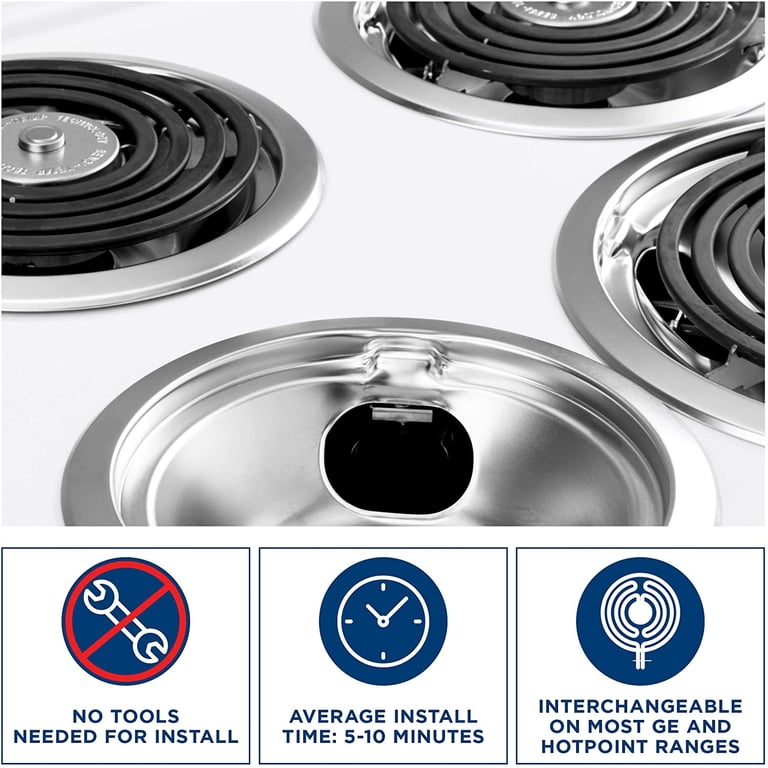
- OEM burners: Made by the stove’s manufacturer, guaranteed to fit and work as designed.
- Universal burners: Made by third-party companies to fit many different stoves.
Here’s a quick comparison:
| Type | Pros | Cons |
|---|---|---|
| OEM | Perfect fit, warranty support, reliable quality | Usually more expensive |
| Universal | Lower price, easy availability | May not fit or perform as well, limited support |
If you need absolute reliability, go with OEM. If you’re on a budget and willing to check fit carefully, universal can be a good choice.
Credit: www.walmart.com
Common Myths About Electric Stove Burner Interchangeability
A lot of advice on forums and social media is based on assumptions. Let’s clear up some common myths:
- Myth: All coil burners are the same.
- Fact: They come in different sizes, wattages, and connector types.
- Myth: You can use any burner that fits physically.
- Fact: Electrical compatibility is just as important as size.
- Myth: Brand doesn’t matter.
- Fact: Each brand may use unique connectors or safety features.
- Myth: Universal burners always work.
- Fact: Even “universal” parts may not fit or function properly on all stoves.
Believing these myths can lead to wasted money or safety hazards.
Signs You Need A New Burner
Not every burner problem means you need to swap. But these signs suggest replacement is needed:
- Burner won’t heat up at all
- Burner heats unevenly or cuts out during use
- Visible cracks, breaks, or burned spots on the element
- Burner wiggles or won’t sit flat
- Sparks or burning smell when turned on
If you see any of these, it’s time for a replacement. Continuing to use a faulty burner can be unsafe.

Credit: www.amazon.com
Maintaining Your Electric Stove Burners
Proper care can extend the life of your burners, reduce the need for replacements, and keep them working efficiently.
- Clean regularly: Remove drip pans and wipe burners with a damp cloth (when cool). Avoid harsh chemicals.
- Inspect connections: Check prongs and sockets for corrosion or burns.
- Don’t overload: Avoid using cookware heavier than what the burner is rated for.
- Use correct cookware: Flat-bottomed pans conduct heat better and reduce stress on burners.
- Replace drip pans: Dirty or rusted pans can cause poor heating and hide damage.
A detail often missed: Bent or loose burner prongs can cause poor contact and heating issues. Gently bend them back or replace the burner if needed.
The Role Of Cookware In Burner Performance
Many people blame the burner when food cooks unevenly, but sometimes the problem is the pan.
- Heavy, flat-bottomed cookware helps heat distribute evenly.
- Warped pans can cause hot spots or poor contact with the burner.
- Large pans on small burners may leave food undercooked at the edges.
A practical tip: Match pan size to burner size for best results.
Troubleshooting Burner Problems
If a burner isn’t working, here’s how to troubleshoot before replacing:
- Swap with another burner of the same size: If the new burner works, the original burner is bad. If not, the problem may be the socket or control switch.
- Check the receptacle: Look for signs of burning or corrosion.
- Test the switch: If the burner and socket are good, the infinite switch (the dial that controls the burner) may be faulty.
- Check the wiring: Loose or damaged wires can cause failure.
If you’re not comfortable with electrical repairs, call a qualified technician.
When To Call A Professional
Some repairs are best left to experts, especially with smooth-top or induction stoves. Call a pro if:
- You’re unsure about compatibility
- The stove trips breakers or blows fuses
- There’s visible damage to wiring
- The burner is hardwired rather than plug-in
A licensed technician can ensure safety and maintain your warranty.
Environmental Impact And Disposal
Old electric burners contain metals and sometimes electronic components. Don’t just throw them in the trash.
- Recycle: Many cities have electronic recycling programs.
- Manufacturer take-back: Some brands offer take-back programs for old parts.
- Hazardous waste: If the burner is damaged or burned, it may need special handling.
Check local guidelines for safe disposal.
Cost Of Replacement Burners
Prices vary based on type, brand, and availability.
- Coil burners: $10–$40 each
- Radiant elements: $40–$120 each
- Induction modules: $80 and up
OEM parts usually cost more than universal ones. You may also need a new receptacle or drip pan ($5–$15 each).
One cost-saving strategy: Buy burners in sets if you plan to replace more than one.
Where To Buy Replacement Burners
You have several options:
- Appliance parts stores: Often have staff who can check compatibility.
- Online retailers: Amazon, eBay, and specialty sites offer wide selections.
- Manufacturer websites: The safest source for OEM parts.
- Home improvement stores: Like Home Depot or Lowe’s, carry common sizes.
Always check return policies in case the burner doesn’t fit.
For more detailed guidance on part numbers and standards, you can check resources like this Wikipedia page on electric stoves.
Summary Table: Key Factors For Interchangeability
To help you quickly review, here’s a summary:
| Factor | Why It Matters | What to Check |
|---|---|---|
| Size | Physical fit and stability | Diameter and prong length |
| Wattage | Heating performance, safety | Burner label or manual |
| Connector type | Proper electrical contact | Shape and position of prongs |
| Brand/model | Matching design and features | Model number, compatibility chart |
| Mounting bracket | Secure installation | Bracket style and fit |
| Sensor features | Safety, auto shutoff | Manual, part description |
Frequently Asked Questions
Can I Use A Burner From One Brand On A Different Brand Of Stove?
Usually not. Burners from different brands often have unique connectors, wattage ratings, and mounting styles. Even if they look similar, they may not be compatible. Always check the model numbers and compatibility guides before swapping.
Are Universal Electric Stove Burners Really Universal?
“Universal” burners fit many common models, but not all. The size, connector type, and wattage still need to match your stove. Read the product details carefully and compare them to your old burner.
What Should I Do If My New Burner Doesn’t Fit?
If your new burner doesn’t fit, do not force it. Double-check the size, connector, and part number. Return it and find a compatible replacement. Forcing a burner can damage your stove or create a safety hazard.
Is It Safe To Use A Higher Wattage Burner Than My Original?
No. Using a higher wattage burner can overload your stove’s wiring and controls. This can cause overheating, tripped breakers, or even fire. Always match the wattage to the manufacturer’s recommendation.
How Often Should Electric Stove Burners Be Replaced?
There’s no set schedule. Replace electric stove burners when they stop working, heat unevenly, or show physical damage. With good care, they can last 5–10 years or more.
In the end, while electric stove burners sometimes seem interchangeable, the reality is more complex. Always check compatibility for safety and performance. A little research now can save you a lot of trouble later and keep your kitchen running smoothly.