
Ceiling fans are a common sight in homes, offices, and commercial spaces around the world. They help keep rooms comfortable, save on air conditioning costs, and can even add style to a space. But not all ceiling fans are the same on the inside. One important difference is the type of motor inside: AC (Alternating Current) or DC (Direct Current). Knowing if your ceiling fan uses an AC or DC motor can help you understand its performance, energy use, controls, and even its noise level. However, many people aren’t sure how to tell the difference. In this article, you’ll learn simple and advanced methods to identify if your ceiling fan is AC or DC, understand why it matters, and get tips that save you time and money.
Why The Motor Type Matters
Before you check your fan, it’s helpful to know why the motor type is important. AC and DC fans may look similar, but they have different strengths.
AC ceiling fans have been around for decades and are found in most older homes. They are often less expensive and easy to repair. However, they use more energy and are sometimes noisier, especially at lower speeds.
DC ceiling fans are newer and use advanced technology. They are more energy efficient, quieter, and can offer more speed options. They usually come with remote controls and sometimes extra features.
If you want to save on electricity bills or need a fan for a bedroom or study where silence matters, the motor type can make a big difference. Also, knowing your fan’s motor helps when buying spare parts or getting repairs.
Basic Signs: Quick Ways To Guess Your Fan’s Motor Type
Some clues can help you make an educated guess about your ceiling fan’s motor type without opening the fan or checking the manual.
1. Age Of The Fan
Most ceiling fans made before 2012 are likely to be AC models. DC fans became common in the last decade as energy efficiency became a bigger focus.
2. Remote Control Features
AC fans often use a pull chain, wall switch, or a basic remote with only a few speed settings (usually 3). DC fans almost always come with a remote control, sometimes with 5 or 6 speeds, reverse function, and even a timer.
3. Number Of Speeds
AC fans usually offer 3 speeds: low, medium, and high. DC fans commonly provide 5 or 6 speeds for more precise control.
4. Noise Level
DC motors are generally quieter than AC motors, especially at low speeds. If your fan is almost silent, it may be DC.
5. Energy Label
Look for an Energy Star or similar energy efficiency label. DC fans are more likely to have these certifications.
Check The Manual Or Model Number
If you have your fan’s manual or can find the model number, you can get a clear answer.
- Search for the model number online. Most manufacturers list specs on their websites.
- Manuals often state “AC Motor” or “DC Motor” in the specifications.
If you don’t have the manual, check for a sticker on the top of the fan motor (you may need a ladder). This sticker often includes the model and electrical details.
Physical Inspection: What To Look For
Sometimes, the best way is to inspect the fan itself. Here’s how you can do it safely.
1. Examine The Motor Housing
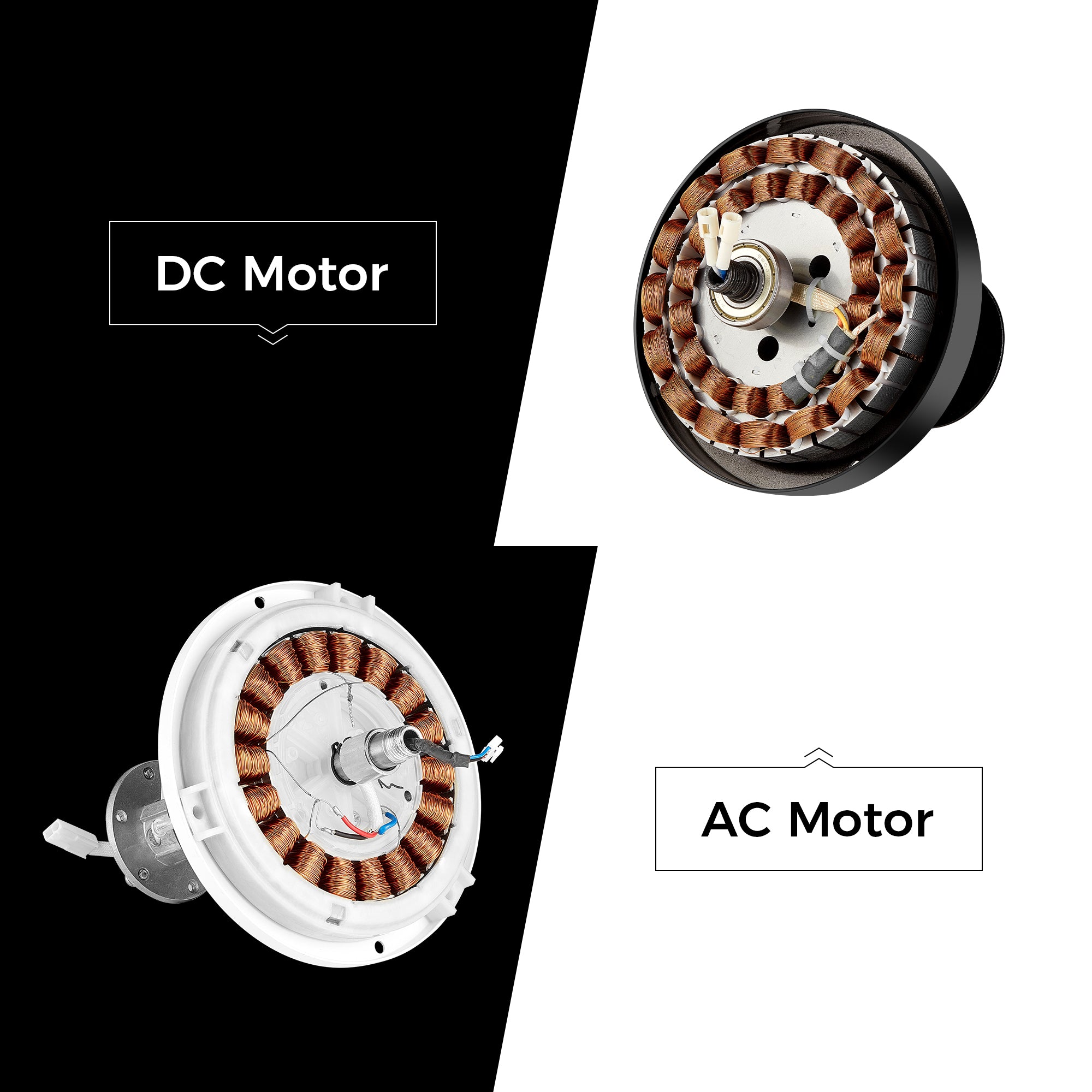
Take a careful look at the motor housing (the part attached to the ceiling). DC fans usually have a more compact or thinner motor housing, as DC motors are smaller and lighter. In contrast, AC motors are bulkier.
2. Wiring Differences
If you have experience with electrical work, you can check the wiring (always turn off the power first). AC fans usually have two or three wires (live, neutral, and sometimes ground). DC fans often have extra wires or a control module because they need a driver to convert AC to DC.
3. External Driver Or Module
DC fans almost always have an external driver—a small box or electronic module located in the canopy or attached to the ceiling bracket. This module converts household AC to DC. If you find such a module, your fan is DC.
4. Capacitor Presence
AC fans usually have a visible capacitor inside the housing—a small cylindrical or oval component. DC fans do not use the same type of capacitor for speed control.
Reading The Label: What Do The Details Mean?
Most ceiling fans have a label with important electrical information. Here’s how to interpret it:
- Input Voltage: If it says “120V~ 60Hz” (the tilde means AC), it’s likely an AC fan. If it says “24V DC” or “36V DC,” it’s a DC fan.
- Amps and Watts: DC fans often use less power (as low as 20-35W for a large fan). AC fans may use 60-80W or more.
- Manufacturer Info: Some labels will state the motor type directly.
Compare Performance: Ac Vs Dc Ceiling Fans
Understanding the main differences in performance and use can help you identify your fan and make better decisions in the future.
| Feature | AC Fan | DC Fan |
|---|---|---|
| Energy Use | Higher (60-80W typical) | Lower (20-35W typical) |
| Noise Level | Louder, especially at low speed | Very quiet |
| Speed Settings | Usually 3 | 5 or 6, sometimes more |
| Control Type | Pull chain, wall control, basic remote | Remote control, wall module, smart control |
| Price | Lower | Higher |
| Reverse Function | Manual (switch on fan) | Remote or automatic |
| Installation Complexity | Simpler | May require special wiring or module |
Credit: carrousa.com
Advanced Methods: Testing And Analysis
If you want a more technical approach, you can use special tools to test your fan’s motor type.
1. Use A Multimeter
A multimeter can help you check the power supply to the fan. AC fans are powered directly from the AC supply (120V in the US). DC fans receive lower DC voltage, usually from a converter.
- Measure the voltage at the fan’s motor terminals.
- If you see household voltage (e.g., 120V), it’s AC. If you see 24V or 36V DC, it’s a DC fan.
2. Look For A Driver Or Converter
Open the canopy and check for an electronic driver. This is a small electronic box. It converts AC to DC for the fan. If present, you have a DC fan.
3. Control Board Details
Some DC fans have a control board with markings like “DC IN” or “DC OUT.” These are clear signs of a DC motor.
4. Motor Type Markings
Check for labels on the motor itself. DC motors may be labeled as “Brushless DC Motor” or “BLDC. ”
Real-world Examples
To make these steps clearer, let’s look at a few real-world scenarios.
Example 1: The Old Pull Chain Fan
You moved into a house built in 2005. The ceiling fan has a pull chain, no remote, and feels quite heavy. The sticker on top says “120V~ 60Hz.” This is almost certainly an AC fan.
Example 2: The Modern Bedroom Fan
You bought a fan last year with a slim motor, a remote offering 6 speed options, and a “reverse” button. It’s nearly silent at night. The label says “24V DC.” This is a DC fan.
Example 3: The Office Remote-controlled Fan
The fan in your office is mid-sized, installed in 2018, and comes with a remote that only allows 3 speeds. There’s no driver box visible. The label reads “120V~ 60Hz.” This is likely an AC fan with a remote module, not a DC fan.
Example 4: Smart Home Ceiling Fan
You control your fan using a phone app, and it has multiple speed settings and a timer. Smart fans are almost always DC fans because of their advanced control needs.
Table: Common Signs To Identify Ceiling Fan Motor Type
Here’s a summary of typical features to help you decide at a glance.
| Sign | AC Fan | DC Fan |
|---|---|---|
| Installed before 2012 | Yes | Unlikely |
| Remote with 6+ speeds | No | Yes |
| Manual reverse switch | Yes | No (usually remote) |
| Energy Star label | Less common | Common |
| Large, heavy motor | Yes | No |
| External driver box | No | Yes |
| Runs silent on low speed | Rarely | Yes |
| Pull chain control | Yes | No |
Common Mistakes When Identifying Fan Motor Type
Many people make small errors when trying to identify their ceiling fan’s motor type. Avoid these common mistakes:
- Assuming Remote Equals DC: Some AC fans come with remote controls, but that does not mean they are DC. Always check for other signs.
- Confusing Speed Settings: Not all fans with more than three speeds are DC, but it’s a strong hint.
- Ignoring the Label: The fan label often has the answer, but people forget to check it.
- Not Turning Off Power Before Inspection: Always cut the power before opening the fan’s housing.
- Missing the Driver Box: Some DC fans hide the driver in the ceiling bracket or canopy, so look carefully.
- Trusting Only Noise Level: While DC fans are quieter, some high-quality AC fans are also quiet.
Why Manufacturers Choose Ac Or Dc Motors
Understanding the reasons behind motor choices can help you see the bigger picture.
Cost
AC motors are cheaper to produce and repair. For budget fans or very large installations, AC remains common.
Technology
DC motors are more advanced, smaller, and lighter. They allow for more features and better efficiency.
Region
In some countries, AC fans are still the standard due to older building codes or lower energy costs. In newer markets, DC fans are quickly gaining ground.
Features
If a fan offers smart controls, app connectivity, or advanced timers, it is almost always a DC model.
Environmental Impact: Ac Vs Dc Ceiling Fans
Switching from an AC to a DC fan can make a real difference in energy use.
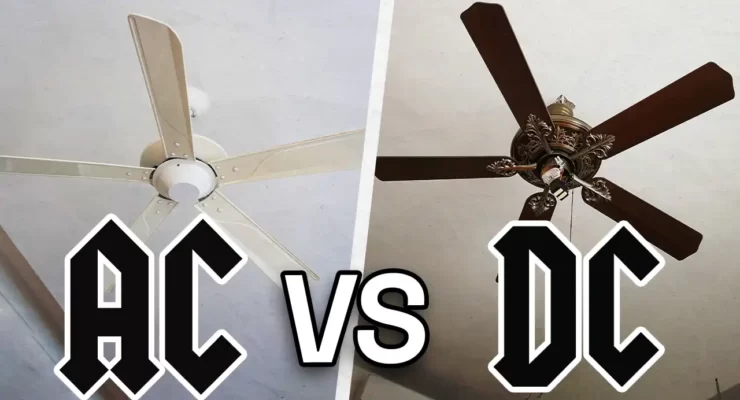
- DC fans use 60-70% less electricity than AC fans of the same size and airflow.
- Over a year, this can save you significant money, especially in hot climates where the fan runs all day.
- Lower energy use means less carbon footprint, making DC fans a greener choice.
Credit: yourenergyanswers.com
Practical Tips For Buyers And Owners
If you’re buying a new fan, or just want to understand what you have, here are some practical tips:
- Check the Features: More speeds, quieter operation, and advanced remotes usually mean DC.
- Ask for Motor Type: If shopping in a store, ask the salesperson for the motor type. Many buyers forget this.
- Look at the Price: If the fan is much cheaper than similar models, it’s likely AC.
- Think About Your Needs: For bedrooms, studies, or nurseries, a DC fan’s silence is worth the extra cost.
- Check Rebates: Some utility companies offer rebates for DC fans due to their efficiency.
- Plan for Repairs: AC fans are easier to repair in most places. DC fans may need special parts.
- Read User Reviews: Look for comments about noise, speed options, and ease of use.
How Fan Motor Type Affects Long-term Ownership
Your fan’s motor type affects more than just daily use. It matters for the long run.
- Maintenance: AC fans are easier and cheaper to fix. DC fans may need a specialist.
- Lifespan: DC fans tend to last longer because they have fewer moving parts and run cooler.
- Upgrades: If you want to add a smart home system, DC fans are more likely to support this.
Table: Energy Use Over One Year
To show the difference in energy use, here’s an example for a typical ceiling fan running 8 hours per day.
| Fan Type | Power (Watts) | Hours per Day | kWh per Year | Approx. Annual Cost (USD) |
|---|---|---|---|---|
| AC Fan | 70 | 8 | 204 | ~$28 |
| DC Fan | 28 | 8 | 81.8 | ~$11 |
*Note: Based on average US electricity cost of $0.14/kWh.*
Non-obvious Insights Most People Miss
Even experienced DIYers and home owners miss these details:
- Driver Box Location: Some DC fans hide the driver inside the ceiling bracket, not the motor housing. People often miss this and wrongly assume it’s an AC fan.
- Wall Control Compatibility: Many wall speed controls for AC fans will not work with DC fans. Trying to use them can damage the fan or void the warranty.
- Reverse Feature: Some AC fans have a reverse switch on the fan body, but DC fans usually let you reverse direction with the remote or app. If you cannot find a reverse switch, check the remote—this detail often surprises new owners.
- Smart Home Integration: Only DC fans generally support smart home features like Alexa or Google Assistant integration.
- Startup Speed: DC fans often start up more slowly and smoothly, while AC fans jump to speed quickly. This is a subtle but telling sign if you observe carefully.

Credit: lightingandbulbsunlimited.com
When To Consider Upgrading Your Fan
If you have an older AC fan and are thinking about replacing it, here are signs it’s time to upgrade:
- The fan is noisy or shakes even after balancing.
- You want more speed options and a remote.
- You need better energy efficiency.
- You want to connect your fan to a smart home system.
- Local energy rebates are available for DC fans.
Switching to a DC fan can mean long-term savings, better comfort, and extra features.
How Electricians Identify Motor Type
Professional electricians use both the above methods and their own tricks:
- They check the wiring and look for a driver box.
- They test the voltage at the motor.
- They use their knowledge of recent models—most new fans above $200 are DC.
- They know common brands: For example, Haiku, Minka Aire, and Big Ass Fans are mostly DC.
If you’re unsure or uncomfortable, it’s always smart to ask a professional.
Frequently Asked Questions
What Is The Main Difference Between Ac And Dc Ceiling Fans?
The key difference is the type of motor. AC fans use the power directly from your house, while DC fans use a driver to convert electricity into DC power. DC fans are more efficient, quieter, and have more speed settings.
Can I Use My Existing Wall Speed Control With A Dc Ceiling Fan?
No. DC fans require their own special remote or wall control. Using a regular AC fan wall controller can damage the electronics.
Are Dc Ceiling Fans Worth The Extra Cost?
Yes, in most cases. DC fans save money over time through lower energy bills, make less noise, and offer more features. The higher upfront price pays off, especially if you use your fan often.
How Can I Find Out The Motor Type If My Fan Has No Label?
Try checking the number of speeds, remote features, and noise level. If you’re still unsure, check for an external driver box or contact the manufacturer with your model number.
Where Can I Learn More About Ceiling Fan Technology?
A trusted resource is the Wikipedia page on ceiling fans, which offers more technical details and historical background.
Ceiling fans are more than just spinning blades. Knowing if your ceiling fan is AC or DC helps you make smarter choices, enjoy better comfort, and save money. With this guide, you’re now ready to identify your fan type quickly and confidently—no guesswork, no confusion.