
Staining your front door is one of the simplest ways to make a big change in your home’s curb appeal. A fresh, rich stain can highlight the natural beauty of wood, add character, and even protect your door from weather damage.
Many homeowners believe staining is difficult or only for professionals, but with the right guidance, you can achieve a professional look on your own. This guide will walk you through every step, sharing practical advice and insights that most beginners miss.
Why Stain Your Front Door?
A front door is more than just an entrance. It’s the first thing people see and touch when they visit your home. Over time, sunlight, rain, and temperature changes can wear down the finish, making the door look tired or even start to rot. Staining is not just about color—it’s about protection and preservation.
Staining creates a seal that keeps moisture out and blocks harmful UV rays. Unlike paint, stain soaks into the wood, letting the natural grain show through. This adds warmth and character that paint can’t match. If you want your home to feel inviting and well cared for, a beautifully stained door sends the right message.
Many people are surprised to learn that a well-stained door can last up to 3-5 years before needing a touch-up. That’s a solid return on a weekend’s work.
Choosing The Right Stain And Supplies
The biggest mistake people make is picking the wrong stain. There are two main types: oil-based and water-based. Oil-based stains penetrate deeper and last longer, but they take more time to dry and require mineral spirits for cleanup. Water-based stains dry quickly and have less smell, but may not last as long outdoors.
Oil-based Vs. Water-based Stains
| Type | Pros | Cons |
|---|---|---|
| Oil-Based | – Deep penetration – Richer color – Longer lasting | – Longer dry time – Strong odor – Harder cleanup |
| Water-Based | – Fast drying – Low odor – Easy cleanup | – May raise wood grain – Not as durable outdoors |
For a front door that faces direct sun or heavy rain, oil-based stains are usually best. But if you want a quick project with less smell, water-based is fine—just plan to reapply more often.
What Else You’ll Need
- Exterior wood stain (oil- or water-based, your choice)
- High-quality brush or staining pad
- Clean rags
- Sanding block (120- and 220-grit sandpaper)
- Mineral spirits (if using oil-based)
- Wood conditioner (for soft woods like pine)
- Exterior polyurethane (for extra protection)
- Screwdriver (to remove hardware)
- Painter’s tape
- Drop cloths or plastic sheeting
- Gloves
- Mask and safety glasses
- Bucket of water (for water-based stains)
- Vacuum (for dust)
Pro tip: Don’t use cheap brushes or sponges. They leave streaks and loose bristles in the finish. Always buy the best brush you can afford for this job.

Credit: www.thriftydecorchick.com
Preparing Your Door For Staining
Preparation is where most people go wrong. Skipping steps or rushing leads to blotchy color, uneven shine, and a shorter finish life. Spend time here and the staining part will be easy.
Remove The Door Or Stain In Place?
You can stain your door while it’s hanging, but for the smoothest, most even result, it’s better to take it off. Removing the door gives you full access to every edge and side, and you don’t have to worry about drips or weather.
But if your door is heavy or you can’t leave your home open, you can stain it while it’s in place—just be extra careful with tape and drop cloths.
Step-by-step Prep
- Remove all hardware: Take off the handle, lock, kickplate, and any other metal parts. Put them in a safe place.
- Clean the door: Wash with soapy water to remove dirt and oils. Rinse and let dry completely.
- Protect surrounding areas: Lay down drop cloths. Use painter’s tape around glass, trim, and weatherstripping.
- Sand the surface: Start with 120-grit sandpaper to remove old finish and scratches. Follow the wood grain. Finish with 220-grit for smoothness.
- Vacuum and wipe: Remove all dust with a vacuum and a tack cloth or damp rag.
- Apply wood conditioner (if needed): For soft woods (pine, fir, alder), brush on pre-stain conditioner. Let it soak in for 15 minutes, then wipe off. This helps prevent blotches.
Insight: Many beginners forget to sand between coats or after using wood conditioner. This tiny step makes a huge difference in getting a glass-smooth finish.
Staining Your Front Door: Step-by-step
Now comes the fun part. Don’t rush, and follow the grain of the wood. If you’re staining for the first time, practice on a scrap board to get a feel for how the stain spreads and wipes off.
How To Apply Stain
- Mix the stain: Stir well so the color is even. Do not shake the can—this adds bubbles.
- Test the color: Try the stain on a hidden part or scrap wood. Let it dry; colors often look different wet vs. dry.
- Apply stain with a brush or pad: Work in sections (top, middle panels, bottom, edges). Brush or wipe the stain along the grain.
- Let it soak in: Wait 5–15 minutes, depending on how dark you want the color. The longer it sits, the deeper the shade.
- Wipe off excess: Use a clean rag to remove extra stain. Wipe in the direction of the grain for even color.
- Let it dry: Wait as the can directs (usually 6–24 hours).
- Repeat for deeper color: If you want a darker look, add a second coat after the first one is fully dry.
Non-obvious insight: More stain does not always mean deeper color. If the wood stops absorbing, wipe off and let dry. Forcing extra stain can lead to sticky, uneven patches.
Working With Raised Panels And Details
Doors often have grooves, raised panels, or glass inserts. Use a smaller brush for corners and edges. Stain these first so you can blend drips or overlap as you do the main panels. Always finish each section before moving to the next to avoid lap marks.
Practical tip: If your door has glass inserts, use a razor blade to clean off any stain that gets on the glass after the stain dries. It’s quicker and neater than trying to tape perfectly.
Sealing And Protecting Your Door
Stain adds color, but it doesn’t block water or sunlight by itself. For real protection, you need to add a clear exterior polyurethane or spar urethane topcoat.
Choosing A Topcoat
- Water-based polyurethane: Dries clear and won’t yellow. Good for lighter stain colors.
- Oil-based polyurethane: Adds a warm, amber tone. Lasts longer, but may yellow with age.
- Spar urethane: Best for outdoor use, made to flex with temperature changes and resist UV.
How To Apply The Topcoat
- Stir the finish gently—don’t shake.
- Apply with a clean brush in long, even strokes. Follow the grain.
- Let dry as directed (usually 4–8 hours).
- Lightly sand with 220-grit sandpaper between coats for a smooth finish. Wipe away dust.
- Apply 2–3 coats for best durability, sanding in between.
Common mistake: Skipping the sanding between coats. This step helps each layer stick and removes dust or bubbles.
| Topcoat Type | Best For | Dry Time (per coat) | Durability |
|---|---|---|---|
| Water-based Polyurethane | Light stains, indoor doors | 2-4 hours | Good |
| Oil-based Polyurethane | Rich/dark stains, high-traffic doors | 6-8 hours | Very Good |
| Spar Urethane | Exterior, direct sun/rain | 4-6 hours | Excellent |
Reinstalling And Final Touches
Once your final coat is completely dry (do not rush this! ), you can reinstall hardware and hang the door. Carefully remove all tape and clean up any drips or smudges with a small amount of mineral spirits (for oil-based) or water (for water-based).
Check the door edges, bottom, and top—these are easy to miss, but they take the most weather. Make sure stain and finish cover every exposed area. Unprotected edges can soak up moisture and cause warping.
Pro tip: Lubricate your hinges with a little oil before rehanging. This prevents squeaks and makes sure your fresh finish isn’t scratched.
Troubleshooting Common Problems
Even with care, a few issues can pop up. Here’s how to fix them:
Blotchy Color
Usually caused by uneven sanding or skipping wood conditioner. Lightly sand the problem area and restain. For severe blotching, strip and start over—but this is rare if you prep well.
Sticky Finish
If the stain feels tacky after a day, you may have put on too much or the weather is too humid. Wipe with a clean rag and let it dry longer. Don’t add more finish until it’s fully dry.
Lap Marks Or Dark Edges
This happens when stain dries before you finish a section. Always work “wet to wet. ” If you see lap marks, re-wet the area with fresh stain and blend with a rag.
Bubbles In Topcoat
Usually from shaking the can or brushing too fast. Sand lightly after it dries, then add another smooth coat.
Cloudy Finish
Moisture trapped under the topcoat can cause this. Always stain and finish in dry weather. If you get a cloudy patch, sand it lightly and reapply the finish.
Maintenance: Keeping Your Door Looking Great
A stained wood door is easy to care for if you check it each year. Here’s how to keep it looking new:
- Wipe down with a damp cloth to remove dirt and dust.
- Inspect for peeling or fading every spring and fall.
- Spot-repair scratches with stain on a rag, then reseal.
- Reapply topcoat every 2–3 years, or sooner if your door gets strong sun or rain.
Non-obvious tip: Apply a thin coat of exterior wax every year. This repels water and adds shine, especially for south-facing doors.
| Maintenance Task | How Often | Why It Matters |
|---|---|---|
| Clean surface | Monthly | Removes dirt and prevents mold |
| Check for damage | Twice a year | Fixes problems before they worsen |
| Reapply topcoat | Every 2–3 years | Keeps moisture out |
| Apply exterior wax | Yearly | Adds water resistance |
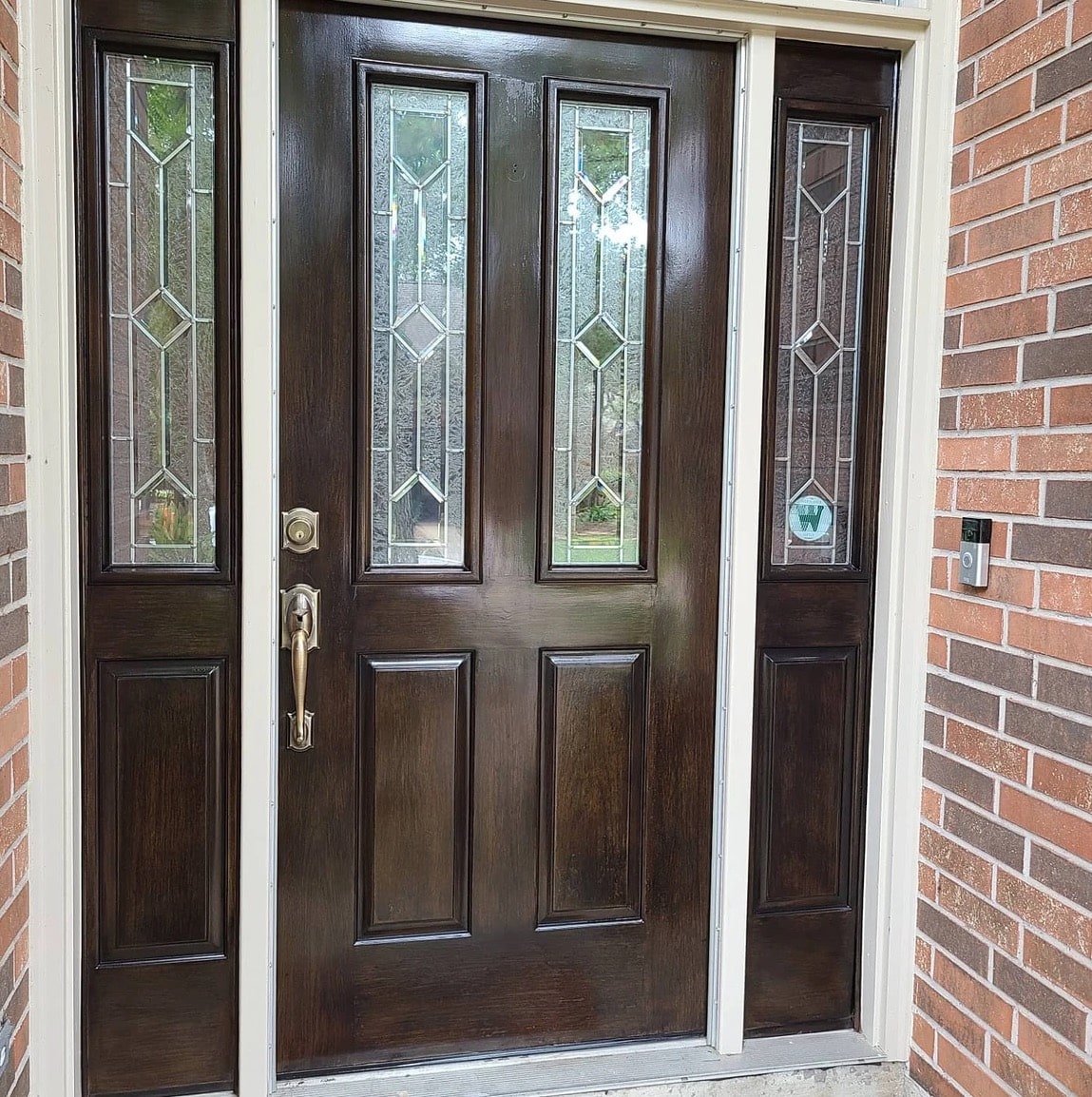
Credit: sturdydoors.com
Real-world Examples
Let’s look at two quick stories.
Example 1:
Sarah lives in the Midwest, where winters are cold and summers are humid. She used a water-based stain her first time and loved the easy cleanup. But after two years, the finish faded and started to peel. The next time, she switched to an oil-based stain and spar urethane.
The new finish lasted over four years before needing a touch-up.
Example 2:
Mike stained his front door in place without removing it. He taped carefully and used a high-quality brush. The finish looked great, but he forgot to seal the top and bottom edges. After one rainy season, the door started to swell and stick.
He had to sand and reseal those missed edges—but now the door works perfectly.
These examples show: the right stain and careful prep make all the difference, but even small details (like door edges) matter.
Safety And Environmental Tips
Staining and sealing involve chemicals. Always work in a well-ventilated area. Wear gloves, a mask, and safety glasses. Keep rags with stain or finish in a metal container—these can catch fire if left in a pile.
If you have leftover stain or finish, don’t pour it down the drain. Your local waste center can tell you how to dispose of it safely. For more on eco-friendly practices, check the EPA’s official site.

Credit: www.beneathmyheart.net
Frequently Asked Questions
How Long Does It Take To Stain A Front Door From Start To Finish?
The entire process, including prep, staining, drying, and sealing, usually takes 2–3 days. Most of this time is waiting for coats to dry. The actual working time is about 4–6 hours spread across several steps.
Can I Stain A Door Without Removing It From The Hinges?
Yes, you can stain a door while it’s still attached. Use painter’s tape to protect hinges, glass, and nearby trim. Lay a drop cloth underneath. Work carefully to avoid drips. Removing the door is best for even coverage but not strictly required.
What If My Door Is Painted, Not Stained?
You must remove all paint before staining. Use a chemical paint stripper or a sander to get down to bare wood. Stain cannot soak into paint, so this prep is critical. Skipping this step will lead to a blotchy, uneven result.
How Often Should I Re-stain My Front Door?
Most front doors need to be re-stained every 3–5 years. If your door faces harsh weather or full sun, check it yearly for fading or cracks and reapply finish as needed.
What’s The Best Way To Pick A Stain Color?
Test several colors on a piece of scrap wood or a hidden part of your door. Stains look different on various wood types, and the final color can be darker or lighter than the sample. Always check the color after it dries completely.
Staining your front door is a rewarding project. With patience, the right tools, and careful steps, you can transform your entryway and protect your home for years to come. Don’t rush, and remember: the details matter. If you follow this guide, you’ll finish with a door that looks as good as any professional’s work.