
When you don’t have a dresser, keeping your clothes organized can feel almost impossible. Clothes pile up, things get lost, and your room quickly looks messy. But here’s the good news: you don’t need a dresser to have a tidy, stylish, and practical space. With the right strategies, you can store your clothes so they’re easy to find, easy to use, and even pleasing to look at. If you’re short on space, living in a dorm, moving frequently, or simply prefer a minimalist lifestyle, this guide will show you how to organize clothes without a dresser—efficiently, creatively, and with minimal stress.
Let’s break down everything you need to know. We’ll cover smart storage ideas, space-saving tips, what to do with tricky items like socks or accessories, how to keep things neat over time, and even ways to make your space look great.
You’ll learn from real examples, discover options for every budget, and avoid common mistakes that make clothes organizing harder than it needs to be.
Why You Might Not Have A Dresser
There are many reasons you might not use a dresser. Maybe your room is too small. Some apartments and dorms don’t allow bulky furniture. You might move often, or you just want to avoid spending money on something that takes up a lot of space.
Sometimes, people prefer open storage because it helps them keep only what they use, reducing clutter.
Whatever your reason, it’s important to know that you can still have a neat, organized wardrobe. In fact, not having a dresser can make you more creative and intentional with your storage choices.
Key Principles For Organizing Without A Dresser
Before jumping into specific solutions, let’s look at the basic ideas that will help you succeed:
- Visibility: If you can see your clothes, you’ll wear them. Out of sight is often out of mind.
- Accessibility: Make sure you can reach your clothes easily. If it’s hard to access, you’ll avoid using it.
- Grouping: Keep similar items together—jeans with jeans, socks with socks.
- Rotation: Put your most-used items in the easiest-to-reach spots.
- Flexibility: Use storage that adapts as your wardrobe changes.
These principles help prevent piles and mess, even if you have very little room.
Using Hanging Storage Solutions
Hanging storage is a lifesaver when you don’t have a dresser. It uses vertical space, keeps clothes wrinkle-free, and can actually make your room look more open.
Clothing Racks
Clothing racks are simple metal or wood frames that let you hang clothes in the open. They’re affordable, portable, and come in many styles.
Benefits:
- Easy access to every item.
- Makes you more selective—only hang what you actually wear.
- Good for small spaces or rooms with awkward layouts.
Tips:
- Group clothes by type or color for a tidy look.
- Use matching hangers to create a clean style.
- Add a small shelf below for shoes or baskets.
Over-the-door Hooks And Racks
If you have a door, you have extra storage. Over-the-door racks let you hang jackets, bags, scarves, and even pants.
Advantages:
- No tools or installation required.
- Perfect for renters or students.
- Keeps things off the floor.
A common mistake is overloading these racks, making the door hard to close. Stick to lighter items or rotate seasonally.
Hanging Shelves
Fabric or plastic hanging shelves can attach to closet rods or racks. They create cubbies for folded clothes, shoes, or accessories.
Why they work:
- Maximize vertical closet space.
- Great for sweaters, jeans, and t-shirts.
- Collapsible if you need to move.
Keep in mind, very heavy items might sag these shelves over time. Use them for light to medium weight clothes.
Smart Use Of Closet Space
Your closet can do much more than hold a few hangers. With a little planning, you can fit most or all of your wardrobe in even a small closet.
Double Closet Rods
Install a second rod below the main one. This instantly doubles the hanging space for shorter items like shirts and pants.
Shelf Dividers
If you have a top shelf, use shelf dividers to keep stacks of clothes upright and separated. This prevents messy piles and helps you see what you have.
Storage Bins And Boxes
Use labeled bins or boxes for out-of-season clothes, accessories, or items you rarely use. Clear boxes make it easier to see what’s inside.
Shoe Organizers For More Than Shoes
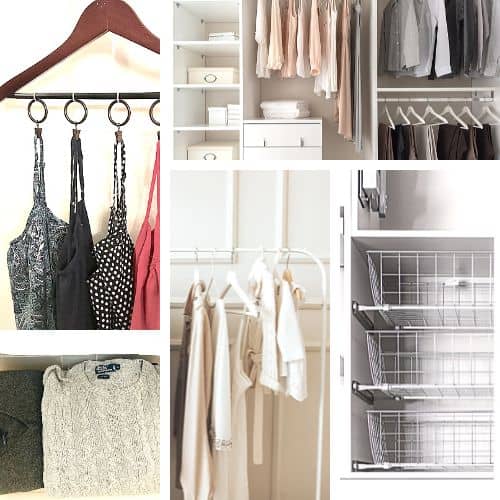
Hanging shoe organizers with pockets are perfect for storing socks, underwear, rolled t-shirts, or even accessories like belts and scarves.
Credit: organizenvy.com
Under-bed Storage
The space under your bed is valuable real estate. Used well, it can store a surprising amount.
Flat Bins And Drawers
Look for flat plastic bins or rolling drawers designed for under-bed use. They keep clothes dust-free and easy to access.
Best uses:
- Off-season clothes
- Extra bedding
- Shoes or bags
Vacuum-sealed Bags
For clothes you won’t use for months, vacuum-sealed bags shrink bulky items like sweaters and jackets. This method can save up to 75% of space, according to manufacturers.
A warning: Don’t use these for delicate fabrics, as long-term compression can damage them.
Diy Under-bed Storage
If you’re handy, you can build or repurpose old drawers with wheels. This creates custom storage at low cost.
Open Shelving And Cube Units
Open shelving is a stylish and practical way to store clothes. Cube shelves (like IKEA’s KALLAX) are especially popular.
How To Use Open Shelving
- Fold t-shirts, jeans, and sweaters to fit into each cubby.
- Use baskets or fabric bins for smaller items.
- Display attractive pieces (like hats or bags) on top.
Advantages
- Everything is visible, reducing clutter.
- Easy to rearrange as your needs change.
- Can double as room dividers in studios or shared spaces.
Common Mistakes
Overstuffing shelves or not folding clothes well can make shelves look messy fast. Take time to fold carefully—this also prevents wrinkles.
Using Baskets, Bins, And Boxes
Baskets and storage bins are flexible, affordable, and work in any room.
Types Of Baskets And Bins
- Fabric bins: Soft, lightweight, and easy to carry.
- Woven baskets: Add style and warmth.
- Plastic bins: Stackable and easy to clean.
Where To Use Them
- On shelves, under beds, or in closets.
- Stacked in corners for vertical storage.
- In open racks for grouped storage.
Labeling
Labeling bins helps everyone in your home know where things go. This is especially helpful for kids or shared spaces.
Comparison: Fabric Vs. Plastic Bins
Here’s a quick look at the pros and cons:
| Type | Pros | Cons |
|---|---|---|
| Fabric Bins | Lightweight, stylish, collapsible | Less sturdy, can stain |
| Plastic Bins | Durable, stackable, easy to clean | Not as attractive, can crack |
Wall-mounted Solutions
Walls offer lots of vertical storage potential.
Hooks And Pegboards
Wall hooks are simple and can hold bags, hats, jackets, or accessories. Pegboards let you customize storage with hooks, baskets, and shelves.
Benefits:
- Keeps items off the floor.
- Makes use of awkward wall space.
- Easy to rearrange as your needs change.
Floating Shelves
Install floating shelves for folded clothes, baskets, or decor. If you live in a rental, look for removable adhesive shelves.
A tip: Don’t overload wall shelves—they’re best for lighter items.
Organizing Small Items Without A Dresser
Socks, underwear, jewelry, and accessories are easy to lose without drawers. Here’s how to keep them in order:
Drawer Organizers In Bins
Use drawer organizers inside baskets or boxes to separate small items. These can be bought or made from cardboard.
Hanging Organizers
Many hanging organizers have small pockets for socks, underwear, or jewelry. Hang these on closet rods or behind doors.
Small Boxes Or Pouches
Group accessories in labeled boxes or fabric pouches. This makes it easy to grab what you need and keeps everything tidy.
Jewelry Boards Or Trays
Mount a jewelry board on the wall, or use a tray on a shelf to organize necklaces, rings, and watches.
Multi-use Furniture For Clothes Storage
Some furniture does double duty as storage.
Storage Benches And Ottomans
A storage bench at the end of your bed or a storage ottoman can hold clothes, bedding, or shoes while also serving as seating.
Bed Frames With Drawers
Some beds come with built-in drawers. These are perfect for clothes storage if you don’t want anything visible.
Nightstands With Shelves
Instead of a regular nightstand, use a small bookshelf or a unit with baskets.
Folding And Rolling Techniques
How you fold your clothes makes a big difference, especially when you have limited storage.
File Folding
Inspired by the KonMari method, file folding means folding clothes into rectangles that stand upright. This works well in bins, baskets, or shelves, letting you see everything at once.
Rolling Clothes
Rolling can save space and reduce wrinkles, especially for t-shirts, pajamas, and workout clothes.
When To Hang Vs. Fold
Use this rule of thumb:
- Hang: Dresses, blouses, jackets, items that wrinkle easily.
- Fold: Jeans, t-shirts, sweaters, pajamas.
Folding Comparison
| Method | Best For | Pros | Cons |
|---|---|---|---|
| Stacked Folding | Shelves, deep bins | Simple, fast | Items at bottom are hard to reach |
| File Folding | Shallow bins, baskets | Easy to see everything, neat | Takes more time to fold |
| Rolling | Travel, small spaces | Maximizes space, less wrinkling | Can look messy if not done carefully |
Seasonal Rotation And Decluttering
Keeping everything out at once makes organizing harder. Instead, rotate seasonally and declutter often.
Seasonal Clothing Rotation
Twice a year, move out-of-season clothes to under-bed bins, top closet shelves, or vacuum bags. Keep only what you’ll wear for the next few months in main storage.
Decluttering Tips
- Set aside time every few months to review your wardrobe.
- Ask: Have I worn this in the last year?
- Donate, recycle, or sell what you don’t use.
Many people keep too much “just in case. ” Being realistic frees up space and makes organizing easier.
Making Your Storage Look Good
A tidy space feels better to live in. Here’s how to keep your storage stylish:
- Stick to one or two basket or bin styles for a coordinated look.
- Arrange clothes by color or type for visual order.
- Add a small plant, art, or a mirror near your storage area.
- Hide less attractive storage in corners or behind curtains.
Budget-friendly And Diy Options
You don’t need to spend a lot to organize clothes.
- Repurpose old boxes as bins—cover with fabric or paper for style.
- Use tension rods in closets for extra hanging space.
- Stack sturdy crates for open shelving.
- Hang a branch or wooden dowel from the ceiling as a unique clothing rack.
Many people overlook the potential of things they already own. Get creative—just make sure your solutions are safe and sturdy.
Common Mistakes To Avoid
Even good storage ideas don’t work if used poorly. Here are mistakes to watch out for:
- Overfilling bins or racks, making items hard to find.
- Mixing too many types of storage, which looks messy and is confusing.
- Not labeling boxes or baskets, leading to lost items.
- Ignoring small items, which quickly become clutter.
- Not decluttering regularly, causing overflow and chaos.
The key is consistency. Make it easy for yourself to put things away where they belong.
Room-by-room Organizing Tips
Depending on where you store your clothes, your approach may change.
Bedroom
- Use under-bed storage and open racks.
- Baskets or cube shelves can double as nightstands.
Shared Spaces
- Stick to attractive, closed storage (like woven baskets).
- Use a room divider or curtain to create a clothing area if needed.
Small Apartments Or Studios
- Go vertical—shelving, hooks, and racks.
- Hide storage with screens or fabric.
Kids’ Rooms
- Low bins and open shelves kids can reach.
- Bright labels with pictures for younger children.
Comparing Storage Methods
Which method is best? It depends on your space, budget, and style. Here’s a quick comparison:
| Storage Method | Best For | Space Needed | Cost | Visibility |
|---|---|---|---|---|
| Clothing Rack | Frequent use, small rooms | Medium | $$ | High |
| Under-Bed Bins | Out-of-season, seldom used items | Low | $ | Medium |
| Open Shelves | Everyday wear, display | Medium-High | $$ | High |
| Baskets/Bins | Smaller items, kids’ rooms | Low | $ | Low-Medium |
| Wall Hooks | Accessories, jackets | Very Low | $ | High |
Real-life Examples And Success Stories
- College student: Used a $20 clothing rack, two large baskets, and under-bed boxes to store all clothes in a tiny dorm.
- Young family: Chose cube shelves with fabric bins for each child, making it easy for kids to put away their own clothes.
- Minimalist couple: Installed one large wall pegboard and a floating shelf. Everything is visible and off the floor, creating a calm, open space.
- Frequent mover: Uses collapsible bins and a simple rack—can pack and go in an hour with zero hassle.
Credit: organized31.com
Two Insights Beginners Often Miss
- Folding style matters as much as storage type. File folding or rolling clothes can double the amount you fit in a basket or shelf.
- Consistency beats creativity. It’s better to use one or two types of storage in a coordinated way than to use ten different ideas. Too many styles create visual clutter and confusion.
How To Maintain Your System
Once you’re organized, the key is staying that way.
- Put clothes away right after laundry—don’t let piles build up.
- Review your system every few months. If it’s not working, change it.
- Teach everyone in your home to use the system—especially kids.
- Make it easy to declutter by keeping a donation bag or box handy.
The most organized homes are not perfect—they’re simply consistent.
Credit: www.youtube.com
When To Consider Adding A Dresser
While it’s possible to go without a dresser, sometimes adding a small one can make sense. If you find you have too many small items, or your current system isn’t working, a mini dresser or even a secondhand chest of drawers can be a good investment.
But try these ideas first—you may find you don’t need one at all.
For more inspiration and ideas, check out Apartment Therapy.
Frequently Asked Questions
What Is The Best Way To Store Clothes If I Don’t Have A Closet Or Dresser?
Use a combination of clothing racks, shelves, and baskets. Hang what wrinkles easily and fold or roll the rest. Maximize under-bed and wall space.
How Can I Organize Small Items Like Socks And Underwear Without Drawers?
Store them in bins with dividers, small boxes, or in hanging organizers with pockets. Label each container for easy access.
How Often Should I Declutter My Clothes?
Aim to declutter every 3-6 months. If you notice clothes piling up or bins overflowing, it’s a sign to review your wardrobe.
Are Open Storage Solutions Messy Or Hard To Keep Tidy?
They can be if overfilled or not folded well. Keep only what you use, fold carefully, and group items by type or color for a neat look.
Can I Organize Clothes Without Spending A Lot Of Money?
Absolutely. Repurpose boxes, baskets, or crates you already own. DIY solutions like tension rods, hooks, and homemade labels are effective and cheap.
Organizing clothes without a dresser is not just possible—it’s an opportunity to create a system that fits your life, space, and style. With a little planning and some creativity, you’ll enjoy a clutter-free room and a wardrobe that works for you every day.