
When you’re ready to buy a sectional, excitement can quickly turn into confusion. Sectionals come in many shapes and sizes, and every home is different. If you’ve ever wondered whether your dream sectional will fit your space—or worried about it blocking a doorway or window—you’re not alone.
Measuring for a sectional is about more than just getting the length right. It’s about flow, comfort, and making sure your investment truly works for your life.
In this guide, you’ll learn exactly how to measure for a sectional. We’ll look at the tools you need, the steps to take, and the details that often get missed by beginners. By the end, you’ll have the confidence to choose a sectional that fits your space and your style.
Why Measuring For A Sectional Is So Important
Choosing a sectional isn’t just about picking your favorite color or fabric. A sectional is often the biggest piece of furniture in a living room. If you get the size wrong, it can block walkways, crowd the room, or even make your living area uncomfortable. Proper measuring is the difference between a room that feels open and welcoming, and one that feels cramped.
Many people skip measuring or only check the length of one side. That’s a mistake that can lead to returns, extra costs, and a lot of frustration. Sectionals are often custom or special order, which makes returns expensive or impossible.
Spending a bit more time measuring now will save you headaches later.
Understanding Sectional Sofa Shapes
Sectionals come in many shapes. The most common are L-shaped, U-shaped, and curved. Each shape fits rooms in different ways.
- L-shaped sectionals have two sides that meet at a right angle.
- U-shaped sectionals add a third side, making a U form.
- Curved sectionals bend gently, often creating a cozy conversation area.
Knowing your room’s layout and where you want to place the sectional will help you decide which shape fits best. For example, a U-shaped sectional works well in large, open rooms, while an L-shape is perfect for corners.
Tools You Need To Measure For A Sectional
Before you start, gather these items:
- Tape measure (at least 25 feet long)
- Graph paper or blank paper for sketching
- Pencil and eraser
- Masking tape or painter’s tape
- Notepad for notes
- Smartphone camera to take reference photos
Using the right tools will help you measure more accurately and visualize the sectional in your space.
Step-by-step Guide: How To Measure For A Sectional
Measuring for a sectional involves several steps. Follow these in order for the best results.
1. Measure Your Room
Start by measuring the full dimensions of your room.
- Measure the length and width of the room from wall to wall.
- Note the height of your ceilings.
- Record the location of windows, doors, radiators, and other features.
Write down each measurement. This gives you the big picture and helps you decide where the sectional will go.
2. Identify Obstacles And Features
Next, look for anything that might get in the way of the sectional.
- Measure the distance from the floor to the bottom of windowsills.
- Note how far doors swing into the room.
- Mark electrical outlets, vents, or built-in shelves.
These features can limit where you place the sectional or how big it can be.
3. Decide On Sectional Placement
Now, choose where you want the sectional. Common placements are:
- Against a wall
- In a corner
- Floating in the center of the room
Think about your traffic flow. Leave at least 24–36 inches (about 60–90 cm) for walkways around the sectional. Don’t block main pathways between doors.
4. Mark The Area With Tape
Use masking or painter’s tape to outline the sectional’s footprint on the floor. This helps you see how much space it will take.
- Tape out the length and width of the sectional based on product dimensions or your best estimate.
- Include the chaise or recliner if your sectional has one.
- Sit, stand, and walk around the tape. Is there enough room for movement?
This step reveals problems you might not see on paper.
5. Measure The Sectional Itself
If you already have a sectional in mind, get its exact dimensions from the retailer. If not, use standard sizes for reference:
- L-shaped sectionals: Each side is usually 90–120 inches long.
- U-shaped sectionals: Each side can be 95–135 inches.
- Chaise sectionals: The chaise is typically 60–75 inches deep.
Key measurements:
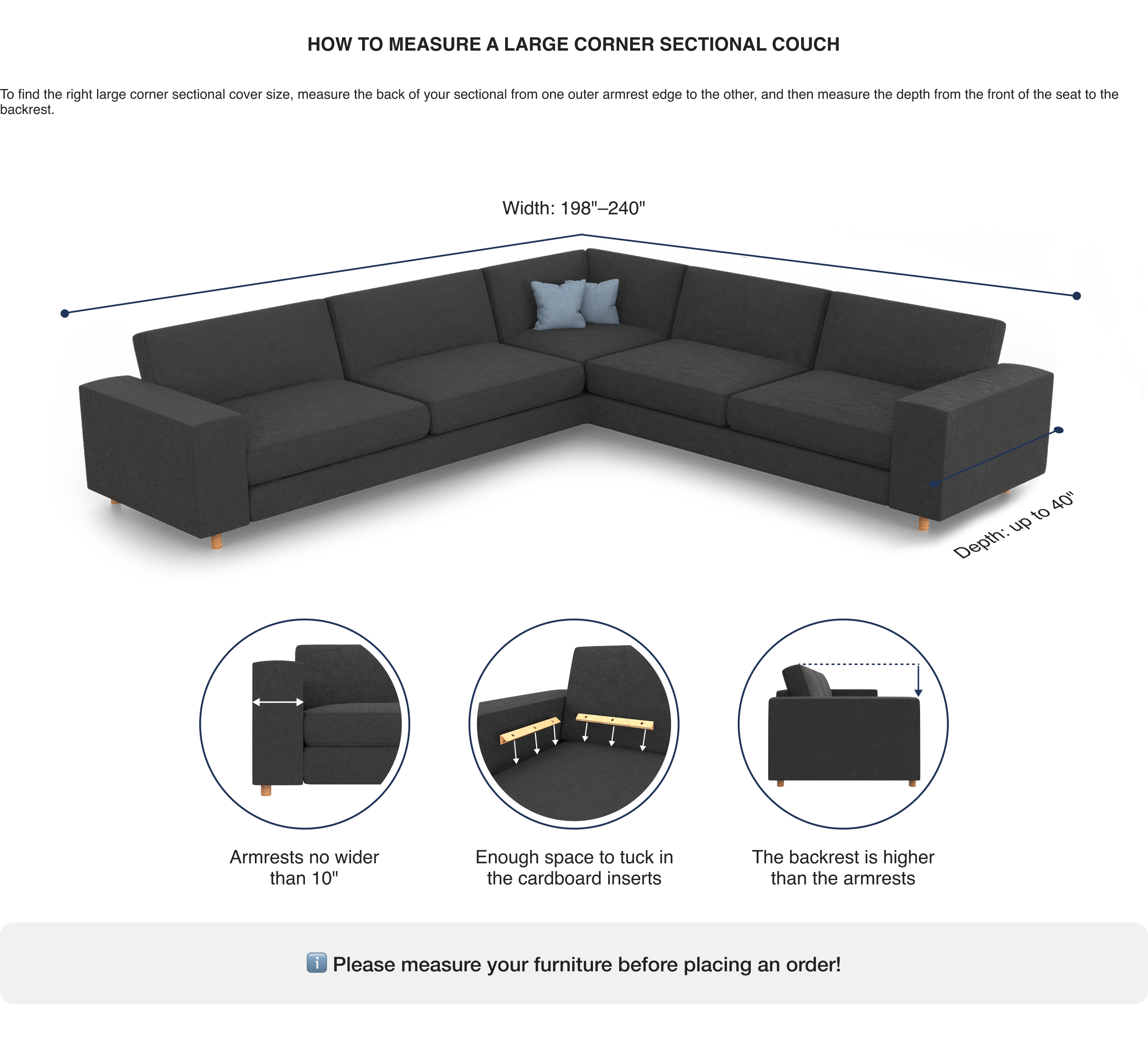
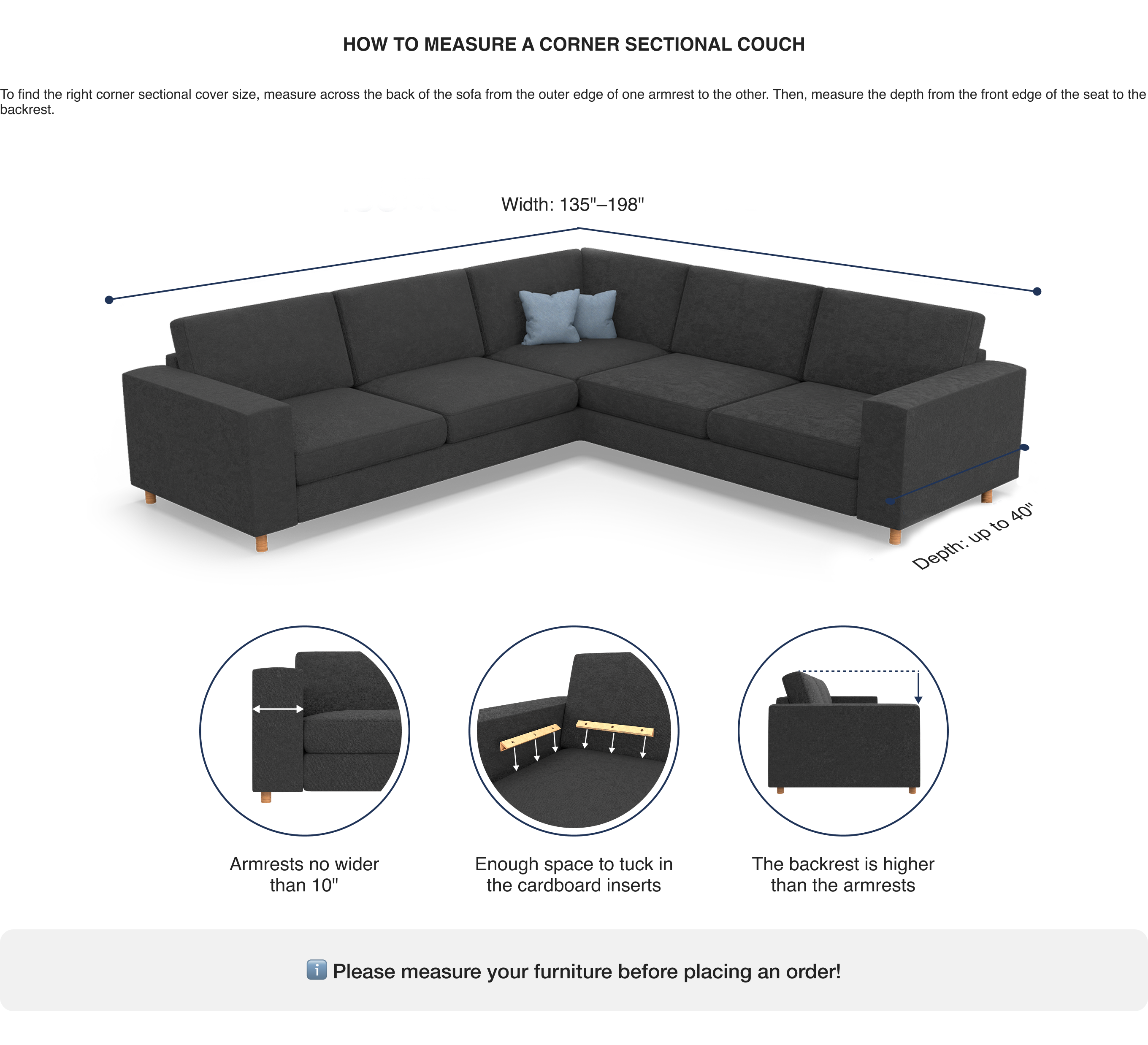
- Overall length: The longest side from outer arm to outer arm.
- Overall depth: From the back of the sectional to the front edge.
- Chaise length: From the backrest to the end of the chaise.
- Seat depth and height: For comfort.
Write these down. You’ll use them to check if the sectional fits your room.
6. Check Doorways, Hallways, And Stairs
Many people forget to measure the path the sectional will take to reach the room. Sectionals are heavy and bulky. If it can’t fit through the door, you’ll have a problem.
- Measure the width and height of all doors, hallways, and stairs.
- Note any tight corners, low ceilings, or sharp turns.
- Compare these measurements to the largest piece of the sectional.
Sectionals often come in pieces, but some parts are still very large. If access is tight, check if the sectional can be disassembled further.
7. Consider Additional Furniture
Think about what else will be in the room:
- Coffee tables
- Side tables
- Lamps
- Media consoles
Leave enough space for these items. Don’t overcrowd your room. A good rule: leave at least 18 inches between the sectional and a coffee table.
8. Sketch A Floor Plan
Draw your room to scale on graph paper. Add windows, doors, and other features. Sketch the sectional’s outline based on your measurements. Move it around on paper to try different layouts.
This visual tool is helpful if you’re choosing between different sectional sizes or shapes.
9. Think About Tv Viewing Distance
If your sectional will face a TV, measure the distance from the sectional’s front edge to the TV screen. For a comfortable viewing experience:
- For a 55-inch TV, the best distance is about 7–11 feet.
- For a 65-inch TV, aim for 8–13 feet.
Don’t place the sectional too close or too far from your TV.
10. Double-check Everything
Before you order, review all your measurements. It’s easy to make mistakes, especially if you’re excited.
- Re-measure key areas.
- Ask a friend or family member to check your work.
- Take photos of your tape outlines and sketches.
It’s better to catch a problem now than after the sectional arrives.
Common Sectional Configurations And Their Measurements
Sectionals come in many configurations. Each has unique measurement needs.
L-shaped Sectional
The classic L-shape fits well in corners. Measure both arms from the outer edge to the corner. Watch out for one side being longer than the other.
U-shaped Sectional
These are large and need a lot of space. Measure the outer edge of each arm, plus the depth of the center section.
Chaise Sectional
A chaise adds lounging space. Measure from the back of the sectional to the end of the chaise. Make sure it doesn’t block walkways.
Modular Sectional
These come in separate pieces you can arrange. Measure each piece and the total footprint.
Curved Sectional
Curved sectionals are stylish but take up more space. Measure the widest and deepest points, not just the center.
Here’s a quick comparison of common sectional types and typical dimensions:
| Sectional Type | Typical Length (inches) | Typical Depth (inches) | Best For |
|---|---|---|---|
| L-Shaped | 90–120 | 35–40 | Corners, small to medium rooms |
| U-Shaped | 95–135 | 35–45 | Large, open spaces |
| Chaise | 95–120 | 60–75 (chaise) | Lounging, open layout |
| Curved | 100–140 | 40–50 | Conversation areas |
Mistakes Beginners Often Make (and How To Avoid Them)
Even careful people can make measuring mistakes. Here are two that are easy to miss:
- Ignoring sectional height: Many people focus only on length and depth, forgetting height. If your windows are low, or you have wall art, a tall sectional can block them.
- Not considering door swing: Sectionals placed near doors can block them from opening fully. Always check the door’s movement.
Other common mistakes:
- Not measuring the path to the room (hallways, stairs).
- Forgetting about radiators or baseboard heaters.
- Not leaving enough space for coffee tables or walkways.
Always look for hidden obstacles.
Credit: mammamiacovers.com
Sectional Orientation: Left-facing Vs Right-facing
Sectionals are often described as left-facing or right-facing. This refers to the side the longer section or chaise is on when you face the sofa.
- Left-facing: The longer part or chaise is on your left as you look at the sectional.
- Right-facing: The longer part or chaise is on your right.
Choosing the wrong orientation is a common mistake. Decide based on your room’s shape and where you want the open area.
Measuring For A Reclining Sectional
Some sectionals have reclining seats. These need extra space behind and in front.
- Measure the depth when the seat is fully reclined.
- Leave at least 6–8 inches behind the back for the recliner to open.
- Make sure walkways aren’t blocked when the seat is extended.
Double-check with the retailer for the recliner’s full open depth.
Sectionals With Sleeper Or Storage
If your sectional has a sleeper bed or built-in storage, measure the space needed when these features are in use.
- For sleepers, measure the length and width with the bed fully extended.
- For storage, make sure there is room to lift and access the compartment.
Always check these details before buying.
How To Measure For A Custom Sectional
Custom sectionals can be made to fit your exact space. The process is similar, but even more precise.
- Provide the manufacturer with your room dimensions and layout.
- Specify door and window locations.
- Ask for a scale drawing before you order.
Some companies offer in-home measuring services. This can help if your room has a tricky shape.
Visualizing Your Sectional: Digital Tools And Ar
Many retailers now offer online tools to help you visualize a sectional in your space. Some use augmented reality (AR) apps for smartphones. Others have online room planners.
Try uploading your room’s dimensions and placing a virtual sectional. This can reveal problems with fit or flow before you buy.
Real-life Example: Measuring For A Small Apartment
Sofia lives in a 700-square-foot apartment. She wants a small L-shaped sectional. Here’s what she does:
- Measures her living room: 14 feet by 12 feet.
- Notes her door swings open into the room by 30 inches.
- Marks windowsills at 20 inches high.
- Uses tape to outline a 90-inch by 35-inch sectional.
- Realizes the chaise would block the window if left-facing. Right-facing fits better.
- Measures the entry door: 32 inches wide. Sectional comes in two pieces, each 30 inches wide—so they’ll fit.
By carefully measuring, Sofia avoids buying a sectional that blocks her window or won’t fit through the door.
Sectional Sizing Guidelines For Different Room Sizes
What size sectional fits your space? Here’s a basic guideline:
| Room Size (sq ft) | Recommended Sectional Length | Sectional Type |
|---|---|---|
| Under 150 | 70–85 inches | Small L-shaped or chaise |
| 150–250 | 85–110 inches | Medium L-shaped or U-shaped |
| 250 and up | 110+ inches | Large L-shaped, U-shaped, or modular |
These are starting points. Always measure your actual space.
How To Measure For A Sectional With A Rug
Most living rooms have a rug under the sectional. Here’s what to consider:
- The rug should extend at least 6 inches beyond the edges of the sectional.
- For a floating sectional, the front legs should sit on the rug.
- Measure your rug size before choosing your sectional size.
This creates a balanced look and prevents tripping.
Credit: mammamiacovers.com
Sectional Placement: Floating Vs Against The Wall
Sectionals can be placed against walls or float in the middle of a room.
- Against the wall: Saves space. Good for small rooms.
- Floating: Creates a cozy seating area. Good for open layouts.
If floating, leave at least 36 inches behind the sectional for easy walking. Use a console table or shelf behind the sectional for extra function.
Measuring For Sectionals In Open-plan Spaces
Open-plan homes need special care. Without walls to guide you, it’s easy to choose a sectional that’s too big.
- Use tape to mark the boundary of the seating area.
- Leave enough space for dining or other activities.
- Consider a modular sectional for flexibility.
A sectional can help define the living area in a large open room.

Credit: www.sofasbysaxon.com
Two Insights Beginners Miss
- Don’t forget baseboards: Always measure from the wall, not the baseboard. Baseboards can stick out up to an inch, which affects fit.
- Account for legs and feet: Some sectionals have chunky feet or legs that add to the depth. Check the product specs for total depth, not just seat depth.
These small details can make a big difference.
Sectional Measuring Checklist
Review this quick checklist before you buy:
- Measure your room’s length, width, and height.
- Note all doors, windows, and obstacles.
- Mark the sectional’s footprint with tape.
- Measure the path to the room (doors, halls, stairs).
- Check for other furniture and leave enough space.
- Confirm sectional dimensions, including height, depth, and chaise/recliner.
- Decide on left-facing or right-facing configuration.
- Visualize with sketches or digital tools.
- Double-check all measurements.
- Save your notes and photos for reference.
Useful External Resource
For more on furniture measuring and placement, see this helpful guide from Ashley Furniture.
Frequently Asked Questions
How Much Space Should Be Between A Sectional And The Wall?
Leave at least 2–4 inches between the back of the sectional and the wall. This prevents scratches and allows for airflow. For reclining sectionals, leave at least 6–8 inches.
Can A Sectional Fit Through A Standard Doorway?
Most sectionals come in separate pieces. Standard US doors are 32–36 inches wide. Measure the largest piece of the sectional and compare it to your doorway. If it’s close, remove legs or detachable arms for more clearance.
What Is The Best Way To Choose Sectional Orientation?
Stand facing the main side of your room. If you want the longer part or chaise on your left, choose left-facing. If you want it on your right, choose right-facing. Consider traffic flow and window placement.
How Do I Measure For A Sectional If My Room Is Not A Perfect Rectangle?
Measure each wall individually. Note any angles, nooks, or irregular shapes. Sketch your room on graph paper. Use tape to mark the sectional’s outline, adjusting for the room’s unique shape.
Is It Possible To Have A Sectional In A Small Room?
Yes, but choose a smaller sectional (70–85 inches long) or a two-piece chaise. Use slim arms and low backs for a lighter look. Avoid bulky recliners or U-shapes. Measure carefully and consider modular designs.
Choosing a sectional is a big decision, but measuring correctly makes it much easier. Take your time, double-check your work, and you’ll create a living space that’s both beautiful and comfortable. Your perfect sectional is out there—and now you know exactly how to make sure it fits.