
Sliding barn doors add character and style to homes, offices, and even commercial spaces. They save space, look great, and are easy to use. But one thing often worries people: how to lock a sliding barn door. If you want privacy in a bedroom, bathroom, office, or just need extra security, locking a sliding barn door can be tricky. Unlike standard doors, barn doors do not have a typical door frame or latch, so you need special solutions.
Many people try to solve this with homemade hacks—like hooks, magnets, or even heavy objects—but these quick fixes usually don’t work well for daily life. The good news is, today you can choose from many practical and stylish ways to lock your sliding barn door.
This guide will walk you through all the best options, step by step, so you can find a lock that fits your door, your needs, and your taste.
You’ll learn about the main types of barn door locks, see the pros and cons of each, and get honest advice for common situations. We’ll cover DIY tips, installation details, and even compare products and prices to help you make a confident decision.
You’ll also discover problems that beginners often miss, like door alignment, wall clearance, and child safety. By the end, you’ll know exactly how to lock your sliding barn door—whether it’s for a bathroom, bedroom, office, or outside space.
Why Lock A Sliding Barn Door?
Before looking at locks, it helps to ask: why do you want to lock your barn door? The reason matters, because not all locks are right for every situation.
- Privacy: Bedrooms, bathrooms, and offices often need a simple lock for privacy.
- Security: For exterior doors or rooms with valuables, you may need a stronger, more secure lock.
- Child Safety: Sometimes, you want to keep small children out of certain rooms.
- Pet Control: Barn doors can help keep pets in (or out) of an area.
- Noise Reduction: A lock can help keep a barn door tight against the wall to reduce sound, though no barn door will block noise completely.
Knowing your goal helps you choose the right style and strength of lock. For example, a bathroom may only need a simple latch, while a home office with expensive equipment might need a lock with a key.
Main Types Of Barn Door Locks
Choosing the right lock is easier if you know the main types on the market. Here are the most popular options, with their pros, cons, and best uses.
1. Surface-mounted Hook And Eye Latch
This is the classic, simple solution. A hook and eye latch has two parts: a metal hook and a small eye (loop). The hook swings into the eye to lock the door.
Pros:
- Very easy to install
- Inexpensive
- Works for light privacy needs
Cons:
- Not strong enough for security
- Can be opened from outside if someone reaches over or under the door
- Some styles look rustic, which may not suit modern decor
Best for: Bathrooms, bedrooms, pantries, closets
2. Sliding Bolt Lock
A sliding bolt lock (also called a barrel bolt) has a metal bolt that slides into a catch to hold the door shut. Some have a small padlock hole for extra security.
Pros:
- Simple to use and install
- Stronger than a hook and eye latch
- Can be placed at top, bottom, or center of the door
Cons:
- Usually only locks from one side
- Can be tricky for children or elderly people
Best for: Bathroom, closet, or light security rooms
3. Teardrop Latch
A teardrop latch is a small, rotating metal piece shaped like a teardrop. It swings over the edge of the barn door to hold it closed.
Pros:
- Very low profile—almost invisible when installed
- Easy to use with one hand
- Good for tight spaces
Cons:
- Only provides privacy, not real security
- Must be aligned well to work
Best for: Bathrooms, bedrooms, laundry rooms
4. Flip Latch
A flip latch is a basic metal latch that flips over a catch plate to lock the door. It is similar to what you see on bathroom stalls.
Pros:
- Inexpensive and simple to install
- Works well for privacy
- Some styles can lock from both sides
Cons:
- Not very secure—easy to break with force
- Can rattle or loosen over time
Best for: Bathroom, closet, or bedroom
5. Privacy Lock With Indicator
Some privacy locks have a red/green indicator that shows if the room is occupied, similar to public restroom locks.
Pros:
- Clear visual indicator for others
- Good for shared bathrooms or offices
- Easy to use
Cons:
- Usually more expensive
- Installation can be tricky
Best for: Guest bathrooms, shared office spaces
6. Keyed Lock
A keyed lock is a lock with a key—usually a surface-mounted deadbolt or cam lock.
Pros:
- High security for valuables or exterior doors
- Can lock from both sides (with double cylinder models)
- Many styles to match decor
Cons:
- More expensive
- Installation requires careful measurement
- Can lose the key
Best for: Offices, exterior barn doors, rooms with valuables
7. Sliding Barn Door Lock With Latch Catch
Some companies now make special barn door locks with a latch and catch designed for sliding doors. These often use a curved or angled piece that locks the door from inside.
Pros:
- Made for barn doors, so they fit well
- Some models allow emergency opening from outside (good for bathrooms)
- Modern designs available
Cons:
- Usually pricier than basic latches
- Some require drilling into the wall or door
Best for: Bathrooms, bedrooms, home offices
8. Floor Bolt Lock
A floor bolt lock is a metal bolt that slides down from the bottom of the door into a hole in the floor.
Pros:
- Very secure—hard to break without tools
- Good for double doors or heavy barn doors
- Often used in commercial spaces
Cons:
- Requires drilling into the floor
- Not wheelchair accessible
- Can be hard to reach
Best for: Exterior doors, large barn doors, commercial spaces
9. Magnetic Barn Door Lock
A magnetic lock uses strong magnets to hold the door closed. Some models have a hidden release or button.
Pros:
- No visible hardware—clean look
- Quiet to operate
- Some models can be childproof
Cons:
- Not for strong security—can be forced open
- Needs careful installation for magnets to align
Best for: Bedrooms, home offices, child safety
10. Smart Locks And Electronic Barn Door Locks
Some modern barn doors use smart locks that you can control with a phone app, keypad, or even voice command.
Pros:
- High-tech, convenient for frequent use
- Can track who enters and when
- No keys to lose
Cons:
- Expensive
- Needs batteries or power source
- Setup can be complex
Best for: Offices, rental properties, tech-savvy homes
Comparing Barn Door Lock Types
Choosing the right lock means balancing privacy, security, price, and appearance. Here’s a quick comparison of popular options:
| Lock Type | Privacy | Security | Ease of Use | Price |
|---|---|---|---|---|
| Hook and Eye | Good | Low | Easy | Low |
| Sliding Bolt | Good | Medium | Medium | Low |
| Teardrop Latch | Good | Low | Easy | Low |
| Keyed Lock | High | High | Medium | High |
| Smart Lock | High | High | Medium | High |
How To Choose The Right Lock For Your Sliding Barn Door
With so many choices, it’s easy to get confused. Here’s how to narrow it down:
1. Consider Your Main Goal
- For privacy, a simple latch or teardrop lock is enough.
- For security, choose a keyed lock, floor bolt, or smart lock.
- For child safety, consider a magnetic or childproof latch.
- For style, pick a lock that matches your door and room.
2. Check Door And Wall Clearance
Barn doors usually sit off the wall. Make sure your lock can fit in the space between the door and wall. Some locks need extra clearance to work, especially sliding bolts and flip latches.
3. Think About Who Will Use The Lock
If young children, elderly, or guests will use the door, pick a lock that is easy to operate. Avoid locks that need a lot of strength or fine motor skills.
4. Budget
Locks range from $5 for a basic latch to $200+ for a smart lock. Decide what you want to spend before shopping.
5. Installation Skills
Some locks are DIY-friendly, while others need tools and skill. If you’re not handy, consider hiring a pro for complex locks.
Step-by-step: How To Install A Barn Door Lock
Let’s look at how to install a common barn door lock—a sliding bolt lock. The process is similar for most surface-mounted locks.
What You Need
- Sliding bolt lock kit
- Power drill
- Screwdriver
- Measuring tape
- Pencil
- Level
Steps
1. Choose The Position
Decide if you want the lock at the top, middle, or bottom of the door. Usually, chest height is best.
2. Mark The Holes
Hold the lock body on the door. Use a pencil to mark where the screws will go. Make sure the bolt lines up with the catch plate on the wall.
3. Drill Pilot Holes
Use a small drill bit to make pilot holes for the screws. This helps prevent the wood from splitting.
4. Attach The Lock
Screw the lock body to the door. Use a level to keep it straight.
5. Install The Catch Plate
Slide the bolt to see where it hits the wall. Mark that spot, then attach the catch plate with screws.
6. Test The Lock
Slide the door shut and move the bolt into the catch. Make sure everything lines up and works smoothly.
7. Adjust If Needed
If the bolt doesn’t fit, loosen the screws and adjust the position. Then retighten.
Tips For A Smooth Install
- Always measure twice before drilling.
- Use screws that are long enough for your door’s thickness.
- For heavy doors, use extra screws for strength.
- If your wall is drywall, use anchors to prevent the lock from pulling out.
Common Problems And How To Avoid Them
Locking a barn door isn’t always simple. Here are two issues that often surprise beginners:
1. Door Gap And Wall Clearance
Barn doors usually float 1/2 inch or more from the wall. Some locks won’t work if the gap is too big. Always measure the gap before buying a lock. If needed, use a spacer (a small piece of wood) behind the lock to bring it closer to the wall.
2. Lock Alignment
If your barn door is crooked or sags, locks may not line up. Make sure your door glides smoothly and is level before adding a lock. Adjust the hardware if needed. Small alignment errors cause big headaches with locks.
Advanced Options: Double Barn Doors And Special Needs
Some spaces have double sliding barn doors (also called bypass doors). Locking these takes special hardware.
- Use a floor bolt lock on one door to anchor it in place.
- Add a surface bolt to lock both doors together.
- For childproofing, use a high-mounted lock out of reach.
If you need an ADA-compliant (wheelchair accessible) lock, avoid floor bolts and choose a surface-mounted lock at a reachable height.
Cost Comparison: Barn Door Lock Prices
Locks vary widely in price. Here’s what you can expect:
| Lock Type | Average Price (USD) | DIY Installation? |
|---|---|---|
| Hook and Eye | $5–$15 | Yes |
| Sliding Bolt | $10–$25 | Yes |
| Teardrop Latch | $8–$18 | Yes |
| Keyed Lock | $25–$80 | Maybe |
| Smart Lock | $80–$220 | No (usually) |
Remember, installation costs extra if you hire a pro—usually $40–$100.

Credit: www.homacer.com
Diy Vs. Professional Installation
Many barn door locks are DIY-friendly, but some situations call for a professional.
DIY is best if:
- You’re handy with tools
- The lock is simple (hook, latch, bolt)
- You don’t mind small repairs
Hire a pro if:
- The lock is electronic or needs wiring
- The door is expensive or heavy
- You want a perfect, clean finish
A common mistake is drilling in the wrong spot and damaging your door. Always double-check measurements before starting.
Style And Design: Matching Your Lock To Your Door
Barn doors come in many materials and colors—reclaimed wood, modern metal, painted MDF. Your lock should match the style.
- For rustic doors, choose black iron, brushed bronze, or antique brass hardware.
- For modern doors, use stainless steel or matte black finishes.
- For painted doors, look for color-matched hardware.
Many brands sell locks that match their barn door hardware kits. Mixing metals can look stylish, but avoid clashing finishes.
Credit: www.hangingdoorhardware.com
Maintenance: Keeping Your Lock Working
Locks need care, especially on barn doors that move often.
- Lubricate moving parts with silicone spray every 6 months.
- Check screws and hardware for loosening.
- Wipe off dust and dirt to keep locks working smoothly.
- For outdoor barn doors, choose weatherproof locks and clean them often.
If a lock sticks or jams, don’t force it. Adjust or clean as needed.
Safety Tips For Families
If you have children, safety is key.
- Use locks that cannot trap children inside a room.
- Avoid locks with sharp edges or small parts that can break off.
- Install locks high enough that toddlers can’t reach.
- Always teach older children how to open locks in an emergency.
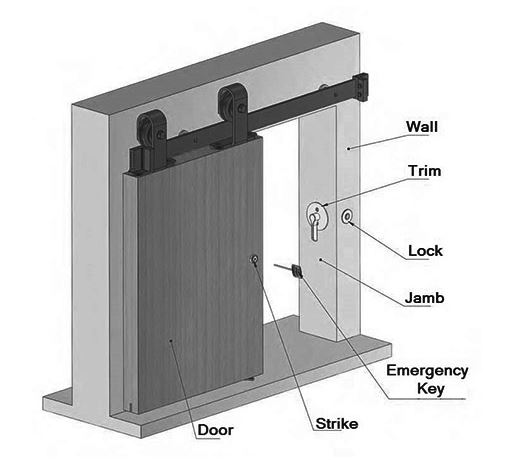
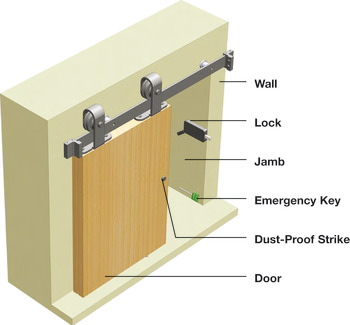
For bathrooms, consider locks with an emergency release on the outside.
Credit: www.hafele.com
Mistakes To Avoid When Locking A Barn Door
- Buying the wrong size lock: Measure your door’s thickness and the wall gap.
- Ignoring wall clearance: Some locks need space between the wall and door.
- Forgetting about accessibility: Make sure all users can operate the lock.
- Skipping instructions: Each lock is different—read the manual.
- Not testing before final install: Hold hardware in place and test the door before drilling.
Beginners often miss the importance of aligning the lock with the catch plate. Even a small error means the lock won’t work.
Where To Buy Barn Door Locks
- Home improvement stores (Home Depot, Lowe’s)
- Online retailers (Amazon, Wayfair)
- Hardware specialty shops
- Direct from barn door hardware brands
Read reviews and check return policies. Some locks look good online but don’t work well in real life.
Real-world Examples
- A small home office used a keyed surface bolt to keep work files safe from children.
- A guest bathroom added a privacy lock with an indicator—guests felt more comfortable.
- A family with toddlers mounted a magnetic lock high up, keeping cleaning supplies safe in a laundry room.
When To Upgrade Your Lock
If your barn door lock is loose, rusted, or doesn’t stay shut, it’s time for an upgrade. Modern locks are stronger, safer, and look better than old-fashioned hardware.
External Resource
For more about the history and security of locks, you can visit the Wikipedia page on Lock and Key.
Frequently Asked Questions
How Do I Lock A Sliding Barn Door From Both Sides?
Most barn door locks only lock from one side. For two-way locking, you need a double-sided keyed lock or a smart lock. These allow you to lock and unlock from either side of the door. Some special privacy locks have a thumb-turn on both sides.
Can I Lock A Barn Door For A Bathroom?
Yes, you can. The best choice is a privacy latch or a lock with an emergency release. This ensures privacy but lets someone open the door from outside in case of emergency.
Are Barn Doors Secure For Exterior Use?
Standard barn doors are not as secure as traditional doors. For exterior use, install a keyed deadbolt or floor bolt, and use strong, weatherproof hardware. You may also need to reinforce the door and frame.
Can I Install A Barn Door Lock Myself?
Many locks are DIY-friendly, especially simple latches and bolts. For electronic or keyed locks, you may need basic tools and careful measuring. If you’re not confident, hire a professional.
What Is The Most Child-safe Barn Door Lock?
A magnetic lock or a high-mounted latch is safest for families with small children. Choose locks that cannot trap a child inside and install them out of reach.
Locking a sliding barn door is easier than you think, if you choose the right hardware and install it carefully. With the right lock, your barn door can be beautiful, private, and safe—giving you peace of mind for years to come.