
Keeping your recliner steady on carpet can seem like a small problem, but it affects your comfort, safety, and even the life of your furniture. Many people notice their recliner slowly shifts after each use, sometimes moving several inches over a week. This not only disrupts your preferred seating position but can also cause wear and tear on both the carpet and the recliner itself. The good news is that you don’t need to live with this annoyance. By understanding what causes recliners to slide and using the right solutions, you can make your chair stay exactly where you want it—no matter how much you relax.
In this guide, you’ll find clear, practical methods to keep your recliner from sliding on carpet. You’ll learn why recliners move, discover both quick fixes and long-term solutions, and get tips that even experienced furniture owners often overlook. Whether you want a cheap DIY hack or a professional solution, this article will help you choose confidently and solve the problem for good.
Why Recliners Slide On Carpet
Before choosing the right fix, it helps to understand why recliners move on carpet in the first place. Recliners are heavier than regular chairs and often have a shifting center of gravity, especially when you lean back or extend the footrest. This motion puts uneven pressure on the legs or base. Carpets, especially plush or low-pile styles, offer less grip than hard floors. This combination makes sliding almost unavoidable unless you take action.
Some common reasons include:
- Recliner leg material: Plastic or metal feet slide more than wooden ones.
- Carpet type: Short, dense carpet fibers provide less grip than thick, high-pile carpets.
- Weight distribution: Sitting on one side or using the footrest shifts the chair’s balance.
- Regular movement: Moving the recliner to clean or access something behind it loosens its position.
Understanding these details helps you pick the best anti-slip strategy for your situation.
Methods To Keep A Recliner From Sliding On Carpet
There is no single solution that fits all recliners and carpets. Some methods are simple and cheap, while others require a bit more investment. Let’s explore the most effective ways to keep your recliner stable on carpet.
1. Rubber Furniture Grippers
Rubber furniture grippers are one of the easiest and most effective solutions. These small pads go under each leg or corner of the recliner. The rubber material creates friction, anchoring the chair in place.
- How to use: Lift each corner of the recliner and place a pad underneath.
- Benefits: Inexpensive, quick to install, no tools required.
- Drawbacks: May compress over time; need replacement every 1-2 years.
Non-obvious insight: Some grippers work better on certain carpets. Look for thicker pads if your carpet has deep pile.
2. Non-slip Furniture Mats
Non-slip mats are slightly larger than grippers and provide a broader base. You can cut them to the exact size of your recliner’s footprint.
- How to use: Measure the recliner’s base, cut the mat, and place it underneath.
- Benefits: Covers more area, ideal for recliners with multiple feet.
- Drawbacks: May be visible if your recliner has short legs.
Tip: Choose mats with a textured bottom for extra grip.
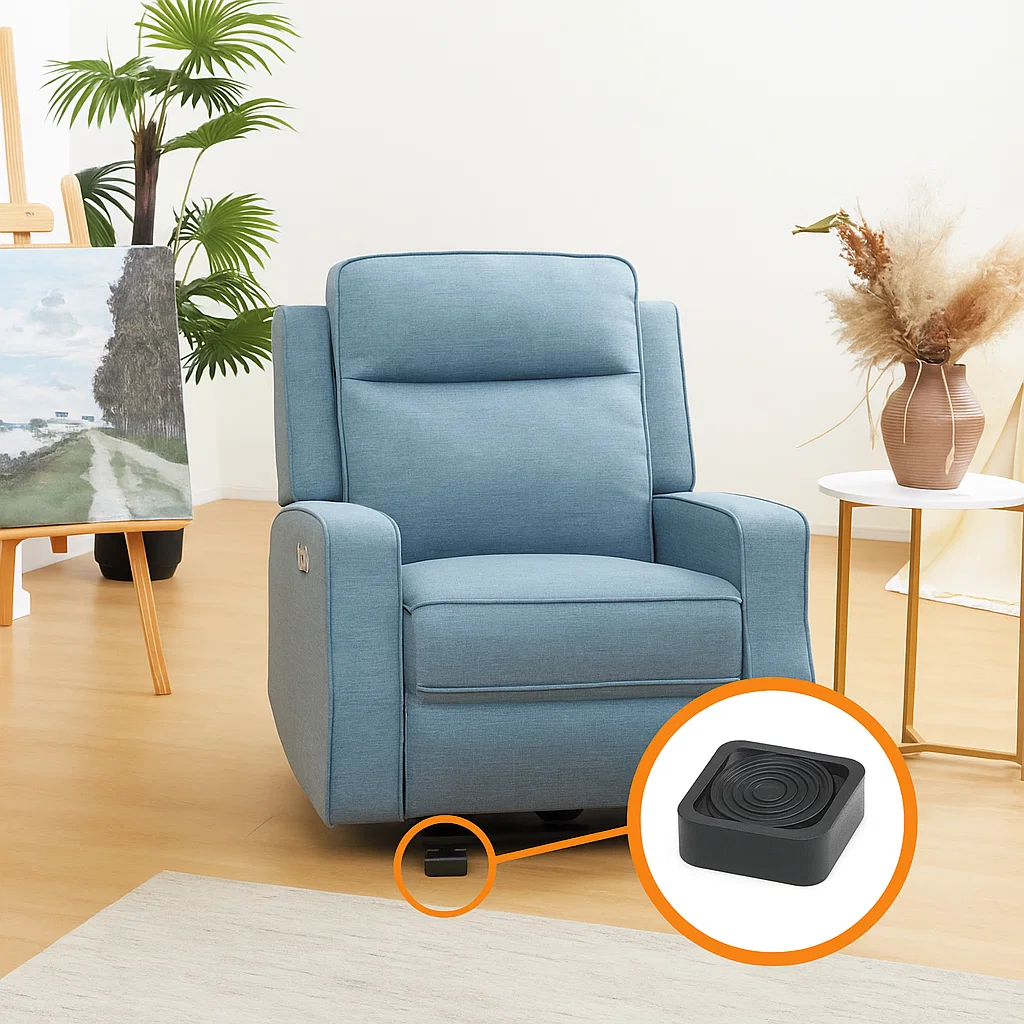
3. Furniture Cups
Furniture cups are hard plastic or rubber “saucers” that cradle each leg of the recliner. They are designed to stop movement on both carpet and hard floors.
- How to use: Place a cup under each leg.
- Benefits: Distributes weight, reduces carpet dents.
- Drawbacks: May not work with recliners that have a solid base instead of legs.
Example: Many people use furniture cups for pianos and heavy beds. They’re just as effective for recliners.
4. Velcro Strips
Velcro strips can be a creative solution, especially for lightweight recliners. Attach one side of the strip to the recliner’s feet and the other to the carpet.
- How to use: Use adhesive-backed Velcro, press firmly to secure.
- Benefits: Holds tightly, easy to remove.
- Drawbacks: Can damage delicate carpets when removed; not for heavy recliners.
Non-obvious insight: Use industrial-strength Velcro for best results.
5. Double-sided Carpet Tape
Double-sided tape is a quick DIY fix. It sticks the recliner legs directly to the carpet.
- How to use: Cut tape to size, apply to bottom of each leg.
- Benefits: Cheap, widely available.
- Drawbacks: Adhesive may leave residue; not long-lasting.
Tip: Clean the recliner feet before applying tape for a stronger hold.
6. Furniture Weights
Adding weights to the base of your recliner increases friction and makes it less likely to slide.
- How to use: Attach weight plates or sandbags under the chair.
- Benefits: Effective for lightweight recliners.
- Drawbacks: Not suitable for recliners with limited space underneath.
Example: Some recliners have hollow bases perfect for adding small weights.
7. Replace Recliner Feet
Changing the material or shape of your recliner’s feet can have a big impact. Rubber or silicone feet grip better than plastic or metal ones.
- How to use: Unscrew the old feet and replace with new ones.
- Benefits: Permanent solution, improves grip.
- Drawbacks: Requires basic tools, may affect chair height.
Practical tip: Measure the thread size before buying replacement feet.
8. Anchoring To The Wall
If you never move your recliner, anchoring it to a wall is an option. Use brackets or straps to fix the back of the recliner to the wall.
- How to use: Attach small brackets to the recliner and wall studs.
- Benefits: Zero movement, very secure.
- Drawbacks: Hard to move for cleaning, may damage wall.
Common mistake: Using drywall anchors instead of finding a stud—always use a stud for safety.
9. Anti-slip Underlay
Anti-slip underlays are usually sold for rugs but work well under recliners. They are thin, rubberized sheets that increase friction.
- How to use: Cut to size and place under the recliner.
- Benefits: Cheap, invisible, easy to adjust.
- Drawbacks: May lose effectiveness over time.
Non-obvious insight: Choose a thicker underlay for heavy recliners.
10. Carpet Tiles
If your carpet is old or worn, carpet tiles can provide a fresh, grippy surface under your recliner.
- How to use: Replace a small area of your carpet with tiles.
- Benefits: Customizable, improves look and function.
- Drawbacks: May not match existing carpet perfectly.
Tip: Use tiles with a rubber backing for best results.
11. Diy Wooden Base
A DIY wooden base can help if your recliner has a narrow or unusual base that doesn’t sit flat. A sturdy wooden board, cut to size, spreads out the weight and gives more surface area for anti-slip pads.
- How to use: Cut wood to fit, attach non-slip pads, and place recliner on top.
- Benefits: Custom fit, very stable.
- Drawbacks: May raise chair height, needs basic carpentry skills.
Example: A half-inch plywood board works well for most recliners.
12. Adjust Recliner Placement
Sometimes, simply moving your recliner a few inches can make a big difference. Avoid placing it on seams or edges of the carpet, which are more slippery.
- How to use: Find a flat, stable part of the carpet.
- Benefits: Free, instant improvement.
- Drawbacks: Only works for minor sliding.
Practical tip: Mark the ideal spot with tape while adjusting.
13. Professional Anti-slip Kits
Some companies sell anti-slip kits designed for all types of furniture. These kits usually include pads, adhesives, and sometimes special feet.
- How to use: Follow the kit instructions for best results.
- Benefits: All-in-one solution, often long-lasting.
- Drawbacks: More expensive than DIY options.
Non-obvious insight: Kits from flooring companies are usually more durable.
14. Carpet Shims
Carpet shims are thin, wedge-shaped pieces used to level furniture on uneven carpet. They stop sliding caused by dips or soft spots.
- How to use: Place shims under the recliner’s feet where needed.
- Benefits: Levels chair, prevents rocking and sliding.
- Drawbacks: May be visible if not positioned carefully.
Example: Foam or rubber shims blend better with most carpets.
15. Install A Carpet Anchor System
A carpet anchor system is a more advanced solution. These small, hidden anchors grip the carpet from below and attach to the recliner’s feet.
- How to use: Install anchors under the carpet and connect to the recliner.
- Benefits: Nearly invisible, very effective.
- Drawbacks: Installation can be tricky, not for renters.
Tip: This method is great for home theaters or permanent setups.
Credit: www.aosom.com
Comparing The Most Popular Solutions
To help you choose, here’s a comparison of the most common methods based on key features:
| Method | Cost | Ease of Installation | Visibility | Long-Term Effectiveness |
|---|---|---|---|---|
| Rubber Grippers | Low | Easy | Low | Moderate |
| Furniture Cups | Low | Very Easy | Low | High |
| Velcro Strips | Low | Easy | Low | Low |
| Professional Kits | High | Moderate | Low | High |
| Carpet Anchor System | High | Hard | Very Low | Very High |
How Carpet Type Affects Recliner Stability
Not all carpets are the same. The type and thickness can change how much your recliner slides.
| Carpet Type | Sliding Risk | Best Solution |
|---|---|---|
| Low-Pile (Office-style) | High | Rubber Grippers, Furniture Cups |
| Medium-Pile (Most Common) | Medium | Non-Slip Mats, Replace Feet |
| High-Pile (Shaggy) | Low | Anti-Slip Underlay, Shims |
Non-obvious insight: High-pile carpets can hide furniture pads, but they sometimes compress and lose grip over time.
Mistakes To Avoid When Securing Your Recliner
Many people make small mistakes that keep their recliner from staying in place. Avoid these common errors to get the best results:
- Using the wrong size grippers: Too small, and they won’t hold. Too large, and they stick out.
- Ignoring recliner weight: Heavy chairs need stronger pads or multiple solutions.
- Not cleaning the feet: Dust and dirt reduce grip—wipe them before applying anything.
- Forgetting about cleaning: Make sure your solution allows you to move the recliner if needed.
- Choosing visible solutions: Some fixes, like wooden bases, may not look good in a living room.
Pro tip: Test your solution by sitting and reclining fully before calling the job done.
Maintenance And Longevity Tips
Once your recliner is stable, it’s easy to forget about it. But a little maintenance can keep it from sliding for years.
- Check pads and mats every 6 months for wear and replace if needed.
- Vacuum under and around the recliner regularly to keep dust from reducing grip.
- Re-tighten or re-secure any anchors or screws if you notice movement.
- Test the stability after moving the recliner for cleaning or redecorating.
Non-obvious insight: Some rubber grippers dry out and harden faster in rooms with strong sunlight—rotate or replace them more often if your recliner sits by a window.

Credit: www.amazon.com
When To Call A Professional
Most recliner sliding issues can be fixed with simple products or DIY methods. But sometimes, it’s best to call in a pro:
- Recliner is very heavy (over 150 lbs) or part of a large sectional.
- Recliner base is damaged or uneven.
- Need a custom solution for home theater seating or commercial spaces.
Professional installers have special anchors and tools for these situations.
Cost Comparison: Diy Vs. Professional Solutions
Which is more cost-effective—doing it yourself or hiring a pro? Here’s a quick look:
| Solution | Average Cost | DIY Skill Level |
|---|---|---|
| Rubber Grippers | $10–$20 | Easy |
| Furniture Cups | $15–$30 | Very Easy |
| Professional Kit | $40–$70 | Moderate |
| Carpet Anchor System (Pro Install) | $100–$250 | Professional Only |
Tip: For most homes, a $20 set of grippers or cups is enough. Only choose pro solutions for very heavy or unusual recliners.
Safety And Damage Prevention
A sliding recliner is more than a nuisance. It can cause:
- Trip hazards for children, seniors, or pets.
- Furniture damage from repeated movement or tipping.
- Carpet wear—recliners that move grind down carpet fibers, causing visible tracks or holes.
Pro insight: Using the right anti-slip solution protects both your furniture investment and your flooring.
Real-world Example
One family noticed their recliner moved almost a foot each week on their low-pile living room carpet. They tried double-sided tape, which worked for a while but left sticky residue. After switching to thick rubber grippers and replacing the recliner’s plastic feet with rubber ones, the problem vanished.
Their carpet stayed clean, the recliner was steady, and they avoided the cost of replacing the carpet.

Credit: www.youtube.com
Environmental Considerations
If you care about eco-friendly solutions, look for:
- Natural rubber pads instead of synthetic.
- Wooden bases made from certified sustainable wood.
- Recyclable furniture cups.
Non-obvious insight: Avoid adhesives and tapes if you want to keep your carpet in perfect condition for resale or donation.
Where To Buy Anti-slip Products
You can find most anti-slip products at:
- Home improvement stores (Home Depot, Lowe’s)
- Online retailers (Amazon, Walmart)
- Specialty furniture stores
- Flooring centers for advanced kits
Always check product reviews and measure your recliner’s feet before buying.
For more details on furniture stability, see this Wikipedia entry on furniture.
Frequently Asked Questions
Why Does My Recliner Keep Sliding Even After Using Grippers?
Some recliners are very heavy or have uneven feet, which can make basic grippers less effective. Try using larger pads, a non-slip mat, or double up on solutions for better grip. Check if the feet are clean and level.
Will Anti-slip Solutions Damage My Carpet?
Most rubber or silicone pads are safe for carpets. Avoid adhesives or Velcro if your carpet is delicate or you plan to move the recliner often, as they may leave residue or pull fibers.
What’s The Best Solution For A Recliner With A Solid Base, Not Legs?
For recliners with a solid bottom, use a large non-slip mat, anti-slip underlay, or a wooden base with attached rubber pads. These give more surface area for grip.
How Often Should I Replace Furniture Grippers Or Pads?
Check them every 6–12 months, or sooner if you notice the recliner starting to move again. Sunlight, humidity, and heavy use can wear them out faster.
Can I Use These Methods For Other Furniture, Like Sofas Or Beds?
Yes, almost all anti-slip solutions work for sofas, beds, and even tables. Just match the product size and strength to the weight and base of your furniture.
Keeping your recliner from sliding on carpet is a simple way to improve comfort, safety, and the look of your living space. With the right solution, your favorite chair will stay exactly where you want it—ready for you to relax, every single day.