
Hanging curtains on corner windows can seem tricky. The angles, the limited space, and the need for privacy and style often make people feel confused. But with the right steps and a little creativity, your corner windows can look stunning and work well for your needs.
Whether you want to block light, add elegance, or make your room feel bigger, knowing how to hang corner window curtains opens new design possibilities for your home.
In this guide, you’ll learn every detail you need to get it right. We’ll cover how to choose the best hardware, measure for a perfect fit, install your rods, select the right curtains, and avoid common mistakes. You’ll also discover smart solutions for tricky corners, expert tips, and ideas to make your space stand out.
If you’ve ever wondered how professionals make corner windows look so good, you’re about to find out.
Understanding Corner Windows
Corner windows are windows that meet at a corner of a room, forming an L-shape or sometimes a more complex angle. They often bring in extra light and views, but their shape creates challenges for standard curtain rods and panels.
Why Corner Windows Are Unique
- Angles: The meeting point creates a sharp angle, not a flat wall.
- Space: There’s often less space for hardware and fabric to hang neatly.
- Light: These windows let in more light from two directions.
- Privacy: Corners may face neighbors or the street, so privacy is a concern.
Understanding these features helps you plan for the right curtain solution. You need to cover both window sides smoothly, and the hardware must work with the angle.
Choosing The Right Curtain Rods For Corners
The type of curtain rod you pick will make a big difference. Standard straight rods won’t work well for corners. Here are the main options:
1. Corner Connector Rods
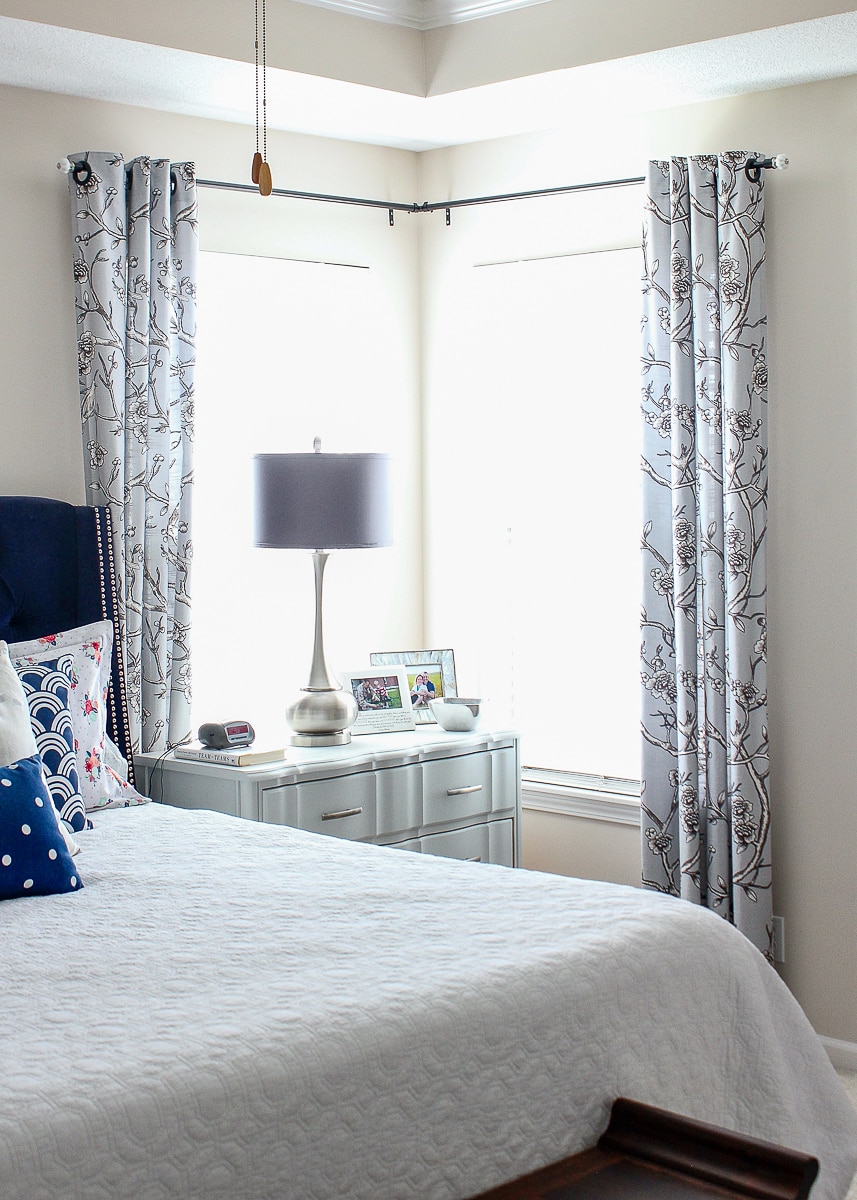
These rods are designed with a corner connector—a special piece that joins two rods at an angle. This connector lets the rods meet smoothly and allows curtain panels to glide past the corner without getting stuck.
Pros:
- Easy to install
- Looks seamless
- Curtains open and close smoothly
Cons:
- Limited style choices in some stores
- May cost more than standard rods
2. Flexible Or Bendable Rods
Some rods are made of flexible metal or plastic. You can bend them to fit almost any angle, including corners.
Pros:
- Good for sharp or odd angles
- Can be cut to size
Cons:
- Not as strong for heavy curtains
- May sag if not supported well
3. Double Bracket Systems
This system uses two rods, each mounted on one side of the corner, with brackets very close together at the corner. The curtains meet or slightly overlap at the corner but may not glide across.
Pros:
- Simple installation
- Works with existing rods
Cons:
- Gap or bump at the corner
- Not as smooth for opening/closing
4. Ceiling-mounted Tracks
Tracks are mounted to the ceiling, allowing the curtain to curve around the corner. Tracks are a favorite in modern or minimalist homes.
Pros:
- Sleek look
- Allows curved movement
- Great for floor-to-ceiling curtains
Cons:
- More complex installation
- Harder to find in some stores
Rod Comparison Table
To help you compare, here’s a table showing the main features of each rod type:
| Rod Type | Best For | Ease of Install | Cost | Notes |
|---|---|---|---|---|
| Corner Connector Rod | Most corner windows | Easy | $$ | Smooth look, glides well |
| Flexible Rod | Sharp/odd angles | Medium | $$ | Needs strong support |
| Double Bracket | Quick fixes | Easy | $ | Gap at corner |
| Ceiling Track | Modern look | Medium | $$$ | Curved movement |
Tip: If you want a seamless look and easy movement, a corner connector rod or ceiling track is often the best choice.

Credit: stylebyemilyhenderson.com
Measuring For Corner Curtains
Accurate measurement is the key to success. Here’s how to measure your corner window for curtains:
Tools You’ll Need
- Metal measuring tape (more accurate than fabric tape)
- Pencil and notepad
- Step ladder (if needed)
- Level (for straight lines)
Step-by-step Measuring
- Measure Each Window Side: Measure the width of each window from outer edge to outer edge. Write down both numbers.
- Decide Curtain Rod Placement: Most people hang rods 4–6 inches above the window frame and extend 3–6 inches past the window sides. Decide how high and wide you want your rods.
- Account for the Corner: Measure the distance from the corner to where the rod will start on each wall. This helps you find the exact rod length needed.
- Measure for Overlap: If using separate rods, decide if you want the curtains to overlap at the corner. Add 2–4 inches for overlap.
- Check Ceiling Height: If using ceiling tracks, measure from the ceiling down to where you want the curtains to end.
- Mark Bracket Placement: Use a pencil to mark where brackets will go. Double-check with a level.
Non-obvious Insight: Always measure twice! Even small mistakes can leave gaps or cause the rods to not fit.
Installing Curtain Rods For Corner Windows
Once you have your rods and measurements, it’s time to install. The steps vary a little depending on the rod type, but the main process is similar.
1. Gather Your Tools
- Power drill and drill bits
- Wall anchors and screws (for drywall)
- Screwdriver
- Pencil
- Level
- Ladder
2. Find Wall Studs
Corner windows often have less space for strong mounting. Use a stud finder if possible. If there’s no stud, use heavy-duty wall anchors to keep the rods secure.
3. Install The Brackets
- Mark bracket locations on each wall, making sure they are the same height.
- Drill pilot holes for the screws.
- Attach the brackets with screws, using anchors if needed.
4. Connect The Rods
- For corner connector rods, attach one rod to each bracket, then join them with the corner connector piece.
- For flexible rods, bend to fit the angle before attaching.
- For double bracket systems, install brackets close together at the corner.
- For ceiling tracks, follow the manufacturer’s instructions for attaching the track to the ceiling.
5. Check For Level
Use a level to make sure the rods are straight. Uneven rods will make your curtains hang awkwardly.
6. Test The Fit
Before hanging curtains, slide the rods or connectors to make sure they move smoothly and fit the corner angle.
Extra Tip: Leave enough space above the window for curtain rings or grommets to move freely. If the rod is too close to the window frame, curtains may get stuck.
Selecting The Best Curtains For Corner Windows
Not all curtains work equally well for corners. The right fabric, length, and style can make your corner windows a highlight of the room.
1. Curtain Length
- Floor-length curtains add elegance and make the room look taller.
- Café curtains (covering just the lower half) are good for kitchens or breakfast nooks.
- Sill-length curtains are best for small rooms or windows with furniture below.
Non-obvious Insight: If your floors are uneven, measure the length to the floor in several spots. Small height differences can make curtains look uneven.
2. Curtain Width
Each panel should be 1. 5–2 times the width of the window for fullness. For corner windows, make sure each side has enough fabric to cover the window and meet or overlap at the corner.
3. Fabric Choice
- Sheer curtains let in light and are good for privacy without blocking views.
- Blackout curtains block light for bedrooms.
- Medium-weight fabrics like linen or cotton are best for most homes.
4. Style And Color
Choose a style that fits your room. For example:
- For a modern look, use plain white or gray panels.
- For a cozy feel, choose patterned or textured fabrics.
Tip: Lighter colors make rooms feel bigger and brighter, which is useful for corners that may feel small.
5. Curtain Heading
- Grommet tops slide easily but need more rod space.
- Rod pocket styles are simple but harder to move.
- Pinch pleat or tab top styles offer a tailored look.
Curtain Fabric Comparison
This table shows how different curtain fabrics perform for corner windows:
| Fabric Type | Light Control | Privacy | Maintenance | Best For |
|---|---|---|---|---|
| Sheer | Low | Medium | Easy | Living rooms |
| Blackout | High | High | Medium | Bedrooms |
| Linen/Cotton | Medium | Medium | Easy | Most rooms |
Step-by-step: How To Hang Corner Window Curtains
Let’s put everything together into clear steps you can follow for hanging corner window curtains.
Step 1: Choose Your Rod Type
Pick the rod system that works best for your window shape, style, and budget.
Step 2: Measure And Mark
Carefully measure the window width, height, and distance from the corner. Mark bracket positions with a pencil.
Step 3: Install Brackets
Attach brackets to the wall or ceiling, making sure they are level and secure.
Step 4: Assemble And Attach Rods
Connect rods using corner connectors or bend flexible rods as needed. Attach to brackets.
Step 5: Hang Curtains
Thread curtains onto the rods. Adjust the fabric so each side meets smoothly in the corner.
Step 6: Test And Adjust
Open and close the curtains to test movement. Adjust panel overlap or bracket positions if needed.
Step 7: Style The Curtains
Arrange the panels so they hang evenly. Use tiebacks or holdbacks if you want to keep curtains open during the day.
Pro Tip: If your curtains don’t move smoothly around the corner, try using curtain rings with hooks for easier gliding.
Creative Design Ideas For Corner Window Curtains
Corner windows are a great chance to be creative. Here are some ideas to make your space unique:
1. Layered Curtains
Use a sheer curtain closest to the window for soft light and a heavier curtain in front for privacy. Layering adds depth and style.
2. Floor-to-ceiling Drama
Hang curtains from the ceiling to the floor for a luxurious look and to make the room feel taller.
3. Mix Fabrics Or Colors
Use different fabrics or colors on each side of the corner for a bold, custom look.
4. Use Tiebacks
Tiebacks or holdbacks can frame the window and let in more light during the day.
5. Add A Valance
A valance or short top panel can hide hardware and add a finishing touch.
Common Mistakes To Avoid
Even with the right tools and style, mistakes can happen. Here are some to watch for:
1. Wrong Measurements
Measuring only once or guessing can lead to gaps, sagging rods, or curtains that don’t cover the window fully.
2. Weak Hardware
Corner windows need strong brackets and rods. Avoid thin or weak rods that will bend or sag.
3. Too Little Overlap
If the curtains don’t overlap enough at the corner, you’ll have a gap that lets in light or reduces privacy.
4. Poor Fabric Choice
Heavy fabrics on weak rods may pull the hardware out of the wall. Light fabrics on a dark wall may not give enough privacy.
5. Clashing Styles
Curtains that clash with your wall color or room style can make the window stand out in a bad way.
Expert Advice: Always check the weight limit for your rod and brackets. If you’re unsure, ask at your local hardware store or look for product reviews.
Advanced Tips And Professional Tricks
If you want your corner window curtains to look like a designer did them, try these advanced tips:
1. Use A Continuous Rod
Some manufacturers make rods that curve smoothly around a corner. This avoids breaks or gaps and lets curtains glide all the way around.
2. Hide The Hardware
Use a valance or ceiling track to hide rods and brackets for a clean, modern look.
3. Add Extra Panels
Instead of one panel per side, use two panels per side for more fullness. You can pull the inner panels for privacy and leave outer panels open for style.
4. Custom-made Curtains
If you have an unusual window size or shape, consider custom curtains. Many online stores let you choose exact measurements and fabrics.
5. Wall-to-wall Coverage
For a dramatic effect, hang curtains across the entire wall, not just the window. This makes the room feel larger and hides any awkward angles.
Maintenance And Care For Corner Window Curtains
Keeping your curtains looking good is important for both style and function.
Cleaning
- Machine-washable curtains: Wash every 3–6 months. Use a gentle cycle and mild detergent.
- Dry-clean only fabrics: Take to a professional cleaner once or twice a year.
- Sheers: Shake out dust weekly and wash monthly.
Checking Hardware
- Inspect rods and brackets every few months for loosening or sagging.
- Tighten screws as needed.
Adjusting For Seasons
- Use lighter curtains in summer for airflow.
- Switch to heavier, insulated curtains in winter for warmth.
Non-obvious Insight: Always hang curtains back on the rod while slightly damp after washing. This helps smooth out wrinkles without ironing.
When To Call A Professional
Sometimes, hanging corner window curtains is not a DIY job. If you have:
- Very high or wide windows
- Heavy or expensive fabric
- Unusual shapes or historic homes
…it’s smart to call a pro. They have special tools and experience to get a perfect look. Costs vary, but it’s often worth it for peace of mind and top results.
Sustainability And Green Choices
If you care about the environment, look for:
- Organic cotton or linen curtains
- Recycled polyester fabrics
- Eco-friendly hardware (like bamboo rods)
- Energy-efficient curtains to save on heating and cooling
Sustainable curtains can reduce your carbon footprint and keep your home healthy.
For more on sustainable home choices, see the EPA Green Homes guide.

Credit: blog.kwikhang.com
Quick Reference: Hanging Corner Window Curtains
Here’s a handy summary for your next project:
| Step | What to Do | Key Tip |
|---|---|---|
| 1 | Choose the rod type | Corner connector or ceiling track for best look |
| 2 | Measure carefully | Measure each side from corner out |
| 3 | Install brackets | Use wall anchors if no stud |
| 4 | Attach rods/tracks | Make sure rods are level |
| 5 | Hang and style curtains | Arrange panels for smooth overlap |
Frequently Asked Questions
How Do I Keep Curtains From Getting Stuck At The Corner?
Use a corner connector rod or a ceiling-mounted track. These let curtain rings or hooks glide smoothly past the corner joint. Lubricate the rod or track with a little silicone spray if movement is stiff. Avoid regular rods that meet at a sharp angle, as these cause snags.
What’s The Best Way To Get Full Privacy With Corner Curtains?
Choose blackout curtains or layer a sheer and a heavier panel. Make sure the curtain panels overlap at the corner by at least 2–4 inches. This prevents any gaps where people could see in, especially at night.
Can I Use The Same Curtain Rod For Both Sides Of The Corner?
Yes, with a corner connector or a bendable rod, you can have one continuous rod for both sides. This gives a seamless look and makes it easier to open and close the curtains. For very sharp angles, a flexible rod or ceiling track is the best choice.
How Do I Hang Curtains If My Corner Window Is Close To The Ceiling?
Use a ceiling-mounted track or hang the rod as high as possible, just below the ceiling line. Floor-to-ceiling curtains make the space look taller and give a modern feel. Choose lightweight fabric if the rod is close to the ceiling to avoid crowding.
What Should I Do If My Window Frame Is Uneven Or Walls Are Not Straight?
Measure at several points to find the average height. Use adjustable brackets to level the rod. For very uneven walls, a flexible rod or ceiling track can hide flaws. Custom-made curtains can be hemmed to different lengths if one side is higher than the other.
Hanging corner window curtains does take some planning, but the results are worth it. With the right hardware, careful measurements, and smart fabric choices, you can turn a tricky corner into a beautiful feature. Take your time, follow the steps, and enjoy your brighter, more stylish space.
Credit: thehomesihavemade.com