
A bedroom should feel comfortable and welcoming, but sometimes it can look empty or unfinished. Maybe you just moved in, or you have a large room that feels sparse. Filling space in a bedroom goes far beyond buying random furniture.
It is about creating a balanced, harmonious environment that matches your style and needs. Whether you love a minimalist look or want a cozy retreat, there are smart ways to make your bedroom look complete and inviting.
Many people struggle with arranging furniture, choosing the right accessories, and making a room feel lived-in. You might find yourself with awkward corners, too much empty floor, or blank walls that seem out of place. The good news is, you don’t need to be an interior designer to solve these problems.
With some practical ideas and a clear plan, you can transform your bedroom into a space that feels both beautiful and functional.
This guide will walk you through everything you need to know about filling space in a bedroom. You’ll discover furniture ideas, storage solutions, decorative touches, and even clever tricks that professionals use. We’ll also cover common mistakes and how to avoid them, plus answer the most frequent questions people have.
By the end, you’ll have a clear vision and plenty of inspiration to make your bedroom a space you truly enjoy.
Understanding Your Bedroom Space
Before you start adding items, it’s important to study your bedroom. Every room is different, so understanding your unique space will help you make better decisions.
First, measure your bedroom. Note the size, shape, and any features like windows, doors, or built-in closets. Large bedrooms often feel empty in the center, while smaller rooms can have awkward corners or hard-to-use walls. Think about how you use your bedroom—do you just sleep there, or is it also a place for reading, working, or relaxing?
Next, look at the natural light. Light changes how a room feels. If you have big windows, you can use lighter colors and airy fabrics. For darker rooms, mirrors and brighter colors help open up the space.
Finally, take a picture of your bedroom. Sometimes, seeing it in a photo reveals empty spots or areas that need more attention.
Smart Furniture Placement
Furniture is the biggest factor in how full or empty your bedroom feels. But it’s not just about adding more pieces—it’s about choosing the right ones and putting them in the best places.
Choose The Right Bed Size
The bed is the main focus in most bedrooms. In a large room, a small bed can make everything look out of balance. If you have the space, consider a queen or king-size bed. For smaller rooms, a double or full-size bed may be best.
Adding a headboard or a bed frame with a tall design can also make the bed area look more substantial. Upholstered or wooden headboards work well.
Add Nightstands And Bedside Tables
A bedroom looks unfinished without nightstands on each side of the bed. They fill space and add symmetry. In a bigger room, choose larger nightstands with drawers or shelves. If your space is small, floating shelves or slim tables work well.
Place A Bench Or Seating Area
A bench at the foot of the bed fills empty floor space and adds a place to sit. In very large bedrooms, a small seating area with an armchair and side table creates a cozy corner.
Use Dressers And Chests
A dresser or chest of drawers is both practical and helps fill wall space. Tall dressers are good for narrow spaces, while wide ones work well on long walls. Consider a double dresser for more storage and a bigger impact.
Comparison: Dresser Vs. Chest
Here’s a quick comparison to help you choose:
| Type | Best for | Pros | Cons |
|---|---|---|---|
| Dresser | Wide wall space | More surface area, decorative top | Takes up more floor space |
| Chest | Narrow spaces | Tall, fits in corners | Less surface for decor |
Consider A Vanity Or Desk
If you have extra space, a vanity or small desk can be a good addition. It’s useful for getting ready or as a work-from-home spot.
Using Rugs To Define Areas
A rug is a powerful way to fill empty floor space and make a bedroom feel warmer.
Pick The Right Size
A common mistake is choosing a rug that’s too small. In most bedrooms, the rug should extend at least 2 feet around the bed. For very large rooms, use a bigger rug or layer two rugs for extra texture.
Layering Rugs
Layering a smaller patterned rug on top of a larger, plain rug adds depth and interest. This trick works especially well if you have hardwood floors.
Rug Placement Guide
Here’s a simple guide for rug placement with different bed sizes:
| Bed Size | Rug Size | Placement |
|---|---|---|
| Queen | 8’ x 10’ | Under bed, extends on sides and foot |
| King | 9’ x 12’ | Under bed, covers wide area |
| Twin | 5’ x 8’ | Beside bed or fully under bed |
Filling Wall Space
Blank walls can make a bedroom feel empty, but there are many ways to add style and interest.
Hang Art And Photos
Large-scale artwork or a gallery wall with framed photos creates a focal point. Choose pieces that match your color scheme and personal taste. For a bold look, hang one big piece above the bed.
Use Mirrors
A mirror does more than fill space—it also reflects light and makes the room look bigger. Place a large mirror on an empty wall or use several smaller mirrors in a group.
Add Shelves
Floating shelves let you display books, plants, or small decor items. They also break up large blank walls. Arrange shelves at different heights for a more dynamic look.
Install Wall-mounted Lighting
Wall sconces or reading lights free up nightstand space and add a stylish touch. They work well on each side of the bed or above a reading chair.
Create An Accent Wall
Painting one wall a different color or using wallpaper adds instant interest. Choose a color that complements your bedding and furniture.
Bringing In Storage Solutions
Storage can fill empty spots and keep your bedroom organized.
Use Storage Benches
A storage bench at the end of the bed or under a window adds seating and hides away extra blankets or pillows.
Add Baskets And Boxes
Decorative baskets fill corners and provide a place for laundry, magazines, or toys. Stack two or three for a layered look.
Under-bed Storage
If you have a raised bed, use the space underneath for storage boxes or drawers. This trick keeps the room tidy and makes use of otherwise wasted space.
Built-in Solutions
Built-in shelves or cabinets are great for filling large walls or awkward nooks. They can be custom-made or bought as modular units.
Decorating With Plants And Greenery
Plants are a simple way to fill space and bring life to your bedroom.
Choose The Right Plants
Tall plants like fiddle leaf figs or snake plants are perfect for empty corners. Small potted plants work well on dressers, nightstands, or shelves.
Group Plants Together
Instead of spreading plants around the room, try grouping several in one area. Use different heights and types for a more natural look.
Hanging Planters
Hanging planters or wall-mounted pots save floor space and add greenery at eye level.
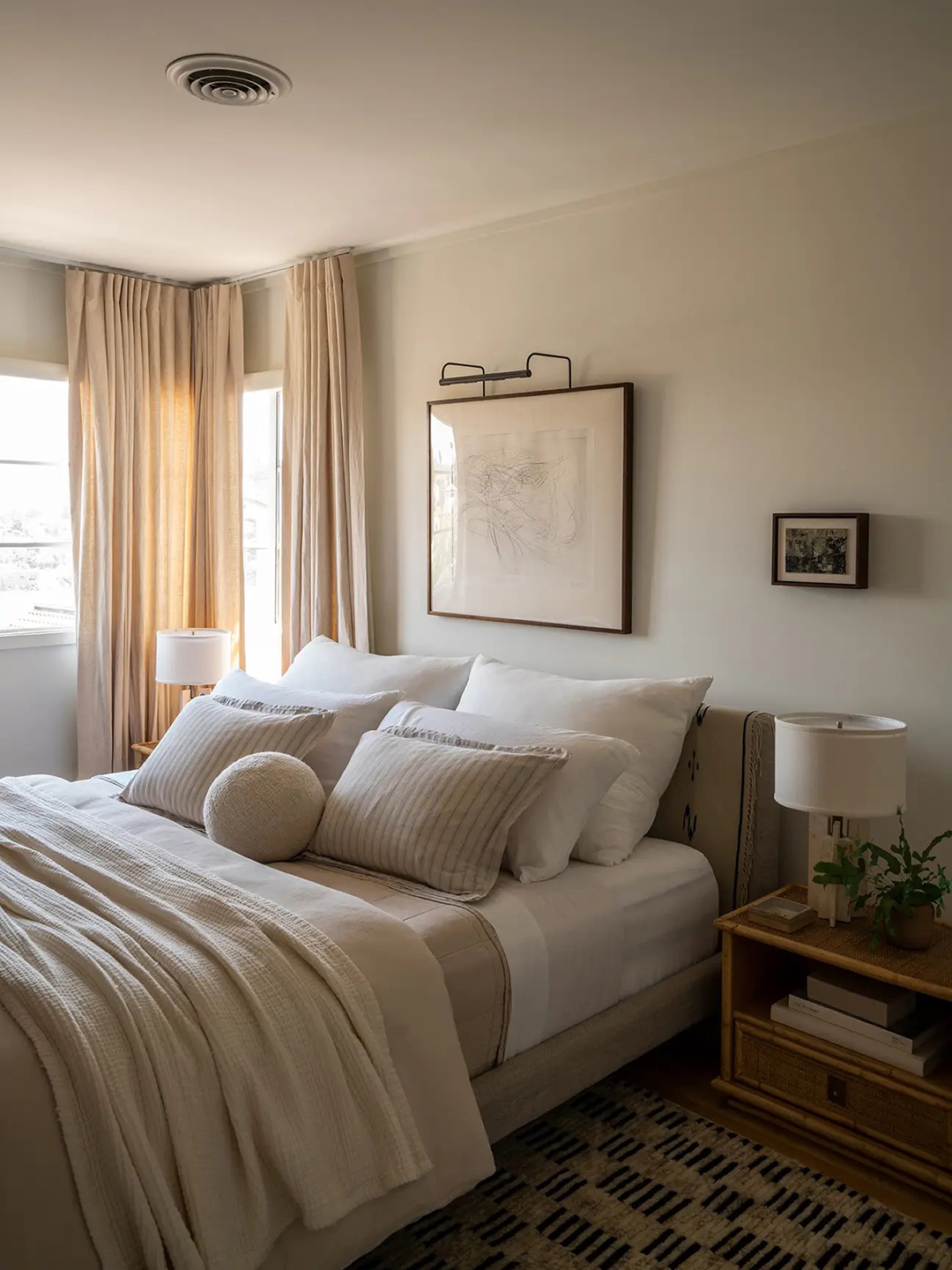
Credit: www.domino.com
Adding Decorative Accessories
The right accessories make a bedroom feel finished and personal.
Use Throw Pillows And Blankets
Pile a few throw pillows on the bed or a chair. Add a soft blanket or quilt for texture and color.
Place Decorative Trays And Bowls
A tray on your nightstand or dresser can hold small items like jewelry, watches, or candles. This not only fills space but keeps things organized.
Display Books And Magazines
A stack of favorite books on a nightstand or shelf adds personality. For a bigger impact, use a small bookcase.
Use Candles And Diffusers
Candles and reed diffusers add warmth and a pleasant scent. Place them on a dresser, shelf, or windowsill.
Making Use Of Vertical Space
Many bedrooms have high ceilings or tall walls. Using this space makes the room feel fuller and more stylish.
Tall Bookcases And Cabinets
A tall bookcase fills vertical space and provides storage. Place it in a corner or beside the bed.
Hanging Curtains High
Install curtains close to the ceiling, even if your windows are lower. This makes the room look taller and draws the eye upward.
Vertical Art Or Tapestries
Hang a long piece of art or a fabric tapestry to fill a tall, narrow wall.
Creating A Cozy Seating Area
If you have extra space, a seating area can make your bedroom feel like a retreat.
Add A Reading Chair
A comfortable chair and a small table create the perfect spot for reading or relaxing.
Loveseat Or Chaise Lounge
For very large rooms, a small loveseat or chaise gives you a place to unwind.
Add A Floor Lamp
A floor lamp beside your chair adds light and makes the area inviting.
Using Color And Texture
Color and texture play a big role in making a bedroom feel full and layered.
Layer Bedding
Use sheets, quilts, and comforters in different colors and textures. This adds depth to the bed area.
Mix Materials
Combine wood, metal, glass, and soft fabrics in your furniture and decor. For example, pair a wooden dresser with a metal lamp and a glass vase.
Add Texture With Wall Hangings
Macramé, woven baskets, or fabric wall art add texture and interest to blank walls.
Filling Awkward Spaces And Corners
Many bedrooms have tricky spots that are hard to use. Instead of ignoring them, turn them into useful areas.
Corner Shelves
Install corner shelves for books, plants, or decor.
Small Desk Or Vanity
A slim desk fits well in an unused corner and adds function.
Floor Lamps Or Tall Plants
A tall floor lamp or plant fills vertical space and makes a corner feel intentional.
Balancing The Room
While filling space is important, balance is key. Too many items can make the room feel cluttered. Here are tips to keep everything in harmony:
- Leave enough walking space around the bed and furniture.
- Keep surfaces tidy—don’t overcrowd nightstands or dressers.
- Choose a few large accessories instead of many small ones.
- Match colors and styles for a unified look.

Credit: www.castlery.com
Common Mistakes To Avoid
Filling space is not just about adding more things. Many people make mistakes that actually make the room feel less comfortable.
Overcrowding
Adding too much furniture or decor makes the room feel cramped. Make sure there’s space to move around easily.
Ignoring Lighting
A dark bedroom feels smaller and less welcoming. Use table lamps, floor lamps, and wall lights to brighten the space.
Using Only Small Items
Many people use lots of small accessories, which can look cluttered. Instead, choose a few larger pieces for impact.
Not Thinking About Function
Every item should have a purpose, whether it’s for storage, comfort, or decoration.
Forgetting Vertical Space
People often focus only on the floor and ignore walls and corners. Use shelves, tall plants, or hanging decor to fill these areas.
Real-life Examples: Transforming Empty Bedrooms
Sometimes the best inspiration comes from real examples. Here’s how two different bedrooms were transformed:
Example 1: Large Master Bedroom
The room had a king-size bed but felt empty in the middle and corners. The solution included:
- Adding a large area rug under the bed
- Placing a bench at the foot of the bed
- Creating a seating area with two chairs and a small table near the window
- Hanging a large piece of art above the bed
- Using tall plants in corners
- Installing built-in shelves on one wall
After these changes, the room felt balanced, inviting, and full of life.
Example 2: Small Apartment Bedroom
This room had a twin bed and little floor space. The changes included:
- Using a tall chest of drawers instead of a wide dresser
- Placing floating shelves above the bed for books and decor
- Hanging a large mirror to reflect light
- Adding a small rug beside the bed
- Using storage boxes under the bed
The result was a room that felt bigger, more organized, and cozy.

Credit: www.castlery.com
Budget-friendly Ways To Fill Space
Not everyone has a big budget for new furniture. Here are affordable ways to make your bedroom look complete:
- DIY art: Create your own artwork or frame favorite photos.
- Repurpose old furniture: Paint or refinish an old chair or table.
- Shop secondhand: Thrift stores often have unique pieces at low prices.
- Use textiles: Add throw pillows, blankets, or curtains for color and texture.
- Plants: Even one or two low-cost plants can make a big difference.
When To Call A Professional
Most people can fill bedroom space themselves, but sometimes professional help is useful. If you have a very large or awkwardly shaped room, or if you want custom built-ins, an interior designer can offer creative solutions. They also help with color choices and layout for a truly balanced result. For more on the role of interior designers, see Wikipedia’s Interior Design page.
Frequently Asked Questions
How Can I Fill A Bedroom With Little Money?
You can use affordable solutions like adding rugs, DIY art, or thrifted furniture. Plants, throw pillows, and repurposed items also work well. Focus on what you already have and rearrange for a fresh look.
What Size Rug Is Best For A Bedroom?
Choose a rug that extends at least 2 feet around the bed. For a queen bed, an 8’ x 10’ rug works well. For a king bed, go for 9’ x 12’. In small rooms, use a runner or a smaller rug beside the bed.
How Do I Fill An Awkward Corner In My Bedroom?
Try a tall plant, a floor lamp, or corner shelves. You can also place a small reading chair or a decorative basket. The key is to add height or function, not just fill space.
Should I Use Large Or Small Decor Items?
A mix works best, but don’t use only small items. One or two large pieces, like a big piece of art or a tall plant, make the room feel more balanced and less cluttered.
How Do I Make My Bedroom Cozy And Not Just Full?
Use soft textures, warm lighting, and personal touches like photos or favorite books. Avoid overcrowding—leave some open space for a relaxed, comfortable feel.
Filling space in a bedroom is about more than just buying things. It’s a balance of style, function, and comfort. With the right plan, you can transform any bedroom—large or small—into a space that feels just right for you. Start with the basics, add layers, and most importantly, make it your own.