
Covering a jack knife sofa can seem like a big job, but it’s a smart way to make your RV or small space look better. Jack knife sofas are popular in RVs because they save space by turning from a sofa into a bed.
But the upholstery often wears out, gets stained, or just looks old after some time. If you know how to cover a jack knife sofa the right way, you can refresh its look without paying for expensive reupholstering or buying a new couch.
This guide will show you everything you need to know, even if you have never sewn anything before. You’ll learn how to measure, pick the right fabric, sew or fit a cover, and keep your sofa looking great for years.
You’ll also see real examples, learn mistakes to avoid, and get tips for a professional finish. If you want to protect your sofa, match your RV’s style, or just try a new DIY project, you’ll find clear steps here.
Understanding The Jack Knife Sofa
Before you cover your jack knife sofa, it helps to know what makes it unique. A jack knife sofa is a special type of sofa bed. Instead of pulling out a mattress, you fold the seat forward so the back and seat lay flat, making a bed. This design saves space and is perfect for RVs, campers, and small apartments.
Common Features
- The seat and back are connected with a hinge.
- The sofa sits on a metal or wooden frame.
- You often find them in RVs, travel trailers, or tiny homes.
- Some have armrests, some do not.
- They are usually bolted to the floor for safety.
Why Cover A Jack Knife Sofa?
Covers protect the fabric from spills, sun damage, and pet hair. They also let you change the sofa’s color or style easily. If your sofa is old or stained, a new cover can make it look like new. Plus, it’s much cheaper than buying a new sofa or paying a professional to reupholster it.
Planning Your Project
Starting with a good plan saves time and avoids mistakes. Covering a jack knife sofa is not the same as using a regular slipcover, because the sofa moves and folds.
Measure Carefully
Before you buy any fabric or tools, measure your sofa:
- Seat width and depth (from arm to arm, and from the front to the back).
- Back width and height (from the bottom to the top).
- Armrests (if you have them).
- Thickness of cushions.
Write down all measurements in inches. Take each measurement twice to make sure you are correct. Add 2-3 inches to each side for seams and tucking.
Check The Sofa’s Movement
Open and close the sofa bed. Watch how the seat and back move. Notice where the sofa bends. You need a cover that will stretch or move with the sofa, or that you can remove before folding it into a bed.
Decide: Ready-made Or Custom Cover
You have two main choices:
- Ready-made covers: Fast and easy, but may not fit perfectly. Best for simple shapes and standard sizes.
- DIY custom cover: Best fit, can pick your own style and fabric, but takes more time and effort.
For most jack knife sofas, a DIY custom cover gives the best results because the folding design is unique.

Credit: www.reddit.com
Choosing The Right Fabric
The fabric you choose will affect how your cover looks, feels, and lasts. Think about these factors:
Durability
RV sofas get a lot of use. Choose a strong fabric like:
- Twill
- Canvas
- Microfiber
- Denim
- Outdoor upholstery fabric
These are tough and resist stains.
Washability
Covers get dirty, so pick a fabric you can wash easily. Some fabrics, like velvet, look nice but are harder to clean.
Stretch
A little stretch helps your cover fit well and stay in place when you move the sofa.
Color And Pattern
Light colors make small spaces look bigger but show dirt. Dark colors hide stains but can make a space feel smaller. Patterns hide wear and stains better than solid colors.
Special Features
Some fabrics are water-resistant or pet-proof. If you have pets or kids, look for these.
How Much Fabric Do You Need?
Measure all parts of your sofa and add up the total surface area. Buy extra fabric for mistakes, seams, or matching patterns. For a typical 68-inch RV jack knife sofa, you may need about 5-7 yards of 54-inch wide fabric.
Tools And Materials
Have all your supplies ready before you start.
- Fabric (see above)
- Sharp scissors or rotary cutter
- Measuring tape
- Pins or clips
- Fabric chalk or washable marker
- Heavy-duty thread
- Sewing machine (or needle for hand sewing)
- Velcro, zippers, or elastic (optional)
- Safety pins or upholstery pins
- Staple gun (for permanent covers)
- Screwdriver or wrench (if you need to remove the sofa)
Using quality tools makes the job easier and gives a better finish.
Preparing Your Sofa
Before you start, clean your sofa well. Remove any old covers, crumbs, or dust. If you want, take photos of each step as you take apart the sofa—this helps you put it back together.
If possible, remove the sofa from the RV to give you more space. Some people just remove the cushions, but taking the whole sofa out makes it easier to reach every part.
Check for any broken springs, loose bolts, or damage. Fix these now, because you won’t want to take the cover off again soon.
Creating A Pattern For Your Cover
A good pattern is the key to a nice fit. Jack knife sofas have simple shapes, but the moving parts need extra attention.
The Drape-and-pin Method
This is a simple way for beginners:
- Drape your fabric over one part of the sofa (the seat, for example).
- Pin the fabric along the edges, following the sofa’s shape.
- Use fabric chalk to mark corners, seams, and folds.
- Remove the fabric and lay it flat. Cut along your marks, adding 1 inch for seams.
Repeat for each section: seat, back, and arms.
Using Old Covers As A Pattern
If your sofa has an old cover, take it off and open the seams. Lay each piece flat on your new fabric and trace around it. This gives you an exact shape and makes cutting easy.
Making A Paper Pattern
You can also use large paper (like butcher paper or newspaper). Cut and tape pieces until they fit each part of the sofa. Then use these paper shapes to cut your fabric.
Label Each Piece
Write “seat,” “back,” “arm,” etc. On each piece of fabric. This prevents mixing them up later.
Sewing Your Cover
Now it’s time to start sewing. Even if you’re not an expert, you can make a neat cover with patience.
Sew In Sections
Sew the seat, back, and arms separately. This makes it easier to fit and adjust each piece.
- Pin the fabric pieces with right sides together.
- Sew seams with a straight stitch, leaving edges open where needed.
- Test fit each section on the sofa before sewing all seams.
Add Closures
You need a way to remove the cover for washing or to adjust it when folding the sofa. Use:
- Velcro strips for easy removal
- Zippers for a tight fit
- Elastic hems to hold covers in place
Sew these along the back or under the sofa where they won’t show.
Hem And Finish Edges
Fold the raw edges under and sew a hem so they don’t fray. Double-stitch for extra strength.
Fitting Around Hinges
Leave extra fabric or a small gap where the seat and back bend. If you sew the cover too tight here, the sofa won’t fold. Some people sew two separate pieces and connect them with Velcro or fabric ties at the hinge.
Installing The Cover
Once your cover is sewn, it’s time to put it on the sofa.
- Slide the seat section over the seat cushion.
- Pull the back section over the back rest.
- Attach arm covers, if you have them.
- Fasten Velcro, zippers, or elastic.
- Tuck extra fabric into the sides and back for a snug fit.
Open and close the sofa to check the fit. Adjust as needed.
If you want the cover to stay in place for a long time, use upholstery pins or a staple gun on the underside of the frame. This works well if you don’t plan to remove the cover often.
Making A No-sew Cover
If you don’t want to sew, you can still cover your jack knife sofa with a few tricks.
Using Fitted Sheets
A fitted sheet can work as a quick cover. Choose one that matches the size of your sofa. Pull it over the seat and back, tucking the edges under the cushions.
Tuck-and-pin Method
Drape a large piece of fabric over the sofa. Use upholstery pins or special slipcover grips to hold it in place. Tuck the extra fabric into the cracks and sides.
This method is not as neat, but it’s fast and easy to remove for washing.
Stretch Slipcovers
Buy a stretch slipcover made for sofas. These fit better than a flat sheet but may not be perfect if your sofa has a unique shape or arms.
Tips For A Professional Look
Even a DIY cover can look like it was made by a pro. Here are some tips:
- Use matching thread and fabric for invisible seams.
- Iron your seams and fabric before sewing for a flat, smooth look.
- Double-stitch corners for strength.
- Add piping or trim for a finished edge.
- Match patterns at the seams if using striped or plaid fabric.
- Attach buttons or decorative ties for style.
Common Mistakes To Avoid
- Not allowing for movement: If you make the cover too tight, the sofa won’t fold. Leave extra space at the hinges.
- Using the wrong fabric: Thin or stretchy fabrics may wear out quickly or slip off.
- Skipping measurements: Guessing leads to covers that don’t fit.
- Forgetting to pre-wash fabric: Some fabrics shrink after washing. Wash and dry before cutting.
- Not securing the cover: Covers can shift when you sit or sleep on them. Use pins, Velcro, or elastic.
Example: Covering A 68-inch Rv Jack Knife Sofa
Let’s look at a real-world example to make these steps clearer.
Measuring
The sofa is 68 inches wide, 36 inches deep (seat + back), and 6 inches thick. There are no arms.
Choosing Fabric
A heavy-duty navy blue canvas, 54 inches wide. Bought 7 yards to be safe.
Making The Pattern
Used butcher paper to create separate patterns for seat and back. Left a 3-inch gap at the hinge for folding.
Sewing
Sewed each section with a 1-inch seam allowance. Added a zipper along the back for easy removal.
Installing
Put the cover on, zipped it closed, and tucked the extra fabric. Used Velcro at the hinge to allow movement. The cover fits snugly and looks almost new.
Cost Comparison: Diy Vs Professional
Here’s a comparison to help you decide if DIY is right for you.
| Option | Estimated Cost | Time Needed | Pros | Cons |
|---|---|---|---|---|
| DIY Cover | $40-$120 | 4-8 hours | Custom fit, style choice, low cost | Time, sewing skill needed |
| Professional Upholstery | $350-$700 | 1-2 weeks | Expert finish, no work for you | High cost, less style control |
| Ready-made Slipcover | $60-$250 | 1 hour | Fast, easy | May not fit well |
Comparing Fabric Types For Jack Knife Sofa Covers
Choosing fabric is a big decision. Here’s a quick look at common options:
| Fabric Type | Durability | Washability | Cost (per yard) | Comfort |
|---|---|---|---|---|
| Canvas | High | Easy | $10-$16 | Firm |
| Microfiber | Medium | Easy | $8-$14 | Soft |
| Denim | High | Easy | $12-$20 | Firm |
| Twill | Medium | Easy | $8-$18 | Medium |
| Outdoor Fabric | High | Easy | $15-$30 | Medium |
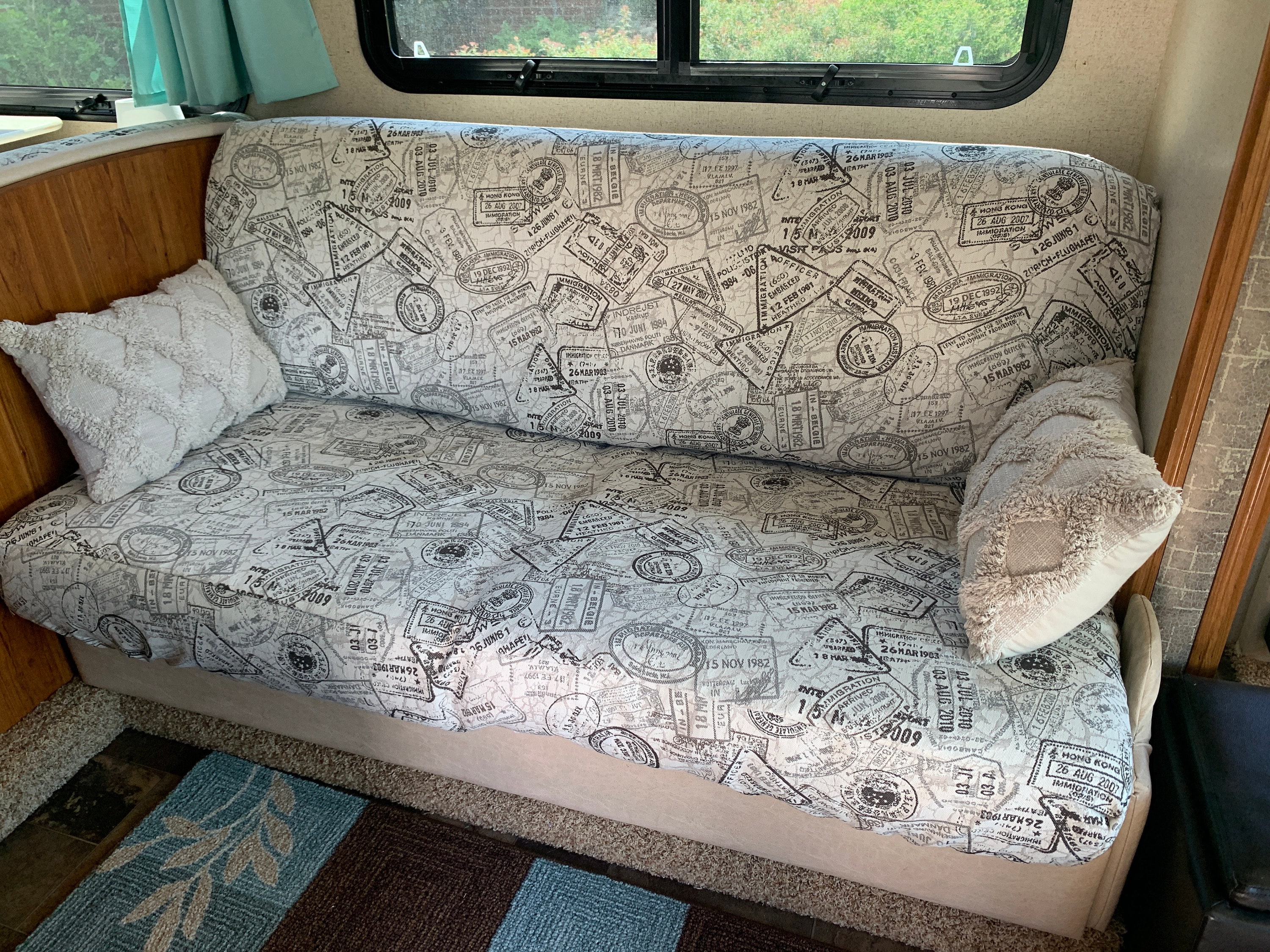
Credit: www.etsy.com
Cleaning And Maintaining Your Sofa Cover
A new cover is only as good as how you care for it. Keeping it clean is simple if you use the right fabric and care methods.
Regular Cleaning
- Vacuum the cover weekly to remove dust and crumbs.
- Wipe spills right away with a damp cloth.
Washing
- Wash in cold water on a gentle cycle.
- Use mild detergent.
- Air dry or tumble dry low to prevent shrinking.
Spot Cleaning
For stains, use a mix of water and mild soap. Test on a hidden spot first. Avoid bleach, which can damage fabric.
Protect From Sun
Sunlight can fade covers, especially in RVs. Use shades or window film to protect your sofa.
Rotate And Adjust
If possible, rotate or switch the seat and back covers every few months. This helps them wear evenly and last longer.
Advanced Tips For Customizing Your Cover
Once you have a basic cover, you can add features to make it even better.
Add Pockets
Sew fabric pockets on the sides or back for remotes, magazines, or phones. This is handy in small spaces.
Use Contrasting Piping
Sew a thin strip of a different color fabric along the seams for a stylish accent.
Add A Waterproof Layer
Sew a thin waterproof liner under your cover if you expect spills or have pets.
Make Matching Pillows
Use leftover fabric to sew throw pillows or bolster cushions for extra comfort.
Try A Two-tone Design
Use one color for the seat and another for the back. This can make the sofa look custom and modern.

Credit: www.amazon.sg
Real-world Insights And Troubleshooting
Beginners often miss some key details that affect the final result. Here are two important insights:
- Check Frame Attachments: Some jack knife sofas are bolted to the floor. Before starting, check if you need to unscrew the frame to remove the cushions. This can add time and require tools.
- Mind the Mechanism: The folding mechanism can pinch or wear out fabric. Watch for sharp edges or tight spots and reinforce these areas with extra stitching or a patch of strong material.
If your cover keeps sliding, try sewing strips of non-slip rug pad to the underside. This simple trick keeps the cover in place without showing.
If your sofa has cup holders or pull-out drawers, design the cover with openings or flaps to keep them accessible.
When To Replace Instead Of Cover
Sometimes a cover is not enough. If your jack knife sofa has broken springs, a sagging frame, or very old foam, it may be better to repair or replace it. Covers work best for cosmetic fixes, not major structure problems.
If you decide to replace your sofa, look for newer models with removable, washable covers or stain-resistant fabric. You can find more on current RV furniture trends at Wikipedia.
Frequently Asked Questions
What Is The Best Fabric For A Jack Knife Sofa Cover?
The best fabric is canvas or outdoor upholstery fabric because they are tough, easy to clean, and resist stains. Microfiber is also a good choice for comfort.
Can I Cover A Jack Knife Sofa Without Sewing?
Yes. You can use a fitted sheet, stretch slipcover, or drape and pin fabric with upholstery pins. The result may not be as neat, but it’s quick and easy to remove for washing.
How Do I Keep My Cover From Sliding Off?
Use Velcro strips, elastic edges, or non-slip rug pads sewn under the cover. Tucking the cover tightly into the sofa’s cracks also helps keep it in place.
Is It Cheaper To Cover Or Replace A Jack Knife Sofa?
It’s much cheaper to cover a sofa. DIY covers usually cost $40-$120, while a new jack knife sofa can cost $400 or more. Covering is smart if your sofa is still comfortable.
Do I Need To Remove The Sofa From My Rv To Cover It?
No, but it helps. Removing the sofa gives you more space to work and lets you fit the cover better. If you can’t remove it, at least take out the cushions if possible.
Covering a jack knife sofa takes effort, but the reward is a fresh, new look that matches your style and protects your furniture. With a little planning and patience, you can make your RV or small space feel more like home.