
Keeping your SPC flooring clean is important for both appearance and long-term durability. SPC stands for Stone Plastic Composite, a modern type of vinyl flooring known for its strength and water resistance. Many people choose SPC floors for homes and offices because they are easy to maintain and can handle heavy foot traffic. But cleaning SPC flooring the right way is not always obvious. Using incorrect methods or harsh chemicals can damage the surface, dull the finish, or even void your warranty. In this article, you’ll learn everything you need to know about cleaning SPC flooring, from daily care to deep cleaning. You’ll discover expert tips, common mistakes, and practical advice to keep your floors looking new for years.
What Is Spc Flooring?
SPC flooring is made from a blend of limestone powder, polyvinyl chloride (PVC), and stabilizers. This mix creates a rigid, stable plank that looks like wood or stone but is much easier to care for. The key features of SPC floors are:
- Waterproof: SPC is fully resistant to water, making it ideal for kitchens, bathrooms, and basements.
- Durable: The stone core resists dents, scratches, and heavy furniture.
- Easy to Install: Most SPC planks use a click-lock system for fast installation.
- Low Maintenance: Regular cleaning is simple compared to hardwood or laminate.
SPC flooring is sometimes confused with WPC (Wood Plastic Composite) and traditional vinyl. Here’s a quick comparison:
| Feature | SPC Flooring | WPC Flooring | Traditional Vinyl |
|---|---|---|---|
| Core Material | Stone & PVC | Wood & PVC | PVC Only |
| Water Resistance | Excellent | Good | Moderate |
| Durability | High | Medium | Low |
| Thickness | 3.5–8 mm | 5–8 mm | 1.5–3 mm |
| Price Range | $2–$5/sq.ft. | $3–$6/sq.ft. | $1–$3/sq.ft. |
Knowing these differences helps you understand why SPC floors need special cleaning care.
Why Cleaning Spc Flooring Matters
SPC flooring is tough, but it’s not indestructible. Dirt, sand, and spills can scratch the surface or dull the shine. Regular cleaning prevents:
- Scratches and scuffs from small debris
- Stains and discoloration from spills
- Wear and tear in high-traffic areas
- Buildup of bacteria in kitchens and bathrooms
A study by the National Floor Safety Institute found that 85% of dirt in homes comes from shoes. If you clean SPC floors often, you protect them and keep your indoor air healthier. Also, many manufacturers require proper cleaning to keep your warranty valid.
Credit: floormonk.com
Tools And Supplies You Need
Before you start, gather these basic supplies:
- Soft broom or dust mop
- Microfiber mop
- Bucket
- PH-neutral floor cleaner
- Soft cloths
- Vacuum with hard floor setting
- Spray bottle (for spot cleaning)
- Warm water
- Non-abrasive sponge
- Plastic scraper (for sticky messes)
Avoid using:
- Steam mops (too hot for SPC)
- Abrasive pads
- Wax or polish products
Using the correct tools prevents accidental damage.
Daily Cleaning Routine
SPC floors are easy to keep clean if you follow a daily routine. This is especially important in homes with kids, pets, or lots of guests.
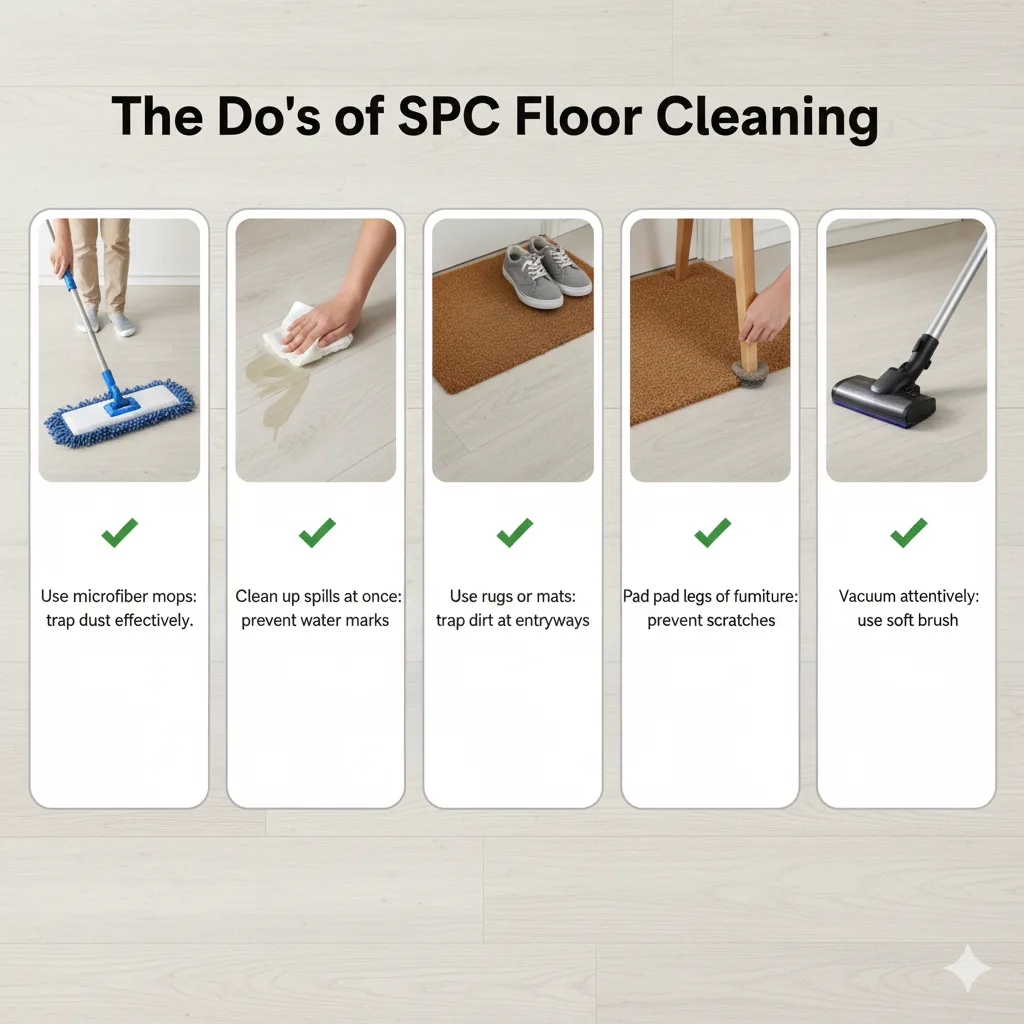
- Sweep or vacuum: Use a soft broom or a vacuum designed for hard floors. Remove dust, sand, and crumbs. Don’t use beater bars or rough brushes that can scratch.
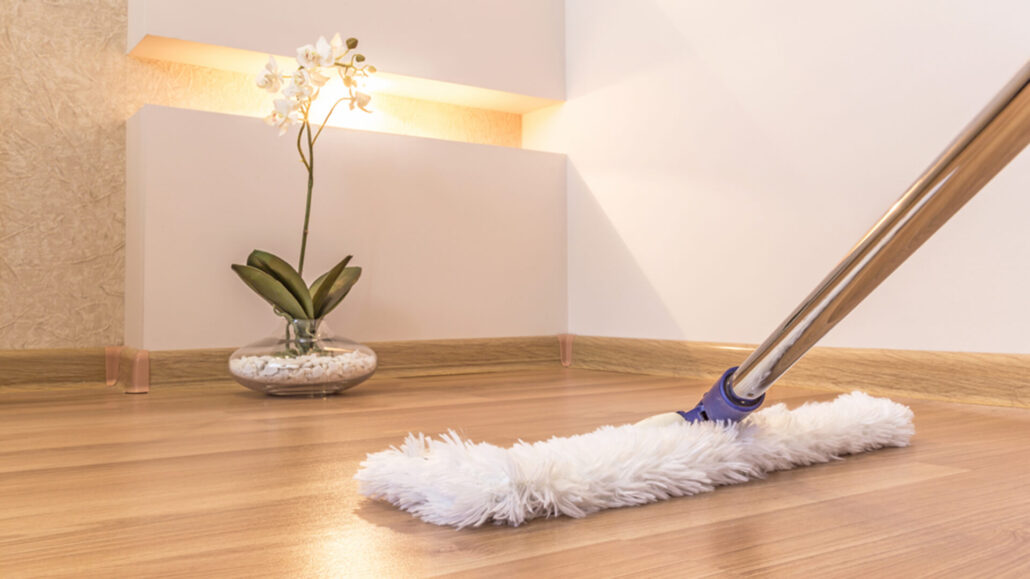
- Dry mop: Microfiber mops pick up fine dust and hair. Move the mop gently across the floor.
- Spot clean: If you see spills or sticky spots, wipe them right away with a damp cloth and a little pH-neutral cleaner. Don’t let liquids sit for long.
Most homeowners skip daily cleaning, thinking SPC floors don’t need it. But ignoring dirt can lead to micro-scratches and dullness over time.
Weekly And Deep Cleaning Methods
Besides daily care, SPC floors need a deeper clean once a week or every two weeks, depending on use.
Weekly Mop
- Prepare solution: Mix a pH-neutral cleaner with warm water, following the label instructions. Never use bleach or ammonia.
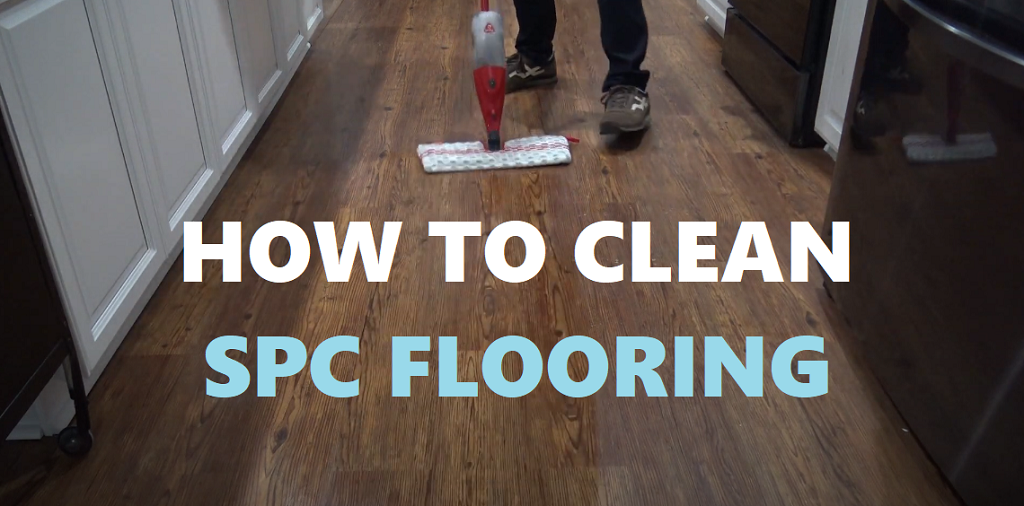
- Damp mop: Dip your microfiber mop in the solution, wring it out well, and mop the floor. Avoid soaking the floor; too much water can cause damage at plank edges.
- Rinse mop: Change water if dirty. Mop again with plain water to remove residue.
- Dry the floor: Use a soft towel or let air dry.
Deep Cleaning
For tough stains or built-up grime, follow these steps:
- Move furniture: Clear the area to reach all spots.
- Vacuum thoroughly: Get into corners and under furniture.
- Apply cleaner: Spray stubborn stains with pH-neutral cleaner. Let sit for 5 minutes.
- Scrub gently: Use a soft sponge or microfiber cloth.
- Rinse well: Mop with clean water.
- Dry completely: Moisture can collect at plank seams, so dry after cleaning.
A non-obvious tip: Always check cleaner labels for “SPC safe.” Many all-purpose cleaners are too strong and can cause fading or sticky residue.
Removing Stains And Spills
SPC flooring resists most stains, but some spills can cause problems if not handled quickly.
Common Stains
- Food and drink: Clean right away with a damp cloth and mild cleaner.
- Ink, paint, or markers: Use a little rubbing alcohol, then rinse with water.
- Grease or oil: Sprinkle baking soda, wait 10 minutes, then wipe with a damp cloth.
- Pet accidents: Blot up liquids, then clean with a pH-neutral disinfectant.
Sticky Messes
For glue, gum, or sticky candy:
- Freeze the spot: Put ice in a plastic bag and place on the mess.
- Scrape gently: Use a plastic scraper.
- Clean residue: Wipe with a damp cloth and mild cleaner.
Never use sharp metal tools or knives, as they can scratch SPC flooring. Many beginners try metal scrapers and regret the permanent marks.
Credit: www.accessfloorstore.com
Preventing Scratches And Damage
Even though SPC flooring is tough, it can scratch if not protected.
- Place doormats at entrances to trap dirt.
- Use furniture pads under chairs and tables.
- Avoid dragging heavy items.
- Keep pet nails trimmed.
- Clean up sand or grit right away.
High-traffic areas benefit from area rugs, but make sure rugs have non-staining backings. Rubber-backed mats can cause discoloration over time.
What Cleaners Are Safe For Spc Flooring?
Not all cleaners are safe for SPC floors. Choosing the right cleaning solution protects the surface and keeps the finish bright.
Safe Cleaners
- PH-neutral floor cleaners: These are designed for vinyl and SPC floors.
- Diluted dish soap: Use a few drops in a bucket of warm water.
- White vinegar solution: Mix one cup vinegar with one gallon warm water (use sparingly).
Unsafe Cleaners
- Bleach
- Ammonia
- Abrasive powders
- Oil-based soaps
- Wax or polish
Here’s a quick comparison of common cleaning solutions:
| Cleaner | Safe for SPC? | Effect |
|---|---|---|
| pH-neutral cleaner | Yes | Keeps finish, no residue |
| Diluted vinegar | Yes | Removes odor, gentle |
| Bleach | No | Discolors, weakens planks |
| Ammonia | No | Fades color, leaves streaks |
| Steam mop | No | Can warp or separate planks |
Most beginners think “all-purpose” means safe. But some all-purpose cleaners are too strong for SPC. Always check the label.
Cleaning Spc Flooring In Different Rooms
SPC flooring is used everywhere, but each room has unique cleaning needs.
Kitchen
- Clean up food spills immediately.
- Watch for grease near stoves.
- Use mats in front of sinks.
Bathroom
- Mop up water after showers or baths.
- Avoid leaving wet towels on the floor.
- Use gentle disinfectants.
Living Room
- Sweep daily if you have pets.
- Place felt pads under coffee tables.
- Rotate rugs to prevent uneven wear.
Basement
- Check for moisture or leaks.
- Clean up mud and debris after rain.
- Air out rooms to prevent mold.
Using room-specific cleaning helps prevent localized damage.
Eco-friendly Cleaning Options
Many homeowners want green cleaning solutions. SPC floors don’t need harsh chemicals, so eco-friendly options work well.
- Use microfiber mops instead of disposable pads.
- Try homemade cleaners: One cup vinegar and one gallon water.
- Baking soda removes odors and stains.
Avoid using too much water with eco-cleaners. SPC is waterproof, but excess moisture can seep between planks.
Credit: stflooring.com
Common Cleaning Mistakes
Even experienced cleaners make mistakes with SPC flooring. Here are some errors to avoid:
- Using too much water: Flooding can cause edges to swell.
- Skipping daily cleaning: Dirt builds up and scratches the surface.
- Using steam mops: Heat damages the plank structure.
- Applying wax or polish: SPC floors don’t need waxing; it leaves a sticky film.
- Ignoring manufacturer guidelines: Always follow care instructions to keep your warranty.
A non-obvious mistake: Cleaning with a dirty mop. Rinsing and wringing out mops often prevents streaks and bacteria.
Maintaining Shine And Finish
SPC floors have a factory-applied finish that lasts years. To keep the shine:
- Clean regularly with pH-neutral cleaner.
- Buff with a dry microfiber mop.
- Don’t use wax or polish.
- Avoid harsh sunlight; use blinds or curtains.
If shine fades, consult your flooring manufacturer before using any restorative products. Some companies offer approved maintenance kits.
Dealing With Odors
SPC flooring rarely smells, but strong odors can come from spills, pet accidents, or mold under planks.
- Clean spills quickly.
- Use diluted vinegar to neutralize odors.
- Air out rooms by opening windows.
- Check for hidden moisture under planks.
If you notice persistent odors, inspect for water leaks or mold. SPC is waterproof, but moisture can collect underneath.
How To Clean Spc Flooring After Construction Or Renovation
After renovation, SPC floors may have dust, paint, or glue.
- Sweep thoroughly: Remove construction dust.
- Vacuum corners: Get hidden debris.
- Spot clean paint/glue: Use a plastic scraper and rubbing alcohol.
- Damp mop: Use pH-neutral cleaner to remove fine dust.
- Dry well: Construction moisture can cause problems.
Don’t use harsh chemicals or metal tools; these can scratch and ruin the floor.
Seasonal Cleaning Tips
SPC floors face different challenges in each season.
Spring
- Clean pollen and mud tracked indoors.
- Use entry mats.
Summer
- Mop more often if kids and pets are home.
- Remove sand from beach trips quickly.
Fall
- Sweep leaves and debris.
- Watch for rainwater near entrances.
Winter
- Remove salt and snow right away.
- Dry wet shoes and boots before entering.
Adapting your cleaning routine helps prevent seasonal damage.
Professional Cleaning: When And Why
Most SPC floors don’t need professional cleaning. But in some cases, experts can help:
- After big spills or stains
- For large commercial spaces
- To restore shine after years of wear
Professional cleaners use safe equipment and solutions. Avoid companies that use steam mops or wax products. Check reviews and ask about their methods.
Spc Flooring Cleaning For Pet Owners
Pets bring extra cleaning needs. SPC floors are good for pet homes because they resist scratches and moisture.
- Clean accidents right away with pH-neutral disinfectant.
- Sweep daily to remove pet hair.
- Use mats under food and water bowls.
- Trim pet nails to avoid scratches.
Many pet owners skip mats, but they help prevent water damage and stains.
Spc Flooring Cleaning For Allergies
SPC floors are hypoallergenic, but dust and pollen can collect on the surface.
- Sweep daily with a microfiber mop.
- Vacuum with HEPA filter.
- Clean corners and under furniture.
- Don’t use scented cleaners that may trigger allergies.
Regular cleaning improves indoor air and lowers allergy symptoms.
Comparing Spc Cleaning With Other Flooring Types
Let’s see how SPC cleaning compares to other common floors:
| Floor Type | Cleaning Difficulty | Water Resistance | Common Issues |
|---|---|---|---|
| SPC Flooring | Easy | Excellent | Scratches, chemical damage |
| Hardwood | Moderate | Poor | Water damage, stains |
| Laminate | Easy | Good | Swelling, dullness |
| Tile | Easy | Excellent | Grout stains |
| Carpet | Hard | Poor | Odors, stains |
SPC floors are easier to clean than hardwood or carpet, and they handle water better than laminate.
Cleaning Tips From Real Users
Homeowners who use SPC flooring often share these practical tips:
- Always keep a microfiber mop handy for quick cleanups.
- Change cleaning water often to avoid streaks.
- Use entry mats to cut dirt by 60%.
- Don’t let pets or kids eat directly on the floor.
Another insight: Many users notice that using a vacuum with a hard floor setting keeps the finish brighter and avoids scratches.
Warranty And Manufacturer Guidelines
Most SPC flooring comes with a warranty. To keep your coverage, follow the cleaning instructions provided by the manufacturer. Common rules include:
- Use only approved cleaners.
- Don’t use steam or wax.
- Clean up spills quickly.
- Avoid abrasive pads.
Some warranties are voided by improper cleaning. Always keep the instruction booklet or visit the manufacturer’s website for details. For more information, you can check FlooringInc.
Frequently Asked Questions
How Often Should I Clean Spc Flooring?
Daily sweeping or dry mopping is best. For most homes, mop with a pH-neutral cleaner once a week. In high-traffic areas, clean more often.
Can I Use A Steam Mop On Spc Flooring?
No, steam mops can damage SPC floors by causing warping or separating planks. Use a damp microfiber mop instead.
What’s The Best Cleaner For Spc Flooring?
The safest option is a pH-neutral floor cleaner designed for vinyl or SPC. You can also use diluted dish soap or vinegar, but avoid harsh chemicals.
How Do I Remove Tough Stains From Spc Flooring?
For tough stains, use a plastic scraper for sticky messes and rubbing alcohol for ink or paint. Always rinse with water and dry after cleaning.
Does Spc Flooring Need Waxing Or Polishing?
No, SPC floors have a factory-applied finish. Waxing or polishing can create a sticky residue and damage the surface. Regular cleaning keeps the shine.
Keeping your SPC flooring clean doesn’t have to be hard. With the right tools, safe cleaners, and a simple routine, your floors will stay beautiful and strong for years. Avoid common mistakes, stay informed about manufacturer guidelines, and adapt your care to your lifestyle.
SPC flooring is designed for easy maintenance, so enjoy its benefits and keep it looking new with these practical cleaning tips.