
Every kitchen has a story to tell, and much of that story is written in the shine—or stains—on your pots and pans. Maybe you’ve cooked a hearty stew, fried crisp bacon, or tried a new curry. Over time, all that flavor leaves a mark.
Even with regular washing, pots and pans can look dull, stained, or scratched. But what if you could make them look almost brand new, without spending money on replacements or expensive cleaning products? The truth is, with the right techniques, your cookware can regain its sparkle and serve you well for years.
This guide gives you everything you need to clean pots and pans to look like new, no matter the material or the mess. We’ll cover methods for stainless steel, non-stick, cast iron, copper, aluminum, and more. You’ll learn simple steps, smart tricks, and cleaning mistakes to avoid—plus what actually works (and what doesn’t).
If you’ve ever felt frustrated by stubborn stains or burnt-on food, you’re in the right place.
Why Pots And Pans Lose Their Shine
It’s easy to think your cookware is ruined when it looks dull or stained. In reality, most discoloration, stains, and residue are normal signs of use. Overheating, burnt food, dishwasher damage, and even the type of water in your area can all play a role. Hard water leaves mineral spots. Acidic foods like tomatoes can stain some metals. Even the wrong cleaning method can make things worse.
Knowing why your cookware looks old is the first step to making it look new again. Each material—stainless steel, non-stick, cast iron, copper, or aluminum—has its own issues and cleaning rules. Using the wrong method can cause permanent damage.
Key Tools And Supplies For Cleaning
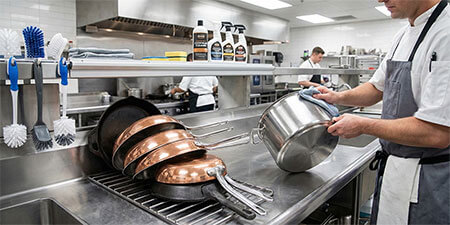
Before you begin, gather some basic supplies. Most of these are found in your kitchen or at a local store. Having the right tools saves time and prevents scratches or other damage.
- Soft sponges – Safe for all surfaces, especially non-stick.
- Nylon scrubbers – Good for tougher stains without scratching.
- Steel wool or copper pads – Only use on certain metals (never non-stick).
- Baking soda – Natural, gentle abrasive.
- White vinegar – Cuts through mineral stains and grease.
- Dish soap – Removes everyday grease and food.
- Cream of tartar – Excellent for tough stains on aluminum and stainless steel.
- Lemon juice – Removes discoloration and odors.
- Hydrogen peroxide – Helps with burnt-on residue.
- Salt – Mild abrasive for scrubbing.
- Microfiber cloths – For drying and polishing.
A few items are surprisingly useful: a soft toothbrush for corners, a wooden spoon to scrape food off gently, and paper towels for quick drying.
Credit: www.gofoodservice.com
Cleaning Stainless Steel Pots And Pans
Stainless steel is loved for its durability and shine, but it can still get rainbow stains, water spots, or burnt-on residue. The good news: most stains are removable.
Basic Cleaning
Wash with warm water, dish soap, and a soft sponge. Rinse and dry immediately to avoid water spots.
Removing Burnt Food
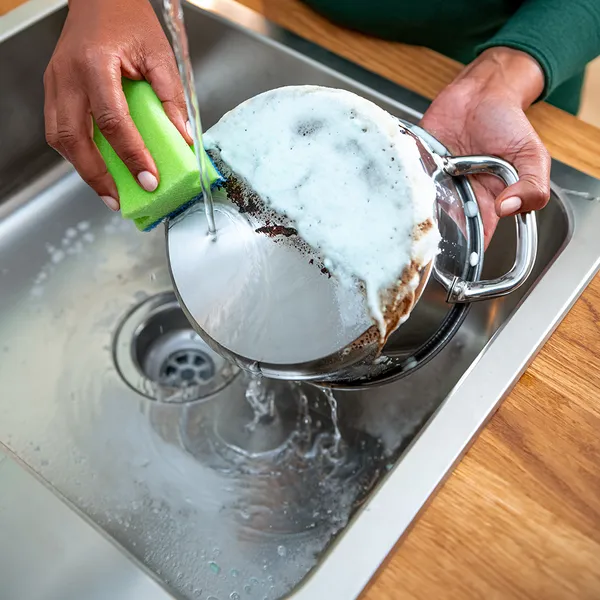
- Fill the pan with enough water to cover the burnt area.
- Add a few drops of dish soap or 2 tablespoons of baking soda.
- Bring to a boil for 10–15 minutes.
- Let cool, then scrub with a nylon pad.
If residue remains, make a paste of baking soda and water. Spread on the area and let sit for 15 minutes before scrubbing.
Getting Back The Shine
For stubborn stains or rainbow discoloration:
- Sprinkle baking soda over the surface.
- Add a little white vinegar. It will fizz.
- Scrub gently with a soft sponge in a circular motion.
- Rinse and dry.
For a mirror finish, buff with a microfiber cloth.
Common Mistakes
- Don’t use steel wool or harsh powders—they can scratch.
- Avoid salt in cold water; it can cause pitting.
- Never leave stainless soaking for long periods, as it can discolor.
How To Clean Non-stick Pans
Non-stick pans are easy to use but need gentle care. Harsh cleaning can ruin the coating, leading to sticking and flaking.
Everyday Cleaning
Wash with warm water and mild dish soap using a soft sponge. Dry with a towel.
Handling Stubborn Residue
If food sticks:
- Fill the pan with warm, soapy water.
- Let soak for 20–30 minutes.
- Wipe with a sponge—never use steel wool.
For sticky oil or stains, sprinkle baking soda on the damp surface, let sit for 15 minutes, then wipe gently.
Restoring Non-stick Surface
If your pan has lost its non-stick ability, try this:
- Wash and dry the pan.
- Rub a small amount of cooking oil onto the surface.
- Heat in a 300°F (150°C) oven for 30 minutes.
- Let cool, then wipe excess oil.
What To Avoid
- No metal utensils or harsh scrubbers.
- Don’t use non-stick spray, as it can build up and cause sticking.
- Never clean in the dishwasher unless the manufacturer says it’s safe.
Reviving Cast Iron Cookware
Cast iron gets better with age, but only with proper care. If you see rust or food build-up, don’t panic—cast iron is very forgiving.
Routine Cleaning
While the pan is still warm (not hot), wipe out food with a paper towel. For stuck-on bits, scrub with coarse salt and a little oil using a paper towel or soft brush.
Deep Cleaning And Rust Removal
If rust or heavy residue appears:
- Scrub with a mixture of baking soda and water using a nylon brush.
- For stubborn rust, use a little white vinegar (but don’t soak for more than an hour).
- Rinse and dry thoroughly.
- Heat on the stove to remove all moisture.
Re-seasoning Your Pan
After cleaning, always add a layer of oil:
- Rub a thin layer of vegetable oil over the entire pan.
- Place upside-down in a 400°F (205°C) oven for one hour (use foil below to catch drips).
- Turn off the oven and let cool inside.
This builds a natural non-stick layer and protects against rust.
Common Errors
- Never soak cast iron in water overnight.
- Don’t use soap unless you plan to re-season.
- Always dry completely to avoid rust.
Polishing Copper Pots And Pans
Copper is beautiful but requires maintenance to stay bright. Over time, it develops a greenish layer called patina. While some cooks love this look, you can easily restore the shine.
Regular Cleaning
Wash with warm water and mild dish soap. Dry immediately to prevent water spots.
Removing Tarnish
Use a natural acid and abrasive:
- Sprinkle salt on the copper.
- Cut a lemon in half, dip in salt, and rub over the pan.
- Rinse with water and dry.
Alternatively, make a paste of vinegar, salt, and flour. Rub on, let sit for 10 minutes, then rinse and polish.
Commercial Copper Cleaners
For deep stains, use a copper polish following instructions. Always wash and dry after using chemicals.
Insider Tips
- Line the inside with tin or stainless steel to prevent reactions with food.
- Never put copper pans in the dishwasher—it strips the finish.
Credit: arniesappliances.ca
Cleaning Aluminum Cookware
Aluminum is lightweight and heats quickly, but it stains and scratches easily.
Basic Cleaning
Wash with dish soap and a soft sponge. Dry completely.
Restoring Shine
For discoloration:
- Fill the pan with water and add 1 tablespoon cream of tartar or lemon juice per quart of water.
- Boil for 10–15 minutes.
- Let cool, wash, and dry.
For tough stains, use a paste of baking soda and water. Rub gently.
Avoiding Damage
- Don’t use bleach or alkaline cleaners.
- Avoid steel wool or metal scrubbers.
Dealing With Burnt-on Food And Stains
Burnt food is the most stubborn problem for any cookware. The right method depends on the material, but here are universal strategies:
Boiling Method
- Add water and a few drops of dish soap or baking soda.
- Bring to a boil for 10–15 minutes.
- Let cool, then scrub gently.
Baking Soda And Vinegar Soak
- Sprinkle baking soda over the burnt area.
- Pour white vinegar—let fizz for a few minutes.
- Scrub with a nylon pad.
Hydrogen Peroxide Trick
- Pour enough hydrogen peroxide to cover the burn.
- Add 1–2 tablespoons of baking soda.
- Heat to simmer for 10 minutes (do not boil dry).
- Let cool, scrub, and rinse.
Hydrogen peroxide should not be used on non-stick pans.
Cleaning Outside Surfaces And Bottoms
The outsides of pots and pans collect grease and burnt stains, especially on gas stoves. These areas need attention too.
- Sprinkle baking soda on the outside.
- Add a little water to form a paste.
- Scrub with a nylon pad or old toothbrush.
- For greasy residue, spray with white vinegar, let sit, then wipe.
For really tough stains, you can use a bar keeper’s friend or similar cleaner, but always check compatibility with your pan’s material.
Dishwasher Vs. Hand Washing: What’s Best?
Many modern pans claim to be dishwasher safe, but not all should go in. Here’s a quick comparison.
| Material | Dishwasher Safe? | Notes |
|---|---|---|
| Stainless Steel | Usually Yes | May dull shine over time |
| Non-Stick | Rarely | Hand wash keeps coating intact |
| Cast Iron | No | Rusts and loses seasoning |
| Copper | No | Dishwasher strips finish |
| Aluminum | Sometimes | Uncoated can discolor |
Hand washing is almost always gentler and helps your cookware last longer. The dishwasher can cause discoloration, remove non-stick coatings, and damage handles or lids.
How To Keep Pots And Pans Looking New
Getting your cookware clean is only half the job. Keeping it shiny and fresh saves time and money in the long run.
Smart Storage
- Store with soft liners or paper towels between pans to prevent scratches.
- Hang pots to avoid stacking damage.
Regular Maintenance
- Wipe out pans after every use, not just after cooking.
- Dry thoroughly after washing.
Seasoning And Oiling
- Season cast iron and carbon steel regularly.
- Rub a drop of oil on stainless steel after cleaning to prevent water spots.
Quick Action
- Clean stains and spills as soon as possible.
- Never let food dry out and harden in the pan.
Avoid These Mistakes
- Don’t stack wet pans.
- Don’t use oven cleaner or harsh chemicals.
- Avoid high heat if not needed—overheating causes permanent stains.
How Often Should You Deep Clean?
Everyday washing is important, but deep cleaning brings back the shine. Here’s a useful schedule:
| Cookware Type | Recommended Deep Cleaning | Why? |
|---|---|---|
| Stainless Steel | Monthly | Removes rainbow and mineral stains |
| Non-Stick | Every 2-3 months | Prevents oil build-up |
| Cast Iron | As needed | Depends on use and rust |
| Copper | Every 2-4 weeks | Restores shine |
| Aluminum | Monthly | Removes discoloration |
Deep cleaning can be as simple as boiling water and baking soda, or using a special polish. The key is consistency.

Credit: www.familyfeedbag.com
Natural Cleaning Solutions Vs. Commercial Products
Some people prefer natural cleaners like baking soda, vinegar, and lemon juice. They’re safe, cheap, and good for most surfaces. Others choose commercial products for speed or tough stains.
Natural Solutions
- Baking soda: Gentle, safe, deodorizes.
- Vinegar: Dissolves mineral stains and cuts grease.
- Lemon juice: Brightens and removes odors.
- Salt: Mild abrasive for scrubbing.
Commercial Cleaners
Products like Bar Keeper’s Friend, Bon Ami, or special copper and stainless polishes work faster but may contain chemicals. Always check the label for compatibility with your cookware.
When To Use Which
- Use natural cleaners for everyday and light stains.
- Use commercial products for burnt-on or old stains.
- Always rinse thoroughly after using any product.
How To Remove Common Stains And Discoloration
Not all stains are the same. Here’s how to handle the most common ones:
Rainbow Tint On Stainless Steel
Caused by overheating, these colored streaks look bad but are harmless.
- Rub with vinegar or a paste of baking soda and water.
- Buff with a microfiber cloth.
White Spots Or Cloudiness
Often from mineral-rich (hard) water.
- Soak in vinegar for 5–10 minutes.
- Rinse and dry.
Black Residue On Aluminum
This is usually oxidation.
- Boil a mixture of water and cream of tartar.
- Scrub gently and rinse.
Green Or Brown Patina On Copper
- Use lemon and salt, or a copper cleaner.
- Rinse and dry immediately.
Sticky Or Greasy Film
Happens from oil build-up or cooking spray.
- Sprinkle baking soda, let sit, scrub with a damp sponge.
Pro tip: For really stubborn stains, repeat the process rather than scrubbing hard, which can damage the surface.
Comparing Cleaning Methods: What Works Best?
Different methods have their pros and cons. Here’s a quick look:
| Cleaning Method | Best For | Pros | Cons |
|---|---|---|---|
| Boiling Water + Baking Soda | Burnt food on most metals | Gentle, effective | Takes time |
| Lemon + Salt | Copper, stainless | Natural, deodorizes | Not for deep burns |
| Vinegar Soak | Mineral stains | Easy, cheap | Strong smell |
| Cream of Tartar | Aluminum, stainless | Restores shine | Not always available |
| Commercial Cleaner | All stubborn stains | Very effective | Contains chemicals |
Safety Tips When Cleaning Cookware
- Always let pans cool before cleaning to avoid warping.
- Wear gloves when using harsh chemicals.
- Open windows or use a fan when cleaning with vinegar or commercial products.
- Test new products on a small area first.
Two Surprising Insights Most People Miss
- Letting pans air dry causes water spots and streaks. Always dry with a towel, especially for stainless steel and copper.
- Acidic foods (tomato, citrus) can react with uncoated copper and aluminum, causing pitting or off flavors. Clean these pans quickly after cooking such foods.
When To Replace Pots And Pans
Even with the best cleaning, all cookware wears out eventually. Signs it’s time to replace:
- Deep scratches or peeling on non-stick pans.
- Cracked or warped bottoms (causes uneven cooking).
- Rust that won’t come off cast iron.
- Lining worn through on copper pans.
If you’re not sure, check the manufacturer’s warranty and guidelines.
Where To Learn More
For more in-depth information about cookware materials and cleaning science, see this Wikipedia article on cookware and bakeware.
Frequently Asked Questions
How Do I Remove Burnt Food From The Bottom Of A Pan?
Fill the pan with water and a tablespoon of baking soda. Bring to a boil, then let cool. Scrub with a nylon pad. For really tough burns, repeat or try a vinegar soak.
Is It Safe To Use Steel Wool On All Pans?
No, steel wool is only safe on uncoated stainless steel or cast iron. Never use on non-stick, copper, or aluminum—it will scratch and ruin the finish.
Can I Put My Pots And Pans In The Dishwasher?
Only some stainless steel and certain aluminum pans are dishwasher safe. Non-stick, cast iron, and copper should always be hand washed to protect their finish and performance.
What’s The Best Way To Clean The Outside Of Pots And Pans?
Use baking soda and a damp sponge for most stains. For greasy build-up, spray with white vinegar first. Scrub with a nylon pad or old toothbrush, then rinse and dry.
How Often Should I Deep Clean My Cookware?
Deep clean stainless steel and aluminum monthly, copper every 2–4 weeks, and non-stick every few months. Cast iron is cleaned as needed, usually when rust or sticky residue appears.
Caring for your pots and pans is easier than it seems. With the right techniques and a bit of effort, even the oldest pan can look fresh and perform well. Not only do you save money, but you also enjoy better tasting meals and a happier kitchen.
Give your cookware the attention it deserves, and it will reward you for years to come.