
When you walk into a bedroom, lighting is one of the first things you feel, even before you consciously see it. The right lamp can make your bedroom a peaceful retreat or a productive spot for reading. But choosing lamps for your bedroom is not as simple as picking the prettiest one. There are many factors you need to consider: from lamp size and placement to bulb type, brightness, and even style. Many people end up with lamps that are too bright, too dim, or simply don’t fit their needs. This guide will help you confidently choose the best lamps for your bedroom, so you can enjoy a space that’s both beautiful and practical.
Understanding Bedroom Lighting Needs
Bedroom lighting is about more than just seeing in the dark. You need the right light for sleeping, reading, dressing, and relaxing. In most bedrooms, you need a mix of ambient light, task lighting, and accent lighting. Ambient light fills the whole room, task lighting helps you do specific activities, and accent lighting adds mood or highlights features.
If you only have one bright ceiling light, your bedroom might feel harsh or uninviting. On the other hand, if you rely just on small lamps, you may not have enough light for practical tasks. Smart lamp choices balance these needs, making your bedroom comfortable and functional.
Types Of Lamps For Bedrooms
Not all lamps are the same. The type of lamp you choose will affect how your room looks and feels. Here are the main lamp types for bedrooms:
1. Table Lamps
These are the most popular choice for bedside lighting. Table lamps are placed on nightstands or dressers. They come in many shapes and sizes, so you can find one to match any style.
2. Floor Lamps
Floor lamps stand on the floor and can light up dark corners or provide reading light next to a chair or bed. They are great if you don’t have space on your nightstand.
3. Wall-mounted Lamps
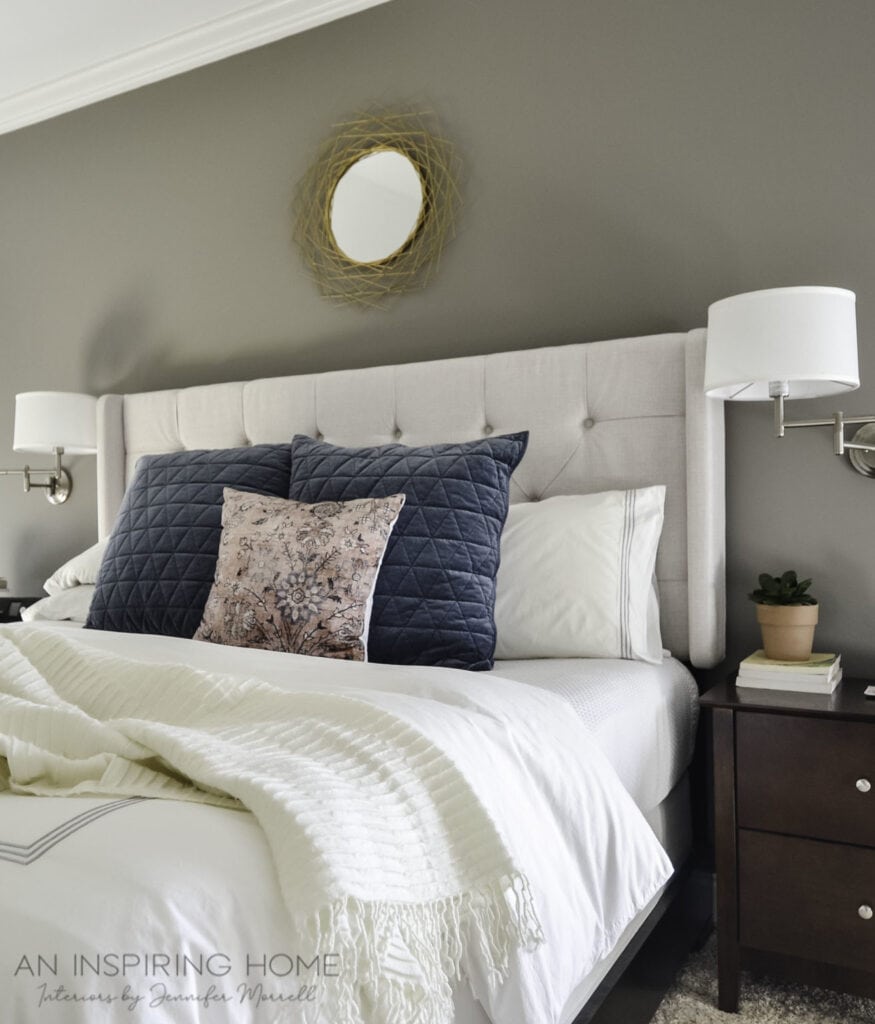
Wall lamps, also called sconces, save space and add a stylish look. Many have swing arms, letting you direct the light where you need it. These are especially useful in small rooms.
4. Pendant Lamps
Pendant lamps hang from the ceiling. In bedrooms, they are often used over nightstands or as statement pieces in the center of the room. Choose adjustable pendants for more flexibility.
5. Clip-on Lamps
Clip-on lamps are small, portable, and can be attached to shelves, headboards, or desks. They are perfect for focused light, like reading in bed.
Non-obvious insight: Many people forget that mixing different lamp types can create layers of light, making the room more flexible for different activities.
Credit: jessicawellinginteriors.com
How To Choose The Right Lamp Size
The size of your lamp is just as important as its style. A lamp that’s too big can overwhelm your space, while a lamp that’s too small might not give enough light or look out of place.
Matching Lamp Size To Furniture
A good rule is that the lamp should not be taller than your nightstand by more than 1. 5 times. For example, if your nightstand is 24 inches tall, your lamp (including the shade) should be between 24-36 inches.
If you have a large bed or wide nightstand, choose a bigger lamp. For smaller furniture, pick a slimmer lamp.
Lamp Shade Proportion
The lamp shade should be about two-thirds the height of the lamp base. This keeps the lamp balanced and prevents the shade from looking too big or small.
Visual Balance
Try to keep your lamps in scale with your bed and other furniture. For king-size beds, bigger lamps look better. For twin beds, smaller lamps make more sense.
Non-obvious insight: Check the height of your mattress, not just the nightstand. If you have a thick mattress, you may need a taller lamp to reach over your pillows.
Picking The Right Bulb
The bulb inside your lamp affects both how your room looks and how you feel. Here’s what you need to consider:
Brightness
Lamp brightness is measured in lumens. For bedside reading, 400-600 lumens per lamp is usually enough. For general room light, you may want 800-1,600 lumens.
Color Temperature
Bulb color temperature is measured in Kelvin (K). Lower numbers (2,700K–3,000K) give a warm, cozy light. Higher numbers (4,000K–5,000K) are cooler and more energizing.
For bedrooms, most people prefer warmer light (2,700K–3,000K) because it helps you relax.
Led Vs. Incandescent
LED bulbs use less energy and last longer than old-style incandescent bulbs. They are better for the environment and your electric bill.
Smart Bulbs
Smart bulbs can change color, brightness, and even turn on or off with your phone or voice. They’re great if you want flexible mood lighting.
Here’s a quick comparison of bulb types:
| Bulb Type | Energy Use | Lifespan | Best For |
|---|---|---|---|
| LED | Low | 10-20 years | All bedroom lamps |
| Incandescent | High | 1-2 years | Accent lighting |
| Halogen | Medium | 2-4 years | Reading lamps |
| Smart Bulb | Low | 10-20 years | Custom mood lighting |
Practical tip: Always check the lamp’s maximum wattage to avoid overheating or fire risk.
Style And Aesthetics
Your lamp should match your bedroom style, but it’s not just about looks. Here’s how to make the right choice:
Match With Decor
If your bedroom is modern, pick lamps with clean lines and neutral colors. For classic bedrooms, look for lamps with fabric shades and traditional shapes. For rustic rooms, wood or metal bases work well.
Shade Material
Linen and cotton shades give soft light. Glass or metal shades give sharper, more direct light. Think about how much light you want to pass through.
Color And Finish
White or light-colored shades spread light better. Dark shades focus light and create mood. Choose a lamp color that fits your bedding or wall color for a coordinated look.
Statement Lamps
A bold lamp can be a focal point in a simple room. Don’t be afraid to use a bright color or unique shape to add personality.
Experience-based tip: If you change your decor often, pick neutral lamps and update the shades for a fresh look.
Lamp Placement: Where To Put Your Lamps
Even the best lamp won’t help if it’s in the wrong place. Here’s how to decide where your lamps should go:
Bedside Lamps
Bedside lamps should be easy to reach from the bed. Place the lamp so the bottom of the shade is about at your chin level when you’re sitting up. This gives the best light for reading.
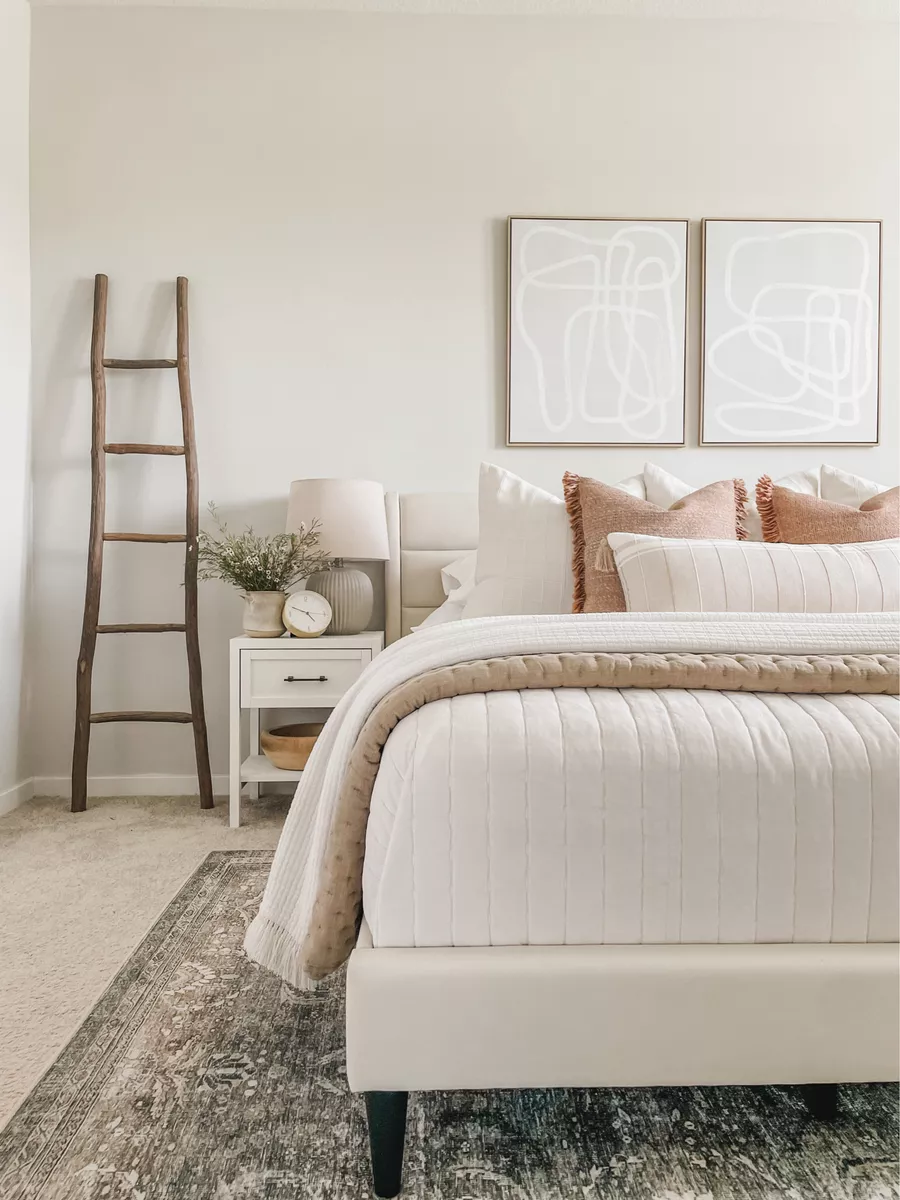
If you have two nightstands, use two lamps for a balanced look.
Dressing Table Or Vanity
A small table lamp works well on a dressing table. Choose one with a bright, clear shade for good light while you get ready.
Reading Nook
If you have a chair for reading, use a floor lamp or wall lamp with a focused beam. Swing-arm lamps are great because you can move the light where you need it.
Accent Lighting
Use small lamps or wall lights to highlight art, plants, or architectural features. This creates layers of light and adds interest to your room.
Common mistake: Placing all lamps at the same height makes the room look flat. Vary lamp heights for a more inviting space.
Functionality: Features To Consider
Modern bedroom lamps can do much more than just turn on and off. Here are some features that can make your life easier:
Dimmable Lamps
Dimmable lamps let you change the brightness for different times of day. Bright for reading, soft for relaxing. Many LED and smart bulbs have dimming features built in.
Usb Ports And Outlets
Some bedside lamps now include USB ports or power outlets in the base. These are perfect for charging your phone or tablet overnight.
Touch Controls
Touch lamps let you turn on, off, or change brightness with a tap on the base. No fumbling for a switch in the dark.
Adjustable Arms
Swing-arm or gooseneck lamps let you direct light exactly where you want it. This is ideal for reading or for couples who want different light levels.
Timer And Smart Controls
Smart lamps can be set to turn on or off at certain times. This helps if you want a light to wake you up gently or turn off after you fall asleep.
Here’s a comparison of useful features:
| Feature | Best For | Why Choose It |
|---|---|---|
| Dimmable | All users | Flexible light for different activities |
| USB Port | Tech users | Charge devices easily |
| Touch Control | Nighttime use | Easy to use in the dark |
| Adjustable Arm | Reading | Direct light where needed |
| Smart Timer | Routine sleepers | Light on/off automatically |
Energy Efficiency And Safety
Saving energy isn’t just good for the planet—it’s good for your wallet. Here’s what to know:
Choose Led
LED lamps use up to 80% less energy than incandescent bulbs and can last for many years. Even if they cost more at first, they save money over time.
Check Safety Labels
Look for lamps with UL or ETL safety labels. This means they’ve been tested for electrical safety.
Position Away From Flammable Materials
Keep lamps away from curtains, bedding, or other flammable items. This is especially important with high-wattage bulbs.
Stable Base
Choose lamps with a heavy, stable base to avoid tipping over, especially if you have children or pets.
Confidence tip: Never use a bulb with higher wattage than the lamp label says. This can overheat the lamp and cause a fire.
Budget: How Much Should You Spend?
Lamps come in a wide price range. You can find simple lamps for $20 or designer pieces for hundreds. Here’s how to budget smartly:
- Set Priorities: Spend more on lamps you use most, like bedside lamps. Save on accent or decorative lamps.
- Check Materials: Metal and glass lamps cost more but last longer. Plastic or thin materials are cheaper but may break easily.
- Look for Sales: Many stores offer deals or bundles, especially during holidays.
- Don’t Forget Bulbs: Factor in the cost of bulbs, especially if you want smart or specialty bulbs.
Practical tip: Even affordable lamps can look great if you choose the right shade or swap out the bulb for better light.
Common Mistakes When Choosing Bedroom Lamps
Many people make the same mistakes when buying lamps. Avoid these for a better experience:
- Ignoring Scale: Picking a lamp that’s too big or small for your furniture.
- Wrong Brightness: Choosing bulbs that are too dim or too bright for the space.
- Clashing Styles: Mixing lamp styles that don’t match your decor.
- Overlooking Features: Missing out on helpful features like dimmers or USB ports.
- One Source of Light: Relying on a single lamp for all tasks.
Credit: www.nikkisplate.com
Step-by-step Guide To Choosing Bedroom Lamps
Let’s put everything together in a simple process:
- Identify Your Needs: Do you read in bed? Need mood lighting? Want to charge devices?
- Measure Your Space: Check the height of your nightstands, bed, and available floor space.
- Pick Lamp Types: Decide if you want table, floor, wall, or a mix of lamps.
- Choose Bulbs: Pick the right brightness and color temperature.
- Match Your Style: Select lamps that fit your decor and color scheme.
- Check Features: Look for dimmers, USB ports, touch controls, or smart options.
- Set a Budget: Decide how much you want to spend.
- Test Placement: Try lamps in different spots before making final choices.
Real-life Examples
Seeing how others set up their bedroom lighting can give you ideas. Here are two examples:
Small Bedroom
Anna has a tiny bedroom with just enough space for one nightstand. She chooses a wall-mounted swing arm lamp to save space. The lamp has a dimmable LED bulb (2,700K) for soft, relaxing light. She adds a small floor lamp in the corner for extra brightness when needed.
Large Master Bedroom
James and Maria have a king-size bed and two wide nightstands. They pick two large ceramic table lamps with linen shades. Each lamp has a built-in USB port. For reading, they use 400-lumen, 3,000K LED bulbs. A third, tall floor lamp in the corner lights up the whole room.
Accent lights behind artwork add a touch of drama.
Credit: stellalighting.com
Table: Quick Lamp Selection Guide
Here’s a cheat sheet for choosing the right lamp for common bedroom needs:
| Need | Lamp Type | Bulb | Extra Features |
|---|---|---|---|
| Reading in bed | Table or wall lamp | 400-600 lumens, 2,700K | Dimmable, adjustable arm |
| Saving space | Wall or clip-on lamp | LED, 400 lumens | Touch control |
| General lighting | Floor lamp | 800-1,200 lumens, 3,000K | Smart timer |
| Accent lighting | Small table lamp | Low-watt LED | Colored shade |
| Charging devices | Bedside lamp with USB | Any LED | USB port |
Sustainable And Smart Choices
If you want to make your bedroom greener, choose lamps made from recycled materials or certified wood. Pick LED bulbs for energy savings. For tech lovers, smart lamps that connect to your phone or smart home system let you adjust light from anywhere.
Many people don’t realize you can recycle old lamps and bulbs at special drop-off points, keeping harmful materials out of landfills. For more on recycling and sustainability in lighting, check out this official guide by the US Department of Energy.
Frequently Asked Questions
What Is The Best Lamp For Reading In Bed?
The best lamp for reading in bed is a table lamp or wall-mounted lamp with a focused beam. Choose one with a flexible or swing arm and use a 400-600 lumen, 2,700K-3,000K LED bulb for clear, comfortable light.
How Tall Should My Bedside Lamp Be?
Your bedside lamp should be about the same height as your nightstand, plus or minus a few inches. The bottom of the lampshade should be at your chin level when sitting up in bed.
Are Led Lamps Better For Bedrooms?
Yes, LED lamps are better for bedrooms because they use less energy, last longer, and give off less heat. They are available in many styles and colors to fit any decor.
How Many Lamps Do I Need In My Bedroom?
Most bedrooms need at least two lamps—one for each side of the bed. If the room is large or has dark corners, add a floor lamp or accent light for balance and flexibility.
Can I Use Smart Bulbs In Any Lamp?
Most smart bulbs fit standard lamp sockets (E26 or E27). Check your lamp’s label to be sure. Smart bulbs may need Wi-Fi or Bluetooth to connect to your phone or smart home system.
Choosing lamps for your bedroom is about combining style, comfort, and practicality. By thinking about your lighting needs, lamp size, bulb choice, and special features, you can create a bedroom that helps you relax, read, and recharge. Remember to mix lamp types for flexible light, check for useful features, and always put safety first.
With these tips, you can turn your bedroom into a true retreat, lit exactly the way you want.