
Building your own step stool is more than a weekend project—it’s a practical investment in your home and your skills. Whether you need a sturdy stool for the kitchen, bathroom, or workshop, making one yourself means you can choose the right size, height, and design.
Many people buy step stools without thinking about safety, durability, or the satisfaction of using something built with their own hands. This guide will help you understand every part of the process, from picking the best materials to adding the final touches.
With clear steps and expert tips, you can build a step stool that’s not just useful, but also safe and long-lasting.
Why Build Your Own Step Stool?
Many people wonder why they should make their own step stool when there are so many ready-made options. Here are a few reasons:
- Customization: You get to pick the size, height, and look that fit your space and needs.
- Quality: Store-bought stools often use cheap materials. Building your own allows you to use strong, safe wood.
- Cost Savings: You can save money, especially if you have leftover wood or basic tools.
- Skill Building: You learn valuable woodworking skills, even if you’re a beginner.
- Satisfaction: There’s a special pride in using something you created yourself.
Most importantly, you can make sure the stool is safe for everyone who will use it. Many cheap stools wobble or break because of poor design or weak materials. When you build your own, you control the quality.
Planning Your Step Stool: What To Consider
Before you start cutting wood, spend time on planning. This is where many beginners make mistakes. Rushing into building without a plan can lead to a stool that’s too short, too tall, or not sturdy enough. Here are key points to think about:
1. Purpose And Location
Where will you use the stool? A kitchen step stool may need to be lightweight and easy to move. For a workshop, it should be heavy and stable. If children will use it, safety is even more important.
2. Height And Size
Standard step stools are between 8 to 12 inches tall. However, measure the highest place you want to reach. Make sure the stool isn’t too tall, which can make it unstable.
3. Weight Limit
Think about who will use the stool. Design for at least 250 pounds for adult use. This means using strong wood and sturdy joints.
4. Materials
Solid wood like pine, oak, or maple is best. Avoid particle board or plywood for the steps. These can split or sag over time.
5. Design And Style
Simple stools are easier to build. If you want a decorative look, you can add details later. Focus on making it stable and safe first.
6. Tools And Skills
You don’t need advanced tools, but a saw, drill, screws, wood glue, clamps, and sandpaper are basics. If you have more tools, you can add details or rounded edges.
7. Safety Features
Non-slip feet, rounded edges, and handles can make your stool safer, especially for kids or elderly users.
Materials And Tools: What You Need
Choosing the right materials and tools is one of the most important steps. Quality materials mean a safer, longer-lasting stool.
Wood Choices
Here’s a comparison of popular wood types for step stools:
| Wood Type | Strength | Weight | Cost | Best For |
|---|---|---|---|---|
| Pine | Medium | Light | Low | General use, beginners |
| Oak | High | Medium-Heavy | Medium | Heavy-duty, decorative |
| Maple | High | Heavy | Medium-High | High weight, long-lasting |
| Plywood | Low-Medium | Light | Low | Not recommended for steps |
Tip: If you’re new to woodworking, pine is easiest to work with and widely available.
Hardware And Fasteners
- Wood screws (1 1/4″ to 2″ long)
- Wood glue
- Non-slip pads for feet
- Sandpaper (80, 120, 220 grit)
- Wood finish (paint, stain, or clear coat)
Basic Tools
- Measuring tape
- Pencil
- Saw (hand saw or circular saw)
- Drill with bits
- Clamps
- Screwdriver
- Square (for right angles)
- Safety goggles
Pro Insight: Many beginners forget to check if their tools are sharp. Dull tools make cuts less accurate and increase the chance of mistakes or injury.
Step-by-step Guide To Building A Step Stool
Building a simple, sturdy stool doesn’t require advanced skills. Follow these steps carefully for the best results.
Step 1: Choose Your Design And Draw A Plan
Decide on the style (single-step or two-step) and draw your plan. A basic single-step stool is usually 16 inches wide, 8 inches high, and 12 inches deep. For a two-step stool, the lower step is about 4 inches high and 8 inches deep; the upper step is 8 inches high.
Non-obvious tip: Draw your cut lines on the wood with a pencil before cutting. This reduces mistakes and waste.
Step 2: Cut The Wood Pieces
Cut your wood according to your plan. For a single-step stool, you’ll need:
- 1 top piece (16″ x 8″)
- 2 side pieces (8″ x 12″)
- 2 support pieces (1″ x 3″ x 12″)
For a two-step stool, you’ll need:
- 1 top step (16″ x 8″)
- 1 lower step (16″ x 8″)
- 2 side pieces (16″ x 12″, with step cutouts)
- 2 support pieces (1″ x 3″ x 16″)
Beginner mistake: Not checking cuts for square (90 degrees). Use a square to check each cut.
Step 3: Sand All Edges And Surfaces
Use 80-grit sandpaper for rough edges, then move to 120 and finally 220 grit for smoothness. Pay extra attention to the edges and corners to avoid splinters.
Practical tip: Sand before assembling. It’s much harder to smooth inside corners after assembly.
Step 4: Dry Fit The Pieces
Assemble the pieces without glue or screws. Make sure everything fits and sits flat on the floor. Adjust as needed.
Non-obvious insight: Uneven floors can trick you. Test your stool on a known flat surface.
Step 5: Assemble The Frame
Apply wood glue to the edges where the top meets the sides. Clamp the pieces together. Drill pilot holes for screws to prevent the wood from splitting. Attach the top to the sides with screws.
Next, add the support pieces underneath. These increase strength and stop the stool from wobbling.
Step 6: Attach Steps (for Two-step Stool)
If you’re making a two-step stool, attach the lower step first. Secure it to the side pieces with glue and screws. Then add the upper step.
Extra safety: For children’s stools, use two screws per joint for added strength.
Step 7: Add Non-slip Feet
Attach non-slip pads to the bottoms of the legs. This prevents the stool from sliding, especially on smooth floors.
Pro tip: Rubber feet work better than felt pads for kitchens and bathrooms.
Step 8: Fill Holes And Sand Again
Fill screw holes with wood filler. When dry, sand the area smooth. This makes the finish look better and keeps the surface safe.
Step 9: Apply Finish
Choose a finish that matches your home and protects the wood. Popular options:
- Paint: Adds color and hides wood grain.
- Stain: Shows off natural grain.
- Clear polyurethane: Protects and keeps natural look.
Apply with a brush or cloth, following the product instructions. Allow to dry fully before use.
Important: For kitchen or bathroom use, choose a water-resistant finish.
Step 10: Test For Safety
Set the stool on a flat surface. Step on it gently to check for wobble or flexing. Test with the heaviest person who will use it. If it feels unstable, check screws, supports, and feet.
Common error: Using the stool before the finish is dry. This can damage both the stool and your floor.
Advanced Features: Making Your Stool Unique
Once you master the basics, you can add special features to make your stool even better.
Handles
Cut hand holes in the sides or top for easy carrying. Mark the position, drill two holes, and connect them with a jigsaw. Sand all edges smooth.
Decorative Edges
Use a router or sanding block to round over corners and edges. This prevents sharp edges and looks more professional.
Personalization
Paint names, designs, or add stencils for children’s stools. Use safe, non-toxic paint for kids.
Folding Design
If you need to store your stool in a small space, consider a folding design. This adds complexity and requires hinges and special supports.
Expert warning: Folding stools can pinch fingers if not designed carefully. Only try this if you have some woodworking experience.
Built-in Storage
Some step stools have a hinged top and storage inside. This is useful for small spaces, but requires strong hinges and careful assembly.
Safety Tips And Common Mistakes To Avoid
Building a safe step stool is the most important goal. Even a small mistake can create a hazard. Here are key safety tips and common errors:
Safety Tips
- Use only solid wood for steps.
- Make sure all screws are tight.
- Check for sharp edges—sand them smooth.
- Add non-slip feet.
- Test stability before use.
Common Mistakes
- Skipping wood glue. Screws alone can loosen over time.
- Not drilling pilot holes. This often splits wood, especially on ends.
- Ignoring weight limit. Thin wood or weak supports can break.
- Rushing the finish. Let paint or varnish dry fully to avoid sticky, unsafe surfaces.
- Using uneven wood. Warped boards make the stool wobble.
Hidden danger: Many beginners forget to check for hidden knots or cracks in the wood. These weak spots can break under weight.
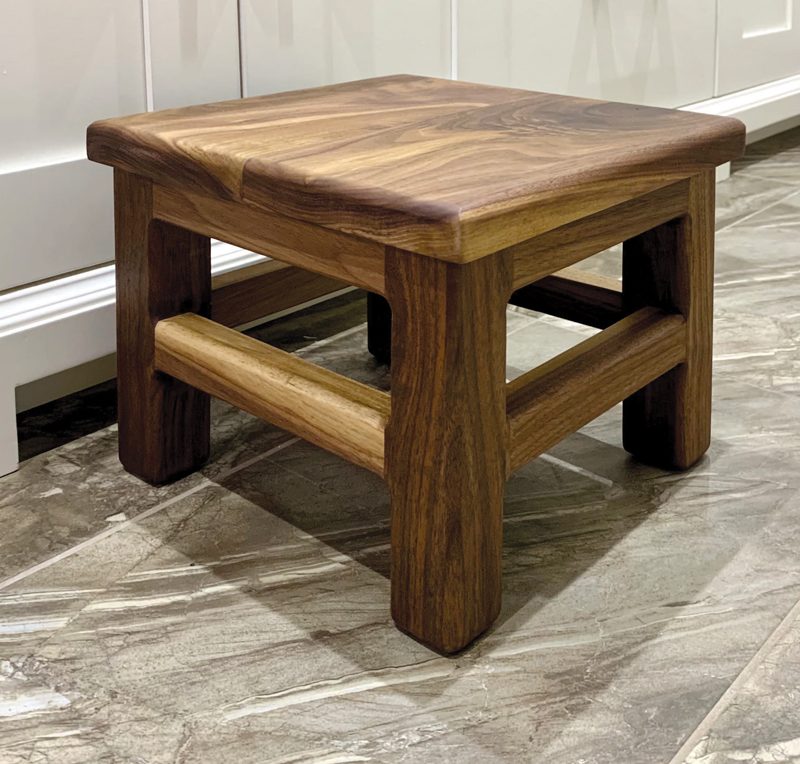
Credit: canadianwoodworking.com
Step Stool Design Variations
Step stools come in many designs. Here’s a simple comparison of popular styles:
| Design | Number of Steps | Best For | Ease of Build | Space Needed |
|---|---|---|---|---|
| Single Step | 1 | Quick reach, small kitchens | Very easy | Small |
| Double Step | 2 | Higher reach, kids | Easy | Medium |
| Folding | 1 or 2 | Small spaces, storage | Advanced | Small when folded |
| Storage Stool | 1 | Bathroom, toys | Medium | Medium |
Choosing the right design depends on your space, needs, and skills. Beginners should start with a single or double step.
Practical Tips For First-time Builders
- Practice cuts on scrap wood before using your good boards.
- Label each piece as you cut it. This avoids confusion during assembly.
- Work slowly—accuracy is more important than speed.
- Ask for help at your local hardware store if you’re unsure about wood types or finishes.
- Double-check measurements before every cut (“measure twice, cut once”).
Unexpected insight: Many people build their first stool too big. Remember, a step stool should be easy to move and store. Start with a simple design, then try bigger or more complex projects later.
Maintenance And Care
A well-built stool can last many years if you take care of it.
- Check screws and joints every few months. Tighten as needed.
- Clean with a damp cloth—avoid soaking wood.
- Reapply finish if the stool is used in wet areas or outdoors.
- Replace non-slip pads if they wear out.
- Store indoors to avoid moisture damage.
Expert tip: If you notice cracks or wobbles, fix them right away. Small problems can become dangerous if ignored.
When To Replace Or Upgrade Your Step Stool
No matter how well you build your stool, there comes a time to repair or replace it. Look for these signs:
- Cracks in wood
- Loose joints that won’t tighten
- Broken or missing non-slip feet
- Unstable on a flat surface
If you need a taller reach or want more features, consider building a new stool with advanced options like folding or storage. Upgrading can also be a fun way to practice new skills.

Credit: www.youtube.com
Inspiration: Real-world Examples
Many famous designers started with simple woodworking projects like step stools. For example, the classic Shaker stool is known for its clean lines and strength. In Japan, the kitchen step stool is often a family project, passed down through generations.
You can find thousands of creative designs online, from painted children’s stools to folding workshop steps. Sites like Woodworker’s Journal offer free plans and photos for inspiration.
Unusual idea: Some people add a chalkboard top for kids to draw on, or a magnetic strip for holding tools. Small customizations can make your stool unique and more useful.
Frequently Asked Questions
How Much Weight Can A Homemade Step Stool Hold?
Most well-built wooden step stools can safely hold 250 to 300 pounds if made from solid wood and assembled with glue and screws. Always test your stool gently before regular use, especially if adults will use it.
What Is The Best Wood To Use For A Step Stool?
Pine is affordable and easy for beginners, but oak or maple offer more strength and last longer. Avoid using plywood for the steps, as it can split or sag over time.
Is It Safe For Kids To Use A Homemade Step Stool?
Yes, if you follow safety tips: use solid wood, round all edges, add non-slip feet, and test for stability. For young children, make the stool wider and lower to reduce tipping risk.
Can I Paint Or Decorate My Step Stool?
Absolutely! You can paint, stain, or add designs to your stool. For children, use non-toxic paint or finish. Make sure the finish is fully dry before use.
What Tools Do I Need To Build A Step Stool?
Basic tools are saw, drill, screws, wood glue, clamps, sandpaper, and a measuring tape. Advanced tools like a router or jigsaw can help with details, but are not required for a simple stool.
Conclusion
Building your own step stool is a rewarding project that combines creativity, practicality, and skill. With careful planning and attention to safety, you can make a stool that fits your home and lasts for years. The process teaches valuable woodworking skills and gives you something truly unique.
Whether you keep it simple or add custom features, your homemade step stool will always stand out as a symbol of your effort and care.