
If you enjoy cooking, you’ve likely noticed cookware labeled hard anodized and non stick at your favorite store. At first glance, they may seem similar—both claim to make cooking and cleaning easier. But the truth is, these two cookware types are quite different. Picking the right one can affect your food, your health, and even your wallet. Many home cooks buy the wrong pans, only to regret their decision later.
So, how do you decide between hard anodized and non stick cookware? This guide will walk you through every detail, from how each type is made to how they perform in your kitchen. You’ll learn about safety, durability, price, maintenance, and the real-life experience of using each.
By the end, you’ll know exactly which cookware suits your cooking style and kitchen needs.
What Is Hard Anodized Cookware?
Hard anodized cookware starts as aluminum. The aluminum goes through a process called anodization, where it’s treated with an acid bath and electric current. This creates a hard, dark, non-reactive surface that is much stronger than regular aluminum.
Why does this matter? Regular aluminum is lightweight and heats up quickly, but it can react with acidic foods like tomatoes, changing taste and even causing health concerns. Hard anodized aluminum, on the other hand, is sealed. It doesn’t react with food and is much tougher.
Hard anodized pans often have a smooth, matte gray or black finish. They feel heavier and sturdier than regular aluminum pans, but not as heavy as cast iron.
Key Features Of Hard Anodized Cookware
- Durable surface—much harder than stainless steel or regular aluminum.
- Non-reactive—won’t affect the taste or color of acidic foods.
- Scratch-resistant—can handle metal utensils better than most non stick pans.
- Good heat distribution—heats quickly and evenly.
- Usually oven safe—most can handle high temperatures.
How Hard Anodized Is Made
The anodization process is key. It changes the surface of the aluminum, making it up to 30% harder than stainless steel. This is why hard anodized pans are known for their toughness. Unlike non stick pans, the non stick quality comes from the smooth anodized surface, not a chemical coating.
What Is Non Stick Cookware?
Non stick cookware is any cookware with a special coating that prevents food from sticking. The most common coating is PTFE (polytetrafluoroethylene), best known by the brand name Teflon. Some newer non stick pans use ceramic or diamond-infused coatings instead.
The non stick layer is usually applied to aluminum or stainless steel pans. When you cook eggs or pancakes, they slide right off, and cleanup is usually as simple as a quick wipe.
Key Features Of Non Stick Cookware
- Effortless food release—great for eggs, fish, pancakes, or any food that tends to stick.
- Very easy to clean—food rarely sticks, so washing up is quick.
- Lightweight—usually lighter than hard anodized or stainless steel pans.
- Affordable—wide price range, but many are budget-friendly.
- Variety—available in many colors, sizes, and styles.
How Non Stick Pans Are Made
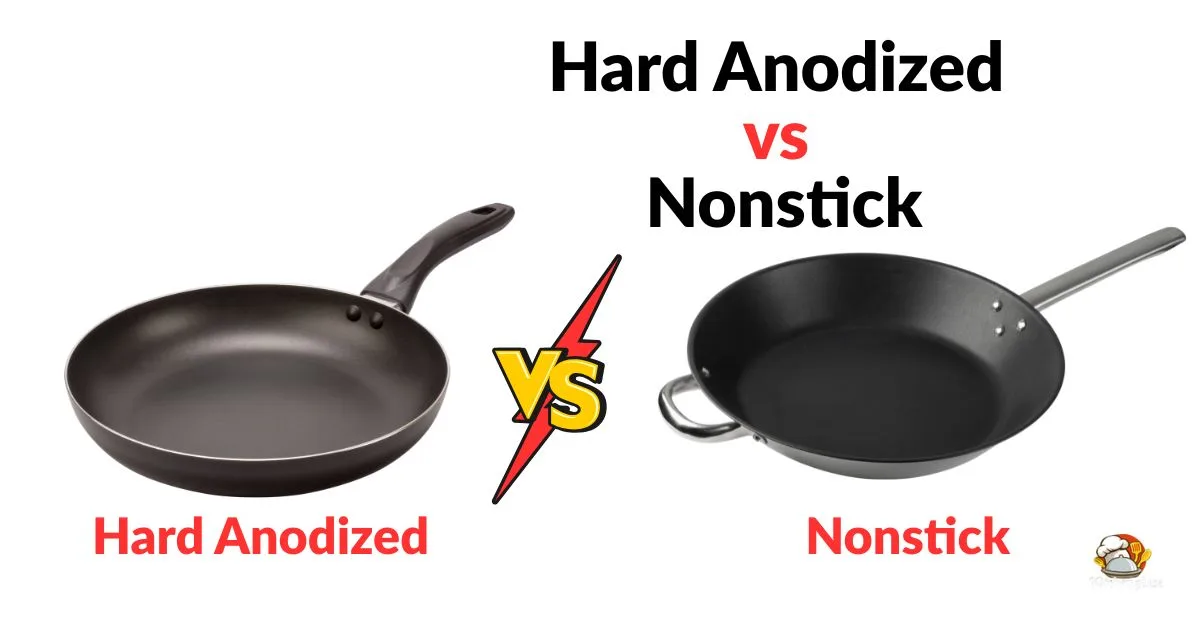
Manufacturers spray or roll a thin PTFE or ceramic coating onto the pan’s surface. This coating is then baked on, creating a slick, smooth layer. While it makes cooking easier, the coating can scratch, wear out, or peel if not cared for properly.
Credit: kitchenpluse.com
Hard Anodized Vs Non Stick: A Head-to-head Comparison
To help you see the differences clearly, here’s a side-by-side look at the most important factors.
| Feature | Hard Anodized | Non Stick |
|---|---|---|
| Base Material | Anodized aluminum | Aluminum or stainless steel with coating |
| Non Stick Property | Good (from anodized surface) | Excellent (from special coating) |
| Durability | Very high | Moderate (coating can wear out) |
| Scratch Resistance | High | Low to moderate |
| Heat Tolerance | Up to 500°F+ (most) | Usually up to 400°F |
| Care Needed | Easy to moderate | Requires gentle handling |
| Price Range | Mid to high | Low to mid |
| Dishwasher Safe | Some are, but hand-washing best | Rarely (hand wash recommended) |
| Best For | Browning, searing, general use | Eggs, pancakes, delicate foods |
Cooking Performance
Let’s see how these pans perform in real kitchens.
Hard Anodized Cooking Experience
Hard anodized pans excel at even heating. They get hot quickly and spread heat well, making them perfect for browning meat, stir-frying vegetables, or making sauces that shouldn’t scorch. Their tough surface means you don’t have to treat them too delicately—metal utensils are usually safe.
You’ll notice that food doesn’t stick easily, especially if you use a bit of oil or butter. However, they aren’t as slick as new non stick pans. If you like making sunny-side-up eggs with no oil, hard anodized might not be slippery enough.
One big advantage is their oven safety. Most can go from stovetop to oven without worry, often up to 500°F or more. This means you can start a dish on the stove and finish it in the oven.
Non Stick Cooking Experience
Non stick pans are famous for their slippery surface. Eggs, pancakes, fish, and even cheese slide right off with little or no oil. This makes them ideal for low-fat cooking and for anyone who hates scrubbing pans.
But there’s a trade-off. Non stick pans can’t handle high heat. Most manufacturers say to keep them below 400°F, or the coating can break down. Searing steak or browning chicken isn’t their strength.
Another thing to remember: non stick coatings scratch easily. Metal utensils, steel wool, or even stacking pans can damage the surface. Once the coating is scratched, food starts to stick, and the pan’s lifespan drops.
Durability And Longevity
Cookware Is An Investment. How Long Will Each Type Last?
Hard Anodized: Built To Last
A good hard anodized pan can last for many years—sometimes a decade or more—with normal care. The anodized surface is tough, resistant to scratches, and doesn’t peel. Even if you use metal spatulas, the pan usually survives just fine.
Some brands add a non stick coating on top of the anodized surface for extra slipperiness. If so, treat that coating gently—once it wears off, you’re left with just the anodized surface, which is still usable but less non stick.
Non Stick: Shorter Lifespan
Even the best non stick pans wear out. Most last 2 to 5 years with regular use, but cheap ones may only last a year. The main reason is the coating—it slowly breaks down from heat, utensils, and cleaning.
Once the coating is gone, the pan loses its magic. Food will stick, and it may start to look patchy or discolored. Replacement is often the best choice.
Pro tip: Avoid using cooking sprays with non stick pans. They can build up and ruin the coating.
Safety And Health Concerns
Cookware safety is a big issue—especially with stories about chemicals and coatings.
Hard Anodized Safety
Hard anodized pans are generally very safe. The anodization seals the aluminum, so it doesn’t react with food or leach into your meals. You can cook tomato sauces, lemon chicken, or chili without worry.
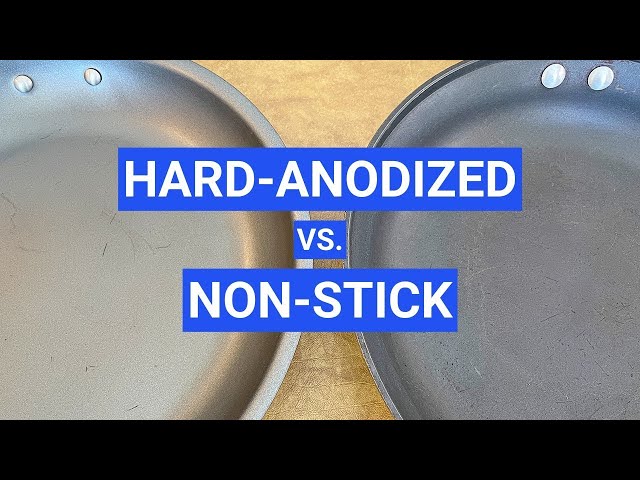
One common question: can the anodized layer wear off? In normal home use, it’s extremely hard to scratch through. If you see silver metal showing, the anodized surface is gone—but this rarely happens.
Non Stick Safety
Traditional non stick pans use PTFE (Teflon). When used below 400°F (204°C), PTFE is considered safe by agencies like the U.S. FDA. Problems arise if the pan is overheated—PTFE can break down and release fumes that can cause flu-like symptoms (called “Teflon flu”) in humans and are deadly to pet birds.
Some older non stick pans (pre-2013) used a chemical called PFOA in manufacturing. This has been phased out in the US and Europe, but if you have very old pans, consider replacing them.
Ceramic-coated non stick pans are PTFE-free but may not last as long or be as slippery.
For more on non stick safety, see EPA’s guidance on PFAS.
Maintenance And Cleaning
How easy is it to keep each type looking and working like new?
Caring For Hard Anodized
Hard anodized pans are low-maintenance but do best with hand washing. Dishwasher detergents can be harsh and dull the finish. Warm water, mild soap, and a soft sponge are enough.
If you have tough stuck-on food, soak the pan first. Avoid using steel wool or abrasive cleaners—they aren’t needed and can dull the surface.
Caring For Non Stick
Non stick pans need gentle treatment:
- Always use wood, silicone, or plastic utensils.
- Wash by hand, even if the label says “dishwasher safe.”
- Avoid stacking pans directly; place a cloth or paper towel between them.
- Never use aerosol cooking sprays—they build up and ruin the non stick layer.
If food starts sticking, it means the coating is wearing out. Some people try to “re-season” non stick pans with oil, but this only helps a little.
Price And Value
Is it worth spending more on one type over the other?
Hard Anodized: Higher Upfront Cost, Long Life
A quality hard anodized pan usually costs $40 to $100 for a good skillet, and $150 to $300 for a full set. The higher price reflects its durability and performance. Over time, since you won’t replace it as often, it can be better value.
Non Stick: Lower Price, Frequent Replacement
Non stick pans range from $15 to $60 for a skillet, and $60 to $200 for a set. Budget brands are very cheap, but the price is often tied to coating quality and thickness. You’ll need to replace them more often, so the long-term cost may add up.
Non-obvious insight: Some “non stick” sets are just regular aluminum with a cheap spray-on coating, which wears out very fast. Always check reviews and material details.
Versatility
Which Pans Can Do More Jobs In Your Kitchen?
Hard Anodized: Jack Of All Trades
Hard anodized pans are good for almost any task except very sticky foods (like eggs with no oil). You can brown, sear, sauté, fry, or even bake with them. Many brands make saucepans, stockpots, and woks with anodized surfaces.
Non Stick: Best For Gentle Cooking
Non stick pans shine with delicate foods—omelets, crepes, fish fillets. But they’re not great for caramelizing, browning, or high-heat roasting. Most people own at least one non stick pan just for breakfast foods.
Practical tip: Many professional chefs own both types. Use hard anodized for high-heat tasks, non stick for eggs and pancakes.
Aesthetic And Design Choices
Both types come in many styles, but there are differences.
Hard Anodized Look And Feel
These pans usually have a matte, dark gray or black finish. The look is modern, sleek, and professional. Handles are often riveted and metal, sometimes with silicone for grip.
Non Stick Variety
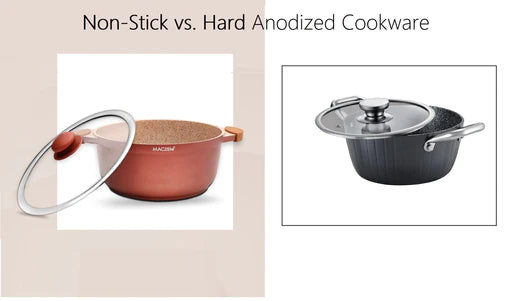
Non stick pans come in many colors—red, blue, copper, white, or classic black. Handles may be metal, plastic, or silicone. If you want to match your kitchen décor, non stick offers more choices.
Credit: macclite.com
Common Mistakes When Choosing Cookware
Choosing the wrong pan can lead to wasted money and frustration. Here are mistakes beginners often make:
- Buying a full set of non stick pans. Most home cooks only need one or two non stick pans for eggs and sticky foods. Hard anodized or stainless steel is better for the rest.
- Using metal utensils on non stick pans. This damages the coating fast.
- Believing all non stick coatings are the same. Cheap non stick pans lose their coating quickly.
- Putting hard anodized pans in the dishwasher. This shortens their life.
- Cooking on high heat with non stick pans. Always keep heat medium or lower.
Real-life Examples: Which Type For Which Task?
Here are some common kitchen tasks and the best pan for each:
- Scrambled eggs or omelets: Non stick pan (easiest cleanup)
- Searing steak: Hard anodized (can handle high heat)
- Simmering sauces: Hard anodized (non-reactive, even heating)
- Grilled cheese: Non stick (but low heat)
- Frying fish: Non stick or hard anodized (if using enough oil)
- Roasting veggies in the oven: Hard anodized (if oven safe)
Non-obvious insight: Hard anodized pans are great for one-pot dishes that start on the stove and finish in the oven—something most non stick pans can’t do safely.
Environmental Impact
How “green” Is Each Type?
Hard Anodized
The anodization process uses chemicals and energy, but the pans last longer, so you buy fewer over time. They are recyclable at the end of their life.
Non Stick
PTFE production uses chemicals, and discarded non stick pans can add to landfill waste. However, newer manufacturing is safer and more regulated. Ceramic non stick pans are more eco-friendly, but may not last as long.
Tip: Always recycle cookware if possible—check with your local recycling center.
Which Should You Buy? Making Your Decision
Still unsure? Here’s a simple guide based on your needs:
- You cook eggs or pancakes daily: Get a non stick skillet for these foods, but don’t buy a whole set.
- You want one pan for everything: Choose hard anodized—it covers most tasks and lasts longer.
- You want to use metal utensils: Hard anodized is safer.
- You need pans for high-heat oven use: Hard anodized is a better choice.
- You want colorful or decorative pans: Non stick offers more options.
- You’re on a tight budget: Non stick pans are cheaper upfront, but plan to replace them.
- You want to avoid chemicals: Ceramic non stick pans are an option, but check reviews for durability.
Credit: www.youtube.com
Side-by-side User Experience
Here’s a quick summary of what real users report:
| Aspect | Hard Anodized Users Say | Non Stick Users Say |
|---|---|---|
| Food Release | “Food slides off with some oil.” | “Eggs slide off with no oil!” |
| Maintenance | “Easy to clean, not fussy.” | “Super easy, but scratches easily.” |
| Durability | “Lasts for years.” | “Coating wears out in 2-3 years.” |
| Versatility | “Works for almost anything.” | “Best for eggs and pancakes.” |
| Value | “More expensive, but worth it.” | “Cheap, easy to replace.” |
Frequently Asked Questions
Is Hard Anodized Cookware The Same As Non Stick?
No. Hard anodized cookware is made from treated aluminum, which is naturally non stick to some degree but not as slippery as pans with a dedicated non stick coating. Many hard anodized pans now have a non stick layer, but the terms are not interchangeable.
Can I Use Metal Utensils With Non Stick Pans?
It’s best not to. Metal utensils can scratch and damage the non stick coating, causing it to wear out faster. Use wood, silicone, or plastic instead.
Are Hard Anodized Pans Safe For Acidic Foods?
Yes. The anodized surface is non-reactive and won’t affect the taste or safety of acidic dishes like tomato sauce or citrus marinades.
What’s The Best Way To Clean Hard Anodized And Non Stick Pans?
For both, hand washing with a soft sponge and mild soap is best. Avoid harsh abrasives and the dishwasher to extend their life.
How Do I Know When To Replace My Non Stick Pan?
If you see scratches, chips, or flaking in the coating, or if food starts sticking even with oil, it’s time to replace your non stick pan.
—
Choosing between hard anodized and non stick cookware isn’t just about labels—it’s about your cooking style, budget, and how much care you’re willing to give your pans. Hard anodized offers durability and versatility, while non stick makes certain tasks (like breakfast) effortless.
Many home cooks find that having one or two of each type gives the best results. Take your time, think about what you cook most, and your kitchen will thank you.