
A warm, hearty stew on a cold night. A perfectly browned roast for your family gathering. When it comes to cooking these memorable meals, the tools you choose matter as much as the recipe. Two of the most popular—and sometimes confusing—choices in the kitchen are the Dutch oven and the roasting pan. Both can create mouthwatering dishes, but they serve different purposes and offer unique benefits. If you’ve ever wondered which one is better for your cooking needs, or if you even need both, you’re not alone.
In this in-depth guide, you’ll discover how the Dutch oven and roasting pan compare in real kitchens. We’ll look at their design, materials, cooking techniques, strengths, and weaknesses. You’ll get clear answers, practical advice, and honest insights to help you decide which is right for you—or how to use both like a pro.
Let’s dive in.
What Is A Dutch Oven?
A Dutch oven is a heavy, thick-walled pot with a tight-fitting lid. Most Dutch ovens are made of cast iron, sometimes coated with enamel, but you’ll also find them in ceramic or aluminum. They can be used on the stove, in the oven, or even over a campfire.
Dutch ovens have been around for centuries. Their design helps retain heat and moisture, making them perfect for slow-cooked dishes. You’ll find them in both round and oval shapes, usually ranging from 4 to 7 quarts in size.
Key Features Of Dutch Ovens
- Material: Cast iron (bare or enameled), ceramic, or aluminum
- Shape: Usually round or oval, deep sides
- Lid: Heavy, fits tightly to trap steam and flavors
- Handles: Sturdy, often looped for oven mitts
- Heat retention: Excellent, keeps food hot for a long time
Common Uses
- Braising meats
- Baking bread
- Simmering stews and soups
- Making casseroles
- Frying or deep-frying
A Dutch oven is often passed down through generations. Its durability and versatility make it a favorite for home cooks and professionals.
What Is A Roasting Pan?
A roasting pan is a large, shallow pan designed to roast meats and vegetables in the oven. It’s usually made of stainless steel, aluminum, or sometimes coated with non-stick surfaces. Many roasting pans come with a rack that sits inside to lift food above the pan’s bottom.
Roasting pans are built for the dry, high-heat environment of an oven. Their open shape allows air to circulate, creating a crispy, browned surface on roasts.
Key Features Of Roasting Pans
- Material: Stainless steel, aluminum, non-stick, sometimes enameled steel
- Shape: Rectangular or oval, shallow sides (2-4 inches deep)
- Rack: Removable, elevates food for even cooking
- Handles: Large, easy to grip, built for carrying heavy dishes
- Capacity: Can hold large cuts of meat (turkey, brisket, etc.)
Common Uses
- Roasting whole poultry (chicken, turkey, duck)
- Roasting large cuts of beef, pork, or lamb
- Cooking vegetables
- Making gravy from pan drippings
- Lasagna or baked pasta (in a pinch)
A roasting pan is a must-have for holiday meals and big family dinners.
Dutch Oven Vs Roasting Pan: Head-to-head Comparison
To make the best choice, you need to see how these two compare in the kitchen. Let’s break down the most important differences.
| Feature | Dutch Oven | Roasting Pan |
|---|---|---|
| Material | Cast iron, enameled, ceramic, aluminum | Stainless steel, aluminum, non-stick |
| Heat Source | Stovetop, oven, campfire | Oven only |
| Lid | Heavy, tight-fitting | Usually open, sometimes with loose lid |
| Depth | Deep (4–7+ inches) | Shallow (2–4 inches) |
| Moisture Control | Excellent, traps steam | Moderate, allows evaporation |
| Best For | Braising, stews, bread, casseroles | Roasting meats, poultry, vegetables |
Cooking Methods
A Dutch oven excels in moist-heat cooking—think braising or stewing, where food cooks slowly in liquid. The heavy lid keeps moisture inside, making meats tender and flavorful.
A roasting pan is made for dry-heat roasting. Air flows around the food, creating crispy skin and caramelized surfaces. This is perfect for turkeys or large beef roasts.
Heat Retention And Distribution
Dutch ovens are famous for their even heat distribution. Cast iron holds heat well, so food cooks evenly and stays hot for longer—even after you turn off the oven.
Roasting pans, usually thinner metal, heat up fast but can cool down quickly. They don’t retain heat as well, but their design helps brown food evenly.
Size And Capacity
Dutch ovens are deep and heavy. They come in sizes from 2 quarts (small) to 13 quarts (extra-large), but most home cooks use a 5–7 quart size.
Roasting pans are wide and shallow. A standard pan can hold a 14–20 pound turkey. Their open design makes them better for large, flat cuts.
Cleaning And Maintenance
Bare cast iron Dutch ovens require seasoning—a layer of oil baked onto the surface. Enameled versions are easier to clean, but both types are heavy and need care to avoid chipping.
Roasting pans are usually dishwasher-safe and easier to scrub. Non-stick pans need gentle cleaning to avoid damage.
Price Range
Dutch ovens cost more, especially from famous brands like Le Creuset or Staub. Good quality roasting pans are usually more affordable, though high-end stainless steel models can be expensive.
When To Use A Dutch Oven
If you want to make dishes that need slow, steady cooking with lots of moisture, a Dutch oven is your best friend. Here’s when you should reach for one:
Braising Tough Cuts Of Meat
Braising means searing meat, then cooking it slowly in a bit of liquid. The Dutch oven’s heavy lid keeps steam inside, turning tough cuts like chuck roast or short ribs into melt-in-your-mouth meals.
Baking Artisan Bread
Dutch ovens create a mini-oven inside your oven. The sealed lid traps steam, making bread with a crisp, golden crust and chewy interior.
Stews And Soups
Long, gentle simmering brings out deep flavors in dishes like beef stew, chili, or chicken soup. The Dutch oven’s thick walls prevent burning and keep soups hot.
Casseroles And One-pot Meals
Layer your ingredients, put on the lid, and let the Dutch oven do the work. It’s ideal for baked pasta, beans, or rice dishes.
Deep-frying
The even heat holds oil at a steady temperature for crispy fried chicken or doughnuts.
Surprising Uses
Some people use Dutch ovens for popcorn or even desserts like cobblers. Their versatility goes far beyond what most beginners expect.
When To Use A Roasting Pan
Roasting pans shine when you need high heat, dry air, and plenty of space. Here’s when to pick a roasting pan:
Roasting Whole Poultry
A turkey or chicken needs open air to get crisp, golden skin. The rack lifts the bird so heat circulates underneath, and fat drips away.
Large Roasts
Whether it’s a beef rib roast, pork loin, or leg of lamb, the roasting pan’s open design browns meat evenly. You can fit big cuts that wouldn’t fit in a Dutch oven.
Roasting Vegetables
A wide, shallow pan spreads vegetables in a single layer. This helps them caramelize and get crispy, instead of steaming in their own juices.
Making Gravy From Pan Drippings
The juices that collect in the bottom are perfect for gravy. Place the roasting pan across two burners to use the drippings with a bit of flour and broth.
Baking Large Dishes
Some cooks use roasting pans for lasagna, baked ziti, or big casseroles. The large surface is great for feeding a crowd.
Surprising Uses
You can use a roasting pan as a water bath for cheesecake, or to catch drips under pies. Some people even use them for sheet pan dinners.
Pros And Cons: Dutch Oven
Every tool has strengths and weaknesses. Here’s what to expect from a Dutch oven:
Pros
- Versatility: Use on stove, oven, or campfire.
- Heat Retention: Keeps food hot for hours.
- Moisture Control: Great for braises, stews, soups.
- Durability: Lasts for decades with proper care.
- Flavor Development: Enhances deep, rich flavors.
Cons
- Weight: Heavy, can be hard to lift (especially when full).
- Care Needs: Bare cast iron needs seasoning and can rust.
- Price: High-quality brands are expensive.
- Limited Size: Not ideal for very large cuts of meat or big turkeys.
- Cleaning: Awkward to wash due to weight and size.
Pros And Cons: Roasting Pan
A roasting pan is built for specific jobs, but has its own strengths and drawbacks:
Pros
- Large Capacity: Fits big cuts, whole poultry.
- Even Browning: Promotes crisp, golden surfaces.
- Easy Gravy Making: Collects flavorful drippings.
- Simple Cleaning: Most are dishwasher safe.
- Affordable: Good models are budget-friendly.
Cons
- Less Versatile: Mostly for oven roasting.
- Poor Moisture Control: Food can dry out if not watched.
- Heat Spots: Thin pans may cook unevenly.
- Storage Space: Takes up a lot of room in cabinets.
- Limited Use on Stovetop: Only some pans are stovetop-safe.
Which Is Healthier?
Both tools can support healthy cooking, but there are a few key differences.
- Dutch ovens allow you to cook with less fat, since the closed environment keeps food moist. You can braise lean meats or make hearty vegetable stews without extra oil.
- Roasting pans let fat drip away from food, which lowers the calorie count. Roasted vegetables need only a little oil for flavor.
The healthiest choice depends on your recipe and how you use the tool.
Real-world Examples
To see the difference in action, let’s look at a few kitchen scenarios:
Example 1: Beef Pot Roast
- Dutch Oven: Sear the roast, add onions, carrots, broth. Cover and cook slowly. The meat becomes tender, and the vegetables soak up flavor.
- Roasting Pan: Sear the roast, place on rack with veggies around. Roast uncovered. The meat forms a crust, but may be less moist inside.
Example 2: Roast Chicken
- Dutch Oven: Chicken is nestled with potatoes and herbs. Lid is on for part of the cook, then removed to brown. Meat is juicy, but skin may not get as crisp.
- Roasting Pan: Chicken on rack, air all around. Skin is golden and crunchy, but you need to watch for drying.
Example 3: Artisan Bread
- Dutch Oven: Bake with lid on, then off. Steam creates a chewy crust.
- Roasting Pan: Not ideal. Bread may dry out without steam.
Example 4: Lasagna
- Dutch Oven: Possible, but high sides may make serving awkward.
- Roasting Pan: Large surface is perfect for feeding a crowd.
Material Choices And Their Impact
The material of your Dutch oven or roasting pan makes a big difference in cooking performance.
Dutch Oven Materials
- Enameled Cast Iron: Easy to clean, doesn’t react with acidic foods. Heavy and expensive.
- Bare Cast Iron: Needs seasoning, but lasts forever.
- Ceramic: Lightweight, but less durable.
- Aluminum: Cheap, but doesn’t hold heat as well.
Roasting Pan Materials
- Stainless Steel: Durable, can go on stovetop for making gravy.
- Aluminum: Lightweight, heats quickly. May warp at high heat.
- Non-stick: Easy to clean, but can scratch or wear out.
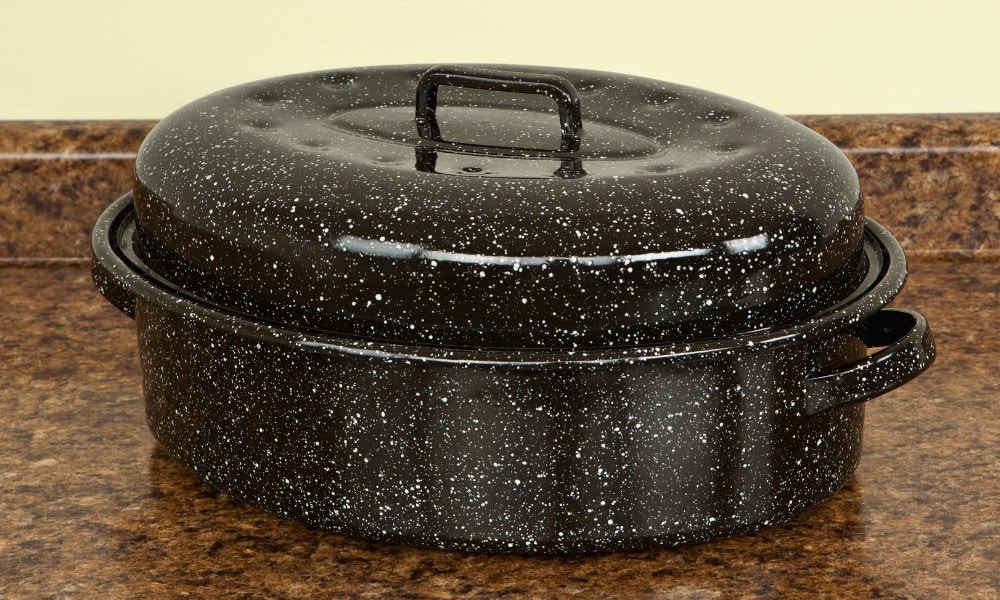
- Enameled Steel: Attractive, easy to clean, but may chip.
Some roasting pans include a rack made of stainless steel or chrome-plated steel. This helps air circulate and keeps food out of the fat.
Credit: theskillfulcook.com
Cost Comparison
How much should you spend? Here’s a quick guide:
| Type | Low-End | Mid-Range | High-End |
|---|---|---|---|
| Dutch Oven | $40–$60 | $80–$150 | $200–$400+ |
| Roasting Pan | $20–$40 | $50–$80 | $100–$200+ |
- A good Dutch oven is an investment. Cheaper models work well, but may chip or wear faster.
- A roasting pan can be bought for little money. For heavy use, stainless steel is best.
Common Mistakes And How To Avoid Them
Even experienced cooks can misuse these tools. Here are mistakes to avoid:
Dutch Oven
- Overfilling: Leave space for steam. Too full, and liquid may boil over.
- Cold Shock: Don’t add cold water to a hot Dutch oven. It may crack or warp.
- Metal Utensils: Avoid scraping enameled surfaces.
- Direct High Heat: Don’t heat empty; cast iron can crack.
Roasting Pan
- No Rack Used: Food can stew in its juices if not elevated.
- Too Crowded: Overcrowding prevents browning.
- Wrong Pan Size: Too small, juices overflow. Too big, drippings burn.
- Not Preheating: Cold pan slows browning.
Dutch Oven Or Roasting Pan: Which Should You Buy First?
If you can buy only one, think about your cooking style:
- If you love stews, soups, and braised dishes, start with a Dutch oven.
- If you roast whole chickens, turkeys, or lots of vegetables, a roasting pan will serve you better.
- If your budget allows, both tools will expand your kitchen skills.
Many home cooks are surprised to learn how much a Dutch oven can do. But, if you host Thanksgiving, a roasting pan is essential.
Maintenance And Longevity
Dutch Oven Care
- Wash by hand with mild soap (if enameled).
- Dry thoroughly to prevent rust.
- Re-season bare cast iron as needed.
- Don’t use in the dishwasher.
Roasting Pan Care
- Soak with warm water for stuck-on bits.
- Most are dishwasher safe.
- Don’t use metal scouring pads on non-stick surfaces.
With proper care, a Dutch oven can last generations. A quality roasting pan will last for years, but thin or non-stick pans may need replacing sooner.
Expert Tips For Best Results
- Preheat the Dutch oven before adding food for better browning.
- Use a thermometer for roasts—don’t trust time alone.
- Deglaze your roasting pan after cooking to make rich pan sauces.
- Let food rest before slicing to keep juices in.
- Invest in quality—cheap pans and pots can ruin a meal.
Non-obvious Insights
- For extra-crispy roast chicken, start in a roasting pan and finish under the broiler.
- Use your Dutch oven as a slow cooker—low and slow heat makes perfect pulled pork.
- A Dutch oven can double as a serving pot, keeping food warm on the table.
Sustainability And Environmental Impact
A cast iron Dutch oven is almost indestructible and lasts for decades, reducing waste. Stainless steel roasting pans are recyclable and often made from recycled materials. Non-stick pans, however, have a shorter life and may end up in landfills.
Investing in durable cookware means fewer replacements and less environmental impact.
How Professional Chefs Use Them
Professional kitchens use both tools for different reasons:
- Dutch ovens for braises, soups, and slow-cooked dishes.
- Roasting pans for fast browning and large-scale roasting.
Many chefs prefer stainless steel for durability and heat response.

Credit: www.reddit.com
Can You Substitute One For The Other?
Sometimes, but not always. Here’s when it works:
- You can braise in a roasting pan if you cover tightly with foil, but heat retention is lower.
- You can roast small cuts in a Dutch oven with the lid off, but may not get crisp skin.
- For large turkeys, only a roasting pan will do.
Popular Brands
- Dutch Ovens: Le Creuset, Staub, Lodge, Cuisinart
- Roasting Pans: All-Clad, Calphalon, Cuisinart, Viking
Check reviews and look for thick, sturdy construction.

Credit: www.youtube.com
Key Takeaways
- Dutch ovens excel at moist, slow cooking and are versatile.
- Roasting pans are best for dry, high-heat roasting and large foods.
- Each has unique strengths—choose based on your favorite dishes.
- Both tools can help you make healthier, tastier meals.
If you want more information on cookware materials and history, check this Wikipedia page.
Frequently Asked Questions
What Is The Main Difference Between A Dutch Oven And A Roasting Pan?
A Dutch oven is a heavy, deep pot with a tight lid, made for slow, moist cooking like braising and stews. A roasting pan is a wide, shallow pan for dry-heat roasting of meats and vegetables, with a rack for air circulation.
Can I Roast A Turkey In A Dutch Oven?
Most Dutch ovens are not big enough for a large turkey. You can roast a small chicken or turkey breast, but for whole turkeys (especially over 10 lbs), a roasting pan is better.
Is A Dutch Oven Worth The Investment?
Yes, especially if you cook stews, braises, or artisan bread. A good Dutch oven lasts for decades, is very versatile, and enhances flavors. If you mostly roast large meats, start with a roasting pan instead.
How Do I Clean Burnt-on Food From A Roasting Pan Or Dutch Oven?
Soak the pan in warm water with a bit of baking soda or dish soap. Use a soft sponge for non-stick or enameled surfaces. For cast iron, use coarse salt as a gentle scrub. Avoid harsh scouring pads on non-stick or enamel.
Can I Use A Roasting Pan On The Stovetop?
Many stainless steel roasting pans can be used on the stovetop for making gravy. Check the manufacturer’s instructions—some thin or non-stick pans are not stovetop-safe and may warp or get damaged.
Choosing between a Dutch oven and a roasting pan comes down to your cooking style. Both are valuable tools, and learning how to use them well will make your meals shine. With the right knowledge, you can get the most out of either—or both—for years to come.