
Every home cook has faced the same frustration: you fill a pot with water, set it on your electric stove, turn the knob, and wait. And wait. And wait. It seems like electric stoves take forever to boil water, especially when you’re in a hurry. You might even wonder if something is wrong with your stove. But this isn’t just your imagination or a faulty appliance. There are real reasons why boiling water on an electric stove can be slow, and understanding them can help you cook smarter and save time.
Let’s explore why electric stoves are often slower, what’s happening under the surface, and practical solutions to make boiling water less of a chore. We’ll compare electric stoves with gas and induction, look at the science of heat transfer, and share expert tips to speed things up.
By the end of this article, you’ll know exactly what slows down your electric stove—and what you can do about it.
The Science Of Boiling Water
Boiling water may seem simple, but there’s real science behind it. To boil, water needs to reach 212°F (100°C) at sea level. The amount of energy required to heat water from room temperature (around 68°F or 20°C) to boiling is significant. For each gram of water, it takes about 4.18 joules of energy to raise the temperature by just one degree Celsius.
But it’s not just about energy input. How quickly water boils depends on how efficiently your stove transfers energy to the pot. Any inefficiency—whether from the stove, the pot, or even the air around—means a longer wait. With electric stoves, some unique challenges slow the process.
How Electric Stoves Work
Electric stoves use resistance heating elements—metal coils or flat ceramic tops. When you turn on the burner, electricity flows through the element, which resists the flow and generates heat. This heat then transfers to your cookware, and finally to the water inside.
There are two main types of electric stoves:
- Coil burners: Exposed metal coils that the pot sits on directly.
- Smooth-top (ceramic or glass): Flat surfaces with heating elements beneath the surface.
Both types have benefits and drawbacks, but both are slower than gas or induction at transferring heat. Here’s why.

Credit: petersburgva.gov
Why Electric Stoves Are Slow To Boil Water
1. Heat Transfer Inefficiency
Electric elements heat up gradually and cool down slowly. Unlike gas flames that provide instant, direct heat, electric burners must first get hot themselves, then transfer that heat through the pot to the water. This indirect process wastes energy.
2. Surface-to-pot Contact
With coil burners, the pot only touches the coils at a few points. Smooth-top stoves do a bit better, but the glass or ceramic layer still acts as a barrier. Any air gaps, warping, or dirt reduce contact and slow heating.
3. Specific Heat Of Water
Water has a high specific heat, meaning it takes a lot of energy to change its temperature. Even with maximum heat, your stove is fighting this physical property.
4. Power Limits
Most electric stoves supply 1,000 to 2,500 watts per burner. That’s enough for most cooking, but not as much as a typical gas burner (which can reach up to 18,000 BTU/hr—roughly 5,300 watts). Less power means slower boiling.
5. Thermal Lag
Electric burners have thermal inertia. They don’t respond instantly to temperature changes. If you switch to high heat, it takes time to ramp up. Once hot, they also stay hot, which doesn’t help if you want to simmer right after boiling.
6. Pot Material Matters
Some pots are better at conducting heat. Aluminum and copper pots heat water faster than stainless steel or cast iron. But if your pot is thin or warped, it may lose heat instead of transferring it efficiently.
7. Environmental Factors
Room temperature, humidity, altitude, and even the amount of water all affect boiling time. Electric stoves are more sensitive to these changes because they operate close to their maximum output.
Comparing Electric, Gas, And Induction Stoves
Understanding how electric stoves compare with other types can highlight their unique challenges and advantages.
| Stove Type | Average Time to Boil 1 Liter | Heat Efficiency | Typical Power Output |
|---|---|---|---|
| Electric Coil | 8-10 minutes | 60-70% | 1,000-2,500 W |
| Electric Smooth-top | 7-9 minutes | 65-75% | 1,200-2,200 W |
| Gas | 5-8 minutes | 40-55% | 5,000-18,000 BTU/hr |
| Induction | 3-5 minutes | 85-90% | 1,800-3,700 W |
Induction stoves are the fastest because they use magnetic fields to directly heat the pot—not the air or stove surface. Gas is also fast due to its high output, but less efficient because much heat escapes around the pot.
Electric stoves sit in the middle: more efficient than gas but less powerful and slower to react.
Real-world Example: Boiling Water On Different Stoves
Let’s say you want to boil 1 liter (about 4 cups) of water from room temperature. Here’s what you might experience:
- Electric coil stove: 8–10 minutes
- Electric smooth-top: 7–9 minutes
- Gas stove: 5–8 minutes
- Induction cooktop: 3–5 minutes
The difference might not seem huge for one pot, but over time, these minutes add up—especially if you’re cooking pasta, vegetables, or soups often.
Common Mistakes That Slow Boiling On Electric Stoves
Many people make simple errors that make electric stoves even slower. Avoid these mistakes to save time:
- Using oversized pots for small amounts of water: More pot surface means more heat lost to the air.
- Not covering the pot: Leaving the lid off lets heat escape. Always cover your pot to trap heat.
- Filling the pot with cold water straight from the fridge: Room-temperature water boils faster.
- Using warped pots: If your pot isn’t flat, it won’t make good contact with the burner.
- Cooking on dirty burners: Burners covered in spills or debris heat less efficiently.
- Turning the heat down too soon: Electric elements stay hot, but lowering the setting too early can slow things down.
How To Boil Water Faster On An Electric Stove
You don’t have to accept slow boiling. Here are practical tips to cut down waiting time:
- Start with hot tap water if safe in your area. It’s already closer to boiling.
- Use a kettle: Electric kettles are much faster (often boiling 1 liter in under 3 minutes).
- Cover your pot with a tight lid to keep heat in.
- Use a flat-bottomed pot that matches the burner size.
- Choose the right material: Aluminum or copper pots heat up fastest.
- Don’t overfill: Only boil the amount you need.
- Keep burners clean for best heat transfer.
- Preheat the burner before placing the pot on it.
- Avoid multitasking: Place the pot in the center of the burner for even heating.
The Role Of Cookware In Boiling Speed
Not all pots are created equal. The type, shape, and material of your cookware can make a big difference.
| Material | Thermal Conductivity (W/m·K) | Boiling Speed | Notes |
|---|---|---|---|
| Copper | 390 | Very fast | Expensive, reacts with some foods |
| Aluminum | 205 | Fast | Lightweight, affordable |
| Stainless Steel | 15 | Moderate | Durable, non-reactive |
| Cast Iron | 46 | Slow | Heavy, retains heat well |
| Glass | 1 | Very slow | Good for oven, not stovetop boiling |
Copper and aluminum are the fastest for boiling, but stainless steel is the most common. If you use a thick-bottomed stainless steel pot with an aluminum or copper core, you’ll get good performance without the downsides of pure copper.
Electric Stoves Vs. Electric Kettles
Electric kettles are designed to heat water quickly and efficiently. They use a coil directly in the water, minimizing energy loss.
- Electric kettle: Boils 1 liter in 2.5–4 minutes.
- Electric stove: Boils 1 liter in 7–10 minutes.
If you boil water often for tea, coffee, or instant food, an electric kettle is a smart investment. For larger quantities, though, you may still need the stove.
When Electric Stoves Make Sense
Despite their slower boiling, electric stoves have advantages:
- Safer to use (no open flame)
- Easier to clean (especially smooth-tops)
- Often less expensive to buy and install
- Better for slow, even cooking
If you rarely need to boil large amounts of water quickly, or if safety and easy cleaning matter more, electric stoves are a good fit.

Credit: www.reddit.com
How Altitude Changes Boiling Time
At higher altitudes, water boils at a lower temperature because air pressure is lower. This means water boils faster—but food may not cook as well, because it never gets as hot.
For example, in Denver (about 5,000 feet above sea level), water boils at around 203°F (95°C). It will come to a boil faster, but pasta and potatoes may take longer to cook. Electric stoves don’t change this—so at high altitudes, boiling is faster but less effective for thorough cooking.
Energy Efficiency And Cost
Electric stoves are often more efficient than gas at converting energy into heat, but they’re slower because of lower power output and heat transfer issues.
- Induction cooktops: Up to 90% efficient
- Electric coil or smooth-top: 65–75% efficient
- Gas stoves: 40–55% efficient
But the cost of electricity is usually higher than natural gas in many areas. If you boil water often, consider the long-term energy cost.
The Myth Of “forever” Boiling
It’s easy to feel like electric stoves “take forever” to boil water, but for small amounts (1–2 cups), the difference is often just a few minutes. The real frustration sets in with large pots—like for pasta or soup—where you wait 10–15 minutes or more.
Two non-obvious insights:
- The lid makes the biggest difference: Even on a slow stove, always use a lid. This can cut boiling time by 20–30%.
- Preheat the pot with a bit of water: Adding a small amount of hot water and preheating the pot before adding the rest speeds up the process, as the pot itself is already hot.
Is It Time To Upgrade?
If you find yourself boiling water daily and hate waiting, consider an upgrade. Induction cooktops are fast, efficient, and safe, but require compatible cookware. Electric kettles are a cheap, simple way to speed up your routine. Even replacing old, warped pots can help.
But for most people, a few smart habits with your electric stove can make a big difference.
Is There A “hack” To Make Electric Stoves Faster?
Many online “hacks” promise faster boiling, but most don’t work or are unsafe. For example, adding salt to water does not make it boil faster—in fact, it may slow it slightly. Splitting water into two smaller pots to increase surface area can help, but only if both pots fit fully on the burners.
The safest, most effective tricks are:
- Use a kettle for small volumes
- Always cover the pot
- Use the best pot you have
Environmental Impact
Electric stoves are cleaner to operate than gas, producing no indoor air pollution. But their environmental impact depends on how your electricity is generated. In areas with clean energy (hydro, solar, wind), electric stoves are greener. Where electricity comes from coal, their footprint is higher.
Still, for many, the benefits of safety and cleaner air make electric stoves a good choice—even if they boil water slowly.
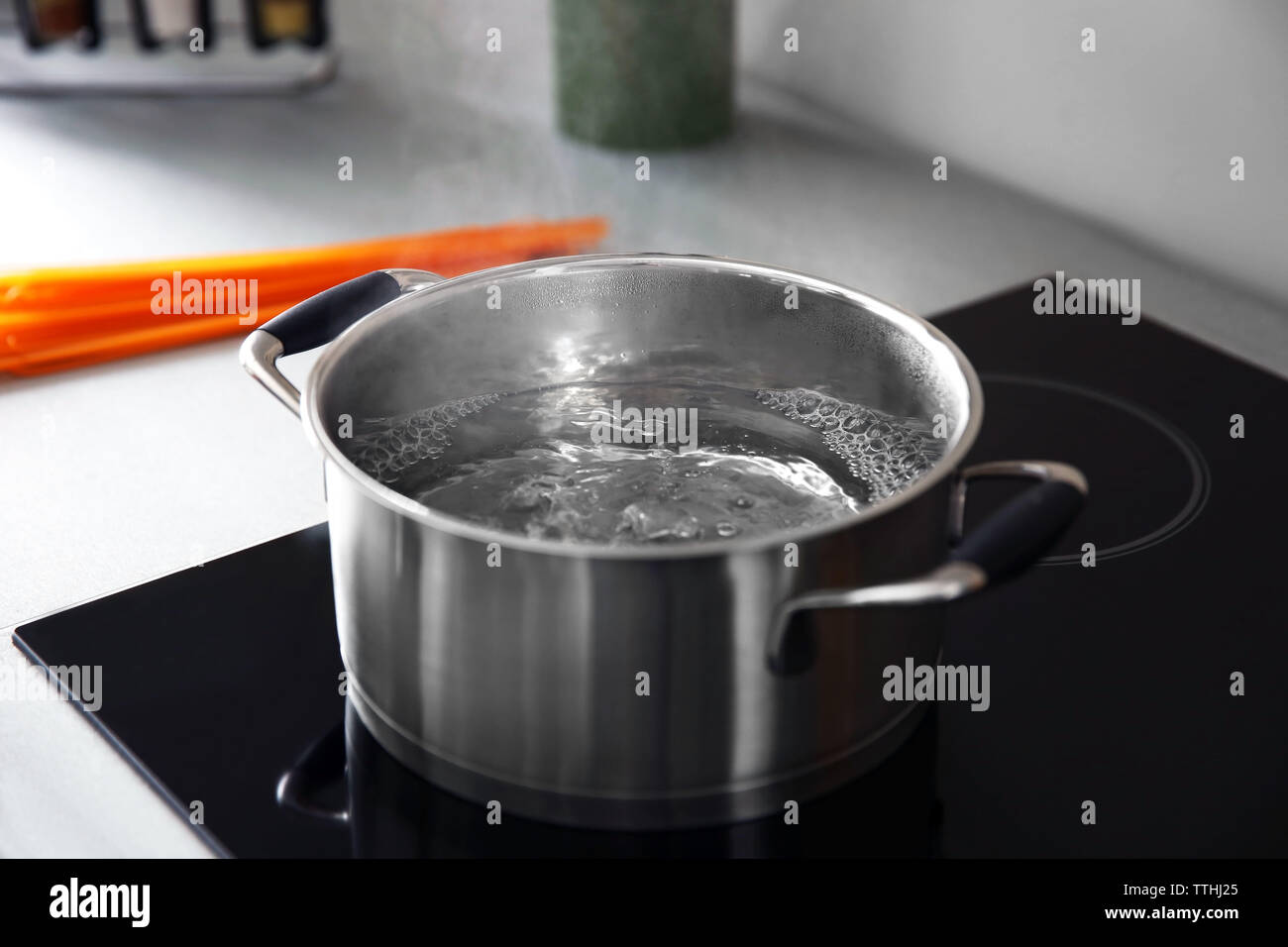
Credit: www.alamy.com
What About Induction Stoves?
Induction cooking is the gold standard for speed and efficiency. It uses electromagnetic energy to heat the pot directly. If you’re tired of waiting, this is the best solution—though it means buying new cookware if yours isn’t magnetic.
Induction stoves boil water in almost half the time of electric stoves, with less wasted energy and a cooler kitchen.
Practical Advice: Making The Most Of Your Electric Stove
- Plan ahead: Start boiling water first when preparing a meal.
- Use the right burner: Match pot size to burner size.
- Keep the lid on: Heat escapes fast without it.
- Boil only what you need: More water takes more time.
- Check your cookware: Flat, clean, and good materials matter.
- Preheat if possible: Get the pot hot before adding all the water.
- Consider a kettle: For speed and convenience.
One detail many people miss: Over time, electric coils can degrade and heat less efficiently. If your stove is old, replacing the coils may help.
When To Call A Professional
If your electric stove takes much longer than the averages above, or if burners heat unevenly or not at all, it may be time for a checkup. Faulty wiring, failing elements, or damaged controls can all slow boiling. Don’t ignore these issues—get a technician to inspect your appliance.
The Takeaway
Electric stoves do take longer to boil water than gas or induction, but the reasons are clear: slower heat transfer, limited power, and cookware factors. With smart habits—like using lids, good pots, and sometimes an electric kettle—you can cut boiling time and frustration.
Boiling water doesn’t have to be a test of patience. Understanding your stove and adapting your kitchen habits is the real key. For more on heat transfer and cooking technology, check out this resource from Wikipedia.
Frequently Asked Questions
Why Does My Electric Stove Take So Long To Boil Water?
Electric stoves heat slowly because the heating element must warm up and transfer energy through the pot to the water. Gas and induction stoves provide more direct, faster heat, so electric stoves will always be a bit slower.
Will Using A Lid Really Make Water Boil Faster?
Yes, keeping the lid on traps heat and steam, making the water reach boiling point faster. This can reduce boiling time by up to 30%.
What Kind Of Pot Boils Water Fastest On An Electric Stove?
Flat-bottomed pots made of aluminum or copper heat water fastest. Avoid warped, dented, or glass pots for boiling.
Is It Safe To Use Hot Tap Water To Speed Up Boiling?
In most areas, hot tap water is safe for boiling, but check local guidelines. Some pipes may introduce contaminants into hot water, so when in doubt, use cold water and heat it.
Should I Upgrade To Induction For Faster Boiling?
Induction stoves are much faster and more efficient, but require compatible (magnetic) cookware. If speed is a priority and you’re willing to invest, induction is the best choice for boiling water quickly.