
Cleaning a rusty cast iron skillet can feel intimidating, especially if you’re new to cooking with cast iron. You might worry the rust has ruined your favorite pan, or that you’ll damage the seasoning. The good news is, even a heavily rusted cast iron skillet can be saved and restored to its former glory. And you don’t need expensive cleaners or harsh chemicals—just a common kitchen staple: baking soda.
Whether you’ve inherited a family skillet or found a deal at a thrift store, knowing how to clean a rusty cast iron skillet with baking soda is a valuable kitchen skill. This step-by-step guide will walk you through the process, explain why rust happens, and share expert tips to help you avoid common mistakes.
You’ll also learn how to keep your skillet in top condition, so it lasts for generations.
Why Cast Iron Skillets Rust
Cast iron is prized for its durability and excellent heat retention, but it’s also vulnerable to rust. Rust forms when iron reacts with water and oxygen, creating a reddish-brown layer that can flake off and ruin the surface of your pan.
The main reasons cast iron skillets rust include:
- Leaving the pan wet or soaking in water
- Not drying thoroughly after cleaning
- Storing in humid environments
- Scratches that expose bare metal
- Skipping the seasoning step
Even a small amount of moisture can trigger rust, especially if your skillet’s seasoning (the protective oil layer) is thin or damaged. Understanding these causes helps you prevent rust in the future.
How Baking Soda Removes Rust
Baking soda works as a gentle abrasive and a natural alkaline cleaner. When you scrub with baking soda, it lifts away rust without scratching the cast iron surface. It also neutralizes acids and odors, which helps in cleaning and restoring cookware.
Compared to harsher chemicals like oven cleaner or steel wool pads, baking soda is safe for both your pan and your health. It won’t damage the metal or affect the taste of food cooked in your skillet later. Plus, it’s inexpensive and widely available.
Supplies You’ll Need
Before you start, gather these supplies:
- Baking soda (at least 1/2 cup)
- Warm water
- Non-metallic scrubber (such as a nylon sponge or brush)
- Paper towels or clean cloth
- Vegetable oil or shortening (for reseasoning)
- Oven (for drying and seasoning)
- Gloves (optional, to protect your hands)
Avoid using steel wool unless the rust is extremely heavy; it can scratch the pan and remove too much seasoning.
Step-by-step Guide: Cleaning Rusty Cast Iron With Baking Soda
Restoring your skillet is a process, but each step is important for the best results. Here’s how to do it:
1. Assess The Rust
First, check how much rust is on your skillet. Light surface rust looks like thin orange or brown spots. Heavy rust feels rough, flaky, and may cover the entire surface. The cleaning method is the same, but heavy rust might need more scrubbing.
2. Rinse And Remove Loose Rust
Rinse the skillet under warm water to remove any loose rust or debris. Don’t soak the pan, as extended contact with water can make rust worse. Use a stiff brush to loosen surface particles.
3. Make A Baking Soda Paste
Sprinkle a generous amount of baking soda over the rusty areas. Add just enough water to form a thick paste. You can mix this directly in the pan or in a small bowl, then apply to the rusted spots.
4. Scrub The Rusty Spots
Use a non-metallic scrubber to work the baking soda paste into the rusty areas. Scrub in small circles, applying gentle pressure. Focus on the worst spots but cover the whole surface for even cleaning.
If the rust is stubborn, let the paste sit for 15-20 minutes, then scrub again. For very heavy rust, you may need to repeat this process several times.
5. Rinse And Check Progress
Rinse the skillet with warm water and dry with a paper towel. Inspect the surface. If rust remains, repeat the baking soda paste and scrubbing steps until the skillet is clean.
Never leave the pan wet—immediately move to the next step after rinsing.
6. Dry The Skillet Completely
Moisture is the enemy of cast iron. After cleaning, dry the skillet thoroughly with a towel. For extra protection, place the pan in a warm oven (200°F/93°C) for 10-15 minutes to evaporate any remaining moisture. This is a step many beginners skip, leading to new rust.
7. Reseason The Pan
Cleaning with baking soda removes rust, but it also strips some of the seasoning layer. To restore protection, rub a thin layer of vegetable oil or shortening over the entire skillet—inside, outside, and the handle.
Place the skillet upside down in a preheated oven (400°F/204°C) for one hour. Put a sheet of foil below to catch drips. After an hour, let the pan cool in the oven. This process rebuilds the non-stick coating and shields the pan from moisture.
8. Store Properly
Once your skillet is cool, store it in a dry place. Keep the lid off, or place a paper towel between skillet and lid, to avoid trapping moisture. Storing with a light coating of oil helps prevent future rust.
Practical Tips For Best Results
Cleaning cast iron is simple but requires attention to detail. Here are practical tips to make the process smoother:
- Always use a non-metallic scrubber to avoid scratching.
- Don’t soak cast iron in water.
- For very heavy rust, use a little coarse salt with baking soda for extra scrubbing power.
- If you see black residue after seasoning, it’s normal—just wipe with a paper towel.
- Avoid soap if possible, as it can strip seasoning. If you use it, reseason right away.
- For stubborn rust, repeat the baking soda treatment as many times as needed.
- Wear gloves to protect your hands during scrubbing.
Comparing Rust Removal Methods
Baking soda is just one way to remove rust. Here’s how it compares to other common methods:
| Method | Effectiveness | Ease of Use | Safe for Pan |
|---|---|---|---|
| Baking Soda | High (for light/medium rust) | Easy | Yes |
| Vinegar Soak | High (for heavy rust) | Moderate | Can damage pan if overused |
| Steel Wool | Very High | Messy | May scratch surface |
| Commercial Rust Remover | Very High | Easy | Possible chemical residue |
| Electrolysis | Excellent | Complicated | Safe if done properly |
Baking soda is ideal for regular maintenance and smaller rust spots. For extremely heavy rust, you might combine methods, but always finish with a thorough cleaning and seasoning.
Common Mistakes To Avoid
Even with the right supplies, some mistakes can make things worse. Here’s what to watch out for:
- Letting the pan stay wet – Always dry immediately.
- Using metal scouring pads – These scratch and remove seasoning.
- Skipping seasoning after cleaning – Bare iron will rust quickly.
- Using too much water – Soaking the skillet can create new rust.
- Storing in humid places – Moisture in the air causes rust, even if the pan looks dry.
- Not applying oil evenly – Missed spots are unprotected.
It’s easy to rush or forget a step, but patience and attention pay off with a smooth, rust-free pan.
How To Maintain Your Cast Iron Skillet
Once you’ve restored your skillet, proper maintenance keeps it in excellent condition:
- Clean after each use with hot water and a brush or non-abrasive sponge.
- Dry thoroughly and heat briefly on the stove to remove water.
- Oil lightly after each cleaning.
- Store in a dry place—never leave in a damp sink or dishwasher.
- Avoid cooking acidic foods (like tomatoes or vinegar) until seasoning is strong.
If you use your skillet often and care for it, the seasoning gets better with time. A well-seasoned pan should look shiny and black, not dull or sticky.

Credit: www.souschef.co.uk
How To Tell If Your Skillet Needs Reseasoning
Sometimes, even after cleaning, your skillet might not perform as well as before. Here’s how to know when to reseason:
- Food sticks easily, even with oil.
- The surface looks dull, gray, or has bare patches.
- You see rust returning.
- The pan smells metallic or “off.”
If you notice these signs, repeat the seasoning process: oil, bake at high heat, and cool. Multiple rounds might be needed for a neglected pan.
What If The Rust Is Really Bad?
For pans with severe rust, you might need to use more aggressive methods before finishing with baking soda. Soaking in a 50/50 vinegar and water solution can help, but be careful—soak for no more than 1 hour. Prolonged exposure to vinegar can pit the iron.
After soaking, scrub with baking soda to neutralize the acid and remove any remaining rust. Rinse, dry, and season as before. For pans with deep pitting or structural damage, restoration may not be possible, but most pans can be saved.
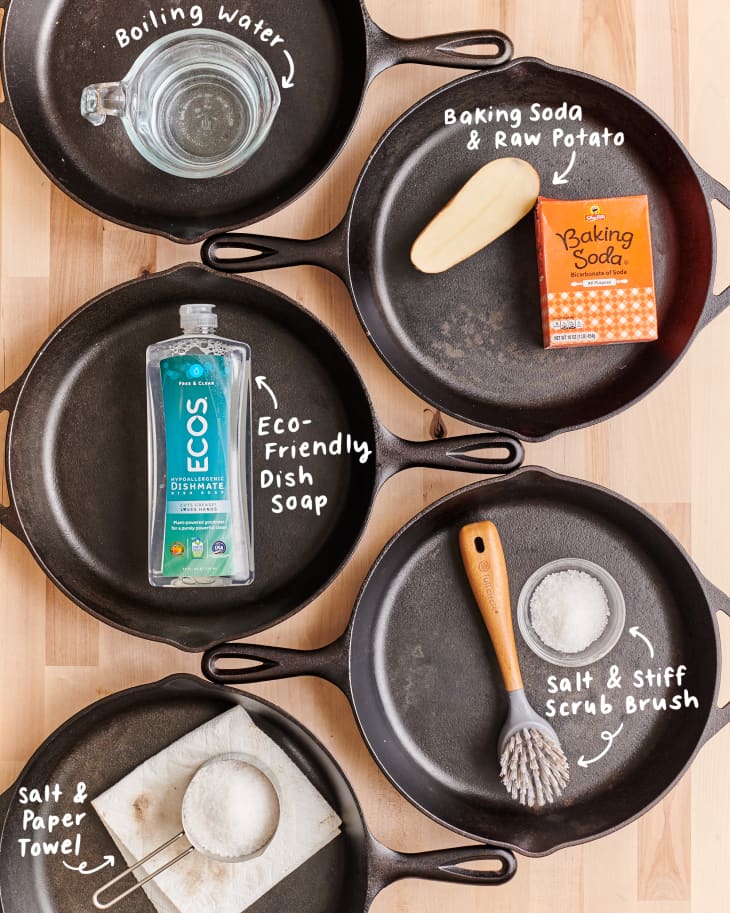
Credit: www.thekitchn.com
The Science Behind Cast Iron Seasoning
Seasoning is more than just oil on a pan—it’s a chemical process called polymerization. When you heat oil on cast iron, it bonds to the surface and creates a hard, shiny layer. This layer is what gives cast iron its famous non-stick qualities and protects against rust.
Baking soda, while removing rust, may break down some of this layer. That’s why reseasoning is always the final step after cleaning rust.
Comparing Cast Iron To Other Cookware
You might wonder why people still use cast iron, given how easily it rusts. Here’s a quick comparison to other popular cookware materials:
| Cookware Material | Heat Retention | Durability | Rust Resistance | Non-stick Ability |
|---|---|---|---|---|
| Cast Iron | Excellent | Very High | Poor (if not seasoned) | Good (when seasoned) |
| Stainless Steel | Moderate | High | Excellent | Poor |
| Non-stick (Teflon) | Poor | Low | Excellent | Excellent |
| Ceramic | Moderate | Moderate | Good | Good |
The key advantage of cast iron is that with proper care, it can last a lifetime—and even improve with age.

Credit: www.reddit.com
Non-obvious Insights For Beginners
Many guides stop at the basics, but there are a few non-obvious tips that can make your cast iron experience much easier:
- Preheat before adding food: Cast iron heats slowly but retains heat well. Always let your skillet warm up for a few minutes before adding oil or food. This helps build seasoning and prevents sticking.
- Never use the dishwasher: Even one cycle can ruin both the seasoning and the iron, leading to heavy rust.
- Don’t be afraid of minor rust: Small spots can be cleaned easily. Regular maintenance prevents major problems.
Beginners often worry about every small scratch or speck of rust. But cast iron is forgiving—regular use and care will keep your skillet in great shape.
When To Seek Professional Help
If your skillet has deep cracks, severe pitting, or warping, home methods may not be enough. Some vintage or valuable pans can be restored by professionals who use electrolysis or sandblasting. This can be expensive, but it’s sometimes worth it for rare or sentimental pieces.
How Often Should You Clean With Baking Soda?
Baking soda cleaning is best for rust removal, not everyday care. For regular cleaning, hot water and a brush are enough. Too much abrasive cleaning can thin the seasoning. Use baking soda only when rust appears, or for a deep clean once or twice a year.
Myths About Cast Iron Cleaning
You might hear myths like “never use water on cast iron” or “soap ruins the pan forever.” In reality:
- Water is safe if you dry the pan quickly.
- Small amounts of mild soap won’t damage a well-seasoned pan.
- Rust can always be removed unless the pan is deeply pitted.
Modern research shows cast iron is easier to maintain than old-fashioned advice suggests. For more in-depth information, see this Wikipedia article on cast iron cookware.
Frequently Asked Questions
How Long Does It Take To Clean A Rusty Cast Iron Skillet With Baking Soda?
The entire process usually takes about 1 to 2 hours, including scrubbing, drying, and reseasoning. Heavily rusted pans may need multiple rounds of cleaning, but each step is quick. Most of the time is spent waiting during the seasoning process.
Can I Use Baking Soda And Vinegar Together On Cast Iron?
It’s not recommended. Baking soda is alkaline, and vinegar is acidic. Mixing them can create a fizzy reaction, but it doesn’t clean better and can damage the seasoning. Use baking soda for gentle cleaning; use vinegar only for heavy rust, and always rinse thoroughly.
Is It Safe To Cook In A Pan That Had Rust On It?
Yes, once you’ve removed all the rust and reseasoned the pan, it’s completely safe for cooking. Any remaining rust particles are harmless but may affect flavor and texture, so thorough cleaning is important.
How Can I Prevent Rust From Coming Back?
Always dry your skillet thoroughly after washing, apply a thin layer of oil, and store in a dry place. Avoid soaking or leaving food in the pan overnight. Regular use also helps maintain the seasoning and prevents rust.
What Should I Do If The Skillet Keeps Rusting?
If rust returns quickly, check your cleaning and storage habits. Make sure you’re drying completely and applying oil after each use. Consider storing with a moisture absorber or in a warmer part of the kitchen if humidity is high.
A well-cared-for cast iron skillet is a joy to use and can last for generations. By learning to clean a rusty cast iron skillet with baking soda, you’re not just saving a pan—you’re preserving a piece of kitchen history. With these steps, tips, and insights, even beginners can master cast iron care and enjoy delicious, home-cooked meals for years to come.