
Why Do Metal Handles Of Pans Get Hot
Have you ever grabbed a metal pan handle, only to pull your hand back quickly because it was burning hot? This simple kitchen surprise is more than just a daily annoyance—it’s a fascinating lesson in science and design. Many people wonder: why do metal handles of pans get hot while cooking? Is it just bad design, or is there more behind this common kitchen problem?
Understanding this issue can help you cook more safely, choose better cookware, and avoid accidents. It can also make you curious about the materials around you and how they react to heat. Whether you’re a beginner in the kitchen or someone who loves science, the answer ties together physics, engineering, and even a bit of history.
Let’s explore why metal handles heat up, how heat moves through different materials, and what you can do to avoid burning your hands. By the end, you’ll see your frying pan in a whole new way.
The Science Of Heat Transfer
To understand why metal handles get hot, you first need to know how heat transfer works. When you cook, heat moves from the stove to the pan and then to your food. But heat doesn’t just stop at the cooking surface—it keeps moving wherever it can.
There are three main ways heat moves:
- Conduction: Heat travels through solid materials, like from the bottom of your pan to the handle.
- Convection: Heat moves through fluids (liquids and gases), like boiling water or hot air.
- Radiation: Heat spreads out in waves, like the warmth you feel from the sun or a campfire.
When you put a pan on the stove, conduction is the main way heat moves from the flame or electric coil into the pan. If your pan has a metal handle, the heat can easily travel from the base to the handle through conduction.
Why Metals Are Good Conductors
Not all materials allow heat to travel through them easily. Metals are especially good at carrying heat because of how their atoms are arranged. In metals, atoms are packed closely together, and free electrons move easily between them. These electrons help transfer energy quickly, making metals excellent conductors.
Some common metals used in cookware and their thermal conductivity (how well they carry heat):
| Metal | Thermal Conductivity (W/m·K) | Common Use in Pans |
|---|---|---|
| Copper | 401 | Professional cookware, bottom layers |
| Aluminum | 237 | Everyday pans, nonstick pans |
| Stainless Steel | 15 | Main body, handles |
| Cast Iron | 55 | Skillets, Dutch ovens |
As you can see, copper and aluminum are especially good at carrying heat. That’s great for even cooking, but not so good for keeping handles cool.
How Pan Design Affects Handle Temperature
The way a pan is designed plays a big role in whether the handle gets hot. Here are some key design factors:
1. Handle Material
If the handle is made of metal, heat can easily travel from the pan base to the handle. If it’s made of wood, plastic, or silicone, these materials don’t carry heat as well, so the handle stays cooler.
2. Handle Length And Shape
A longer handle gives heat more distance to travel, so the end stays cooler. Some handles are hollow or have special shapes that help slow down heat transfer.
3. Where The Handle Connects
If the handle connects directly to the hottest part of the pan, it will heat up quickly. Some pans have handles attached with rivets or welded in a way that limits how much heat moves up the handle.
4. Use Of Heat Breaks
Some pans add a heat break—a small gap, thin section, or a different material between the pan and the handle. This helps stop heat from moving all the way to your hand.
Real-life Example: Frying Pan On A Gas Stove
Imagine you’re frying eggs in a metal pan with a metal handle. The pan sits directly over a gas flame. As the flame heats the bottom of the pan, heat moves quickly through the metal. The food cooks, but at the same time, the handle starts to get hot.
If you leave the pan on the stove for a while, the entire handle can become as hot as the pan itself. If you grab the handle without a towel or oven mitt, you might burn your hand.
But if you use a pan with a plastic or silicone handle, the end of the handle may stay much cooler, because plastic and silicone don’t carry heat well.
Different Types Of Pan Handles And Their Heat Properties
Not all pans are made the same. Let’s look at the most common handle types and how they react to heat:
Metal Handles
- Pros: Strong, durable, oven-safe
- Cons: Get hot quickly, can cause burns if touched without protection
Wooden Handles
- Pros: Stay cool, comfortable to hold
- Cons: Not oven-safe, can wear out or burn over time
Plastic Handles
- Pros: Stay cool, cheap to make
- Cons: Not safe at high temperatures, can melt or degrade
Silicone Handles
- Pros: Stay cool, heat-resistant, easy to clean
- Cons: May not be as sturdy as metal, can degrade over many years
This comparison helps explain why many professional pans use metal handles (for oven use and strength), while home cookware often uses plastic or silicone handles for safety.
Thermal Conductivity: The Key Factor
The main reason metal handles get hot is because of their high thermal conductivity. This is a scientific term that describes how fast heat moves through a material. Metals like copper and aluminum have very high thermal conductivity, while materials like wood, plastic, or silicone have low thermal conductivity.
Here’s a simple way to think about it:
- High thermal conductivity = Heat moves quickly = Handle gets hot fast
- Low thermal conductivity = Heat moves slowly = Handle stays cool
Let’s compare some common handle materials:
| Handle Material | Thermal Conductivity (W/m·K) | Handle Temperature After 10 Minutes on Stove |
|---|---|---|
| Aluminum | 237 | Very Hot |
| Stainless Steel | 15 | Hot |
| Wood | 0.15 | Cool |
| Silicone | 0.2 | Cool |
| Plastic | 0.25 | Cool |
This is why grabbing a metal handle can be dangerous if you’re not careful.
The Role Of Heat Source And Cooking Time
How hot a pan handle gets also depends on how you cook. Here are some factors:
- Direct flame (gas stove): Heats up the pan and handle quickly.
- Electric coil: Slower, but still heats the handle over time.
- Induction stove: Only heats the metal part directly touching the cooktop, so handles may stay cooler unless they are over the heated area.
The longer you cook, the hotter the handle will get. Even if a metal handle seems cool at first, it can get very hot after 10–20 minutes of cooking.
Why Some Metal Handles Stay Cooler
Some pans have metal handles that don’t get as hot. How is this possible? There are a few clever tricks:
Hollow Handles
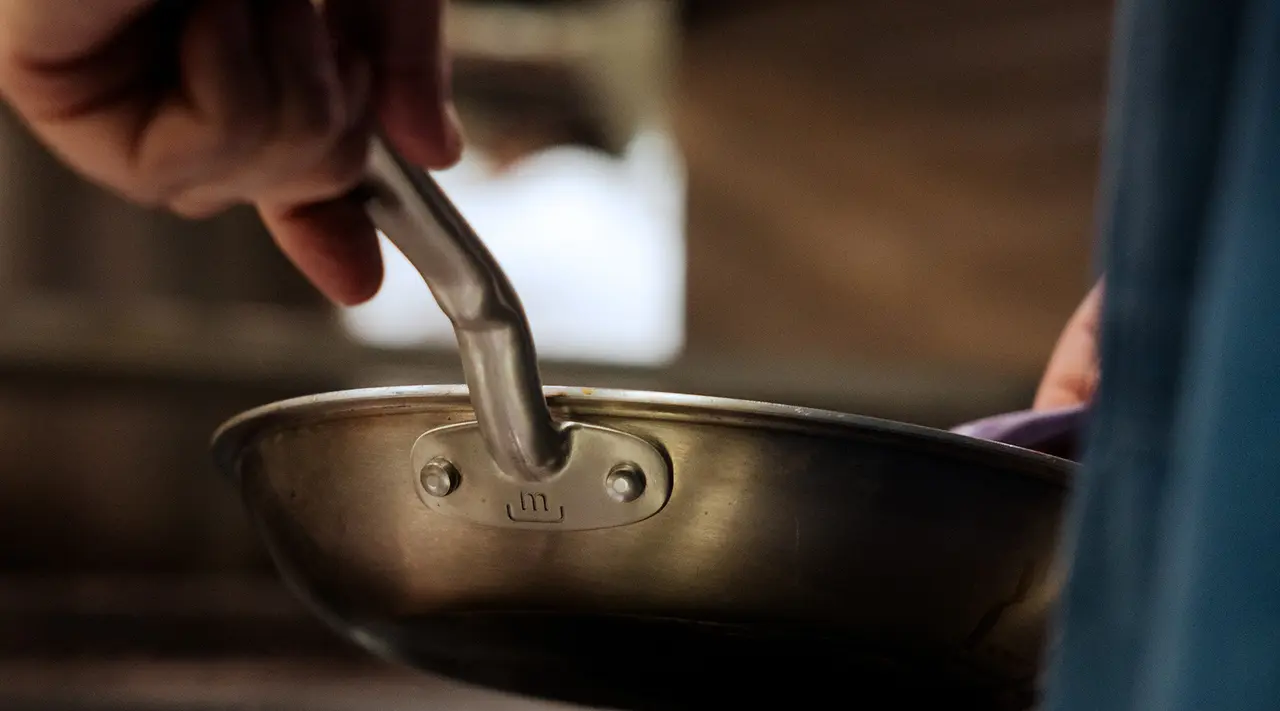
Many pans have hollow handles. Instead of being solid metal, the handle is a tube. Air inside the tube doesn’t carry heat well, so the end of the handle stays cooler.
Thin Connectors
Some handles are attached to the pan with a thin strip of metal. Because there’s less metal, less heat can travel from the pan to the handle.
Heat Breaks
A heat break is a small section of a different material, or a gap in the metal, that slows down the movement of heat. This can make a big difference.
Handle Angle
If the handle points upward and away from the heat, it’s less likely to get hot compared to a handle that sits close to the stove burner.

Credit: www.reddit.com
Practical Ways To Keep Pan Handles Cool
If you want to avoid burning your hand on a metal pan handle, there are several things you can do:
- Use a pan with a non-metal handle: Choose pans with wood, plastic, or silicone handles for stovetop cooking.
- Use a handle cover: Silicone handle covers slip over metal handles and stay cool.
- Position the handle away from the flame: On a gas stove, keep the handle out of direct heat.
- Use a towel or oven mitt: Always grab hot metal handles with protection.
- Choose pans with heat breaks or hollow handles: Look for these features when buying new pans.
These simple steps can make cooking much safer and more comfortable.
Common Myths About Hot Handles
There are many beliefs about why pan handles get hot. Let’s clear up a few common myths:
- Myth 1: Only cheap pans have hot handles
Not true. Even expensive, professional pans with metal handles can get hot because of how heat moves through metal.
- Myth 2: Stainless steel handles always stay cool
False. Stainless steel is a poorer conductor than copper or aluminum but will still get hot over time.
- Myth 3: You can touch a metal handle if it’s not over the flame
Be careful! Heat can travel through the pan even if the handle isn’t directly over the flame.
- Myth 4: Oven mitts are only for the oven
Wrong. Oven mitts or towels are useful anytime you handle hot metal cookware, even on the stovetop.
Credit: madeincookware.com
The History Of Pan Handle Materials
The materials used for pan handles have changed over time. Long ago, most cookware had wooden handles. Wood is easy to work with and doesn’t get hot. But wood can burn or split, and it’s not safe in the oven.
With the rise of metalworking, handles made of iron or steel became common. These are strong and can go from stovetop to oven. But they get hot, which can be dangerous.
In the 20th century, plastics and silicone became popular for pan handles. These materials stay cool and are comfortable to hold. Today, many pans use a mix of materials—metal for strength, and plastic or silicone for safety.
This evolution is shaped by both cooking needs and advances in materials science.
Why Professional Pans Often Have Metal Handles
You might wonder why many pans in restaurants have metal handles, even though they get hot. There are a few reasons:
- Oven-Safe: Professional chefs often move pans from the stove to the oven. Metal handles won’t melt in the oven.
- Durability: Metal handles are strong and last a long time, even with heavy use.
- Easy to Clean: Metal handles can be scrubbed and washed at high temperatures.
- No Chemical Risk: Some plastics can release fumes or break down at high heat. Metal is safer in this way.
However, chefs know to always use towels or cloths when grabbing these pans.
Safety Tips For Using Pans With Metal Handles
Cooking with pans that have metal handles doesn’t have to be dangerous. Here are some important safety tips:
- Always check the handle temperature before grabbing. Use the back of your hand to feel near the handle.
- Keep a towel or oven mitt nearby. Make it a habit to use protection.
- Don’t leave the handle over a hot burner.
- Teach children about hot handles to prevent burns.
- Use handle covers for extra safety, especially if you have kids.
Burns from hot handles are among the most common kitchen injuries, but they are easily avoided with these simple steps.
Unexpected Factors That Affect Handle Temperature
Sometimes, a pan handle gets hotter than expected. Here are some less obvious reasons:
- Gas burners with large flames can heat the handle directly.
- Small pans have less mass, so heat travels faster to the handle.
- Thick pans may keep the base cooler, but thin pans heat the handle more quickly.
- Lids that trap heat can cause the whole pan, including the handle, to get hotter.
Knowing these factors can help you predict when a handle might be hotter than usual.
How Manufacturers Test Pan Handle Safety
Cookware makers must follow safety standards. In the US, the Consumer Product Safety Commission (CPSC) and other agencies set rules for how hot handles can get during normal use.
Manufacturers test handles by:
- Heating the pan to a set temperature for a certain time
- Measuring the handle temperature at the end
- Making sure the handle stays below a specific safety limit
If a pan fails this test, it can’t be sold in stores. This is why most new pans are designed to keep handles as cool as possible.
Comparing Different Pan Brands
Let’s look at how some well-known brands handle the hot handle problem:
| Brand | Handle Material | Handle Design | Oven-Safe? |
|---|---|---|---|
| All-Clad | Stainless Steel | Hollow, angled | Yes |
| Le Creuset | Cast Iron, Stainless, Silicone | Solid, ergonomic | Yes |
| T-fal | Plastic, Silicone | Ergonomic, heat break | Only to 350°F |
| Lodge | Cast Iron | Solid, short | Yes |
This comparison shows that design choices depend on how the pans will be used and who they are made for.
How To Choose The Right Pan Handle For Your Needs
When shopping for new cookware, think about how you cook:
- If you often move pans from stove to oven, metal handles are best.
- If you mainly cook on the stovetop, plastic or silicone handles are safer and more comfortable.
- If you have children, avoid pans with exposed metal handles unless you use handle covers.
Don’t be swayed by looks alone—always consider safety, comfort, and your cooking style.
What Happens If You Burn Your Hand?
Burning your hand on a hot handle is painful but usually not serious. Here’s what to do if it happens:
- Run your hand under cold water for 10–20 minutes.
- Do not use ice—it can damage skin.
- Cover the burn with a clean cloth.
- See a doctor if the burn is severe, blisters, or covers a large area.
Most minor burns heal quickly, but it’s better to avoid them by using safe cookware and good habits.
Two Insights Many Beginners Miss
1. Heat Moves Even When You’re Not Cooking:
After you turn off the stove, heat continues to travel through the pan and handle. A handle can get hotter even after the pan is off the heat.
2. Oven Mitts Can Catch Fire:
If you use a towel or mitt, make sure it doesn’t touch the flame. Many kitchen fires start this way. Always check that your protection is flame-resistant.
These are details that even experienced cooks sometimes overlook.
How Modern Technology Is Changing Pan Handles
Today’s cookware makers are using new materials and designs to solve the hot handle problem. Some examples:
- Thermal insulation layers: Special coatings or liners inside the handle slow heat transfer.
- Custom handle shapes: Ergonomic curves keep your hand farther from the hot part.
- Smart sensors: Some high-end pans now have heat sensors that warn you when the handle is too hot.
Innovation continues, but the basic science of heat transfer will always apply.

Credit: www.reddit.com
Frequently Asked Questions
Why Do Some Metal Handles Get Hotter Than Others?
Different metals carry heat at different speeds. Aluminum and copper handles get hot very quickly, while stainless steel heats up more slowly. The handle’s thickness, shape, and whether it’s hollow or solid also make a difference.
Can I Put Pans With Plastic Handles In The Oven?
Usually no. Most plastic handles can only handle up to about 350°F (175°C). Higher temperatures can melt or damage them. Always check the manufacturer’s guidelines before using a pan with plastic handles in the oven.
Are Silicone Handle Covers Safe?
Yes, silicone handle covers are heat-resistant and safe for most stovetop cooking. Just make sure not to put them directly over a flame or in the oven above their rated temperature, usually up to 450°F (230°C).
Why Do Professional Chefs Prefer Metal Handles?
Professional chefs like metal handles because they are strong, safe for oven use, and easy to clean. Chefs are trained to use towels or mitts, so the risk of burns is lower for them than for home cooks.
Where Can I Find More Information About Cookware Safety?
For more details on cookware safety and handle materials, you can visit the Wikipedia Cookware and Bakeware article. It has detailed explanations about materials, designs, and safety standards.
Cooking is both an art and a science. By understanding why metal handles of pans get hot, you can make safer choices and enjoy your time in the kitchen without surprises. Remember, a little knowledge can keep you and your family safe—and keep your food tasting great.