
If you feel frustrated every time you step into your small kitchen, you’re not alone. Many people struggle to keep a limited kitchen space tidy, practical, and pleasant. But here’s some good news: organizing a small kitchen is possible, and you don’t need a big budget or expensive renovations. With smart techniques and a few clever habits, you can transform even the tiniest kitchen into a space that feels open, efficient, and enjoyable to use.
This guide is here to help you do exactly that. You’ll learn how to plan your space, choose the right storage, declutter, and make your kitchen work for your real life. You’ll also discover tips most beginners miss, like how to use “hidden” spaces and why your daily routines matter as much as your shelves.
By the end, you’ll know how to make every inch count—and maybe even enjoy cooking again.
Understanding Your Small Kitchen
Before buying organizers or moving things around, you need to understand your kitchen’s unique challenges and strengths. Every small kitchen is different—some have awkward corners, others lack drawers, and some just feel overcrowded.
Start by measuring your kitchen. Write down the length, width, and especially the height of your cabinets and walls. Take note of doors, windows, and any obstacles like radiators or pipes. This information will help you decide which storage solutions fit your space.
Next, identify your kitchen’s “pain points. ” Is your countertop always cluttered? Do you have trouble finding utensils? Are your pans hard to reach? List the three biggest problems. These will be your top priorities.
It’s also important to visualize how you move in your kitchen. Notice where you naturally stand when you cook, chop, or wash dishes. The best organization plans support these habits, not fight them.
Declutter And Minimize
One of the most important steps—often skipped by beginners—is decluttering. In a small kitchen, every item should earn its place. Here’s how to do it:
- Empty Everything Out: Take everything out of your drawers, cabinets, and shelves. Spread items on a table or the floor.
- Group Similar Items: Put all baking supplies together, all utensils together, etc. This helps you see what you have in multiples.
- Decide What to Keep: For each group, ask: Do I use this often? Is it in good condition? Does it have a clear purpose?
- Remove Duplicates and Rarely Used Items: If you have three spatulas but use only one, keep your favorite. Donate or store rarely used items elsewhere.
- Be Honest About Gadgets: Many kitchens have unused gadgets (bread makers, ice cream machines, etc.). If you haven’t used it in the last year, consider letting it go.
Non-obvious insight: Many people keep “just in case” items that take up valuable space. If you can borrow or improvise for rare occasions, free up the space now.
:strip_icc()/small-kitchen-organization-ideas-14-house-of-chais-9-cbcf00cdc26f41678b164bf2f515a6c9.png)
Credit: www.mydomaine.com
Smart Storage Solutions
Small kitchens demand creative storage. You need to use both the obvious and “hidden” spaces.
Cabinets And Shelving
Make cabinets work harder:
- Add shelf risers to double the usable space.
- Use pull-out organizers for deep cabinets. These help you see items at the back.
- Store rarely used items on higher shelves.
- Place everyday items at eye or waist height for easy access.
Vertical Space
Walls are often ignored in small kitchens. Use them to your advantage:
- Install hooks for hanging mugs, utensils, or pans.
- Add magnetic strips for knives or spice jars.
- Use floating shelves for open storage of dishes or jars.
- Hang a pegboard for flexible storage.
Under-sink Area
This space is usually messy and wasted. Organize it by:
- Placing a small shelf or stackable bins for cleaning supplies.
- Using a tension rod to hang spray bottles.
- Storing trash bags on a roll.
Inside Doors
The inside of cabinet doors is valuable real estate:
- Mount racks or small baskets to hold lids, wraps, or cleaning cloths.
- Add a measuring spoon organizer for easy access.
Drawers
Deep drawers are great for pans or small appliances. Shallow drawers work best for utensils and tools. Use drawer dividers to keep everything in place.
The Fridge And Freezer
An organized fridge saves space and reduces waste:
- Use clear bins to group similar foods.
- Label shelves for dairy, meat, and produce.
- Store small jars in the fridge door.
Second insight: Many people forget the top of the fridge. Use it for light, non-food items like paper towels or cookbooks.
Maximize Countertop Space
Countertops are your main workspace. Clutter here makes cooking stressful.
- Only keep daily essentials (like a coffee maker or toaster) on the counter.
- Store cutting boards vertically against the wall.
- Use a wall-mounted rack for spices or utensils.
- Consider a folding dish rack you can put away after use.
If you need more prep space, try a pull-out cutting board or a rolling cart that fits beside your counter.
Multi-use Furniture And Tools
In a small kitchen, every tool should do double duty:
- Use nesting bowls and stackable containers to save space.
- Choose pans with lids that fit multiple pots.
- Try a folding table or wall-mounted drop-leaf table for extra eating or prep space.
When buying new tools, ask yourself: “Does this replace another item?” or “Can I use it in more than one way?”
Organizing Food And Pantry Items
Food storage is a big challenge in small kitchens. Here’s how to make it work:
Use Clear Containers
Store dry goods (rice, pasta, cereal) in clear, stackable containers. This keeps food fresh and lets you see when you’re running low.
Label Everything
Labels help you find things quickly and avoid buying duplicates. Use a marker or label maker.
Group By Use
Keep breakfast items together, baking supplies in one spot, and snacks in another. This makes cooking easier.
Rotate Stock
When you buy new food, place it behind the old. This “first in, first out” system reduces waste and saves money.
Mini Pantry Solutions
If you don’t have a pantry, use a small bookshelf, a rolling cart, or baskets on top of the fridge.
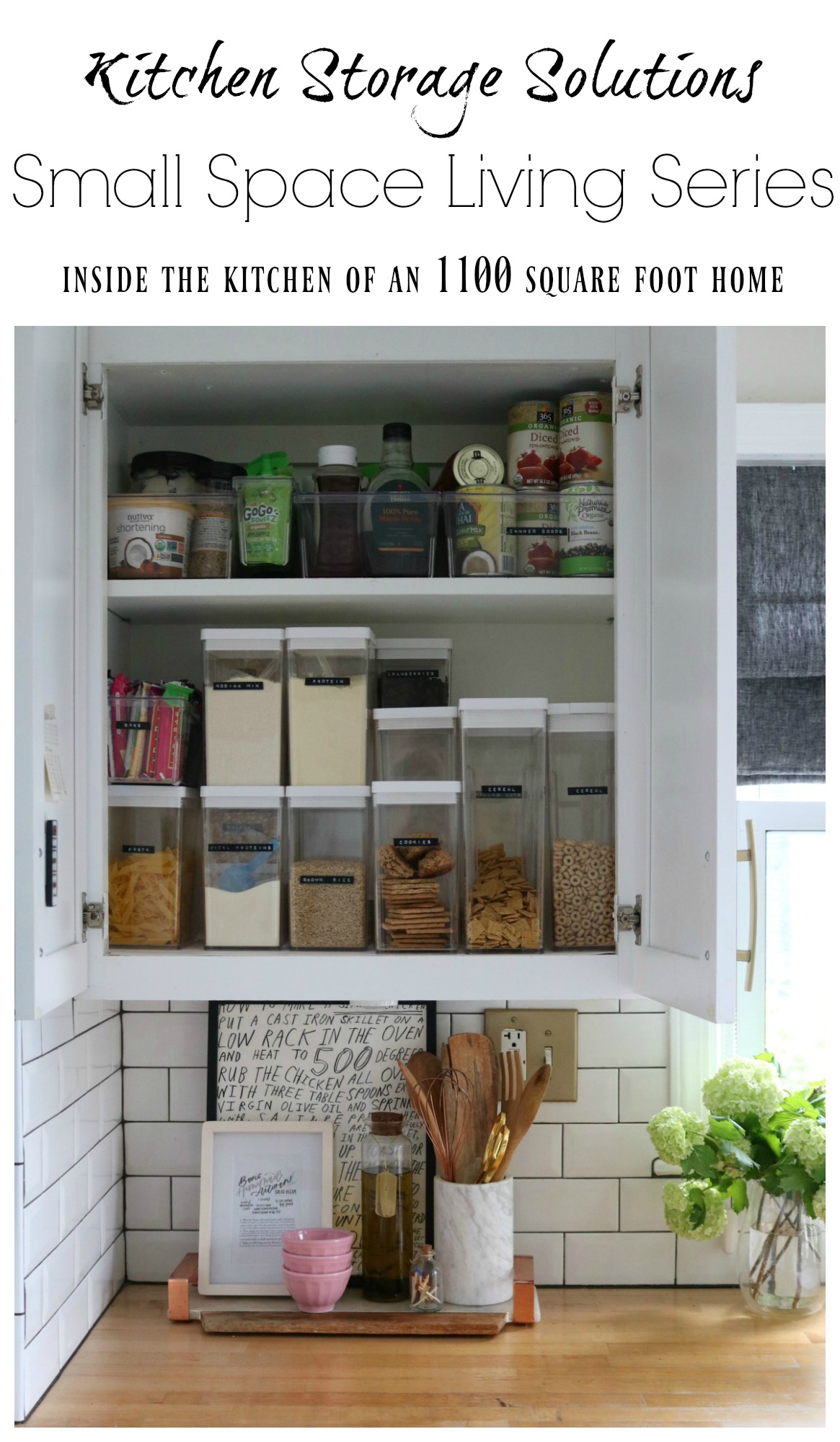
Credit: nestingwithgrace.com
Make Use Of Every Corner
Corners are often wasted in small kitchens. Here’s how to use them:
- Add a lazy Susan (rotating tray) inside corner cabinets.
- Place a corner shelf on the counter for cups or spices.
- Use a corner cart for extra storage.
Lighting And Color Choices
Bright kitchens feel bigger and more welcoming. Consider these tips:
- Use LED strip lights under cabinets for better workspace lighting.
- Choose light colors for walls and cabinets to reflect more light.
- Add a small lamp or battery light in dark corners.
Avoid heavy curtains. If you have a window, let in as much natural light as possible.
Maintain Cleanliness And Order
Getting organized is only half the battle—staying organized is the real challenge. Here’s how to maintain order:
- Do a quick tidy every evening. Return items to their places.
- Wipe counters and sweep the floor regularly.
- Schedule a deeper clean once a month—go through drawers and shelves and remove anything you no longer need.
Practical tip: Make it a habit to put items away as soon as you finish using them. This simple routine saves time and stress.
Tools That Save Space
With so many options, it’s easy to buy organizers that just create more clutter. Here are tools that actually work for small kitchens:
| Tool | Main Benefit | Best For |
|---|---|---|
| Magnetic strip | Frees up drawer space | Knives, metal utensils |
| Pull-out shelf | Easy access to back items | Deep cabinets |
| Lazy Susan | Uses corner space | Spices, oils |
| Stackable bins | Double storage capacity | Pantries, fridge |
| Over-the-door rack | Adds extra storage | Cabinet doors |
Organizing For Different Lifestyles
Your kitchen should match your life. Here’s how to adjust your organization plan:
Families
- Place kids’ snacks and dishes on lower shelves.
- Use bins for easy clean-up.
- Store sharp tools high up or in locked drawers.
Singles Or Couples
- Keep only what you need—one or two place settings.
- Use smaller appliances and tools.
- Try a compact dish rack.
People Who Cook Often
- Keep spices and tools near the stove.
- Use a magnetic knife strip.
- Store pots and pans on a rack for quick access.
Rare Cooks
- Use more closed storage to reduce dust.
- Store most-used items on the counter for convenience.
- Keep rarely used gadgets out of the kitchen.
Common Mistakes To Avoid
Even with good intentions, some habits make a small kitchen feel smaller:
- Keeping Too Much: Don’t keep items “just in case.” Be realistic about your needs.
- Overfilling Drawers: Overstuffed drawers are hard to open and items get lost.
- Ignoring Vertical Space: Walls and the backs of doors are your friends.
- Buying Bulky Organizers: Large systems can take more space than they save.
- Not Maintaining: Organization is an ongoing process, not a one-time event.
Comparing Storage Options
Not sure whether to use open shelves, cabinets, or racks? Here’s a quick comparison:
| Option | Pros | Cons |
|---|---|---|
| Open Shelves | Easy access, airy look | Needs regular cleaning, can look cluttered |
| Closed Cabinets | Hides clutter, protects items | Harder to reach back items |
| Hanging Racks | Uses vertical space, keeps tools handy | Can feel busy, dust collects |
| Drawer Organizers | Keeps small items neat | Limited to drawer size |
Choose the option that matches your cooking habits and how tidy you like your space.
Planning Your Ideal Small Kitchen
Now that you know the main strategies, create your own action plan:
- Identify Your Goals: Do you want to cook more? Entertain guests? Make cleaning easier?
- Start Small: Tackle one area at a time—maybe a single drawer or one cabinet.
- Test and Adjust: Live with your changes for a week. If something isn’t working, adjust it.
- Ask for Help: If you share the kitchen, involve everyone. Organization is easier with teamwork.
:max_bytes(150000):strip_icc()/244985654_986732778725059_1412570390925613709_n-d3c2f809ab334291b357c590570bc86f.jpg)
Credit: www.thespruce.com
Budget-friendly Organizing Ideas
You don’t need to spend much to organize your kitchen. Here are some low-cost options:
- Use shoeboxes or old containers as drawer dividers.
- Hang a tension rod for extra hanging space.
- Repurpose jars for utensils or dry goods.
- Make your own labels with masking tape and a marker.
If you do invest in new organizers, start with the area that causes you the most stress.
Small Kitchen, Big Results: Real-life Examples
Here are two stories that show what’s possible:
Case 1: Anna’s Studio Apartment
Anna had only one counter and three cabinets. She used a pegboard for utensils, added a rolling cart for a portable pantry, and switched to stackable containers. Her kitchen now fits everything she needs and feels twice as big.
Case 2: The Kim Family
With two kids, the Kim family’s kitchen was always messy. They removed gadgets they rarely used, put snacks in low bins for the kids, and hung pots on a wall rack. Now, everyone can help cook and clean up—and dinner feels less stressful.
Small Kitchen Organization: Maintenance Schedule
To keep your kitchen organized, follow this easy schedule:
| Task | Frequency |
|---|---|
| Return items to place | Daily |
| Wipe counters and sweep floor | Daily |
| Clean fridge and toss old food | Weekly |
| Review pantry and declutter | Monthly |
| Deep clean cabinets and drawers | Quarterly |
Set reminders on your phone or calendar to keep on track.
Sustainability In Small Kitchens
Organizing your kitchen can also help the environment. Here’s how:
- Store food properly to avoid waste.
- Use reusable containers instead of single-use plastic.
- Donate usable items you don’t need.
If you want more ideas, check out organizations like the Environmental Protection Agency’s tips for sustainable kitchen practices at EPA Food Waste Reduction.
Frequently Asked Questions
How Can I Make More Space In My Small Kitchen Without Remodeling?
Use wall hooks, over-the-door racks, and stackable bins. Declutter regularly and only keep what you use. You’ll be surprised how much space you gain by organizing smarter, not bigger.
What Should I Do With Appliances I Rarely Use?
Store them in higher cabinets, another room, or donate them. In a small kitchen, only keep appliances you use weekly. This frees up space for daily essentials.
How Do I Keep My Kitchen Counters Clear?
Limit what stays on your counter to one or two items. Store other tools in drawers, on shelves, or hang them on the wall. Return items to their place after each use.
Are Open Shelves Better Than Cabinets In A Small Kitchen?
Open shelves can make a kitchen feel bigger and give quick access, but they require regular cleaning and neatness. Cabinets hide clutter but may be less flexible. Choose based on your habits and style.
How Often Should I Reorganize My Small Kitchen?
Do a quick tidy every day and a deeper reorganization once a month. If you notice clutter building up, take a few minutes to reset your system. Regular maintenance keeps your kitchen running smoothly.
A small kitchen can be a joy to use when it’s organized well. With thoughtful planning, smart storage, and a few good habits, you can create a space that works for you—no matter its size. Remember, the goal is not perfection but making your kitchen more useful and less stressful.
Organize a little each day, and soon your small kitchen will feel just right.