
Baking at home brings comfort, joy, and the delightful smell of fresh bread or cake in the kitchen. But sometimes, you find a recipe that calls for a regular loaf pan, and all you have are mini loaf pans. You might wonder: how many mini loaf pans equal a regular loaf pan? Is it as simple as just dividing the batter, or are there more things to consider? This article digs deep into these questions. You’ll learn the size differences, how to adjust recipes, what to watch out for, and practical tips for perfect results every time.
Understanding Loaf Pan Sizes
First, let’s clear up what we mean by regular loaf pan and mini loaf pans. Most recipes that say “loaf pan” mean a standard size, but not every loaf pan is exactly the same.
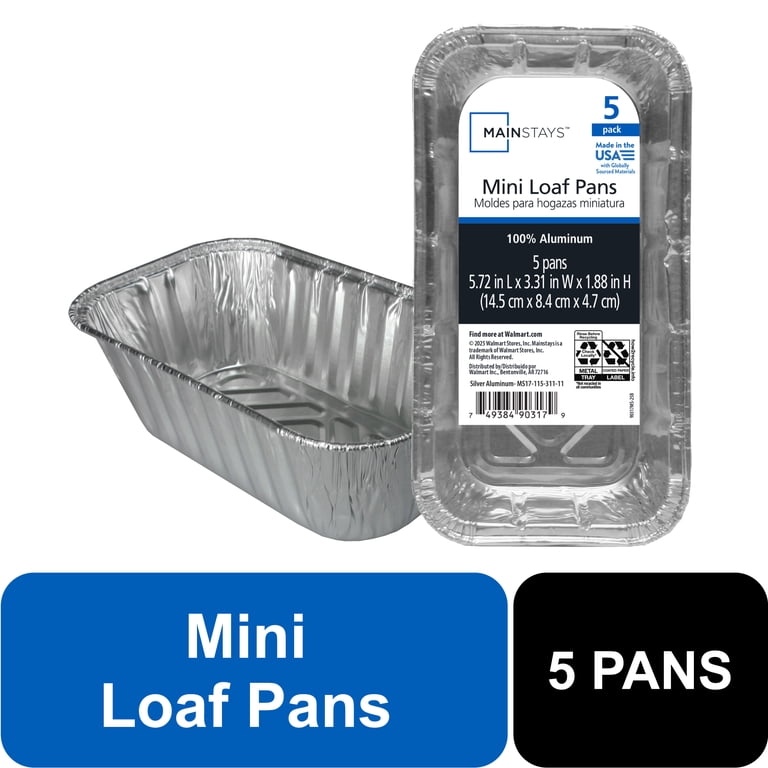
A regular loaf pan in the US is usually 9 x 5 inches, but you will also see 8.5 x 4.5 inches often. On the other hand, mini loaf pans come in different sizes, but a common one is 5.75 x 3 inches. There are even smaller ones, like 4 x 2 inches, but those are less common for most recipes.
Baking is a science. The size and shape of your pan change how your bread or cake bakes. That’s why it’s important to understand the volume of each pan.
Standard Loaf Pan Volumes
To make things clear, here are the typical volumes:
- 9 x 5 inch pan: About 8 cups (1.9 liters)
- 8.5 x 4.5 inch pan: About 6 cups (1.4 liters)
- Mini loaf pan (5.75 x 3 inch): About 2 cups (0.47 liters)
But always check your own pans, as brands can vary.
Measuring Your Pan’s Volume
Not sure about your pan’s volume? Fill it with water, then pour the water into a measuring cup. This simple method gives you an exact answer.
How Many Mini Loaf Pans Equal A Regular Loaf Pan?
Now comes the key question: how many mini loaf pans do you need to equal one regular loaf pan? Let’s do the math, using the most common sizes.
Calculation Example
If your regular pan holds 8 cups, and a mini loaf pan holds 2 cups:
8 cups ÷ 2 cups = 4 mini loaf pans
So, you need four mini loaf pans to match one 9 x 5 inch regular loaf pan.
If your regular pan is 6 cups, you need three mini loaf pans (6 ÷ 2 = 3).
But be careful! If your mini pans are smaller or larger, the number changes. Always check the volume.
When Pan Sizes Don’t Match Exactly
Not all mini pans are 2 cups. Some are 1. 5 cups, others are a bit more. If the math doesn’t divide evenly, fill each mini pan about two-thirds full, and bake any leftover batter in a muffin tin or an extra mini pan.
Why Use Mini Loaf Pans?
Mini loaf pans are not just cute. They have real benefits for home bakers:
- Faster baking: Smaller pans bake more quickly.
- Perfect for gifting: Mini loaves make great gifts for friends or neighbors.
- Easier to store: Leftovers are simpler to freeze or give away.
- Portion control: It’s easier to eat just a little at a time.
But, they also come with challenges, such as different baking times and crusts.
How To Adjust Recipes For Mini Loaf Pans
Switching from a regular loaf pan to mini pans is not just about dividing the batter. There are important adjustments you need to make.
1. Adjust Baking Time
Mini loaves bake faster. If a regular loaf takes 50-60 minutes, mini loaves of the same recipe often bake in 20-35 minutes.
- Start checking at 20 minutes. Use a toothpick to check for doneness in the center.
- Don’t wait for the top to brown as much as you would with a big loaf.
2. Fill The Pans Correctly
Fill each mini pan about 2/3 full. This gives the batter space to rise without spilling over.
3. Watch For Overbaking
Because the pans are smaller, mini loaves can dry out quickly. Check them 5-10 minutes before you think they’ll be done.
4. Adjust Temperature (sometimes)
Most recipes don’t need a temperature change, but if your oven runs hot, lower the temperature by 10-15°F (about 5-8°C) for mini loaves to avoid burning the edges.
5. Divide Mix-ins Evenly
If your recipe has nuts, fruit, or chocolate chips, stir the batter well and divide these evenly, so every mini loaf gets some.
Common Mistakes When Using Mini Loaf Pans
Even experienced bakers can make mistakes when switching pan sizes. Here are the most common ones, and how to avoid them.
- Overfilling pans: Batter spills over and makes a mess. Always stick to the two-thirds rule.
- Not adjusting bake time: Mini loaves left in too long get dry or burned. Check early.
- Uneven division of batter: Some loaves end up larger or smaller. Use a measuring cup or scale for even portions.
- Ignoring pan differences: Dark pans cook faster than shiny ones. Watch closely if using dark mini pans.
- Not greasing properly: Mini pans need good greasing or parchment lining. Small loaves stick easily.
Converting Recipes: Step-by-step Example
Let’s walk through an example: turning a classic banana bread recipe (for a 9 x 5 inch pan) into mini loaves.
Ingredients For One Regular Loaf
- 2 to 3 ripe bananas
- 1/3 cup melted butter
- 3/4 cup sugar
- 1 egg, beaten
- 1 teaspoon vanilla extract
- 1 teaspoon baking soda
- Pinch of salt
- 1.5 cups all-purpose flour
Conversion Process
- Mix the batter as usual.
- Prepare 4 mini loaf pans (for a recipe that fits an 8-cup pan).
- Grease each mini pan well or line with parchment.
- Divide the batter evenly between the pans. Each pan should be about two-thirds full.
- Bake at 350°F (175°C).
- Start checking at 22 minutes with a toothpick. Most mini loaves finish in 24-30 minutes.
- Cool on a rack. Remove from pans after 10 minutes to avoid soggy bottoms.
Results
You’ll get 4 mini banana breads, perfect for sharing or storing.
Practical Tips For Best Results
Baking with mini loaf pans is simple, but these extra tips will help you get perfect results every time:
- Use a scoop or measuring cup to divide batter. This keeps your loaves even.
- Rotate pans halfway through baking for even browning.
- Set mini pans on a baking sheet. It’s easier to move them in and out of the oven.
- Let loaves cool in the pan for 5-10 minutes before turning them out.
- Wrap cooled loaves well to keep them fresh or freeze for later.
Data Table: Common Pan Sizes And Volumes
To help you compare, here is a table of popular loaf pan sizes and how many mini pans you’ll need to match a regular pan.
| Pan Size | Dimensions (inches) | Volume (cups) | Mini Pans Needed (2 cup) |
|---|---|---|---|
| Regular Loaf Pan | 9 x 5 | 8 | 4 |
| Regular Loaf Pan | 8.5 x 4.5 | 6 | 3 |
| Mini Loaf Pan | 5.75 x 3 | 2 | 1 |
| Mini Loaf Pan | 4 x 2 | 1 | 0.5 |
This shows that for most home bakers, four mini loaf pans of 2 cup size equals one regular loaf pan.
When To Use Mini Loaf Pans Vs. Regular
Both sizes have their place in the kitchen. Here’s when you might choose one over the other:
- Mini loaf pans: Gift-giving, bake sales, portion control, trying new recipes, freezing extras.
- Regular loaf pan: Family-sized loaves, classic presentation, recipes needing longer bake times for best flavor.
If you want more variety, use both! Make half a recipe in mini pans and half in a big one.
Real-world Example: Classic Pound Cake
A standard pound cake recipe fills a 9 x 5 inch pan. If you want mini pound cakes:
- Prepare the batter as normal.
- Fill four mini pans (2 cups each).
- Bake at 350°F (175°C) for 25-30 minutes.
- Test for doneness with a toothpick.
Result: Four smaller cakes, which you can glaze and give as gifts.
How Mini Loaf Pans Affect Baking Results
Many new bakers are surprised by how mini pans change the baking process. Here are some non-obvious effects:
- Crust-to-crumb ratio: Mini loaves have more crust compared to the soft inside. This is great for those who love crispy edges.
- Baking time: Even a few extra minutes can dry out a mini loaf, so watch closely.
- Moisture retention: Mini loaves cool faster, so remove from pans quickly to avoid soggy bottoms.
Data Table: Baking Time Comparison
Here’s a look at typical baking times for different pan sizes with the same recipe.
| Pan Size | Typical Baking Time |
|---|---|
| 9 x 5 inch | 50-60 minutes |
| 8.5 x 4.5 inch | 45-55 minutes |
| 5.75 x 3 inch (mini) | 22-30 minutes |
| 4 x 2 inch (small mini) | 18-25 minutes |
As you see, mini loaf pans save time but demand close attention.
Credit: www.walmart.com
How To Scale Down A Recipe
Sometimes you only want to bake a little, not a whole loaf. You can easily scale down recipes for mini loaf pans.
- Divide all ingredients by the number of mini pans needed. For example, if a recipe makes one regular loaf (8 cups), and you only want two mini loaves (2 cups each), use half the recipe.
- Measure carefully. Small errors matter more in small batches.
- Adjust baking time as above.
Scaling down is a great way to test new recipes or avoid waste.
Practical Uses For Mini Loaf Pans
Mini loaf pans are not just for bread. Their size makes them perfect for:
- Meatloaf: Make individual servings.
- Brownies: Thicker than in a square pan, with more edge pieces.
- Fruitcake: Perfect for gifting at holidays.
- Frozen desserts: Use as molds for ice cream cakes.
- Pot pies: Savory meals in mini form.
Cleaning And Caring For Mini Loaf Pans
Mini pans can be a bit tricky to clean, because batter sometimes overflows. Here are some tips:
- Grease well or use parchment liners to prevent sticking.
- Soak pans in warm soapy water if anything is stuck.
- Avoid metal utensils that can scratch nonstick pans.
- Check manufacturer’s instructions for dishwasher safety.
Good care keeps your pans working well for years.
Non-obvious Insights
Many bakers miss these small, but important points:
- Oven temperature can vary more with several small pans. If your oven has hot spots, rotate the pans halfway through.
- Mini pans cool faster, so unmold quickly to avoid steaming and soggy crusts. But don’t rush—let them rest for 5-10 minutes first.
These small details make a big difference in your final result.
Mini Loaf Pan Materials: What To Know
Mini loaf pans come in different materials. Each has its own benefits and challenges:
- Aluminum: Heats evenly, lightweight, affordable. Can discolor with acidic batters.
- Nonstick: Easy release, but can scratch easily. Avoid metal utensils.
- Glass: Lets you see browning, but heats more slowly. Often needs longer baking time.
- Silicone: Flexible, easy to unmold, but may give paler crusts.
Choose pans that suit your baking style and care for them well.
Comparison Table: Mini Loaf Pan Materials
| Material | Pros | Cons |
|---|---|---|
| Aluminum | Even heating, affordable | Can discolor, needs greasing |
| Nonstick | Easy to clean, easy release | Scratches easily, less durable |
| Glass | See browning, stylish | Heats slowly, can break |
| Silicone | No sticking, flexible | Paler crusts, floppy to handle |
Storing And Freezing Mini Loaves
Mini loaves are easy to store. Here’s how:
- Cool completely before wrapping to avoid sogginess.
- Wrap tightly in plastic wrap or foil.
- Label with date if freezing.
- Freeze for up to 3 months. Thaw at room temperature or gently in the oven.
Mini loaves make meal prep and gifts simple and fun.
Choosing The Right Mini Loaf Pan
When buying mini loaf pans, keep these points in mind:
- Check the volume (in cups or milliliters). Not all are the same.
- Choose quality materials that suit your oven and cleaning habits.
- Look for even edges and sturdy construction for best results.
- Consider a set of four or more for easy recipe splitting.
Avoid pans that feel flimsy or have thin coatings that may chip.

Credit: www.mommalew.com
Troubleshooting Common Problems
Even with care, things can go wrong. Here’s how to fix them:
- Loaves sink in the middle: Oven temperature too low, or not enough leavening.
- Edges burn before the center is done: Oven too hot, or pans too close to the heat.
- Loaves stick: Pan not greased, or batter left in too long after baking.
- Uneven rising: Batter not divided equally, or oven hot spots.
A little attention goes a long way.
Extra Tips For Perfect Mini Loaves
- Use an oven thermometer for accurate temperature.
- Test new recipes with a single mini pan first, then scale up.
- Keep a baking log to track what works best in your oven.
When Not To Use Mini Loaf Pans
Some recipes are not suited to mini pans:
- High-moisture batters may spill over or bake unevenly.
- Recipes needing long, slow baking (like some fruitcakes) may dry out in mini pans.
If unsure, bake a test loaf.
Mini Loaf Pans For Special Diets
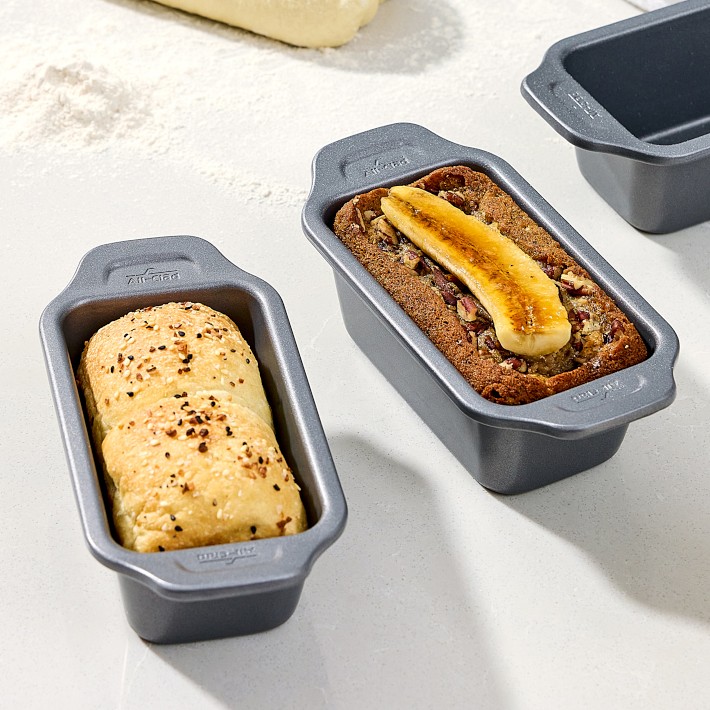
Mini pans are perfect for gluten-free, vegan, or allergy-friendly baking. You can make smaller batches and experiment with less risk.
Credit: www.williams-sonoma.com
Inspiration: Creative Uses For Mini Loaf Pans
- Layered desserts: Build mini tiramisu or ice cream loaves.
- Holiday treats: Wrap in festive paper for gifts.
- Breakfast bakes: Bake mini French toast casseroles or frittatas.
Mini pans make baking more flexible and fun.
Where To Find Mini Loaf Pans
Most kitchen stores and online shops carry mini loaf pans. For reliable information and options, check out the Wikipedia bread pan page.
Frequently Asked Questions
How Do I Know What Size My Mini Loaf Pans Are?
Look on the bottom of the pan for stamped measurements. If there are none, fill the pan with water and pour it into a measuring cup to see how many cups it holds.
Can I Use Mini Loaf Pans For Any Recipe?
Most quick bread, cake, and yeast bread recipes work well in mini pans. Avoid recipes with very wet batters or those needing long, slow baking, as mini pans can dry out the crumb.
Should I Change The Oven Temperature For Mini Loaf Pans?
Usually, you can keep the same temperature. But if your oven runs hot or the loaves brown too quickly, lower by 10-15°F. Always check early for doneness.
Can I Freeze Mini Loaves?
Yes, mini loaves freeze very well. Cool completely, wrap tightly, and freeze for up to 3 months. Thaw at room temperature or in the oven.
What If I Only Have Two Mini Loaf Pans?
Bake two loaves, then bake the rest of the batter in a second batch. Batter can rest at room temperature while the first set bakes.
Baking with mini loaf pans is a flexible and rewarding way to enjoy your favorite recipes. By understanding how mini loaf pans equal a regular loaf pan, and following the tips above, you can bake with confidence and creativity—whether you’re making gifts, portioning for family, or just trying something new.