
Persian carpets are more than just floor coverings—they are works of art, cultural treasures, and often family heirlooms. Their vibrant colors, intricate patterns, and soft wool or silk make any room feel special. But owning a Persian carpet comes with responsibility: proper care is essential. Washing these carpets is not like cleaning a regular rug. The wrong method can cause fading, damage, or loss of softness. Many owners worry about ruining their investment, but with the right steps, you can clean your Persian carpet safely at home.
This guide explains how to wash Persian carpets in detail, from preparation to drying. You’ll learn the best practices, what mistakes to avoid, and practical tips that even experienced carpet owners sometimes miss. Whether your carpet is a family heirloom or a recent purchase, this article will help you keep it beautiful for years.
Understanding Persian Carpets
Before washing, it’s important to know what makes Persian carpets special. These carpets are usually hand-knotted, with thousands of knots per square inch. They use natural dyes and high-quality wool or silk. The patterns often have deep cultural meanings. Because of their materials and construction, they react differently to water and cleaning products compared to machine-made rugs.
Materials Matter
Most Persian carpets are made from:
- Wool: Durable, soft, and naturally stain-resistant.
- Silk: Delicate, with a luxurious sheen.
- Cotton: Often used for the foundation (warp and weft).
Each material needs specific care. Wool tolerates gentle washing, but silk requires extra caution and sometimes professional cleaning.
Why Special Care Is Needed
Persian carpets can be damaged by:
- Harsh chemicals: These can strip natural oils and dyes.
- Excess water: Over-wetting causes mildew or weakening of the base.
- Strong agitation: Can loosen knots and ruin patterns.
Understanding these risks helps you choose the right cleaning method.
When Should You Wash A Persian Carpet?
Not every stain or bit of dirt means your carpet needs a full wash. In fact, over-washing shortens a carpet’s life. Here’s how to decide:
- Visible dirt or stains: If spots don’t come out with vacuuming or spot cleaning.
- Odor: If your carpet has a musty or unpleasant smell, deeper cleaning is needed.
- Allergy symptoms: Dust and pet hair can hide in thick pile.
- Time: For carpets in high-traffic areas, a full wash every 2-3 years is typical. For low-traffic or wall-hanging carpets, every 5-10 years may be enough.
Credit: www.pettyjohnscleaning.com
Preparing For Washing
A successful wash starts with good preparation. Skipping these steps can lead to bigger problems.
Inspect The Carpet
Examine your carpet closely:
- Look for weak spots, holes, or loose threads.
- Note any color fading or dye bleeding from previous washes.
- Identify stains and note their location.
If you find serious damage, consider consulting a professional before washing.
Test For Colorfastness
Some Persian carpets, especially older ones, use natural dyes that may bleed. Always test:
- Wet a white cloth with cool water.
- Press it on a colored area for 10 seconds.
- Check the cloth for color transfer.
If dye transfers, avoid washing with water and seek expert help.
Gather Supplies
You’ll need:
- Mild, dye-free liquid soap (no bleach or strong chemicals)
- Buckets or a hose
- Soft-bristle brush or sponge
- Clean towels
- Wet/dry vacuum (if possible)
- Large plastic sheets or tarps (for drying indoors)
- Fans (for faster drying)
Never use laundry detergent, dish soap, or any cleaner with ammonia.
Choosing The Right Cleaning Location
Washing a Persian carpet is best done outdoors, on a clean, flat surface. If you live in an apartment or have no outdoor space, you can wash a small carpet in a large bathroom or garage, but drying becomes trickier.
Outdoor Washing
Benefits:
- Easy to rinse
- Less risk of water damage to floors
- Faster drying in sunlight and fresh air
Risks:
- Sun can fade colors—dry in shade if possible
- Dust and debris can settle while drying
Indoor Washing
If you must wash inside:
- Protect floors with plastic sheets
- Be prepared for longer drying times
- Use fans or dehumidifiers to prevent mold
Step-by-step Guide: How To Wash A Persian Carpet
Here’s a detailed process to clean your Persian carpet without causing damage. These steps work for most wool carpets. If your carpet is silk, antique, or extremely valuable, consider professional cleaning.
1. Dry Soil Removal
Before adding water, remove as much dry dirt as possible.
- Vacuum both sides of the carpet thoroughly. Go slowly to lift dust trapped deep in the pile.
- For delicate or antique carpets, use a brush attachment or shake gently outside.
- Do not beat the carpet aggressively; this can break fibers and loosen knots.
2. Spot Cleaning Stains
Not all stains need a full wash.
- Mix a small amount of mild soap with water.
- Test on a hidden area.
- Dab stains with a cloth or sponge—never rub hard.
- For tough stains (wine, coffee, pet urine), use a mix of white vinegar and water (1: 1). Rinse with plain water after.
- Blot with a clean towel to remove moisture.
Tip: Some stains (like ink or oil) may need professional attention—do not experiment with harsh chemicals.
3. Wetting The Carpet
Place the carpet flat on your chosen surface.
- Using a hose or buckets, wet the carpet slowly with cool or lukewarm water. Avoid hot water—it can shrink wool and cause dyes to bleed.
- Make sure the carpet is evenly wet, but not soaking. Too much water is hard to remove.
4. Applying Soap
- Dilute mild liquid soap in a bucket of water.
- Dip a soft brush or sponge in the solution.
- Gently scrub the carpet pile in the direction of the fibers. Avoid circular or aggressive motions.
- Work in small sections to ensure even cleaning.
Insight: Many beginners use too much soap, which is hard to rinse out. A little goes a long way.
5. Rinsing Thoroughly
Soap residue attracts dirt, so rinsing is critical.
- Use a hose or buckets of clean water to rinse.
- Keep rinsing until water runs clear.
- For indoor cleaning, use a wet/dry vacuum to help remove water.
Non-obvious tip: Flip the carpet and repeat rinsing the back. Dirt and soap can hide in the foundation.
6. Removing Excess Water
Persian carpets hold a lot of water, which can cause mold or mildew if not removed quickly.
- Squeeze out water by rolling the carpet in clean towels. Step on the roll gently to press out moisture.
- Never wring, twist, or fold aggressively.
7. Drying The Carpet
Proper drying is as important as washing.
- Lay the carpet flat in a shaded, well-ventilated area.
- If possible, elevate the carpet off the ground (using benches or clean bricks) to allow air circulation underneath.
- Use fans to speed up drying.
- Flip the carpet after a few hours to allow the back to dry.
Caution: Never hang a heavy, wet carpet over a railing—it can stretch and warp the shape.
8. Brushing The Pile
After drying, the pile may look flat or rough.
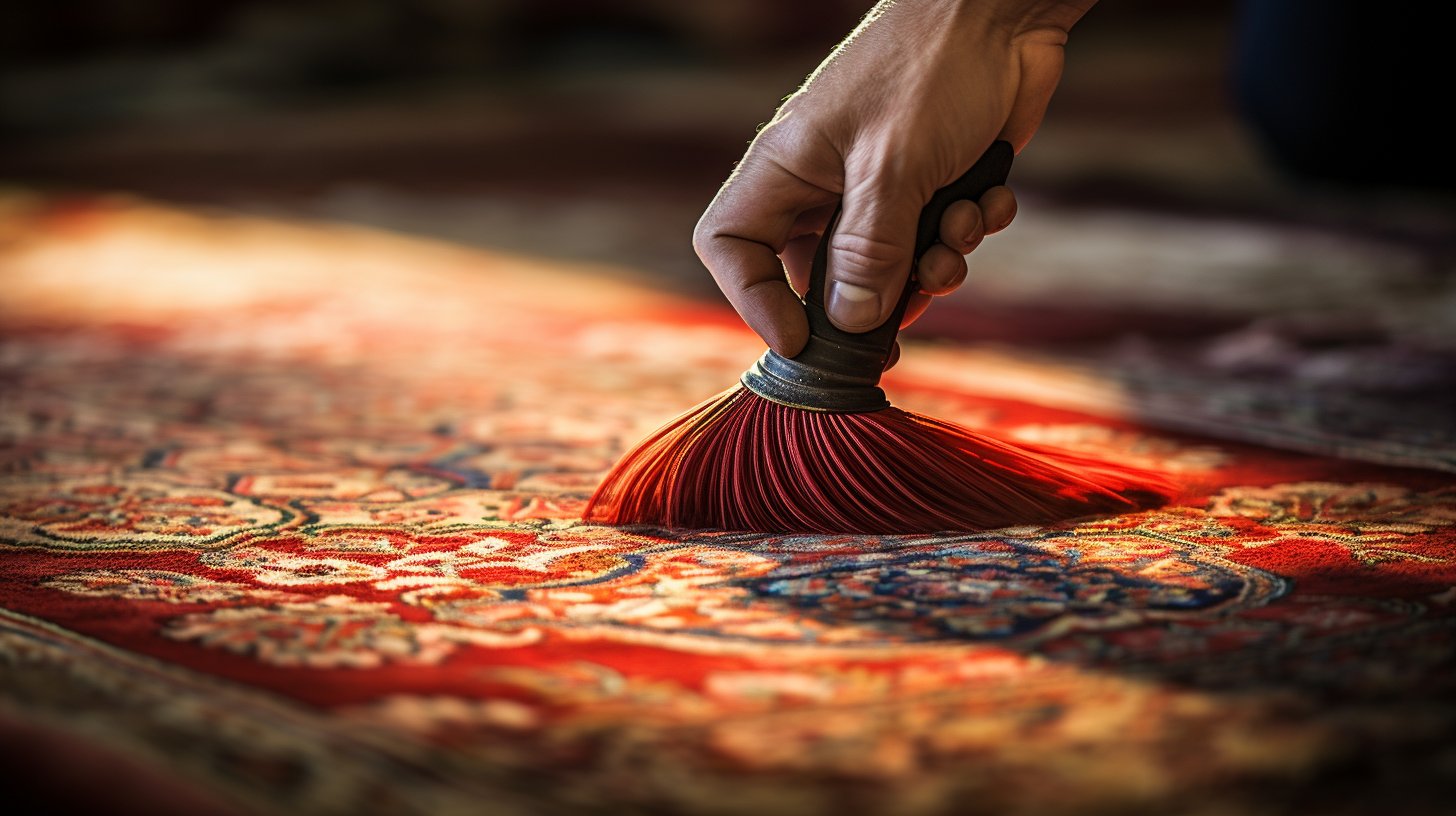
- Use a soft brush to gently lift the pile in the direction of the fibers.
- This restores the carpet’s softness and look.
9. Final Inspection
Check for:
- Remaining stains
- Musty odors (signs of incomplete drying)
- Color changes or bleeding
If issues remain, repeat spot cleaning or consult a professional.
Common Mistakes To Avoid
Some errors can ruin a Persian carpet. Here’s what to watch out for:
- Using hot water: Causes shrinkage and dye bleed.
- Strong chemicals or bleach: Damages fibers and fades colors.
- Over-wetting: Makes drying hard, leading to mold.
- Aggressive scrubbing: Loosens knots and destroys patterns.
- Hanging when wet: Stretches and deforms the carpet.
- Skipping the colorfast test: Risks severe color bleeding.
Comparing Cleaning Methods
Persian carpets can be washed in different ways. Here’s a comparison of home washing, professional cleaning, and dry cleaning:
| Method | Cost | Effectiveness | Risks | Best For |
|---|---|---|---|---|
| Home Washing | Low | Good for routine cleaning | Possible color bleed, drying issues | Modern wool carpets |
| Professional Cleaning | High | Excellent, deep clean | None (with reputable service) | Silk, antique, valuable carpets |
| Dry Cleaning | Medium | Poor for true Persian carpets | Solvents can damage wool/silk | Some synthetic rugs only |
How Often Should You Wash A Persian Carpet?
Washing too often can wear out a carpet, but too little leads to dirt build-up. Here’s a rough guideline:
| Carpet Location | Recommended Washing Frequency |
|---|---|
| High-traffic area (living room) | Every 2-3 years |
| Low-traffic area (bedroom, study) | Every 5-7 years |
| Wall hanging or rarely used | Every 10 years |
Caring For Persian Carpets Between Washes
Regular maintenance extends the time between washes and keeps carpets looking vibrant.
Vacuuming
- Vacuum weekly, but avoid the fringe.
- Use low suction and brush attachments for delicate carpets.
Rotating
- Rotate your carpet every 6-12 months to spread wear evenly.
- This prevents fading from sunlight and heavy foot traffic in one spot.
Dealing With Spills
- Blot spills immediately with a clean towel.
- Avoid rubbing—the stain will spread.
- Use a small amount of water if needed, then dry the area quickly.
Sunlight Protection
- Prolonged sun exposure fades colors. Use curtains or move the carpet occasionally.
Using Carpet Pads
- Place a pad under your carpet to reduce wear, prevent sliding, and protect the backing.
Professional Cleaning: When Is It Necessary?
Some situations call for an expert’s touch.
- Antique or valuable Persian carpets
- Silk carpets
- Severe stains or odors (pet urine, mold)
- Major water damage (floods, leaks)
Professional carpet cleaners use special equipment and gentle cleaning solutions tailored for hand-knotted rugs. They can repair damage and restore colors. If unsure, get a quote and ask about their experience with Persian carpets.

Credit: www.youtube.com
Persian Carpet Cleaning Myths
Many owners believe common myths about cleaning their carpets. Here are a few to avoid:
- “All carpets can be steam cleaned.”
- Steam cleaning is too harsh for hand-knotted Persian carpets and may shrink wool or damage silk.
- “DIY chemicals work just as well.”
- Some household cleaners contain bleach or ammonia, which can ruin natural fibers.
- “You can dry a carpet in direct sun.”
- Sunlight can fade colors quickly. Always dry in shade or indoors with good ventilation.
- “Vinegar is always safe.”
- While diluted vinegar helps with some stains, using too much can weaken wool fibers over time.
How To Store A Persian Carpet After Washing
If you need to store your carpet after cleaning, follow these tips:
- Ensure the carpet is completely dry before storage.
- Roll (never fold) the carpet, with the pile facing inward.
- Wrap in breathable cotton (not plastic) to prevent moisture build-up.
- Store in a cool, dry place away from sunlight and pests.
- Every few months, unroll and air out the carpet to prevent mildew.
Non-obvious insight: Cedar chips or lavender sachets can deter moths without chemicals.
Differences Between Persian And Other Oriental Rugs
Many people confuse Persian carpets with Turkish, Afghan, or Indian rugs. While similar, Persian carpets have unique features:
| Feature | Persian Carpets | Other Oriental Rugs |
|---|---|---|
| Knot Type | Asymmetrical (Persian/Senneh knot) | Often symmetrical (Turkish/Ghiordes knot) |
| Design | Floral, medallion, curvilinear motifs | Geometric, tribal motifs more common |
| Dye | Natural vegetable dyes | Can use both natural and synthetic dyes |
| Wool Quality | High, often hand-spun | Varies |
Understanding these differences helps when buying or cleaning non-Persian rugs.
Environmental Concerns: Eco-friendly Carpet Washing
Washing carpets uses a lot of water and sometimes chemicals. Here’s how to make the process greener:
- Use biodegradable soaps—these break down naturally and are safer for the environment.
- Try to wash on grass or gravel where water can absorb, not flow into storm drains.
- Use old towels for drying instead of paper towels.
- Limit water use by spot cleaning when possible.
Credit: www.carpetbright.uk.com
When Not To Wash At Home
Home washing is not always safe. Avoid washing at home if:
- The carpet is antique (over 80 years old)
- It has metallic threads or delicate silk
- You see serious damage (holes, fraying)
- The dyes run during a colorfastness test
In these cases, a reputable professional is the best option. For more on the history and care of Persian carpets, see the Wikipedia page on Persian carpets.
Frequently Asked Questions
How Can I Tell If My Persian Carpet Is Colorfast?
Test a small hidden area with a damp white cloth. If the cloth picks up color, the dyes are not stable and you should not wash the carpet with water.
What Soap Is Safe For Persian Carpets?
Use a mild, dye-free, fragrance-free liquid soap. Baby shampoo can work in small amounts. Never use bleach, ammonia, or laundry detergents.
Can I Use A Steam Cleaner On My Persian Carpet?
No. Steam cleaners use high heat and moisture, which can shrink wool, cause dye bleeding, and loosen knots in hand-knotted carpets.
How Do I Dry My Carpet Quickly After Washing?
Lay it flat in a shaded, airy spot. Use fans and, if possible, elevate the carpet for airflow underneath. Flip after several hours to dry both sides.
What Should I Do If My Carpet Smells Musty After Washing?
A musty smell usually means the carpet is not completely dry. Move it to a drier, well-ventilated area and use fans. If the smell persists, consult a professional to check for mold or mildew.
Caring for a Persian carpet means more than just cleaning—it’s about preserving a piece of history and culture. With the right approach, even beginners can wash and maintain these treasures at home, keeping them beautiful for generations.