
Washing kitchen mats might seem simple, but there’s more to it than tossing them into the washing machine. Kitchen mats deal with daily spills, crumbs, oil, and foot traffic. Over time, they can become a breeding ground for bacteria and odors if not cleaned properly.
Many people overlook best practices, leading to mats that wear out quickly or never feel truly clean. In this guide, you’ll discover how to wash kitchen mats correctly, protect your investment, and keep your kitchen healthier. Whether you own a rubber mat, a cushy anti-fatigue mat, or a decorative fabric rug, you’ll find practical tips and insights that most people miss.
Why Clean Kitchen Mats Regularly?
Kitchen mats do more than decorate your floor. They catch food, grease, and water, preventing slips and keeping your kitchen tidy. But all that debris doesn’t disappear—it builds up. If left unwashed, mats can develop mold, bad smells, and even cause allergies. A regular cleaning routine extends the life of your mats and keeps your kitchen safe.
Did you know? Studies show that kitchen floors can harbor up to 421,000 bacteria per square inch, especially around the sink and cooking areas. Mats can trap much of this, so cleaning them is not just about appearance—it’s about health.
Mats can also hide allergens like pet dander and pollen. When you walk on the mat, these can be released back into the air. If you have small children who play on the kitchen floor, or pets who like to nap on mats, dirty mats can increase the risk of illness.
Some mats, especially those placed near the stove or sink, soak up oil and water, which are the perfect breeding grounds for mold and mildew if not cleaned regularly.
Regular cleaning also helps maintain the mat’s grip and cushioning. As dirt builds up underneath or within the mat, it can become slippery or lose its anti-fatigue qualities. Mats that are not cleaned can even damage your kitchen floor over time, as trapped dirt and moisture seep through.
Types Of Kitchen Mats And Their Cleaning Needs
Not all mats are created equal. The material and construction of your kitchen mat determine the best cleaning method. Here’s a breakdown of common types:
| Type of Mat | Common Materials | Typical Cleaning Method |
|---|---|---|
| Rubber Mats | Natural/ synthetic rubber | Hose down, scrub, air dry |
| Fabric Mats | Cotton, microfiber, polyester | Machine wash, spot clean |
| Anti-Fatigue Mats | Foam, gel, rubber | Wipe, mild detergent, air dry |
| Decorative Rugs | Wool, nylon, blends | Vacuum, spot clean, professional clean |
| Gel Mats | Polyurethane gel | Wipe, gentle cleaning |
It’s important to recognize that mats designed for heavy-duty use (like those in commercial kitchens) might look similar to home mats but require stronger cleaning, often with degreasers or even steam cleaning. Anti-fatigue and gel mats often have sealed surfaces that can be damaged by too much water or harsh scrubbing.
Decorative rugs sometimes have delicate fibers that can tangle or shrink if washed incorrectly.
Insight: Many anti-fatigue and gel mats are NOT designed for machine washing. Check the care label before cleaning.
If you’re ever unsure, a quick test is to check if the mat feels heavy when wet (suggesting foam or gel inside). These mats should almost always be wiped clean rather than soaked.

Credit: www.amazon.com
Pre-cleaning: Preparing Kitchen Mats For Washing
Preparation makes cleaning easier and protects your mat. Start by:
- Shaking out debris: Take the mat outside and shake it vigorously to remove loose crumbs and dust. For large mats, folding in half and tapping gently can help release more debris.
- Vacuuming: For fabric or textured mats, vacuum both sides to pick up deep dirt. Don’t forget to vacuum the floor area beneath the mat, as dirt can transfer back quickly.
- Checking the care label: Look for special instructions. Some mats can shrink, fade, or warp if washed incorrectly. Manufacturers often include drying instructions too.
- Spot testing: If you plan to use a new cleaner, test it on a small corner first. This prevents discoloration or damage from harsh chemicals.
Non-obvious tip: Always remove sticky substances like gum or dried sauces with a dull knife or spoon before washing. If left, they can melt or spread during cleaning.
If you see pet hair or lint, use a lint roller after vacuuming. Some mats attract hair, which clumps up during washing and may clog your machine. For mats with a rubber or non-slip backing, check for any peeling or cracks.
If the backing is damaged, consider hand washing to avoid worsening the problem.
Washing Kitchen Mats: Methods By Type
Let’s break down the best techniques for each mat type.
Washing Rubber Kitchen Mats
Rubber mats are durable and water-resistant, commonly found near sinks or entryways.
- Take the mat outside. Lay it on a flat surface like your driveway or patio. If you don’t have outdoor space, use the bathtub or shower.
- Rinse with a hose or in the shower to remove debris. Use warm water for better results, as it helps loosen grease.
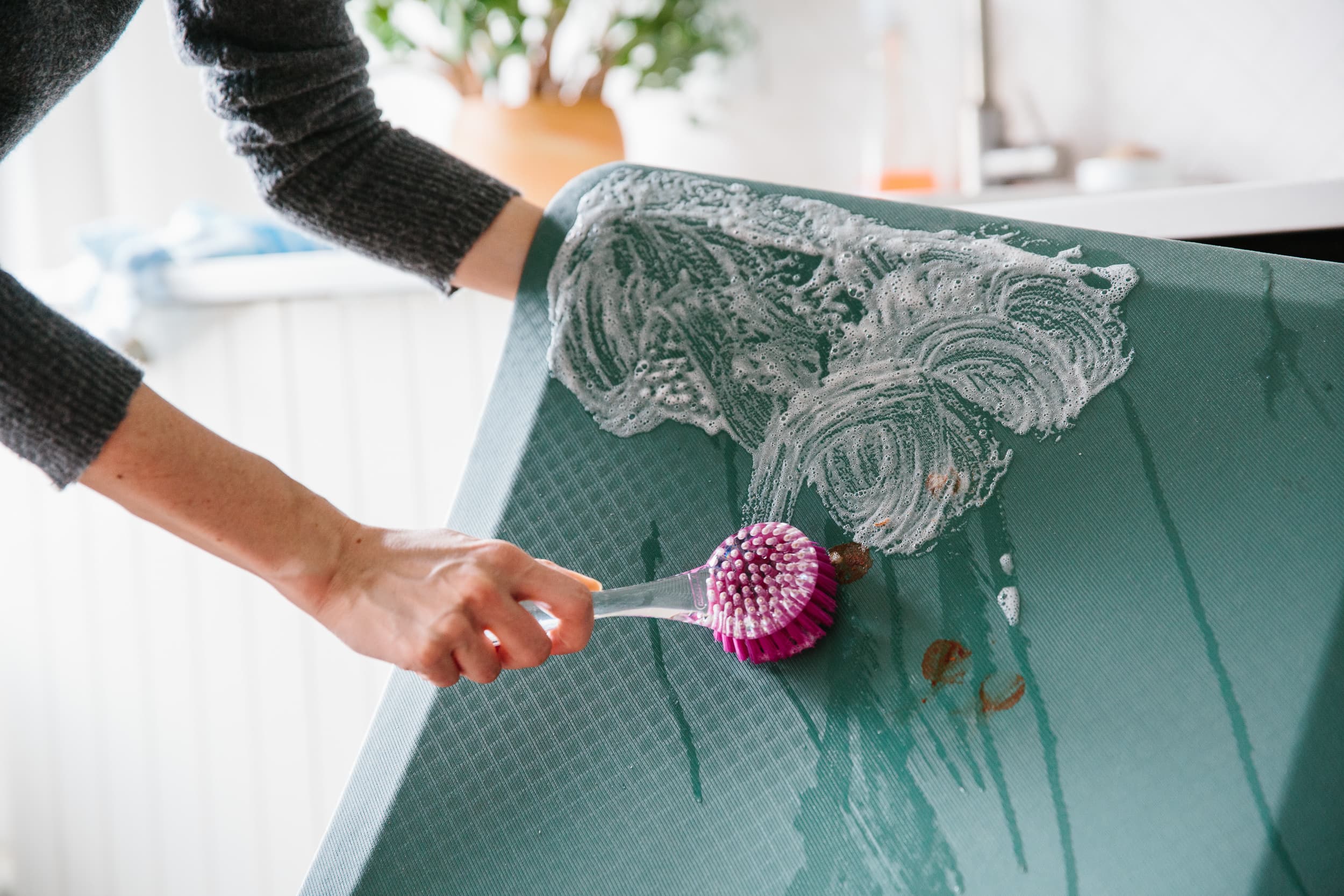
- Scrub with mild detergent. Use a soft-bristled brush and a mix of warm water with a few drops of dish soap. Avoid brushes with metal bristles, which can scratch the surface.
- Pay attention to grooves. Scrub inside textured patterns where grime hides. These grooves often trap crumbs or sticky spills.
- Rinse thoroughly until no soap remains. Soap left on the mat can make it slippery.
- Air dry completely before placing back to prevent mold. Hang the mat over a railing or clothesline if possible.
Extra insight: Avoid using bleach or harsh chemicals, which can damage the rubber and make it brittle.
If your mat smells after cleaning, sprinkle baking soda on the surface, let it sit for an hour, then rinse again. This helps remove stubborn odors.
Washing Fabric Kitchen Mats
Fabric mats are comfortable but soak up spills, leading to stains and odors.
- Check the label for machine-wash instructions. Some mats are machine washable, but others may require hand washing.
- Pre-treat stains with a gentle stain remover or a paste of baking soda and water. Let it sit for 10–15 minutes before washing.
- Choose a gentle cycle with cold or lukewarm water. Hot water can shrink some mats or cause colors to fade.
- Use mild detergent. Avoid bleach, which can fade colors and weaken fibers.
- Air dry or tumble dry on low, if the label allows. High heat can damage the backing or cause shrinkage.
Practical tip: Avoid overloading the washer. Large mats might need to be washed alone to prevent damage.
If your mat has rubber backing, never use fabric softener in the wash—it can break down the non-slip layer. For mats with tough stains, repeat the pre-treating step before washing again.
Washing Anti-fatigue Mats
These mats often have foam or gel interiors and waterproof covers.
- Wipe with a damp cloth and mild soap. For sticky spots, use a little extra soap and let it sit before wiping.
- Do not submerge in water unless the label says it’s safe. Water trapped inside foam can lead to mold or a soggy mat.
- Rinse with a clean cloth to remove soap residue. Go over the mat a few times for best results.
- Air dry flat. Never put in a dryer or direct sunlight—heat can warp the foam.
Common mistake: Many people use abrasive brushes, scratching the mat’s surface. Stick to soft cloths or sponges.
If your anti-fatigue mat smells or feels greasy, sprinkle cornstarch on the surface, let it sit for 30 minutes, then wipe clean. Cornstarch helps absorb oils without damaging the material.
Cleaning Decorative Kitchen Rugs
Decorative rugs can be made from wool, nylon, or blends. They often need special care.
- Vacuum regularly to prevent dirt from settling. Use the brush attachment for delicate fibers.
- Spot clean stains with a gentle cleaner or a solution of water and white vinegar (1: 2 ratio). Blot, don’t rub, to avoid spreading the stain.
- For deep cleaning, professional rug cleaning is best. This keeps colors bright and fibers soft.
- If machine washable, follow fabric mat instructions.
Non-obvious insight: Never use hot water—it can shrink or damage decorative fibers.
Some decorative rugs have fringe or tassels. Clean these by hand with diluted detergent, and avoid soaking them. For wool rugs, use cool water and wool-safe detergent.
Cleaning Gel Mats
Gel mats are soft but can be sensitive to chemicals.
- Wipe with a soft, damp cloth. Always use gentle pressure.
- Use a small amount of mild detergent. Harsh soaps can break down the gel surface.
- Avoid soaking or scrubbing. Too much water can seep into seams.
- Dry with a towel and let air dry fully before reuse.
If your gel mat loses its shine, a little bit of diluted vinegar on a soft cloth can help restore the surface. Test in a hidden spot first.
Removing Stubborn Stains And Odors
Some stains won’t budge with regular washing. Here’s how to tackle them:
Grease Stains
- Sprinkle baking soda on the stain. Let sit for 15 minutes to absorb oil.
- Scrub gently with a soft brush. Avoid pressing too hard, especially on fabric mats.
- Rinse or vacuum up the powder. For rubber mats, rinse with water; for fabric, vacuum after the mat is dry.
If grease persists, dab the area with a little white vinegar, then rinse.
Food And Sauce Stains
- Blot up spills quickly with a paper towel. The sooner you act, the easier the cleanup.
- Apply a mix of water and dish soap. Avoid soaking the area, especially on foam or gel mats.
- Use a soft brush to work in the solution. Make gentle circles.
- Rinse and air dry. Repeat if necessary.
Odors
- Sprinkle baking soda over the whole mat. Baking soda is safe for most surfaces.
- Let sit overnight. This gives time to absorb smells.
- Vacuum off.
Non-obvious tip: For deep odors, add a splash of white vinegar to your wash. It neutralizes smells without leaving a strong scent.
For mats with persistent odors, try placing them outdoors on a dry, breezy day. Sunlight and fresh air can help eliminate tough smells naturally, but avoid direct sun for rubber, foam, or gel mats.
Drying Kitchen Mats Properly
Drying is just as important as washing. Mats left damp can develop mildew.
- Air dry flat. Hang over a railing or lay on a clean surface. For larger mats, use two chairs to create a drying rack.
- Avoid direct sun for rubber, foam, or gel mats—it can cause fading or warping. For fabric mats, a bit of sun can help kill bacteria but monitor closely.
- Use a fan for quicker drying indoors. Point the fan directly at the mat for best results.
- Ensure complete dryness before placing back on the floor. Press the mat between towels to speed up drying if needed.
Common mistake: Rolling up a damp mat. This traps moisture inside and leads to mold.
If you’re drying multiple mats, leave space between them for airflow. For thick mats, flip them over after a few hours to help both sides dry evenly.
How Often Should You Wash Kitchen Mats?
Frequency depends on usage and mat location:
| Mat Location | Recommended Cleaning Frequency |
|---|---|
| Near the sink | Once per week |
| Cooking area | Once every 1-2 weeks |
| High traffic entryway | Weekly or as needed |
| Low traffic area | Monthly |
Note: If you cook daily, wash mats more often. After large spills or illness in the household, clean mats immediately.
Seasonal cleaning is also smart—give all mats a deep clean at the start of each season. If you have pets or small children, consider cleaning more frequently, as they can track in extra dirt and bacteria.
Mistakes To Avoid When Washing Kitchen Mats
Many people damage their mats by using the wrong cleaning methods. Watch out for these common errors:
- Ignoring care labels: Always check instructions before washing.
- Using harsh chemicals: Products like bleach or ammonia can degrade many mats.
- Over-soaking foam/gel mats: Water can get trapped inside and cause mold.
- Using high heat: Hot water, dryers, or sunlight can warp mats.
- Skipping drying: Damp mats are unsafe and unhealthy.
- Scrubbing too hard: Abrasive brushes can damage surfaces or fibers.
- Washing with heavy items: Washing mats with shoes or jeans can cause tears.
Non-obvious insight: If your mat has a rubber backing, avoid fabric softener in the wash—it can break down the rubber and reduce grip.
Another mistake is not rinsing off all soap. Leftover detergent can make mats slippery and attract more dirt. Also, avoid folding mats to fit them in the washer; this can cause creases that are hard to remove.
How To Keep Kitchen Mats Cleaner For Longer
A few simple habits can make cleaning easier and extend the life of your mats:
- Wipe up spills quickly. The longer a spill sits, the harder it is to remove.
- Remove shoes before entering the kitchen—this reduces outside dirt.
- Vacuum or shake mats regularly to keep crumbs and dust from building up.
- Rotate mats every few months to distribute wear.
- Use an underlay for decorative rugs to prevent slipping and absorb moisture.
Pro tip: Place a small towel under cutting boards or near the stove to catch big spills before they hit the mat.
Consider using a door mat at the kitchen entrance. This catches dirt before it reaches your kitchen mats. For fabric mats, use a fabric protector spray (test first), which helps repel stains.
When To Replace Kitchen Mats
Even with perfect care, kitchen mats won’t last forever. Here’s when you should get a new one:
- Cracks or splits in rubber or foam mats
- Permanent stains or odors that cleaning can’t remove
- Frayed edges or surface peeling
- Loss of grip—mat slides around easily
- Compressed foam that no longer feels comfortable
Most kitchen mats last between 1-3 years with regular use. High-quality anti-fatigue mats may last longer if cared for properly.
If your mat curls at the edges, it’s a tripping hazard. Replace immediately. For decorative rugs, if colors fade or the backing wears off, it’s time for a new one. Don’t wait for visible mold—replace at the first sign to keep your kitchen safe.
Credit: www.thekitchn.com
Eco-friendly Cleaning Options
If you prefer greener cleaning methods:
- Use baking soda and vinegar for stains and odors. Both are safe for most materials and biodegradable.
- Choose plant-based detergents for machine washing. These are less likely to leave harmful residues.
- Sun-dry mats (where safe) to save energy. Sunlight also helps disinfect.
- Recycle old mats—some rubber mats can be recycled at local centers.
Did you know? Many commercial cleaning sprays contain chemicals that can stay in the mat fibers. Natural alternatives are safer for kids and pets.
Another eco-friendly tip: Use old towels or cloths for wiping mats instead of disposable paper towels. Compost food crumbs or debris collected from mats if you have a compost pile.
Special Care For Commercial Kitchen Mats
In restaurants or commercial kitchens, mats face extra grease and foot traffic. Cleaning must be more frequent and thorough.
- Scrub with heavy-duty degreaser weekly. Choose degreasers that are food-safe and approved for kitchen use.
- Steam clean for deep sanitizing. This kills bacteria and removes deep-set grease.
- Rotate mats to allow for full drying and prevent wear. Have spare mats on hand.
- Inspect edges and grip—replace if worn.
For more details on commercial cleaning standards, the EPA’s Greener Products guide can help you choose safe products.
Commercial mats often have beveled edges for safety. Check these edges for damage, as worn edges can trip staff or customers. Deep cleaning may need to be done overnight to allow for full drying before reopening.
Credit: www.doormat.net.au
Quick Reference: Cleaning Methods Comparison
To summarize the best cleaning method for each mat type, see the comparison below:
| Mat Type | Can Machine Wash? | Best Cleaning Method | Drying Method |
|---|---|---|---|
| Rubber | No | Hose & scrub | Air dry |
| Fabric | Yes (usually) | Machine wash | Air or low tumble |
| Anti-fatigue | Rarely | Wipe clean | Air dry flat |
| Decorative Rug | Sometimes | Vacuum & spot clean | Air dry |
| Gel | No | Wipe only | Air dry |
If you’re ever unsure, err on the side of caution—hand wash and air dry.
Frequently Asked Questions
How Do I Remove Sticky Spills From My Kitchen Mat?
First, gently scrape off as much as possible with a dull knife or spatula. For any remaining residue, apply a little cooking oil and let it sit for a few minutes. Wipe with a paper towel, then wash the mat as usual.
This method works well for gum or syrup without damaging the material.
For extra stubborn sticky spots, freeze the mat (if it fits) for an hour. The sticky substance hardens and is easier to peel off.
Can I Use Bleach To Disinfect My Kitchen Mats?
It’s best to avoid bleach, especially on rubber, foam, or colored mats. Bleach can weaken materials, cause fading, and leave behind strong odors. Use a mixture of vinegar and water for disinfection, or choose a gentle, non-chlorine cleaner.
If you need to disinfect after illness, steam cleaning or using a hydrogen peroxide solution (diluted) is safer for most mats.
What Is The Safest Way To Dry Kitchen Mats Indoors?
Lay the mat flat in a well-ventilated room. Use a fan or open windows to speed up drying. Avoid placing mats over heating vents or using a hair dryer, as heat can damage some materials. Make sure the mat is completely dry before using it again.
If you have a dehumidifier, place it near the drying mat to remove moisture from the air faster.
Can I Put Kitchen Mats In The Dryer?
Check the care label first. Some fabric mats can go in the dryer on a low setting, but rubber-backed, foam, or gel mats should never be machine dried. High heat can cause them to warp, melt, or lose shape. Air drying is safest for all types.
If you must use a dryer, add clean tennis balls to help fluff the mat and prevent clumping.
How Do I Keep My Kitchen Mats From Slipping After Washing?
If your mat has a non-slip backing, make sure it’s dry and free from detergent residue. For fabric or decorative mats, use a non-slip pad underneath. Avoid using fabric softener, which can make backing less effective.
If your mat still slips, try cleaning the floor underneath with a bit of vinegar and water to remove any grease.
Keeping your kitchen mats clean doesn’t have to be a chore. With the right techniques and a little regular care, your mats will last longer, look better, and help make your kitchen a safer, more pleasant space.