
Storing a mattress topper might look simple, but small mistakes can ruin its comfort, shape, or cleanliness. Many people buy a good mattress topper to improve sleep, but when it’s time to store it—maybe for a season, a move, or to save space—they’re unsure what to do. If you store it wrong, you can end up with a lumpy, smelly, or even moldy topper. That means wasted money and uncomfortable nights. The good news is, with the right steps, you can keep your mattress topper fresh and ready to use for years.
This guide explains everything you need to know about how to store a mattress topper properly. You’ll learn how to clean it, protect it from damage, and choose the best storage method for your space. I’ll also share some expert tips and simple tricks most people miss, plus answers to the most common questions.
Whether your topper is memory foam, latex, wool, or feather, you’ll find practical advice here.
Why Proper Mattress Topper Storage Matters
A mattress topper is an investment in better sleep. But improper storage can quickly ruin its value. Moisture, dust, pests, and pressure can all damage a topper if you’re not careful.
- Shape and structure: Folding or storing a topper the wrong way can create permanent creases or lumps.
- Hygiene: Storing without cleaning first leads to odors or even mold.
- Allergen control: Dust mites and pet hair can get trapped if not properly protected.
A well-stored topper will last years longer and feel fresh every time you use it.
Know Your Mattress Topper Type
Not all mattress toppers are the same. The material affects how you should store it. Here’s a quick comparison:
| Type | Common Materials | Best Storage Method | Key Risks |
|---|---|---|---|
| Memory Foam | Polyurethane foam | Flat or gentle roll | Creases, moisture |
| Latex | Natural or synthetic latex | Flat, avoid sharp folds | Tears, drying out |
| Feather/Down | Goose, duck feathers | Breathable bag | Odors, pests |
| Wool | Natural wool batting | Flat or loosely rolled | Moths, moisture |
| Polyester/Fiberfill | Polyester fiber | Rolled or vacuum bag | Flattening, static |
Tip: Always check the care label for your exact topper. Some have specific instructions that override general advice.
Step 1: Clean The Mattress Topper Before Storage
Never store a dirty mattress topper. Even small stains or sweat can cause odors, attract pests, or grow mold over time. Here’s how to clean most toppers:
- Vacuum: Use a handheld vacuum with a clean brush head. Gently go over the entire surface, including corners.
- Spot Clean: Mix a mild detergent with water. Use a soft cloth to dab stains—never soak memory foam or latex.
- Deodorize: Sprinkle baking soda across the surface. Let it sit for 8-24 hours, then vacuum again.
- Dry Completely: Air dry in a well-ventilated room. For thick toppers, place near a fan or open window.
- Check for Odors: Smell both sides to make sure it’s fresh.
Insight: Many people skip deodorizing, but this step is critical—especially if you live in a humid area.
Warning: Never put memory foam or latex toppers in a washing machine. Water can break down the foam or promote mold growth.
Step 2: Choose The Right Storage Location
Where you store your mattress topper is just as important as how you store it. The wrong spot can undo all your cleaning and prep work.
Factors To Consider
- Temperature: Choose a room with stable, moderate temperature (ideally 60–75°F).
- Humidity: Keep humidity below 60%. Moisture encourages mold and mildew.
- Sunlight: Avoid direct sunlight, which can fade and weaken materials.
- Pests: Stay away from basements, attics, or garages unless they are clean, sealed, and dry.
Examples of Good Locations:
- Under the bed (if well-protected and clean)
- Closets inside your home
- Climate-controlled storage units
Bad Locations:
- Damp basements
- Unfinished garages
- Outdoor sheds
Tip: Use a hygrometer (inexpensive tool) to check humidity if you’re unsure.
Step 3: Prepare The Topper For Storage
Preparation depends on the type and size of your topper, plus how long you’ll store it.
For Short-term Storage (a Few Weeks To A Couple Of Months)
- Lay flat if possible. This avoids permanent creases or compression.
- If space is tight, roll gently from one end. Don’t fold unless the manufacturer says it’s safe.
For Long-term Storage (several Months Or More)
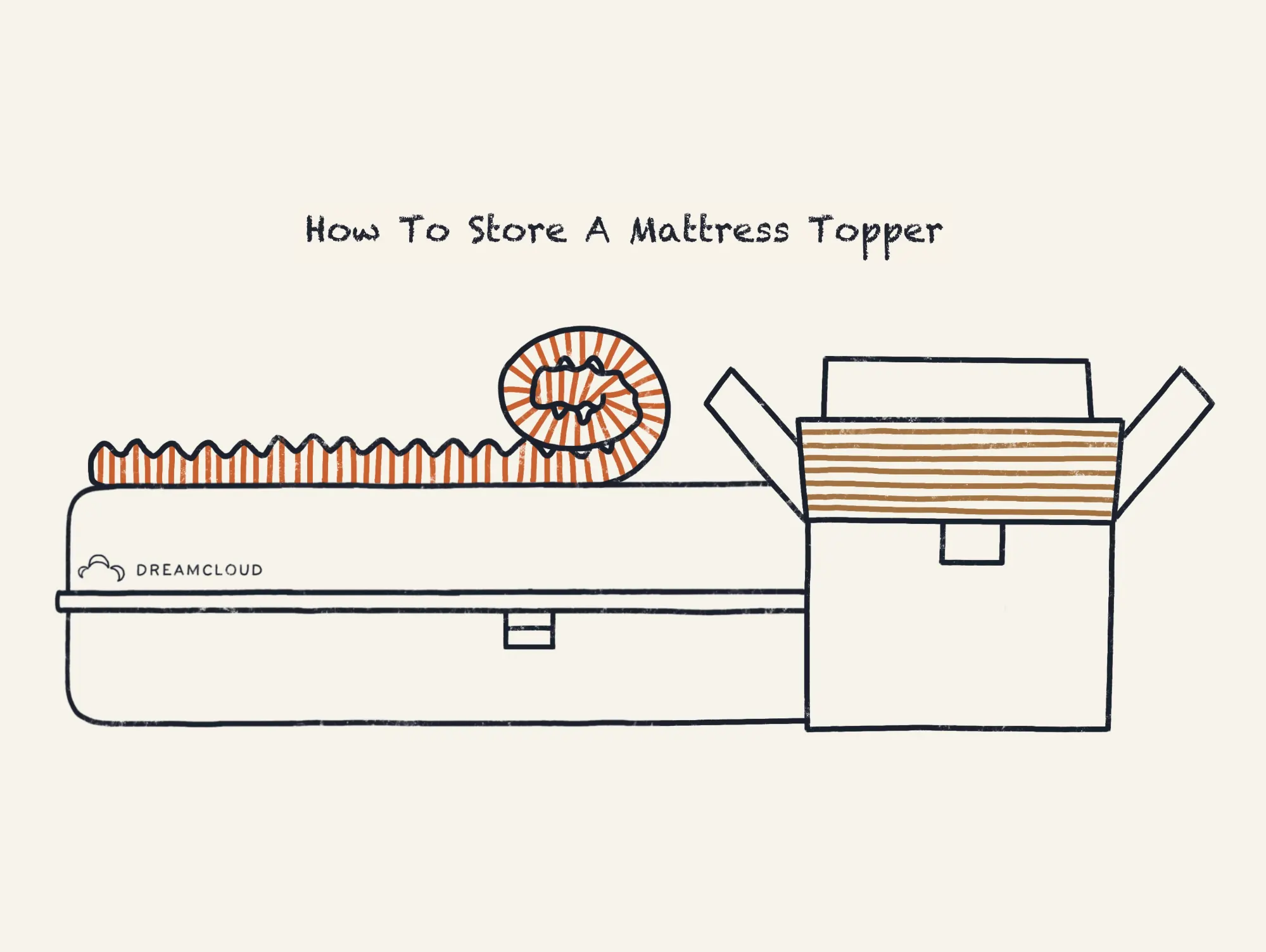
- Roll (not fold) most foam or latex toppers. Folding can crack or stress the foam.
- For feather, down, or wool, loosely fold or roll and store in a breathable bag.
- For fiberfill, vacuum-seal bags may be okay, but don’t over-compress for long periods.
Expert Tip: Place acid-free tissue or a clean cotton sheet between folds to prevent sticking or rubbing.
Common Mistake: Stuffing a topper into a small bag can damage the fill or foam over time.
Step 4: Use A Protective Cover
Never store your mattress topper uncovered. A good cover keeps out dust, bugs, moisture, and even UV light.
Best Protection Options
- Cotton Mattress Storage Bag: Breathable, reusable, and prevents moisture buildup.
- Plastic Mattress Bag: Good for short moves but not for long-term storage (traps moisture).
- Vacuum Storage Bag: Saves space, but only suitable for fiberfill toppers. Not recommended for foam or latex.
- Old Duvet Cover or Sheet: Works in a pinch; just make sure it’s clean.
How to Use:
- Make sure the topper is 100% dry before sealing.
- For vacuum bags, don’t over-compress—this can ruin foam.
- Label the bag with the date and topper type for easy identification later.
Non-Obvious Insight: Some people use scented sachets in the bag. Avoid these—strong scents can linger or stain the material.
Credit: www.dreamcloudsleep.com
Step 5: Store Flat, Rolled, Or Folded?
The way you position your topper while storing depends on the type and available space.
Memory Foam And Latex
- Best: Roll gently from the short end. Do not fold sharply.
- If flat storage is possible (like under a bed), that’s ideal.
- Never stack heavy items on top; it can deform the foam.
Feather/down And Wool
- Loosely fold or roll.
- Store in a breathable bag, not plastic.
- Add cedar chips (in a cloth pouch) to deter moths, but don’t let them touch the topper.
Polyester/fiberfill
- Can be rolled or vacuum-sealed for short periods.
- Avoid compressing for over six months.
| Topper Type | Best Position | Worst Position |
|---|---|---|
| Memory Foam | Gently rolled or flat | Sharp fold, heavy stacking |
| Latex | Flat or loose roll | Folded, compressed |
| Feather/Down | Loose fold/roll | Vacuum-sealed, tight fold |
| Wool | Flat, loose roll | Compressed, plastic bag |
| Fiberfill | Rolled, vacuum short-term | Long-term compression |
Step 6: Monitor Your Stored Topper
Even after storage, don’t forget about your topper. Check on it every few months.
- Open the bag and air it out for an hour.
- Look for moisture, mold, or pests.
- Check for strange smells.
- If compressed, let it “breathe” and fluff up.
If you find any issues, clean again before using.
Pro Tip: Set a reminder in your phone to check every 2–3 months. This small effort can prevent big problems.
Step 7: Reusing Your Mattress Topper After Storage
When it’s time to use your topper again, don’t just put it back on the bed. Give it a refresh:
- Air Out: Place in a sunny (but not too hot) room for a few hours.
- Vacuum: Remove any dust.
- Spot Clean: Address any stains or odors that appeared during storage.
- Reshape: Gently fluff or shake to restore loft.
Common Mistake: Skipping this step can mean sleeping on dust, allergens, or even mold.
How To Store A Mattress Topper In Small Spaces
Small apartments or rooms can make mattress topper storage tricky. But with some creativity, you can keep your topper safe without much space.
Under-bed Storage
- Use a flat, zippered storage bag designed for bedding.
- Make sure the area is clean and dry.
- Don’t place boxes or shoes on top.
Closet Storage
- Roll the topper and place upright in the back of a closet.
- Use a cotton storage bag to keep it fresh.
Vertical Storage
- For foam toppers, you can store them rolled and upright (like a rug) in a corner.
- Avoid leaning against sharp edges.
Behind Furniture
- Slide a rolled topper behind a sofa or wardrobe.
- Make sure it’s not pressed tightly.
Space-Saving Tip: If you must use a vacuum storage bag, do so only for fiberfill toppers and never for more than 3–6 months.
Storing A Mattress Topper During A Move
Moving? A mattress topper needs special care to avoid damage in transit.
- Clean and dry the topper before packing.
- Roll (not fold) foam or latex toppers.
- Use a thick plastic mattress bag for the journey, but remove and air out as soon as possible after moving.
- For feather or wool, use a strong fabric bag with a drawstring.
Important: Never leave the topper in a hot moving truck for days. Heat can damage foam or cause odors.
How Long Can You Store A Mattress Topper?
- Foam and latex toppers: Up to one year if stored flat or rolled, dry, and covered. Longer storage may cause minor deformation but usually recovers after a few days.
- Feather, down, and wool: Can be stored for years if kept dry and away from pests.
- Fiberfill: 6–12 months is safe; longer may flatten the fibers.
Insider Fact: Most foam toppers can recover their shape after months of storage, but a few days of airing out helps.
What To Avoid When Storing A Mattress Topper
Many people make small mistakes that ruin their topper. Avoid these common errors:
- Folding foam sharply: Causes cracks or permanent bends.
- Storing while damp: Leads to mold or mildew.
- Using plastic bags for long-term: Traps moisture.
- Putting in hot attics: Heat breaks down foam or melts adhesives.
- Storing with mothballs: The smell is hard to remove and not always effective.
Pro Insight: Don’t use scented dryer sheets for long-term storage. They may leave greasy marks or react with natural materials.
Practical Tips For Mattress Topper Storage
- Label everything: Write the date, material, and size on the storage bag.
- Protect from pests: Use cedar chips (in a pouch) for wool and feather toppers.
- Use a storage checklist: Make sure you complete all steps.
- Rotate storage position: If storing for over a year, unroll and reroll every 6 months.

Credit: www.youtube.com
Eco-friendly Mattress Topper Storage
If you want to avoid plastic, try these greener options:
- Use organic cotton bags for storage.
- Place natural lavender sachets (in a cloth pouch) for a mild scent and moth protection.
- Store in recycled cardboard boxes lined with a cotton sheet (for dry spaces only).
- Avoid chemical sprays or artificial scents.
How Storage Affects Mattress Topper Lifespan
Good storage can double the life of your topper. Poor storage can ruin it in months.
- Foam toppers: Last 3–5 years with proper care, but only 1–2 if stored poorly.
- Feather and wool: Can last over 10 years if kept dry and clean.
- Fiberfill: Usually 2–3 years, but flattens quickly if compressed.
Research Insight: According to the Sleep Foundation, regular cleaning and proper storage are key to extending bedding life. You can read more at Sleep Foundation.
Credit: www.dreamcloudsleep.com
Mattress Topper Storage Accessories: What Helps?
There are special products that can make mattress topper storage easier:
- Breathable storage bags: Prevent moisture and dust.
- Vacuum storage bags: Only for fiberfill.
- Cedar blocks or sachets: Natural pest control.
- Label tags: For easy identification.
Choose accessories based on your topper type and storage location.
Comparing Storage Methods
Here’s a quick look at the pros and cons of main storage styles:
| Method | Pros | Cons |
|---|---|---|
| Flat | No creases, easy to air out | Takes more space |
| Rolled | Saves space, avoids sharp folds | Some compression risk |
| Folded | Very compact | High crease risk, not for foam |
| Vacuum Bag | Very compact, protects from dust | Not for all materials, risk of moisture |
Advice: When in doubt, roll gently and use a cotton bag. It’s safe for most topper types.
Frequently Asked Questions
How Do I Prevent Mold When Storing A Mattress Topper?
Always make sure the topper is completely dry before storing. Use a breathable storage bag and keep the topper in a dry, cool place. Avoid plastic bags for long-term storage, as they trap moisture. Add a small silica gel pack in the bag for extra moisture control.
Can I Store My Mattress Topper In A Vacuum Storage Bag?
Fiberfill toppers can usually be stored in a vacuum bag for short periods (up to 6 months). Foam, latex, wool, or feather toppers should not be vacuum-sealed, as compression can damage the material or cause odors.
Is It Safe To Fold A Memory Foam Mattress Topper?
It’s best to roll a memory foam topper, not fold it. Folding can cause cracks, creases, or permanent damage. If you must fold, do so gently and only for a short time.
How Do I Remove Odors After Long-term Storage?
Air out the topper in a sunny, well-ventilated room for 1–2 days. Sprinkle baking soda on both sides, let sit for a few hours, then vacuum. For persistent odors, spot clean with a mild solution of water and vinegar.
What’s The Best Way To Store A Mattress Topper If I Have Pets?
Clean the topper thoroughly before storage to remove hair and dander. Use a zippered, pet-proof storage bag (thick cotton or polyester). Store off the floor and away from places pets can reach.
Storing a mattress topper may sound like a small detail, but it’s a step that protects your investment and your sleep quality. Take the time to clean, cover, and choose the right spot, and your topper will stay fresh and comfortable for years.
By following these steps, you’ll avoid the most common mistakes and get the longest life from your mattress topper. If you ever have doubts, check the care label or consult the manufacturer—your sleep (and your wallet) will thank you.