
Adding a door to a bookshelf transforms simple storage into something special. You can hide clutter, protect your books from dust, or create a unique hidden compartment. Many people want a more organized look or even dream of a secret bookcase door like in the movies.
The good news? You don’t need to be a master carpenter to make this upgrade. With the right tools, materials, and a little patience, most people can put a door on a bookshelf in just a weekend.
This guide walks you through everything you need to know. Whether you want a simple cover for your shelves or a fully working bookcase door, you’ll find clear steps and helpful advice. Let’s look at how you can add function and style to your bookshelf with a well-fitted door.
Why Add A Door To A Bookshelf?
Adding a door is more than just a style choice. It serves several practical purposes:
- Dust protection: Keeps your books and items clean, especially in busy homes.
- Visual order: Hides messy shelves, making a room feel calmer.
- Security: Protects valuable books or personal items.
- Versatility: Converts open shelves into closed storage.
- Aesthetic appeal: Gives your bookshelf a clean, finished look.
Some people also use bookshelf doors for hidden rooms or safes. Even without that, a door can make your shelf look custom-built.
Types Of Bookshelf Doors
Before you start, decide what kind of door you want. Each type has its own look, benefits, and installation style.
| Door Type | Best For | Installation Difficulty | Common Materials |
|---|---|---|---|
| **Swing Door** | Standard bookshelves | Easy | Wood, MDF |
| **Sliding Door** | Tight spaces | Medium | Wood, Glass |
| **Bi-fold Door** | Wide shelves | Medium | Wood, MDF |
| **Glass Door** | Display items | Easy | Glass, Wood |
| **Hidden Bookcase Door** | Secret rooms | Hard | Wood, Metal |
For most people, a basic swing or sliding door is the best place to start. They’re easier to install and work for nearly any shelf.
Tools And Materials Needed
You don’t need a workshop to put a door on a bookshelf, but a few tools are essential. Gather these before you start:
Basic Tools
- Tape measure: For accurate sizing
- Pencil: For marking holes and cuts
- Drill and drill bits: To make holes for hinges and screws
- Screwdriver: Manual or electric
- Level: Ensures the door hangs straight
- Saw (hand saw or circular saw): If you need to cut wood
- Sandpaper: For smoothing edges
- Clamps: To hold pieces steady
Materials
- Door panel: Plywood, MDF, or solid wood, cut to size
- Hinges: Choose style and size based on door weight and type
- Screws: To attach hinges and hardware
- Handles or knobs: For opening the door
- Magnetic catches or latches: Keeps the door closed
- Paint or stain: Optional, for finishing
If you’re adding a glass door, you’ll also need glass panels and special clips or frames.
Special Hardware (optional)
- Sliding track kit: For sliding doors
- Bi-fold door hardware: If using bi-folds
- Soft-close hinges: For smooth, quiet closing
Many hardware stores sell ready-made door kits that include most of what you need.
Measuring And Planning
Measuring is the most important step. A small mistake here can make the door not fit, scrape, or hang crooked.
How To Measure Your Bookshelf
- Measure the opening width and height: Use a tape measure. Write down the smallest width and height you find.
- Check for obstructions: Look for molding, trim, or uneven shelf edges.
- Decide on overlap: Doors can sit inside the shelf opening (inset) or overlap the frame (overlay). Overlay doors are easier for beginners.
- Plan door thickness: Thicker doors need stronger hinges. Most bookshelf doors use 1/2″ to 3/4″ thick wood.
- Mark hinge side: Choose which side the door will swing or slide.
Example
If your shelf opening is 30 inches wide by 48 inches high, and you want a single overlay door, cut your door panel at 31″ x 49″ for a 1/2″ overlap on all sides.
Planning For Hinges
- 2 hinges for doors under 36 inches tall
- 3 hinges for doors taller than 36 inches or heavy material
Mark where hinges will go before drilling.
Cutting And Preparing The Door
If you buy a pre-cut door panel, you can skip this part. If you’re cutting your own:
- Mark the cut lines: Use your tape measure and a straight edge.
- Cut the panel: Use a circular saw for straight, clean cuts.
- Sand the edges: Smooth all sides to avoid splinters and help paint stick.
- Dry fit the panel: Hold it against the shelf to check size.
If the door is too big, trim and sand again. Slightly smaller is better than too large.
Non-obvious Tip
Always check squareness. If your bookshelf isn’t perfectly square, cut the door to match the shelf, not just the measurements. This avoids gaps or scraping.
Attaching Hinges
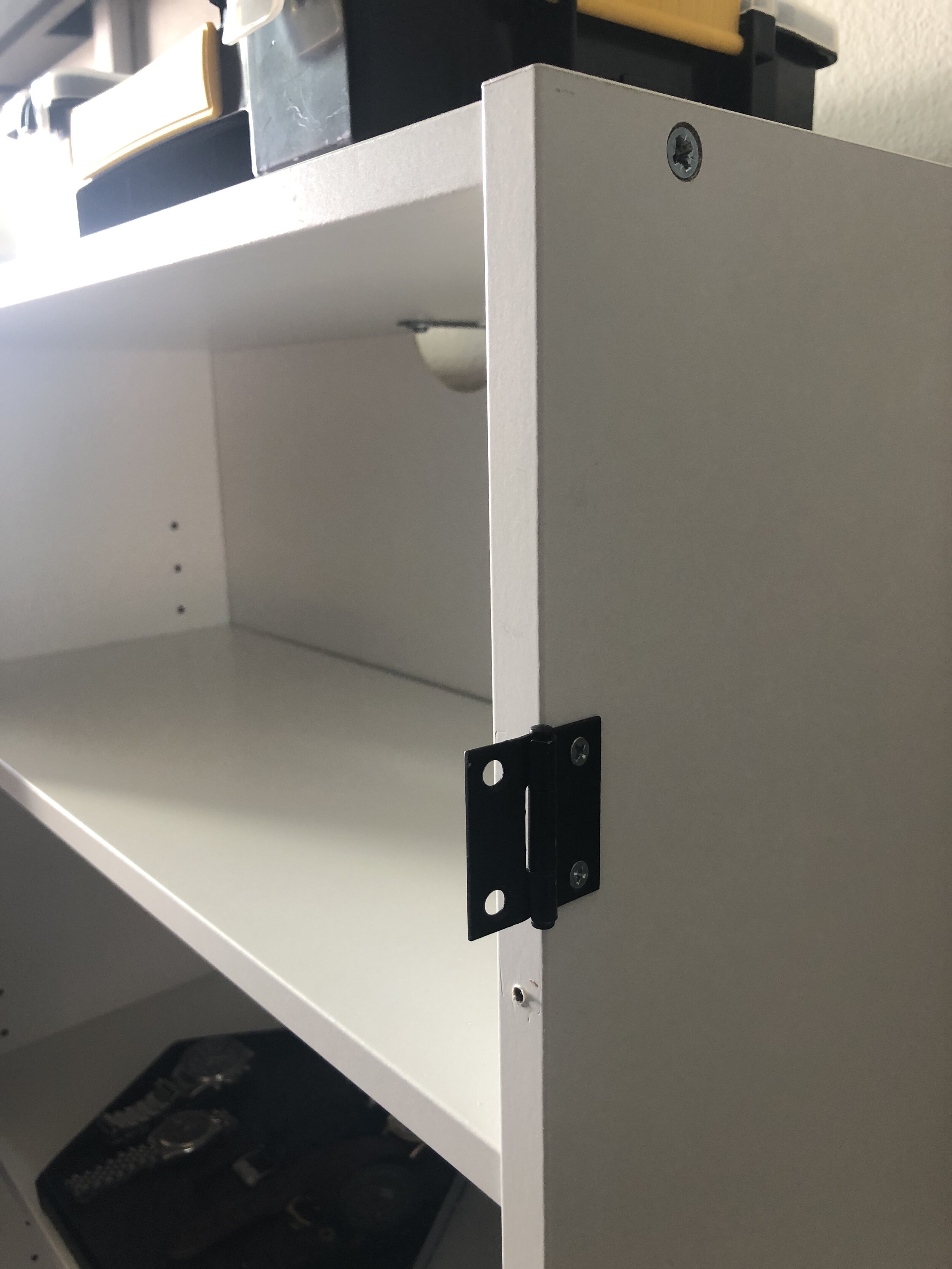
Hinges are the key to a smooth, long-lasting door. The most common types for bookshelves are butt hinges and concealed (Euro) hinges.
Choosing The Right Hinge
| Hinge Type | Look | Strength | Easy to Install? | Best For |
|---|---|---|---|---|
| Butt Hinge | Visible when closed | High | Yes | Wood, MDF doors |
| Concealed Hinge | Hidden from view | Medium | No (needs hole) | Modern look |
| Piano Hinge | Long and visible | Very high | Yes | Tall/Heavy doors |
Most beginners start with butt hinges because they are simple and forgiving.
Attaching Butt Hinges
- Mark hinge locations: Usually 4-5 inches from top and bottom edges.
- Attach hinges to the door first: Use small screws. Pre-drill holes to avoid splitting wood.
- Position the door: Hold the door in place on the bookshelf.
- Mark screw holes on the bookshelf: Through the hinge holes.
- Pre-drill the shelf: For easier screwing.
- Screw the hinges to the shelf: Check that the door swings freely.
If the door rubs or is crooked, loosen screws and adjust as needed.
Using Concealed Hinges
These require drilling a large, flat-bottom hole (usually 35mm) in the back of the door. Use a Forstner bit and follow the manufacturer’s instructions. These hinges are adjustable, letting you fine-tune the door position.
Pro Tip
Use shims (thin pieces of cardboard or wood) under the door during installation to keep a consistent gap at the bottom.
Installing The Door On The Bookshelf
This is where your project comes together. The steps are similar for most hinge types, but here’s a general process:
- Position the door: Use shims or a helper to hold it in place.
- Align the hinges: Make sure they match your markings.
- Attach the hinges: Start with one screw per hinge, check alignment, then finish.
- Test the swing: Open and close the door several times.
- Adjust if needed: Loosen screws to shift the door, then retighten.
For sliding doors, mount the track on top of the shelf, attach rollers or hangers to the door, and hang it on the track. Test for smooth movement.
Common Mistake
Forgetting clearance. Always leave a small gap (1/16″ to 1/8″) between the door and shelf edges so the door doesn’t scrape.
Finishing Touches
Now you can personalize your bookshelf door for style and function.
Adding Handles Or Knobs
- Measure and mark where you want the handle.
- Drill a hole for the screw.
- Attach the handle or knob with a screwdriver.
Choose a handle that matches your room’s style. For a hidden look, use a finger pull or push-to-open latch.
Adding A Catch Or Latch
- Magnetic catches are simple and keep the door closed.
- Roller catches or touch latches are other good options.
Screw the catch to the shelf, and the plate to the door. Adjust until the door stays shut but opens easily.
Painting Or Staining
- Sand all surfaces smooth.
- Wipe away dust.
- Apply primer (for paint) or wood conditioner (for stain).
- Paint or stain in thin layers.
- Let dry fully before reattaching hardware.
A matching finish blends the door into the bookshelf. A contrasting color can make the door stand out.
Special Cases: Glass, Bi-fold, And Hidden Doors
Glass Doors
Glass doors let you display books while keeping dust out.
- Use a wooden frame with glass inside, or buy a ready-made glass door.
- Attach with special glass door hinges or clips.
- Use soft-close hardware to avoid slamming.
Tip: Tempered glass is safer because it doesn’t shatter into sharp pieces.
Bi-fold Doors
Good for wide shelves where a full swing door would be too large.
- Buy a bi-fold door hardware kit.
- Cut doors to half the width of the opening.
- Attach hinges to connect the two door panels.
- Mount the main hinge to the shelf.
- Test folding and adjust as needed.
Hidden Bookcase Doors
For a secret room or safe, the bookshelf itself becomes the door.
- Requires strong, full-length piano hinges.
- The shelf must be sturdy and frame reinforced.
- Use heavy-duty casters on the bottom to support weight.
- Install a hidden latch or magnetic lock.
These projects are more advanced and may need help from a carpenter. But with careful planning, you can build a working secret door.
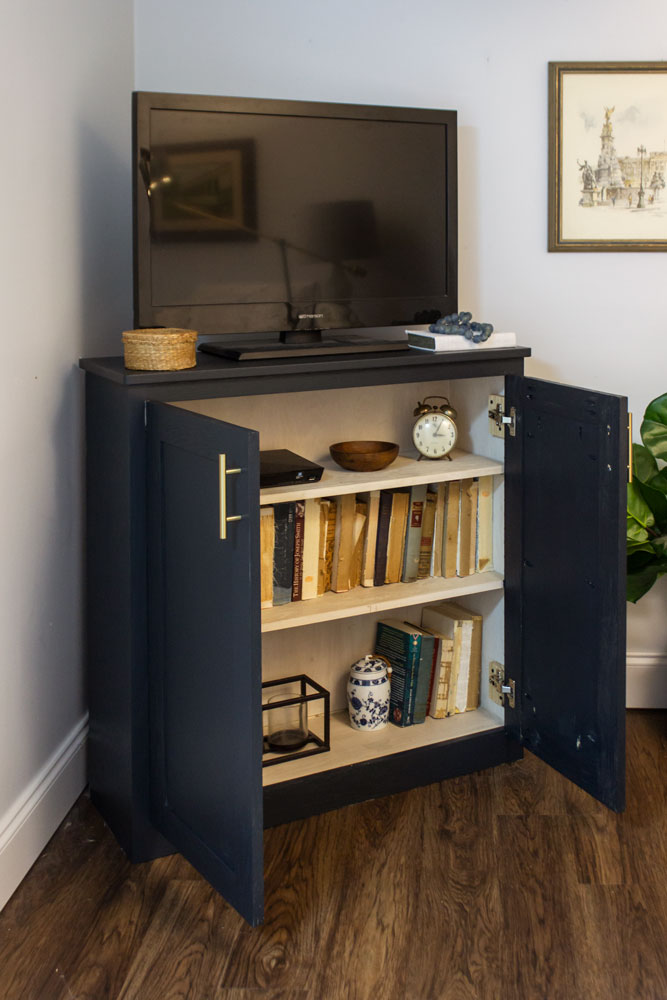
Real-world Example: Simple Overlay Door
Let’s say you have a 36″ x 60″ open bookshelf in your living room. Here’s how you’d add a single overlay door:
- Measure the opening (36″ x 60″).
- Buy a 3/4″ thick plywood panel, cut to 37″ x 61″ (for 1/2″ overlap).
- Sand the edges.
- Paint the door to match the shelf.
- Mark for two butt hinges: 5″ from top and bottom.
- Attach hinges to the door.
- Hold the door in place with shims.
- Screw hinges into the shelf frame.
- Add a magnetic catch at the top.
- Attach a brushed metal handle at a comfortable height.
In less than a day, you have a neat, professional-looking bookshelf door.
Credit: kaylasimonehome.com
Troubleshooting And Adjustments
Even with careful work, sometimes things go wrong. Here’s how to fix common problems:
- Door won’t close fully: Check for hinges set too deep or too shallow. Adjust as needed.
- Door is crooked: Loosen screws, reposition, and retighten.
- Door scrapes the shelf: Sand edges or increase the gap with shims.
- Door rattles: Add a soft bumper or adjust the catch.
If a screw hole strips, fill with a wood dowel and glue, then re-drill.
Safety Tips
- Always wear eye protection when drilling or sawing.
- Secure the bookshelf to the wall if it might tip over.
- Use clamps to hold parts while drilling.
- If using glass, handle carefully and wear gloves.
Cost And Time Estimate
How much will this project cost and how long will it take? Here’s a general idea:
| Item | Estimated Cost (USD) |
|---|---|
| Wood panel | $20 – $50 |
| Hinges (2-3) | $6 – $15 |
| Handle/knob | $3 – $10 |
| Paint/Stain | $10 – $25 |
| Magnetic catch | $3 – $8 |
| Misc. screws, sandpaper | $5 – $10 |
Total cost: $47 – $118 (most projects fall in the middle).
Time needed: 3-5 hours for basic doors. More if painting or making a hidden door.
Upgrades And Creative Ideas
Once you master a basic door, consider these ideas:
- Chalkboard paint on the door for notes or art.
- Mirror panels to make a small room feel bigger.
- Decorative trim for a classic look.
- Fabric panels for a soft touch.
- LED strip lighting inside the shelf.
Some people even automate hidden doors with sensors or remotes, but that’s an advanced project.
Common Mistakes To Avoid
- Measuring only once: Always measure twice, cut once.
- Forgetting about shelf weight: Heavy doors need strong hinges and support.
- Skipping the level check: A crooked door is very noticeable.
- Using the wrong screws: Use wood screws, not drywall or metal screws.
- Ignoring the finish: Unpainted edges or visible screw heads look unfinished.
When To Call A Professional
Most bookshelf door projects are DIY-friendly. But call a pro if:
- The shelf is very old or valuable.
- You want a large, swinging secret door.
- You need custom glass cutting.
- You’re not comfortable with tools.
A carpenter can help with complex builds and ensure safety.

Credit: www.youtube.com
Environmental And Maintenance Considerations
- Use low-VOC paints for better indoor air quality.
- Clean painted doors with a damp cloth, not harsh chemicals.
- Tighten hardware every few months.
- Lubricate hinges with light oil if they squeak.
Proper care keeps your bookshelf door looking and working great for years.
Additional Resources
For inspiration and advanced techniques, check out DIY forums or woodworking sites. There are many video guides for visual learners. For official hinge specs and installation guides, visit Wikipedia.
Credit: www.shadesofblueinteriors.com
Frequently Asked Questions
What Is The Easiest Type Of Door To Add To A Bookshelf?
A simple swing door with butt hinges is the easiest for most people. It only needs basic tools and is very forgiving if your measurements aren’t perfect. Overlay doors (which cover the shelf frame) are especially beginner-friendly.
Can I Add A Door To An Ikea Bookshelf?
Yes, but check the shelf’s construction first. Many Ikea shelves are made from particleboard, which is softer than solid wood. Use shorter screws and avoid over-tightening. Ikea also sells door kits for some models.
How Do I Keep The Door From Sagging Over Time?
Use at least two strong hinges (three for tall or heavy doors). Don’t make the door thicker or heavier than needed. For very wide doors, a piano hinge or extra support at the bottom helps prevent sagging.
What If My Bookshelf Isn’t Perfectly Square?
Measure at several points and use the smallest numbers. Cut your door to match the real shape, not just the ideal rectangle. A slightly uneven door is better than one that scrapes or doesn’t close.
Can I Lock A Bookshelf Door?
Yes. Install a cabinet lock or a hasp and padlock. For hidden or secret bookshelf doors, use a magnetic or coded latch. Just be sure the lock won’t damage your books or the shelf over time.
Adding a door to a bookshelf is a satisfying project that boosts both style and storage. With careful measuring and a few basic tools, you can make your bookshelf work better and look great. Whether you’re hiding clutter or building a secret room, the process is rewarding and the result is something you’ll use every day.