
Picking a door lock with a screwdriver sounds like something from a movie, but it’s a real-world skill that can help in a variety of situations. Maybe you locked yourself out of your room. Maybe you lost the key to a shed or an old interior door.
Sometimes, you need access fast, and calling a locksmith isn’t possible or is too expensive. Understanding this technique is useful, but it also comes with responsibility. You should never use it for illegal reasons. Instead, it’s a tool for emergencies and knowledge.
Many people think all locks are super secure, but basic locks are easier to open than you might imagine. In this guide, you’ll learn everything about picking simple door locks with a screwdriver. From the types of locks you can pick, to the step-by-step methods, safety advice, legal issues, and even what to do if you can’t get in.
You’ll also find tables comparing lock types, screwdriver choices, and alternative tools. This article is designed to be clear and easy to follow, even if you’re a beginner.
Understanding Door Locks
Before you try to pick a lock, it helps to know what you’re dealing with. Not all locks are the same, and some are much harder to open without a key.
Common Types Of Door Locks
- Spring bolt locks – These are the most basic. They use a spring to hold the bolt in place. You’ll often find them on bedroom, bathroom, or closet doors.
- Deadbolt locks – These are stronger and are usually found on main doors. They require the bolt to be moved manually.
- Knob locks – These are built into the door knob itself. They are common in homes.
- Lever handle locks – Similar to knob locks, but with a lever instead of a knob.
- Padlocks – Sometimes used on gates or external doors.
Most interior doors use spring bolt or knob locks, which are less secure but easier to open with basic tools.
Why Some Locks Are Easier To Pick
- Simple mechanism – Locks with a simple spring-loaded bolt can sometimes be bypassed with just the right pressure.
- Poor material – Cheaper locks are made from softer metals and can be manipulated.
- Wear and tear – Old locks often have loose parts, making them easier to pick.
Locks You Should Not Try To Pick
- High-security deadbolts – These are designed to resist picking.
- Electronic locks – Require hacking, not picking.
- Smart locks – Picking is not effective here.
If you’re locked out of a high-security or electronic lock, it’s better to call a professional.
Why Use A Screwdriver For Lock Picking?
You might wonder why a screwdriver is a popular choice for picking locks. The answer is simple: it’s a common household tool, and its shape is often perfect for turning or pushing lock parts.
Types Of Screwdrivers
- Flat-head (slotted) – The tip is flat and straight. This is the most useful for picking simple locks.
- Phillips-head – The tip is cross-shaped. This works on some locks but is less effective than flat-head.
- Precision screwdrivers – These are smaller versions, useful for tiny locks or when you need more accuracy.
When A Screwdriver Works Best
- The lock has a visible slot (like on bathroom push-button locks).
- The lock is old or worn out.
- The lock is not high-security.
When A Screwdriver Won’t Work
- If the lock is tightly built or has anti-pick features.
- If the gap between the door and the frame is too small.
- If the lock uses a complex key shape.
Legal And Ethical Considerations
Before you try to pick a lock with a screwdriver, you must think about the law and ethics. Picking locks is not illegal by itself in many places, but using it for breaking and entering is a crime.
When Is It Legal?
- You are trying to open your own door.
- You have permission from the property owner.
- The situation is an emergency (like a child or pet locked inside).
When Is It Illegal?
- You do not own the property or have permission.
- You are trying to enter a space you shouldn’t.
If you get caught picking a lock without a good reason, you could face fines or even criminal charges. Always know your local laws before you try.
Tools And Equipment You’ll Need
You don’t need a lot to pick a simple lock with a screwdriver, but using the right tools makes it easier and safer.
Essential Tools
- Flat-head screwdriver (small or medium size)
- Paperclip or bobby pin (for extra help)
- Lubricant (like WD-40, for sticky locks)
- Gloves (optional, for grip and safety)
- Flashlight (optional, to see better inside the lock)
Choosing The Right Screwdriver
Not all screwdrivers work the same. Here’s a quick comparison:
| Screwdriver Type | Best For | Pros | Cons |
|---|---|---|---|
| Flat-head (small) | Basic locks (bedroom, bathroom) | Fits most slots, good control | Too big won’t fit; too small may bend |
| Flat-head (medium) | Looser or larger locks | Stronger, more leverage | May damage small locks |
| Precision screwdriver | Tiny locks | Accurate, less damage | Easy to break, less power |
| Phillips-head | Some knob locks | Sometimes fits, common tool | Usually too thick, slips easily |
Choosing the right size is important. If it’s too big, it won’t fit. Too small, and you won’t have enough force.
Step-by-step: How To Pick A Door Lock With A Screwdriver
Now let’s get into the core: how to actually pick a basic door lock using a screwdriver. Remember, this method works best on simple locks, not high-security ones.
Step 1: Assess The Lock
Look closely at the lock. Is it a push-button, a twist, or a slot? If it’s a spring latch or a privacy lock, you have a good chance.
- If there’s a small hole in the knob, it’s a privacy lock.
- If there’s a visible slot, use a flat-head screwdriver.
Step 2: Prepare Your Tools
Select a flat-head screwdriver that fits the slot or hole. If the lock is tight, spray a little lubricant and let it sit for a minute.
Optional: Straighten a paperclip or use a bobby pin as a helper tool.
Step 3: Insert The Screwdriver
Gently insert the screwdriver into the keyhole or slot. Don’t force it—if it doesn’t fit, try a smaller tool.
For privacy locks:
- Push the screwdriver straight into the hole until you feel resistance.
For slot-type locks:
- Insert the tip into the slot, making sure it sits firmly.
Step 4: Apply Turning Pressure
For twist or slot locks, turn the screwdriver like a key—usually clockwise. Use gentle but steady pressure. For privacy locks, push straight in until you hear a click.
- If nothing happens, wiggle the screwdriver gently up and down as you turn.
- For stuck locks, try pushing and turning at the same time.
Step 5: Use A Helper Tool (if Needed)
Sometimes, you’ll need to push the latch aside while turning. Insert a paperclip or bobby pin above or below the screwdriver, and jiggle them together. This can help move the internal parts.
- Keep steady pressure with the screwdriver.
- Jiggle the helper tool side to side.
Step 6: Listen And Feel
As you turn and jiggle, listen for a click or feel the lock loosen. If you feel movement, keep turning gently. Don’t force—the lock can break.
If it’s not working, try slightly different angles, or switch to a smaller screwdriver.
Step 7: Open The Door
Once the lock gives, turn the knob or lever. The door should open. If it’s still stuck, repeat the process.
Special Notes
- For old or rusty locks, be patient. Use more lubricant.
- Never use too much force—you could break the lock or the tool.
- If nothing works after a few tries, stop and try another method.
Alternative Methods Using A Screwdriver
Some locks can’t be picked directly, but you can still use a screwdriver in creative ways.
Using A Screwdriver To Remove The Door Knob
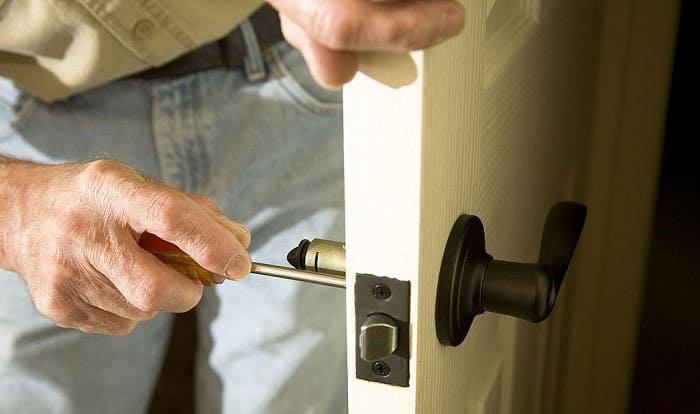
If the lock won’t pick, try removing the knob itself. Many interior knobs are held by visible screws.
- Find the screws on the knob plate.
- Use the screwdriver to remove them.
- Once the knob is off, the lock mechanism is exposed.
- Turn the internal latch with the screwdriver.
Using A Screwdriver To Slip The Latch
For doors with a spring latch (not deadbolts), you can sometimes slip the latch.
- Slide a thin flat-head screwdriver between the door and the frame where the latch is.
- Wiggle and push to force the latch back into the door.
This works best if there’s a gap between the door and the frame.
Using A Screwdriver As A Lever
If the door is loose or the frame is weak, you can gently pry the door near the latch to widen the gap. Be careful—this can damage the door or frame.

Credit: www.art-of-lockpicking.com
Common Problems And Solutions
Even with the right tools, things can go wrong. Here are some common issues and how to fix them.
The Screwdriver Won’t Fit
- Try a smaller tool, like a precision screwdriver or a metal nail file.
- Use a paperclip or bobby pin if the slot is tiny.
The Lock Is Jammed
- Spray lubricant and wait a few minutes.
- Tap the knob gently to loosen stuck parts.
The Screwdriver Breaks
- Use a stronger tool, or double up with a paperclip for support.
- Avoid using plastic screwdrivers; they are too weak.
The Lock Won’t Turn
- Try turning in the opposite direction.
- Jiggle the tool while applying gentle pressure.
- Check if the lock is a deadbolt (which this method can’t open).
The Door Is Still Stuck
- Make sure the screwdriver is deep enough in the lock.
- Try removing the knob or slipping the latch as described above.
Safety Tips And Warnings
Picking a lock with a screwdriver is not risk-free. Here’s how to stay safe and avoid damage.
- Wear gloves to protect your hands from slipping.
- Go slow—rushing can break the lock or tool.
- Use the right tool—don’t force a tool that doesn’t fit.
- Stop if you hear cracking—the lock may be breaking.
- Avoid using too much force—broken locks are expensive to fix.
- Don’t try on expensive or antique locks—they are easily damaged.
When To Stop And Call A Professional
Sometimes, picking a lock yourself is not worth the risk. Here’s when you should call a locksmith:
- The lock is expensive or high-security.
- The door is an important entrance (like a main door).
- You’ve tried several times and nothing works.
- The lock is making loud cracking noises.
- You don’t want to risk damaging the door or frame.
Professional locksmiths have the right tools and skills. It may cost money, but it’s often cheaper than repairing a broken lock or door.
How To Avoid Getting Locked Out Again
After opening your door, take steps to avoid future lockouts.
- Duplicate your keys and keep a spare in a safe place.
- Install a keyless entry (code or smart lock) for main doors.
- Leave a key with a trusted neighbor or friend.
- Lubricate your locks every few months to keep them working smoothly.
- Replace old locks before they fail.
Comparing Lock Types For Screwdriver Picking
Some locks are much easier to pick with a screwdriver than others. Here’s a quick look:
| Lock Type | Pickable with Screwdriver? | Difficulty Level | Risk of Damage |
|---|---|---|---|
| Spring bolt (privacy) | Yes | Low | Low |
| Knob lock (interior) | Yes (sometimes) | Medium | Medium |
| Lever handle lock | Yes (some models) | Medium | Medium |
| Deadbolt | No | High | High |
| Padlock | No | High | High |
| Electronic/Smart lock | No | Very high | Very high |
Always check the lock type before you begin.
Non-obvious Insights For Beginners
Many guides miss these important details:
- Direction matters – Not all locks turn the same way. Try both clockwise and counter-clockwise.
- Pressure is key – Too much pressure can jam the lock. The right amount is gentle but steady.
- Paperclip support – A paperclip can act as a tension wrench, which is what professional lock pickers use. This makes picking much easier.
- Lubrication can solve problems – If a lock hasn’t been used in a long time, a little lubricant can make a big difference.
- Light helps – Using a flashlight to see inside the lock can help you spot stuck parts or the right place to insert your tools.

Credit: www.youtube.com
Real-world Examples And Stories
People use screwdrivers to pick locks more often than you might think. Here are a few examples:
- Student locked out – A college student locked herself out of her dorm room. Using a small flat-head screwdriver and a bobby pin, she opened the privacy lock in five minutes.
- Lost shed key – A homeowner lost the key to his garden shed. He used a flat-head screwdriver to slip the latch and avoid breaking the door.
- Rusty bathroom lock – An old bathroom door wouldn’t open. After spraying lubricant and using a small screwdriver, the lock turned and opened.
These examples show that with patience and the right technique, success is possible.
Comparing Screwdriver Picking To Other Methods
What if you don’t have a screwdriver? There are other ways, but each has pros and cons.
| Method | Tools Needed | Effectiveness | Risk of Damage |
|---|---|---|---|
| Screwdriver picking | Screwdriver, paperclip | High for basic locks | Low to medium |
| Bobby pin picking | Bobby pins | Medium | Low |
| Credit card shimming | Plastic card | Medium for spring latches | Medium (card may break) |
| Removing the knob | Screwdriver | High | Medium |
| Calling a locksmith | Phone, money | Very high | None |
Using a screwdriver is often the best choice for simple locks.
Mistakes To Avoid When Picking A Lock
Beginners often make the same mistakes, which can cause more problems.
- Using too much force – This can break the lock or your tool.
- Not checking the lock type – Some locks cannot be picked with a screwdriver.
- Using the wrong size tool – Too big or too small won’t work.
- Ignoring legal issues – Always make sure you have the right to open the door.
- Forgetting lubricant – Stuck locks need a little help.
Improving Your Lock Picking Skills
If you want to get better at picking locks (for legal, ethical reasons), you can practice.
- Buy a lock picking practice set – These are sold online and are legal to own in many places.
- Start with old locks – Practice on locks you own, not on doors in use.
- Watch tutorials – Many locksmiths share tips on YouTube.
- Learn about lock mechanisms – The more you know, the easier it gets.
For more details on lock picking and its history, check out the Wikipedia page on lock picking.
Credit: www.lockpickmall.com
Frequently Asked Questions
How Do I Know If My Lock Can Be Picked With A Screwdriver?
Most interior locks (like bedroom or bathroom privacy locks) can be picked with a screwdriver. If you see a small slot or hole, there’s a good chance. Deadbolts, padlocks, or electronic locks usually cannot be picked this way.
Will Picking A Lock With A Screwdriver Damage My Door?
There is a small risk of damage if you use too much force or the wrong size tool. Go slow and use gentle pressure. For expensive or antique doors, call a professional instead.
What If I Don’t Have A Screwdriver? Can I Use Something Else?
Yes. In an emergency, you can use a bobby pin, paperclip, or metal nail file. For slot locks, even a coin or butter knife can work if they fit. Always be careful not to bend or break your tool inside the lock.
Is It Legal To Pick My Own Lock?
In most places, it is legal to pick your own lock or if you have permission. Picking locks you don’t own or without permission can lead to criminal charges. Always check your local laws if unsure.
Why Is My Lock Still Not Opening After Many Tries?
If you’ve followed all the steps and your lock still won’t open, it might be jammed, broken, or too secure for this method. Try lubricating the lock, using a different tool, or call a locksmith if you’re stuck.
Picking a door lock with a screwdriver is a useful skill for emergencies. By understanding your lock type, using the right tool, and following careful steps, you can often open basic doors without damage. But always use this knowledge responsibly, and never for illegal reasons.
If in doubt, professional help is the safest option.