
Organizing a baby dresser may look simple, but it’s more than folding tiny clothes and stacking diapers. A well-arranged dresser can save precious minutes during late-night diaper changes, reduce stress, and make daily routines smoother for new parents. Many parents don’t realize how much time is lost searching for a missing onesie or the right pacifier.
A smart dresser setup gives you confidence, peace, and more time to enjoy with your baby. This guide will show you, step-by-step, how to organize a baby dresser for real-life use—so you don’t just have a tidy dresser, but a practical one.
Why Dresser Organization Matters For Babies
When a baby arrives, even small tasks can feel overwhelming. Dresser organization is not just about looks—it’s about function and safety. An organized dresser helps:
- Reduce stress during busy mornings and midnight wake-ups
- Prevent lost or forgotten items
- Keep essentials within easy reach
- Ensure clothing is clean, ready, and the right size
- Make it easy for partners or caregivers to help
Research shows that parents spend, on average, over 2 hours per week searching for misplaced baby items in the first year. Small changes to your dresser setup can give you those hours back.
Choosing The Right Dresser For Your Baby
Before organizing, the dresser itself must be safe and suitable. Here are the main things to consider:
Size And Space
The dresser should fit your nursery’s space but still hold everything you need. Compact dressers are great for small rooms, but avoid ones that are too narrow—they can tip over if overloaded.
Safety Features
Look for dressers with:
- Anchoring kits to secure to the wall (prevents tipping accidents)
- Smooth drawer slides that won’t pinch fingers
- Non-toxic finishes
Number Of Drawers
Most parents find 3 to 6 drawers ideal. Too few, and you’ll struggle with cramped space; too many, and things get spread out and forgotten.
Dresser As Changing Table
Some dressers can double as a changing table. This saves space and keeps essentials close. If you use this setup, make sure the top is wide enough for a changing pad and has safety rails or a non-slip surface.
Essentials To Store In A Baby Dresser
It’s tempting to fill the dresser with every baby item you own. But overloading drawers means more clutter. Focus on key essentials:
- Onesies and Bodysuits
- Sleepwear and Swaddles
- Diapers and Wipes
- Socks and Mittens
- Burp Cloths and Bibs
- Pants and Leggings
- Seasonal Outerwear (hats, sweaters)
- Changing Supplies (creams, ointments)
- Backup Pacifiers and Small Toys
Many parents forget to include extra crib sheets and waterproof mattress pads in the dresser—they’re lifesavers during midnight messes.
Sorting And Decluttering Before Organizing
Start with a clean slate. Remove everything from the dresser. Place items in piles:
- Clothes that fit now
- Clothes too big (save for later)
- Clothes too small (donate or store)
- Damaged or stained items (discard)
Many parents hold onto items “just in case.” Be honest: If it’s stained or never worn, let it go. You’ll gain space and clarity.
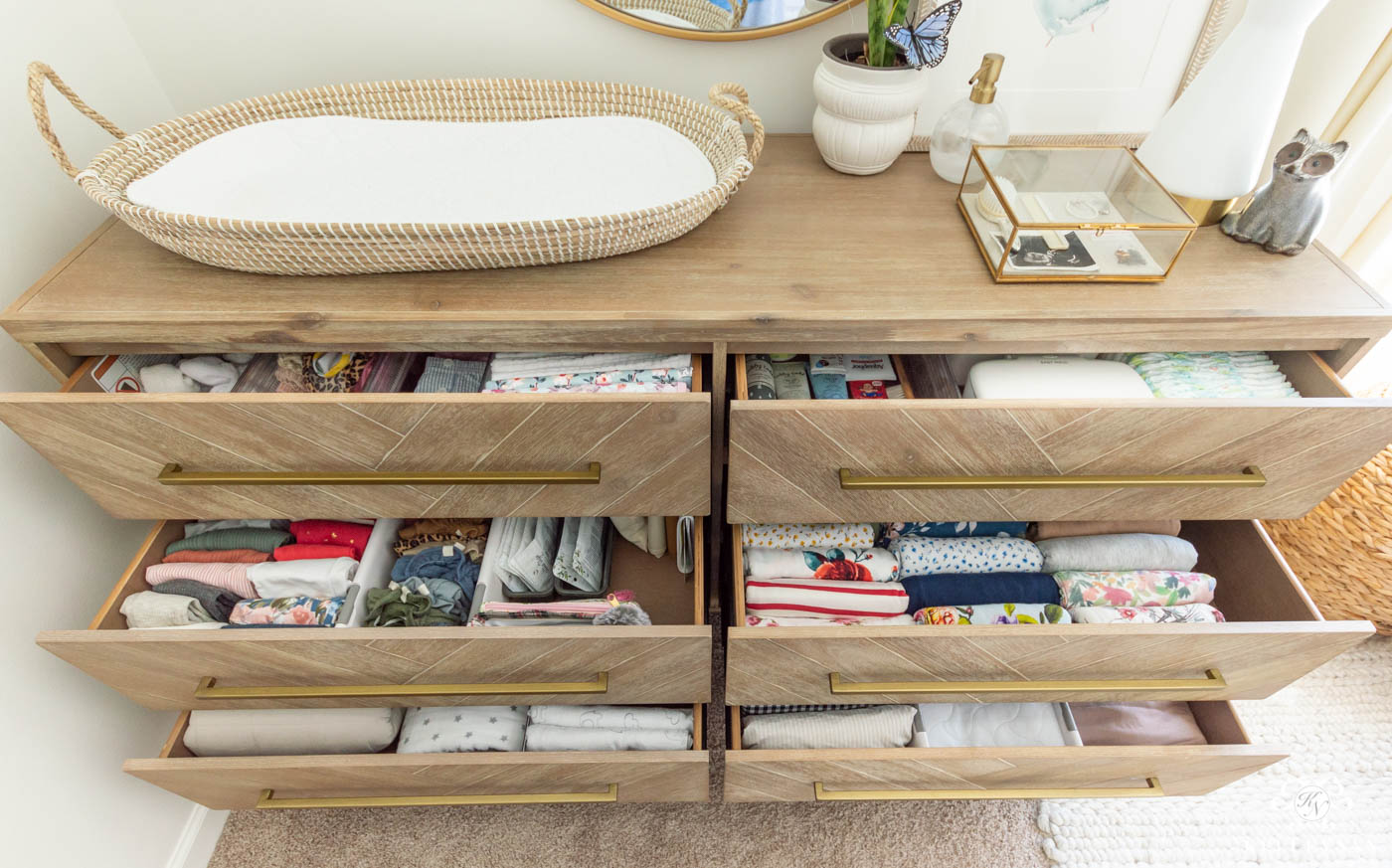
Credit: kelleynan.com
Creating A Simple Dresser Layout
A smart dresser layout helps you find what you need instantly. Here’s a proven setup:
| Drawer | Best Items to Store | Reason |
|---|---|---|
| Top Drawer | Diapers, wipes, creams, pacifiers | Most-used items within arm’s reach |
| Second Drawer | Onesies, bodysuits, socks, mittens | Quick outfit changes |
| Third Drawer | Pajamas, sleep sacks, swaddles | Bedtime made simple |
| Bottom Drawer(s) | Extra sheets, backup clothes, outgrown items | Less-used, bulkier items |
This layout works for most families. Adjust based on your daily routine.
Drawer Dividers: The Secret Weapon
Without dividers, small baby clothes get jumbled. Drawer dividers create mini-zones that keep things visible and neat. There are several types:
Adjustable Plastic Dividers
Moveable and perfect for separating socks, mittens, and tiny accessories.
Fabric Bins
Soft, flexible, and great for groups of onesies or pajamas.
Diy Solutions
Use small boxes or baskets from around the house. Even cut-down cereal boxes work in a pinch.
Here’s a quick look at divider types:
| Divider Type | Pros | Cons |
|---|---|---|
| Plastic Adjustable | Custom fit, easy to clean | Can slide out of place |
| Fabric Bins | Soft, flexible, washable | Take up more space |
| DIY Boxes | Cheap, eco-friendly | Less durable, not always pretty |
Pro tip: Don’t overfill dividers. Leave a little space for adding new items.
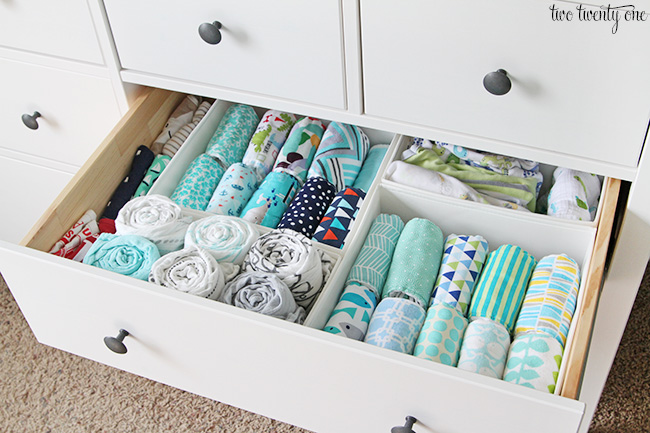
Credit: www.twotwentyone.net
How To Fold And Store Baby Clothes
Folding matters more than you think. Proper folding saves space and keeps clothes visible. Try the file folding method:
- Fold each onesie or shirt into a small rectangle.
- Place vertically in the drawer, like files in a cabinet.
This method lets you see every piece at once—no more digging and making a mess.
For socks and mittens, pair together and roll or tuck into a corner divider.
Baby pants and leggings can be rolled or folded flat. Rolling saves space but only works if you have enough room in the drawer for a single layer.
Organizing Baby Clothes By Size And Season
Babies grow fast. Mixing sizes in one drawer causes confusion. Here’s how to stay ahead:
- Store only current-size clothes in the main dresser.
- Place larger sizes in a labeled bin or a bottom drawer.
- Rotate clothes every 1–2 months as your baby grows.
For seasonal items (like hats or sweaters), keep only what you need now in the dresser. Store off-season items elsewhere to free up space.
Many parents forget to check size tags regularly. If outfits look small, move them out—even if your baby wore them just last week.
Keeping Diapers, Wipes, And Changing Supplies Handy
Diaper changes happen often, sometimes with little warning. Keep these supplies in the top drawer or a nearby caddy:
- Diapers (enough for 1–2 days)
- Wipes (refill packs save space)
- Diaper rash cream
- Disposable bags for dirty diapers
- Extra onesies for quick changes
Some parents use small baskets or bins inside the top drawer to keep supplies upright and easy to grab.
Storing Accessories And Small Items
Tiny items like socks, mittens, and pacifiers easily get lost. Use dedicated dividers or mini-bins for:
- Pacifiers (keep at least two backups)
- Nail clippers and thermometers
- Hairbrush and baby lotion
- Teething toys
Label bins if needed, so helpers can find things easily.
Labeling Drawers And Dividers
Labels save time and make it easy for babysitters or partners to help. Use:
- Stick-on labels
- Chalkboard tags
- Washi tape with marker
Label by item type (“Onesies,” “Socks”) or by size (“0–3M,” “3–6M”). For non-English readers, simple icons (shirt, sock, diaper) also work well.
Rotating And Refreshing Dresser Contents
A baby’s wardrobe changes every few months. Set a reminder to:
- Remove outgrown clothes monthly
- Restock diapers and wipes weekly
- Swap in season-appropriate items
Don’t wait for the dresser to overflow. Regular refreshes keep things simple and neat.
Tips For Shared Dressers And Small Spaces
If your baby shares a dresser with siblings or you have limited space, try these ideas:
- Use color-coded bins or dividers for each child
- Hang extra organizers on the side or back of the dresser
- Store off-season or rarely used items elsewhere (like under the crib)
Vertical storage—such as a hanging organizer—frees up drawer space for everyday essentials.
Maintaining The Organization: Habits That Work
Organizing is not a one-time job. Build these habits:
- Put clean laundry away immediately—sort by drawer as you fold
- Do a quick tidy-up once a week
- Teach caregivers your system with a quick walkthrough
Remember, a perfect dresser is less important than one that works for you daily. If a system isn’t working, change it. Flexibility is key.

Credit: www.lifeunsweetened.com
Common Mistakes When Organizing A Baby Dresser
Many parents make these mistakes:
- Overfilling drawers: Leads to mess and hard-to-find items.
- Mixing sizes: Causes confusion and wasted time.
- Ignoring safety: Unanchored dressers can tip over.
- Not using dividers: Small items get lost easily.
- Storing rarely used items in top drawers: Keeps essentials out of reach.
Avoid these, and you’ll save time and stress.
Real-life Example: A Day With An Organized Dresser
Imagine this scenario: Your baby wakes up at 2 a.m., needs a quick change. You open the top drawer—diapers, wipes, and cream are ready. A clean onesie is in the next drawer, socks beside it. No searching, no stress. Later, grandma visits and offers to help. She sees labels and finds everything she needs without asking. This is the power of a smart dresser setup.
Adapting Your Dresser As Baby Grows
Your baby’s needs change fast:
- Newborn: Focus on onesies, swaddles, diapers.
- 3–6 months: Add more outfits as baby starts to spit up and roll.
- 6–12 months: More variety (pants, jackets), fewer swaddles.
- Toddler: Bigger clothes, more toys, maybe less diaper storage.
Review your setup every few months and adjust as needed. Don’t be afraid to move items around or swap dividers.
Eco-friendly And Minimalist Dresser Organization
If you prefer a greener or minimalist approach:
- Only keep what you use daily
- Donate or sell outgrown clothes
- Use recycled boxes or bins for dividers
- Avoid buying organizing products you don’t need
Minimalism means less to wash, fold, and sort—giving you more time for your baby.
When To Upgrade Or Replace Your Dresser
As your child grows, the dresser may become too small or unsafe. Consider upgrading if:
- Drawers are always full or hard to close
- The dresser wobbles or isn’t stable
- You need more space for bigger clothes or toys
Quality dressers can last from babyhood into childhood if well chosen. Some parents invest in a dresser that matches their child’s future room.
Comparison: Dresser Organization Vs. Closet Organization
How does a dresser compare with using a closet for baby clothes? Here’s a quick comparison:
| Feature | Dresser | Closet |
|---|---|---|
| Accessibility | Easy to grab essentials | Can be harder for quick changes |
| Space Efficiency | Great for small items | Better for hanging outfits, bulk storage |
| Safety | Anchor for tip-over prevention | Usually safer, but less accessible |
| Organization | Simple with dividers | Requires extra bins or hangers |
Most parents find a dresser best for daily essentials and a closet for spare or outgrown clothes.
Products And Tools That Help
Some helpful products for organizing a baby dresser:
- Adjustable drawer dividers
- Small fabric bins
- Stick-on labels
- Drawer liners (protects wood from leaks and stains)
- Rolling carts (for extra storage next to the dresser)
Try to see what you already have before buying new items. Often, kitchen organizers or old gift boxes work perfectly.
Saving Time And Reducing Stress
A well-organized baby dresser doesn’t just look nice—it can save you 15–30 minutes per day. That’s up to 3.5 hours a week! More time for yourself, your partner, and your baby.
Many new parents feel guilty if their organization doesn’t last. Remember, life with a baby is messy and unpredictable. The goal is not perfection, but a system that helps you, not stresses you.
When To Involve Older Siblings Or Caregivers
If you have older kids, let them help with simple tasks—like sorting socks or picking outfits. For babysitters or family, a labeled and organized dresser means they can help without confusion.
Some parents create a “top drawer guide” with icons or photos for quick reference.
Adapting Tips For Twins And Multiples
With twins or more, space is tighter. Use:
- Color-coded dividers or bins for each child
- Separate drawers, if possible, for each baby’s clothes
- Shared drawers only for backup items (like extra wipes)
Label everything clearly to avoid mix-ups, especially during sleepy-night changes.
Practical Insights Most Parents Miss
First, don’t forget to leave a little “empty” space. Babies get gifts, and you’ll want room for surprise items.
Second, keep a small “emergency kit” in the dresser: thermometer, medicine dropper, and a backup pacifier. When your baby is sick, you’ll be glad you don’t have to search.
Third, rotate baby clothes with the seasons. Sun hats and light outfits for summer, cozy pajamas and sweaters for winter. Staying ahead prevents last-minute scrambling.
Trusted Resources For More Tips
For more detailed nursery safety and organization guidance, the American Academy of Pediatrics offers reliable advice. Visit their site for updates on safe sleep and furniture tips: HealthyChildren.org.
Frequently Asked Questions
How Often Should I Reorganize My Baby’s Dresser?
Aim to reorganize every 1–2 months or whenever your baby moves up a clothing size. Babies grow quickly, and refreshing the dresser prevents clutter.
What Should I Do With Clothes My Baby Has Outgrown?
Sort outgrown clothes regularly. Store for future siblings, donate, or sell. Keeping them in the dresser wastes valuable space.
Is It Safe To Use A Secondhand Dresser For My Baby?
Yes, if you check for safety. Anchor it to the wall, ensure drawers slide smoothly, and use non-toxic paint or finishes.
How Can I Keep The Dresser Organized If I’m Very Busy?
Build small habits: put away laundry immediately, label drawers, and do a 5-minute tidy-up weekly. Even small efforts make a big difference.
Should I Store Toys In The Baby Dresser?
Only store small, daily-use toys. Larger toys are better kept in a basket or on a shelf. Overfilling the dresser makes it hard to find essentials.
Organizing a baby dresser is a small step that brings big rewards. With the right system, you’ll have more time, less stress, and a smoother daily routine—so you can focus on what matters most: enjoying your baby’s first months.