
Changing bifold doors into French doors might sound like a big project, but it is more possible than most people think. Many homeowners start with bifold doors because they are practical and save space. But sometimes, you want something that looks more classic and open—something that brings more light and style to your room. French doors are famous for just that. They are elegant, full of glass, and make any space feel brighter and bigger.
If you have old bifold doors on a closet, laundry room, or even as a room divider, you may feel frustrated by their look or function. They can get stuck, make noise, and are not always strong. French doors, on the other hand, open wide, look beautiful, and work well in both modern and traditional homes.
Converting bifold doors into French doors is not just a “quick fix. ” It is a smart upgrade that can change how you use your space. It can also add value to your home, making it more attractive if you ever decide to sell.
This guide will take you through everything: planning your project, what tools and materials you need, step-by-step instructions, and even expert tips. You’ll learn about common mistakes, how to avoid them, and ways to get a professional finish, even if you are new to DIY projects. We’ll also look at costs, how to compare options, and answer the most common questions homeowners have. By the end, you’ll be ready to turn those old bifold doors into stunning French doors that you’ll love for years to come.
Understanding Bifold Doors And French Doors
Before you start, it helps to know the main differences between bifold doors and French doors. This knowledge will help you plan your project better and avoid problems.
Bifold doors are made of two or more panels connected by hinges. These panels fold together as you slide them open, usually along a track. You often find them in closets, laundry areas, and pantries. They are popular because they take up less space when open.
French doors, in contrast, are two separate doors that swing open from the center. Each door has several glass panels, allowing light to pass through. French doors usually open wider than bifold doors and look more stylish. They are commonly used for patios, between rooms, or as closet doors in bedrooms.
Here is a quick side-by-side look:
| Feature | Bifold Doors | French Doors |
|---|---|---|
| Opening Mechanism | Panels fold to one side | Two doors swing open |
| Glass Area | Usually solid or few glass panels | Large glass panels |
| Space Needed | Less clearance when open | Needs more room to swing open |
| Appearance | Simple and functional | Elegant and decorative |
| Common Uses | Closets, pantries, laundry | Patios, rooms, closets |
Non-obvious insight: Not all bifold doors can easily become French doors. You need to check the width, height, and type of frame you have. Some spaces may need extra work or new frames to fit French doors correctly.
Planning Your Door Conversion Project
Every successful DIY project starts with a good plan. Converting bifold doors to French doors is no different. Careful planning saves time, money, and frustration.
Measure Your Door Opening
You must measure your existing door opening before buying any materials. Here’s how to do it right:
- Use a tape measure to get the width of the opening from one side to the other.
- Measure the height from the floor to the top of the opening.
- Measure the depth of the door frame.
Write down all measurements. Measure at least twice to avoid mistakes.
Tip: Many French doors come in standard sizes, but custom sizes are possible if your opening is unique.
Check Your Door Frame
Look at the frame around your bifold doors. Is it strong and square? Are there any signs of damage, warping, or rot? French doors are heavier than bifold doors, so the frame must be solid.
If your frame is weak or damaged, you may need to repair or replace it before installing new doors.
Decide: Convert Or Replace?
Some people convert their existing bifold door panels into French doors by adding glass and new hardware. Others remove the old bifold doors and install new French doors from a store.
Pros of converting: Lower cost, keeps the same look, less waste.
Cons of converting: More work, may not look as good as new French doors.
Pros of replacing: Easier to get a perfect fit and look, often faster.
Cons of replacing: Can cost more, may require more changes to the frame.
Non-obvious insight: If your bifold doors are hollow or damaged, replacing them is often the better choice. Solid or high-quality bifold doors can be converted with good results.
Tools And Materials Needed
Having the right tools and supplies is key for a smooth project. Here’s a list of what you’ll likely need:
- Tape measure and pencil
- Screwdriver (manual and electric drill/driver)
- Hammer and nails
- Pry bar (for removing old tracks and trim)
- Level (important for alignment)
- Saw (hand saw or power saw for frame adjustments)
- Wood shims
- Wood filler or caulk
- Paint or stain (for finishing)
- French door hardware (hinges, handles, lockset)
- New glass panels (if modifying existing doors)
- Safety glasses and gloves
If you are buying new French doors:
- Pre-hung French doors (already in a frame)
- Door threshold (if needed)
- Extra trim or molding
Expert tip: Don’t skip safety gear. Glass and wood splinters are real risks in this project.
Removing Your Old Bifold Doors
The first hands-on step is to take out your bifold doors and all the hardware. This will give you a clean slate.
- Open the doors fully.
- Remove the doors by lifting them off the top pivot. You may need to unscrew the bottom bracket.
- Take out the tracks from the top and bottom of the frame.
- Remove hardware such as brackets, hinges, and any screws left in the frame.
- Clean the opening and fix any holes or damage with wood filler.
Non-obvious insight: Save any screws and hardware in a small container. Some pieces may be useful if you need to reinstall trim or make adjustments later.
Preparing The Door Opening
A well-prepared opening makes French door installation much easier and more professional.
Check For Level And Square
Use your level to check both sides of the opening. French doors need a frame that is straight and square. If the frame is out of alignment, your doors may not close properly.
- If needed, add wood shims behind the frame to adjust the alignment.
- Use a saw to trim any high spots or remove obstacles.
Repair Or Replace Trim And Threshold
If your old bifold door had a track at the bottom, you may see gaps or damage after removal.
- Patch holes with wood filler or caulk.
- Sand smooth once dry.
- Add or replace the threshold if needed, especially for exterior doors.
Tip: For closets, you may not need a threshold. For doors between rooms, a threshold can help block sound and drafts.
Paint Or Stain The Frame
Now is the best time to finish the frame. It’s easier to paint or stain when the area is empty.
- Choose a color or finish that matches your new doors.
- Allow paint or stain to dry fully before installing the doors.
Modifying Existing Bifold Doors (if Converting)
If you want to convert your existing bifold doors into French doors, there are a few extra steps.
Reinforce The Door Panels
Many bifold doors are hollow inside and not meant to swing like French doors. You may need to:
- Add wood strips inside the panels for strength.
- Fill any hollow spaces with foam or wood for a solid feel.
- Sand smooth and patch any holes or dents.
Add Glass Panels
French doors usually have large glass panes. You can cut openings in your bifold panels and add glass inserts.
- Mark where you want the glass.
- Cut out the center panels with a saw.
- Install glass using wood stops and strong adhesive.
- Seal edges with caulk for safety and a finished look.
Important: If you are not comfortable with glass, ask a local glass shop to cut and install the panes. Safety glass is best.
Attach Hinges
Bifold doors usually slide; French doors swing. You must attach strong door hinges to the side of each panel.
- Mark the hinge locations (usually three per door).
- Chisel out space for the hinges if needed so they sit flush.
- Attach with long screws for a strong hold.
Add Handles And Lockset
Install a handle and, if needed, a lockset. These are mounted in the center, just like standard French doors.
Non-obvious insight: French doors often have one “active” door and one “passive” door. The passive door is held closed with bolts at the top and bottom. Plan your hardware so one door can stay shut when needed.
Installing New French Doors
If you are replacing your bifold doors with new French doors, follow these steps for the best results.
Dry Fit The Doors
Before installing, set the doors in the opening to make sure they fit.
- Check for even gaps on all sides.
- Make sure the doors swing freely without hitting anything.
If adjustments are needed, use a saw to trim the frame or add shims as necessary.
Install The Hinges
Mark where the hinges will go on both the door and the frame.
- Use three hinges per door for best support.
- Attach the hinges to the doors first, then to the frame.
- Check that the doors are level and straight.
Secure The Frame
If your French doors are pre-hung (already in a frame), secure the frame in the opening with screws through the sides.
- Use wood shims to fill any gaps and keep the frame tight.
- Check for level and square as you go.
Attach Hardware
Install the handles, lockset, and any extra bolts. French doors often have a flush bolt at the top and bottom of the passive door.
Tip: Test the doors after installing hardware. Make sure they open and close smoothly and lock securely.
Sealing And Finishing Touches
You’re almost done! Now it’s time to make everything look and work perfectly.
Seal The Edges
Use caulk or weatherstripping around the edges for a tight seal. This blocks drafts, dust, and noise.
- For interior doors, a simple foam strip is often enough.
- For exterior French doors, use heavy-duty weatherstripping.
Add Trim Or Molding
Install new trim or molding around the frame for a finished look.
- Nail the trim in place and fill any holes with wood filler.
- Paint or stain the trim to match your doors and frame.
Paint Or Stain The Doors
If your French doors are unfinished, now is the time to add paint or stain.
- Remove the hardware if possible for a cleaner finish.
- Use a brush or roller and follow the wood grain.
- Allow to dry completely before using the doors.
Pro tip: For glass panels, use painter’s tape to protect the edges from paint.
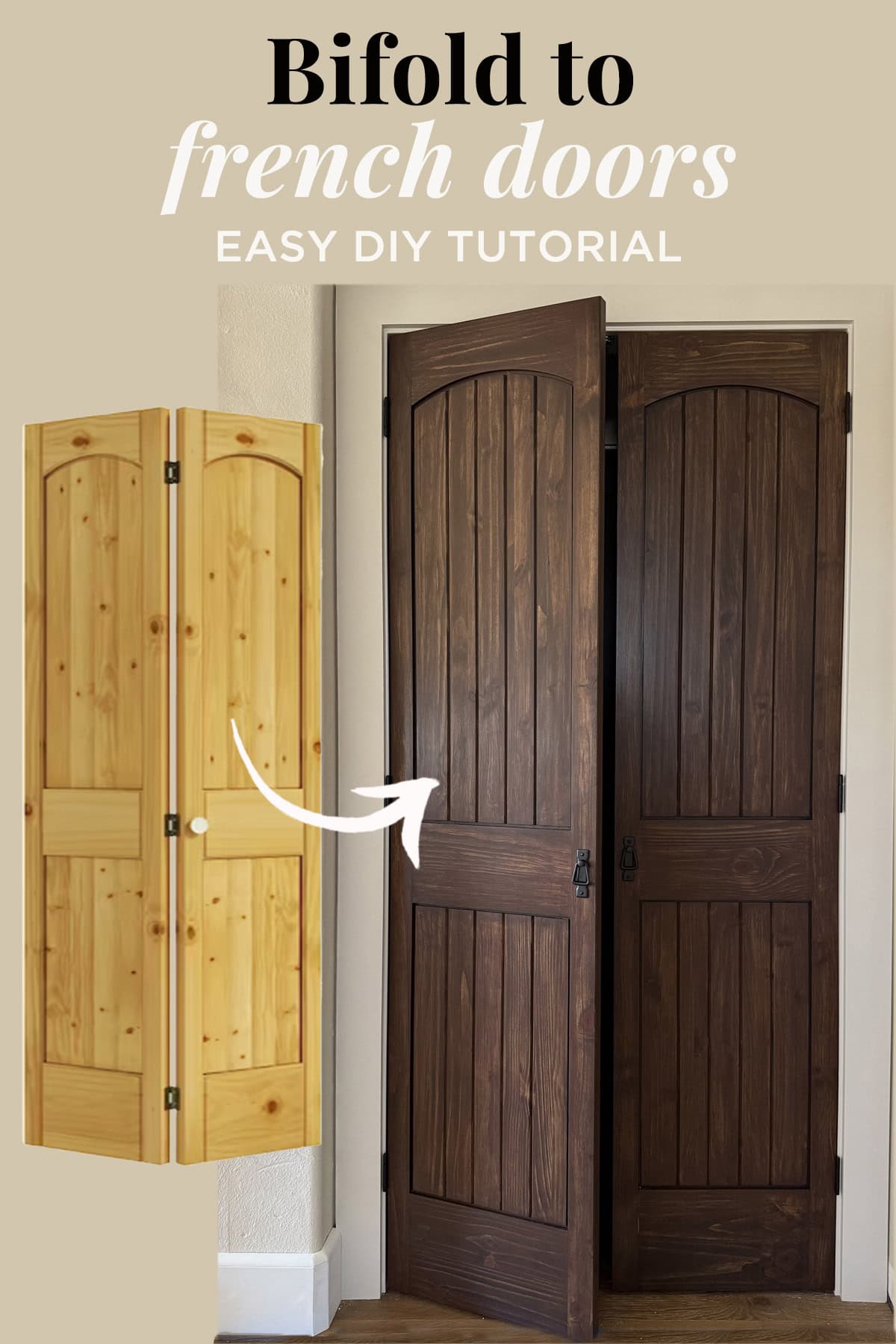
Credit: www.jennasuedesign.com
Cost Comparison: Convert Vs Replace
Many homeowners wonder about the cost of converting bifold doors into French doors compared to buying new ones. Here is a simple comparison:
| Option | Estimated Cost (USD) | Work Needed | Skill Level |
|---|---|---|---|
| Convert existing bifold doors | $100–$300 | Cutting, glass install, hardware | Intermediate to advanced DIY |
| Replace with new French doors | $300–$800+ | Remove old, install new, finish | Beginner to intermediate DIY |
| Hire a pro (install only) | $500–$1,500+ | Pro does all work | No DIY needed |
Non-obvious insight: Sometimes, the time and tools needed for a conversion make buying new doors a better deal—especially if your current doors are in poor shape.
Common Mistakes To Avoid
Even experienced DIYers make mistakes. Here are some of the most common and how to avoid them:
- Not measuring carefully – Always measure twice. Mistakes here can mean extra cost and frustration.
- Skipping frame repairs – Weak or crooked frames cause doors to stick or not close properly.
- Using the wrong hinges – French doors need strong, full-sized hinges. Small hinges can bend or break.
- Not sealing glass panels well – Poor sealing can lead to rattling glass or even air leaks.
- Forgetting about clearance – French doors need space to swing open. Make sure furniture or walls won’t block them.
Pro tip: Take your time with each step. Rushing leads to sloppy work and more problems later.

Credit: www.mixmeasuremake.com
Style Ideas For Your New French Doors
One of the best parts of French doors is how you can customize their style. Here are some options to consider:
- Clear glass panels for a classic look and maximum light.
- Frosted or textured glass for privacy, great for bathrooms or bedrooms.
- Grilles or muntins (the wood or metal strips inside the glass) for a traditional “French cottage” look.
- Painted doors in bold colors for a modern twist.
- Transom windows above the doors for extra light.
Expert tip: Matching the style of your French doors to your home’s design creates a more unified and attractive space.
Maintenance Tips For Long-lasting French Doors
French doors need some care to keep them looking and working their best. Here are a few simple tips:
- Clean the glass regularly with a mild glass cleaner.
- Check the hinges and hardware every few months. Tighten screws if they get loose.
- Touch up paint or stain if you see chips or scratches.
- Lubricate the hinges with a little silicone spray to prevent squeaks.
- Inspect weatherstripping and replace if it’s worn out.
Non-obvious insight: If your French doors face outside, check them after heavy rain or snow. Moisture can cause wood to swell or warp if not sealed well.
Real-life Example: Closet Makeover
Let’s look at a real-world example. Sarah, a homeowner in Texas, had old bifold doors on her bedroom closet. The doors stuck often and looked outdated. She wanted more light and a more open feel.
Sarah measured her opening (60 inches wide by 80 inches tall) and found she could use standard French doors from her local home center. She removed the old bifold doors, patched the frame, and painted everything white. After installing her new French doors with clear glass, her closet felt bigger, and her whole room looked brighter.
Sarah’s project cost about $350 for doors and hardware and took one weekend to complete. She loved the result and said, “Now I want French doors everywhere!”
When To Call A Professional
While many homeowners can handle this project, some situations call for professional help:
- Your opening is not square, or the wall is load-bearing.
- You want custom glass designs or heavy wood doors.
- You are not comfortable with tools or cutting glass.
A good contractor can finish the job quickly and safely. The extra cost can be worth it for a perfect finish.
To learn more about French door installation and best practices, you can visit This Old House.

Credit: decorbytheseashore.com
Frequently Asked Questions
What Is The Main Difference Between Bifold Doors And French Doors?
Bifold doors fold open on a track and save space, while French doors are two swinging doors with glass panels that open from the center. French doors usually look more stylish and allow more light to pass through.
Can I Convert Any Bifold Door Into A French Door?
Not all bifold doors are suitable. Solid wood or strong composite doors are best for conversion. Hollow or damaged bifold doors may not be strong enough to support glass or swing on hinges.
How Long Does It Take To Convert Bifold Doors Into French Doors?
Most DIYers need one or two weekends. Time depends on your skill level, the amount of repair needed, and whether you are adding glass panels.
Is It Cheaper To Convert Bifold Doors Or Buy New French Doors?
Converting is often cheaper if your existing doors are in good shape. But if you need many new parts or your doors are damaged, buying new French doors may be a better deal.
Do French Doors Increase Home Value?
Yes, French doors are seen as a stylish upgrade. They can make your home feel bigger, brighter, and more attractive to buyers.
Transforming bifold doors into French doors is a project that brings both beauty and function to your home. With careful planning, the right tools, and a bit of patience, you can create a space you’ll be proud of every time you walk through those elegant doors.