
Installing a dummy door knob may sound simple, but doing it right takes some care and attention. Dummy knobs are not just decorative—they help finish the look of doors in closets, pantries, and other interior spaces where a working latch isn’t needed.
For many homeowners, replacing or installing a dummy door knob is one of the first DIY projects they try. Yet, even with a basic tool set, small mistakes can lead to a loose fit, misaligned hardware, or a look that feels unprofessional.
This guide will walk you through every part of installing dummy door knobs, from choosing the right model to the final finishing touches. You’ll learn about tools, measurements, and step-by-step installation. We’ll also cover common problems people face, and how to solve them.
By the end, you’ll be ready to install dummy knobs that look clean, feel solid, and last for years.
What Is A Dummy Door Knob?
A dummy door knob is a non-turning handle used mostly on doors where you don’t need a latch or lock. Think about closet doors, double doors, or some bedroom doors. Dummy knobs are fixed—they do not rotate, and there’s no latch mechanism inside. Their main purpose is to give you something to pull or push, and to match the style of other working knobs in your home.
There are two main types:
- Single dummy: This is one knob or lever mounted directly to the door surface. It’s often used when only one side of the door needs a handle.
- Double dummy: This involves two knobs or levers (one on each side), but neither turns or operates a latch. These are often seen on double doors that meet in the middle.
Unlike passage or privacy knobs, dummy knobs are easier to install because there’s no latch to fit inside the door edge. But that doesn’t mean you can ignore the details—proper placement, secure attachment, and matching the style to your other hardware make a big difference.
When And Why Use Dummy Door Knobs
Many people ask why they would need a dummy door knob at all. Here are the most common reasons:
- Closet doors: You need a handle to pull open, but no latch to hold it shut.
- French doors: Especially with double doors, you want a matching knob on both sides for symmetry.
- Pantry doors: These often use ball catches or magnets, so a dummy knob is perfect for opening.
- Decorative matching: If all other doors use a certain style, you may want your closet or decorative doors to match.
- Replacement: Sometimes, a working knob fails and you only need a pull, not a latch.
Dummy knobs are also safer for young children in some cases, because there’s no way to accidentally lock the door.
Tools And Materials Needed
Before you start, gather all the tools and supplies you’ll need. Installing a dummy door knob is one of the simplest hardware jobs, but missing a tool can slow you down.
Essential tools:
- Drill or screwdriver (usually Phillips head)
- Measuring tape or ruler
- Pencil
- Level (optional, for precision)
- Awl or small nail (for marking screw holes)
- Safety glasses (if drilling new holes)
- Hammer (sometimes needed for starter holes)
Materials:
- Dummy door knob set (single or double, matching your door)
- Mounting screws (usually included with the knob set)
- Wood filler (if patching old holes)
- Touch-up paint (optional, for a clean finish)
Extra tip: If you’re replacing a knob, keep some wood glue and sandpaper handy in case the old holes don’t match up perfectly.
Choosing The Right Dummy Door Knob
Not all dummy knobs are created equal. The right choice depends on your door style, thickness, and the look you want.
Key Factors To Consider
- Style and finish: Match the shape and color to your other door hardware. Popular finishes include satin nickel, oil-rubbed bronze, and polished brass.
- Knob vs lever: Knobs are round and classic, while levers are easier to use for people with limited hand strength.
- Single or double: Single for one-sided use, double for doors where both sides need matching handles.
- Mounting plate size: Make sure the base plate (the part that touches the door) is large enough to cover any old holes or marks.
- Brand and quality: Well-known brands like Schlage, Kwikset, and Baldwin are trusted for long-lasting hardware.
Common Mistakes When Choosing
- Picking a finish that doesn’t match your other hardware.
- Buying a lever for a door that swings into a tight space, which can cause clearance problems.
- Not checking the base plate size, leading to visible old holes or paint marks.
Example Comparison
Here’s a simple comparison of popular dummy knob types:
| Type | Best For | Typical Finish | Pros | Cons |
|---|---|---|---|---|
| Single Dummy Knob | Closet, pantry, one-sided doors | Satin nickel, brass | Easy to install, affordable | Only one side has a knob |
| Double Dummy Knob | French/double doors | Bronze, chrome | Symmetrical look | Requires more hardware |
| Dummy Lever | Modern homes, ADA access | Matte black, nickel | Easy to grip | Can catch on sleeves or bags |
Preparing The Door
Before you pick up a screwdriver, check the door where you’ll install the dummy knob. Preparation is key for a neat, long-lasting result.
Remove Old Hardware
If you’re replacing an existing knob, remove it first:
- Unscrew the faceplate and pull the knob off.
- Remove any latches or strike plates from the door edge.
- Clean the area—remove dust, leftover screws, and any loose paint.
Tip: If there are old latch holes, you may need to fill them with wood filler. Let it dry, sand it smooth, and touch up with paint if needed.
Mark The New Knob Location
If this is a new installation (no previous knob), decide where to place the dummy knob:
- Standard height is 36 inches (about 91 cm) from the floor to the center of the knob.
- For double doors, measure carefully so knobs are at the same height.
- Use a pencil to lightly mark the center point.
- Hold the knob’s mounting plate over the mark to check fit and coverage.
Check For Obstructions
Open and close the door to make sure the knob will not hit the wall, trim, or other hardware. For lever handles, check that the lever clears the frame on both sides.
Non-obvious insight: Many people forget to check for wall clearance, leading to dents or chipped paint behind the door.
Step-by-step Installation Guide
Now it’s time to install the dummy door knob. These steps apply to most brands and types, but always check the instructions that come with your hardware.
1. Position The Knob
- Hold the dummy knob or lever against the door, lining up the base plate with your pencil mark.
- Use a level (if available) to make sure the knob is perfectly straight, especially for levers.
2. Mark Screw Holes
- With the knob in place, use a pencil to mark the position of the screw holes on the door.
- For heavy knobs, double-check alignment before moving on.
3. Drill Starter Holes
- Use an awl, small nail, or a drill with a small bit (1/16” is typical) to make pilot holes where you marked.
- Pilot holes make it easier to drive screws straight and prevent splitting the wood.
4. Attach The Dummy Knob
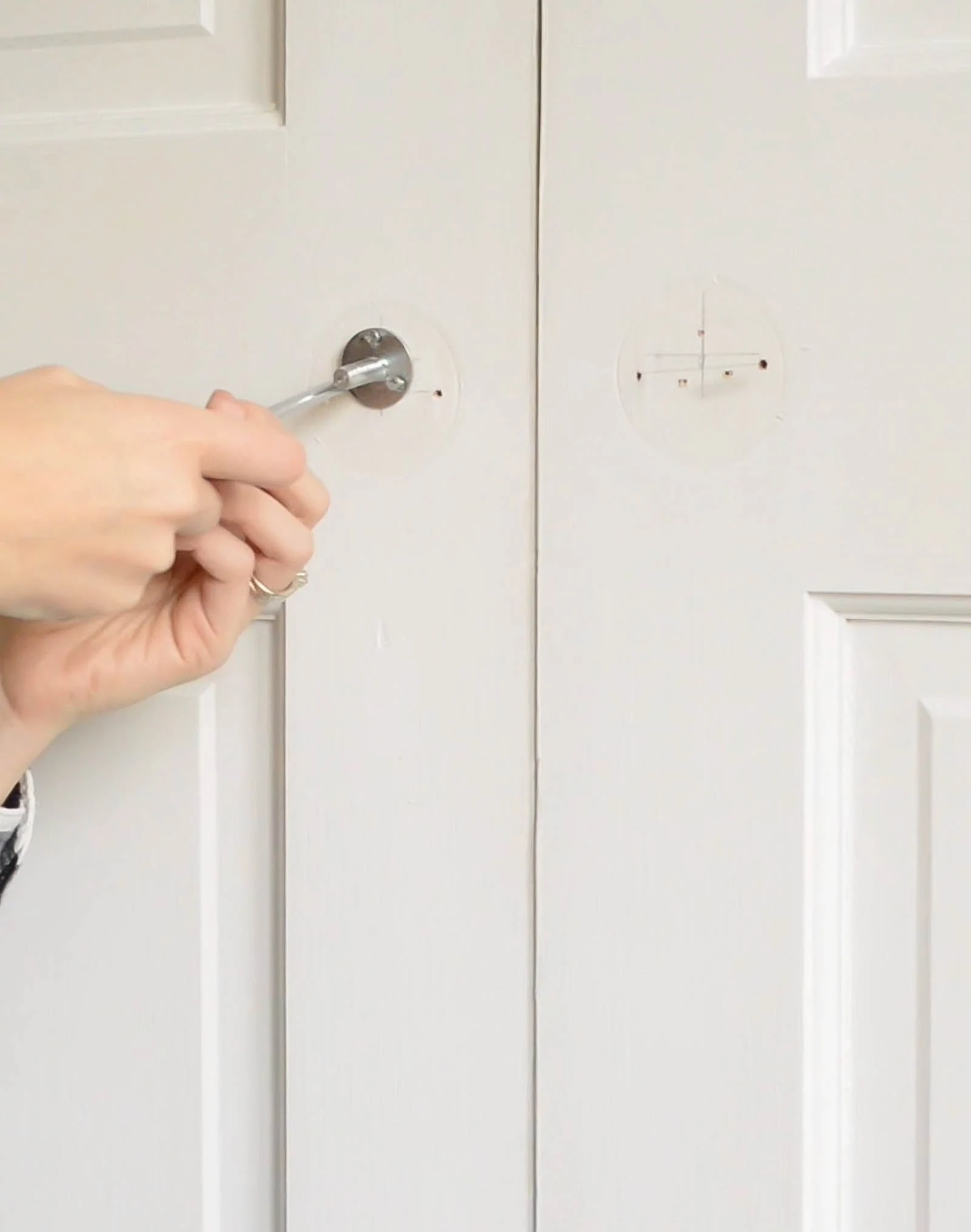
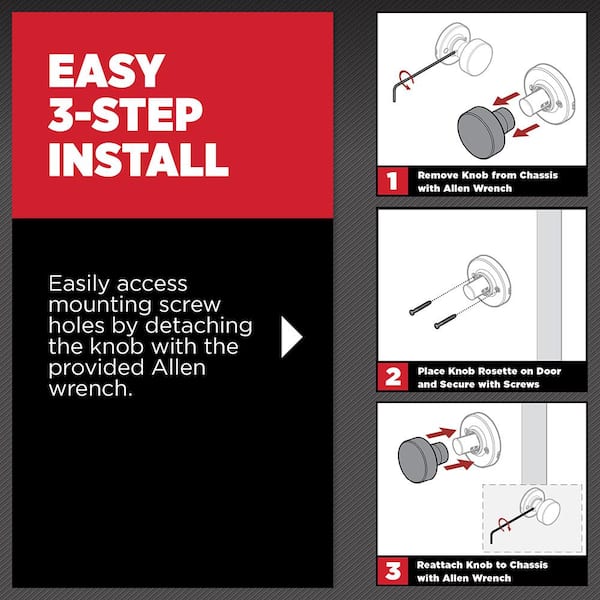
- Place the knob’s base plate over the pilot holes.
- Insert the mounting screws and tighten with a screwdriver. Start with one screw, then add the others.
- Tighten firmly, but don’t overtighten—too much force can strip the hole or crack the plate.
5. Check Fit And Operation
- Wiggle the knob gently to make sure it’s solid.
- Open and close the door. For levers, check that the handle doesn’t hit the frame.
- If the knob feels loose, remove and add thin wood shims or toothpicks in the screw hole, then reinstall.
6. Finishing Touches
- Wipe away pencil marks and fingerprints.
- Touch up any exposed screw heads with matching paint if desired.
- Step back and check that the knob matches nearby hardware.
Example: Installing A Dummy Knob On A Closet Door
Let’s say you have a hollow-core closet door with no previous hardware. You want to add a satin nickel dummy knob to match your bedroom.
- Measure 36 inches from the floor and mark the spot.
- Hold the knob in place and mark screw holes.
- Drill small pilot holes (be careful not to punch through the thin door).
- Screw the dummy knob in place and check for solid fit.
Pro tip: On hollow doors, use shorter screws or plastic anchors to avoid damaging the thin door skin.
Credit: biggerthanthethreeofus.com
Special Situations
Dummy knobs are simple, but some doors present unique challenges. Here’s how to handle the most common ones:
Installing On Hollow-core Doors
Most modern interior doors are hollow. They have a thin wood or fiberboard skin and a cardboard or foam core. Standard screws can pull out easily if you’re not careful.
- Use the shortest screws that will hold securely.
- For extra grip, use plastic drywall anchors made for hollow doors.
- If the knob feels loose, add a squirt of wood glue to the hole before inserting the screw.
Installing On Double Doors
When adding dummy knobs to French doors or double entry doors, symmetry is key.
- Measure both doors carefully so knobs are at the same height.
- For double dummy knobs, mount one on each door—no latch needed.
- If your doors meet in the middle, make sure the knobs do not interfere with each other.
Covering Old Holes
If your door previously had a working knob and latch, you’ll be left with a hole in the edge of the door. Dummy knobs do not cover this.
- Fill the old latch hole with a dowel and wood glue, then sand smooth.
- For large holes, use a wood filler or patch kit.
- Paint or stain the patched area to match the door.
Example Comparison
Here’s how installing a dummy knob on three door types differs:
| Door Type | Special Tools Needed | Key Challenge | Recommended Solution |
|---|---|---|---|
| Solid Wood | Standard screwdriver | None | Use standard screws |
| Hollow Core | Plastic anchors | Weak grip | Use anchors or glue |
| Metal Door | Drill with metal bit | Hard to drill | Pre-drill holes, use self-tapping screws |
Common Problems And How To Fix Them
Even a simple installation can go wrong. Here are the most frequent issues and how to solve them:
Dummy Knob Is Loose
This happens most often on hollow-core doors or if the screw holes are too large.
Fix: Remove the knob, fill the holes with wood glue and toothpicks or matchsticks, let dry, then reinstall with new screws.
Knob Plate Doesn’t Cover Old Holes
You might see part of an old latch hole or marks from a larger plate.
Fix: Choose a dummy knob with a larger base plate, or use a decorative backplate (also called a rosette) to cover the area.
Knob Interferes With Door Frame
The knob or lever hits the door frame or wall when opening.
Fix: Adjust the knob position slightly, or use a smaller style.
Screws Strip Out
The screw hole is too loose, and the screw will not hold.
Fix: Fill the hole with a wood dowel and glue, let dry, redrill a pilot hole, and reinstall.
Non-obvious insight: For stubborn doors, sometimes the frame is slightly warped—try loosening and readjusting the knob position, then retighten.
Matching Dummy Knobs With Other Door Hardware
A well-installed dummy knob should look like it belongs. Matching your hardware style makes your home feel more finished.
- Use the same finish (nickel, brass, bronze, etc.) As your other knobs and hinges.
- Match the shape—if your house uses levers, choose a dummy lever.
- For modern homes, matte black or chrome dummy knobs create a clean look.
- In older homes, glass or crystal dummy knobs can add vintage charm.
Pro tip: When updating several doors, buy all your knobs (including dummies) at once to ensure the finish and style match perfectly.
Maintenance And Care
Dummy knobs are low-maintenance, but a little care keeps them looking new.
- Clean with a soft cloth and mild soap—avoid abrasive cleaners that can scratch the finish.
- Check screws every year and tighten if needed.
- If the finish wears off, touch up with matching paint or metal polish.
Non-obvious insight: In humid climates, metal knobs can tarnish faster. Wipe with a dry cloth to prevent moisture damage.

Credit: www.youtube.com
Cost And Value
Dummy door knobs are usually less expensive than working knobs because they lack a latch and moving parts. Here’s what to expect:
| Type | Average Price (USD) | Where to Buy |
|---|---|---|
| Single Dummy Knob | $8–$20 | Hardware stores, online |
| Double Dummy Knob Set | $18–$40 | Specialty hardware, online |
| Designer/Glass Dummy Knob | $25–$80 | Boutiques, restoration stores |
If you need several, many brands sell multi-packs at a discount.
Tip: Don’t buy the cheapest set unless it matches your other hardware—cheap knobs often have thin, easily bent plates.
Mistakes To Avoid
Even experienced DIYers can make errors with dummy knobs. Here are the most common mistakes:
- Misaligned knobs: Always measure twice, especially on double doors.
- Using the wrong screws: Long screws can punch through hollow doors; short ones may not hold.
- Forgetting door clearance: Check that knobs or levers don’t hit walls or trim.
- Mixing finishes: Don’t mix chrome with brass or nickel unless it’s a deliberate design choice.
- Not patching old holes: Uncovered holes look unprofessional—use a proper filler and paint.
Non-obvious insight: For mirrored closet doors, use a low-profile dummy knob to avoid hitting the glass when the doors slide.
Credit: www.homedepot.com
When To Call A Professional
Most dummy knob installations are easy, but in some situations, a pro is worth the cost:
- If your door is solid metal or very old and fragile.
- When matching antique hardware, which may require special tools.
- If you need to repair a large hole or damaged wood before installing.
A handyman can usually install several dummy knobs in less than an hour.
Where To Find More Information
For official guidance on door hardware standards, visit the Builders Hardware Manufacturers Association. This group sets the standards for door knobs, levers, and related products.
Frequently Asked Questions
How Is A Dummy Door Knob Different From A Passage Or Privacy Knob?
A dummy door knob does not turn and has no latch or locking mechanism. It’s used mainly for looks or as a pull. A passage knob turns and opens doors that don’t need to lock (like a hallway), while a privacy knob can be locked from one side (like a bathroom or bedroom).
Can I Install A Dummy Door Knob Without Drilling?
Most dummy knobs require at least small pilot holes for screws. If you want a no-drill option, look for adhesive or magnetic dummy knobs, but these are less secure and usually only suitable for very light, rarely used doors.
What If My Door Already Has A Large Hole From An Old Knob?
If your door has a standard doorknob hole (about 2 1/8 inches wide), a dummy knob alone will not cover it. You need a special dummy conversion kit or a decorative backplate to fill the hole, then mount the dummy knob over it.
Are Dummy Knobs Safe For Homes With Small Children?
Yes, dummy knobs are safe because they don’t lock. In fact, they can be safer for closets and pantries, since children can’t accidentally lock themselves in.
How Do I Match The Finish Of My New Dummy Knob To My Old Hardware?
Check your current hardware for the exact finish name (like satin nickel or antique brass). Buy from the same brand if possible. If you can’t match exactly, choose a neutral finish (like matte black) for a modern look.
Installing a dummy door knob may only take a few minutes, but doing it well makes a big difference in how your home looks and feels. With the right tools, careful measurements, and a bit of patience, you can achieve a professional-looking result.
Take your time, double-check your placement, and enjoy the satisfaction of a well-finished project.