
Raising a crib mattress may seem like a small detail, but for many parents, it makes a real difference. From helping a baby breathe better to easing reflux symptoms, elevating a crib mattress is a practical solution that can improve your child’s sleep and comfort. But how do you do it safely? What are the best methods, and what mistakes should you avoid? This guide covers everything you need to know about how to elevate a crib mattress, with practical advice, safety tips, and insights that most parents miss.
Why Parents Consider Elevating A Crib Mattress
Many parents look for ways to make their baby more comfortable during sleep. Sometimes, a pediatrician might suggest elevating the mattress to help with acid reflux, nasal congestion, or even ear infections. When a baby sleeps on a slight incline, gravity can help fluids drain away from the head, possibly reducing discomfort and waking.
However, elevating a crib mattress is not a cure-all. It’s important to understand when and why you should do it, and how to do it without creating safety hazards. Let’s look at the main reasons parents consider this option:
- Reflux Relief: Babies with gastroesophageal reflux disease (GERD) often spit up or seem uncomfortable after feeding. Elevating the mattress can sometimes help reduce symptoms.
- Colds and Congestion: A slight incline can help babies breathe more easily when they have a blocked nose.
- Ear Infections: Elevation may reduce fluid buildup in the ears.
- Sleep Quality: Some parents hope an incline will help their child sleep longer or more soundly.
While these are valid reasons, always talk to your pediatrician before changing your baby’s sleep setup.
Safety First: What You Must Know
Before you start, you need to know that safety comes first. The American Academy of Pediatrics (AAP) recommends that babies sleep on a flat, firm surface to reduce the risk of Sudden Infant Death Syndrome (SIDS). Using wedges, pillows, or other soft items in the crib is not safe.
Still, there are situations where a doctor may recommend a slight incline. If so, follow these key safety guidelines:
- Never use loose pillows, blankets, or towels under the baby.
- Do not incline the mattress more than 30 degrees.
- The incline should be firm and stable, not squishy or uneven.
- Check the crib for gaps or areas where your baby could get trapped.
- Always place your baby on their back to sleep.
Non-obvious insight: Some parents try to elevate only one end of the crib by placing objects under the legs. This can make the crib unstable and is not safe. It’s better to adjust the mattress itself inside the crib.
The Main Ways To Elevate A Crib Mattress
There are several methods to raise a crib mattress. Each method has pros and cons, and not all are recommended by experts. Here are the main ways parents try:
1. Crib Wedges
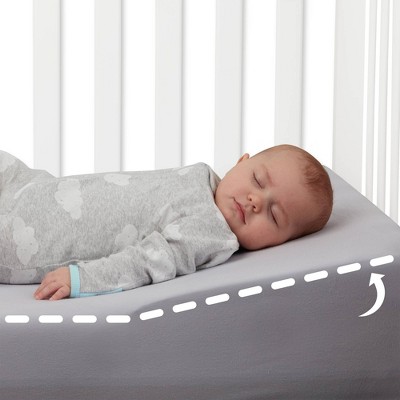
A crib wedge is a firm foam piece designed to fit under the mattress at a gentle angle. These are sold in baby stores and online, and are usually made to fit standard-size cribs.
Pros:
- Easy to use
- Designed for cribs, so usually fit well
- Most create a gentle, even incline (10–15 degrees)
Cons:
- Not all are firm enough—some can compress
- Some are too steep
- Not all are approved by safety groups
Non-obvious insight: Only use a wedge that goes under the mattress, never on top. Wedges that go above the mattress can be a suffocation risk.
2. Adjustable Crib Mattresses
Some modern crib mattresses are designed to be adjustable. These can be set to a flat or slightly inclined position, usually by changing the support structure underneath.
Pros:
- Made with safety in mind
- No need for extra products
Cons:
- More expensive
- Fewer models available
Example: The Newton Baby Mattress offers an adjustable base for slight incline.
3. Diy Methods (with Caution)
Some parents use tightly rolled towels or firm foam under the mattress to create an incline. While this is a common home solution, it’s easy to make mistakes.
Pros:
- Low cost
- Uses items you already have
Cons:
- Hard to get a stable, even incline
- Foam or towels can compress, causing uneven surfaces
- Can create unsafe gaps at the mattress edges
Pro tip: If you try this, make sure the incline is very gentle and the mattress fits tightly in the crib with no gaps.
4. Crib Level Adjustments
Some cribs have adjustable mattress heights that allow you to set one end higher than the other. This usually means modifying the crib slightly or using a crib designed for this purpose.
Pros:
- Stable incline if done properly
- No extra items needed
Cons:
- Not all cribs allow this
- Modifying a crib may void the warranty or reduce safety
Non-obvious insight: Always check with the manufacturer before making changes. Homemade modifications can be risky.
5. Specialty Products
There are specialty products like reflux wedges or sleep positioners marketed for babies. However, many of these are not considered safe by pediatricians.
Pros:
- Easy to find online
Cons:
- Many are not approved by safety groups
- Some are banned or recalled due to safety concerns
Key tip: Avoid products that promise to “hold baby in place” or “prevent rolling.” These are not safe.
Step-by-step Guide: Safely Elevating A Crib Mattress
Let’s look at how to elevate a crib mattress using the safest and most recommended method: a crib wedge under the mattress.
Step 1: Choose The Right Wedge
Select a crib wedge designed for your crib size. Look for these features:
- Firm, not soft or squishy
- Fits the width of your crib
- Made with non-toxic materials
- Creates a gentle incline (10–15 degrees)
Step 2: Prepare The Crib
Remove all loose bedding, toys, and pillows from the crib. The mattress should be bare except for a fitted sheet.
Step 3: Install The Wedge
Place the wedge at the head end of the crib, under the mattress. Make sure it is centered and lies flat, with no folds or bends.
Step 4: Check The Fit
After placing the mattress on top of the wedge, check for gaps at the sides or ends. The mattress should fit tightly against the crib rails.
Step 5: Test Stability
Gently press on the mattress to make sure it does not shift, wobble, or create soft spots. If anything feels unstable, remove the wedge and try a different method.
Step 6: Monitor Your Baby
For the first few nights, check on your baby often to make sure they stay in a safe sleeping position and do not slide down the incline.
Step 7: Adjust As Needed
If your baby seems uncomfortable or slides to the foot of the crib, the incline may be too steep. Adjust or remove the wedge as needed.
Practical example: If your baby has a cold, try using the wedge for a few nights. If symptoms improve, you can remove it when they are well.
Pros And Cons Of Each Elevation Method
To help you compare, here’s a summary of the main methods and their strengths and weaknesses:
| Method | Pros | Cons |
|---|---|---|
| Crib Wedge | Easy, fits well, gentle incline | Some are too soft/steep, must fit mattress size |
| Adjustable Mattress | Safe, built-in, no extra items | Expensive, limited models |
| DIY (Towels/Foam) | Low cost, easy to try | Risk of gaps, uneven surface, compresses easily |
| Crib Level Adjust | Stable if designed for it | Not all cribs allow, may void warranty |
| Specialty Products | Available online | Often unsafe, not recommended |
When Should You Elevate A Crib Mattress?
Elevating a crib mattress is not for every baby or every situation. Here are times when it may be helpful:
- Your pediatrician recommends it for reflux or congestion
- Your baby has a cold or stuffy nose and can’t sleep well
- Short-term use to ease breathing
When not to elevate:
- Your baby rolls over easily or is very active in sleep
- No medical reason for an incline
- Your baby is under 3 months and cannot reposition themselves
Important: Don’t use elevation for general fussiness or sleep training. The risks may outweigh the benefits for healthy babies.
Common Mistakes To Avoid
Many parents want to help their baby, but some mistakes can cause more harm than good. Avoid these common pitfalls:
- Using soft bedding or pillows under the mattress or baby. These can increase suffocation risk.
- Making the incline too steep. Babies can slide down or roll more easily.
- Loose or shifting wedges. If the wedge moves during the night, it creates an unsafe environment.
- Ignoring crib fit. Gaps between the mattress and crib sides can trap a baby’s head or limbs.
- Not checking manufacturer instructions. Some cribs are not meant to be modified.
- Adding wedges above the mattress. Only place wedges under the mattress.
How Much Elevation Is Safe?
The recommended incline is between 10 to 15 degrees. Anything steeper can cause your baby to slide down, roll, or have trouble staying in place.
Quick calculation tip: For a crib mattress 52 inches long, raising the head end by 5–7 inches creates about a 10–15 degree angle.
What Does Science Say About Crib Elevation?
Studies show that elevating a crib mattress may help with some mild reflux symptoms, but it does not prevent reflux. For congestion, a slight incline can help some babies breathe more easily. However, there is no strong evidence that crib elevation prevents SIDS or other sleep problems.
The AAP and other groups recommend a flat, firm sleep surface for most babies. Elevation should be used only if your doctor suggests it, and always with safety in mind.
Comparing Crib Mattress Elevation To Other Solutions
You may wonder if elevating the crib mattress is the best way to help your baby. Here’s how it compares to other common methods for managing reflux and congestion:
| Solution | Helps Reflux | Helps Congestion | Risks |
|---|---|---|---|
| Crib Elevation | Sometimes | Yes | Unsafe if done incorrectly |
| Holding Baby Upright | Yes | No | Must supervise closely |
| Humidifier in Room | No | Yes | Mold if not cleaned |
| Saline Drops | No | Yes | Must use correct dose |
| Medication | Yes | Sometimes | Side effects |

Credit: pbclegal.it
How To Tell If Your Baby Needs An Elevated Mattress
Watch for these signs that your baby might benefit from a slightly elevated crib mattress:
- Frequent spit-up, especially after feeding
- Trouble sleeping due to stuffy nose
- Doctor’s advice to try an incline
But if your baby is healthy and has no breathing or reflux issues, stick to a flat mattress.
Expert tip: Babies grow quickly, and what works for a newborn may not help an older infant. Monitor your child’s needs over time.
How To Choose A Safe Crib Mattress Wedge
Not all wedges are the same. Here’s what to look for when shopping:
- Firmness: The wedge should not compress under the weight of the mattress.
- Size: Make sure it matches your mattress dimensions.
- Angle: Look for a gentle angle (no more than 15 degrees).
- Non-toxic materials: Babies may chew or drool, so avoid foam with harsh chemicals.
- Easy to clean: Spit-up and drool can make wedges messy.
Practical example: Check product reviews and look for certifications from groups like JPMA (Juvenile Products Manufacturers Association).
Practical Tips For Everyday Use
- Always place your baby on their back, even on an incline.
- Use only a fitted sheet—no blankets, bumpers, or toys in the crib.
- Check the wedge and mattress daily for shifts or gaps.
- If your baby starts rolling or scooting, stop using the incline.
- Clean the wedge as needed to prevent mold or bacteria.
What To Do If Your Baby Doesn’t Like The Incline
Some babies may fuss or move more when the mattress is elevated. Try these steps:
- Double-check that the incline is gentle and stable.
- Monitor for sliding—reduce the angle if needed.
- Give your baby time to adjust, but if sleep is worse, remove the wedge.
- Talk to your pediatrician for other solutions if reflux or congestion continues.
Special Cases: Preemies And Babies With Medical Needs
If your baby was born early or has special health needs, always ask your doctor before elevating the crib. Some infants need a very specific sleep surface, and extra elevation can be risky.
Non-obvious insight: Some hospitals use special cribs with built-in incline for premature babies, but these are not the same as home cribs. Home methods may not be safe for all infants.
When To Stop Elevating The Crib Mattress
Most babies outgrow the need for an incline by 4–6 months, or once they start rolling over. At this stage:
- Return to a flat mattress for safe sleep.
- Watch for signs that your baby can move around the crib easily.

Credit: www.youtube.com
Long-term Effects And What To Watch For
There’s no evidence that a short period of crib elevation causes problems for healthy babies. However, watch for:
- Signs of muscle strain or discomfort
- Changes in how your baby sleeps
- Increased rolling or sliding at night
If you see these issues, stop using the incline.
Real Parent Experiences
Many parents report that a gentle incline helped their baby during a cold or a spell of reflux. However, others found little benefit or noticed that their baby slid down the mattress.
Example: One parent used a wedge for their baby’s congestion and saw better sleep for a week, then returned to flat sleep when the cold passed. Another parent found that their baby kept sliding, so they stopped.
Every baby is different, so monitor your child and adjust as needed.
Summary: The Right Way To Elevate A Crib Mattress
Elevating a crib mattress can help with specific issues like reflux or congestion, but it must be done carefully. Use a firm, correctly sized wedge under the mattress, keep the incline gentle (10–15 degrees), and always follow safe sleep guidelines.
Never use soft bedding or put a wedge above the mattress. If you have doubts, talk to your pediatrician.
For more on safe sleep and baby health, check resources like the American Academy of Pediatrics.
Frequently Asked Questions
How Much Should I Elevate My Baby’s Crib Mattress?
A gentle incline of 10 to 15 degrees is usually enough to help with reflux or congestion. For a standard crib mattress, this means raising the head end by about 5–7 inches. Never go steeper, as this can cause your baby to slide or roll.
Is It Safe To Put A Pillow Or Rolled Towel Under The Crib Mattress?
While many parents try this, it’s not the safest method. Pillows and towels can compress, shift, or create gaps at the edges of the mattress. It’s better to use a firm crib wedge designed for this purpose and always check that the mattress fits tightly.
Can I Use A Crib Wedge If My Baby Rolls Over?
No, it’s not safe to use a wedge or incline once your baby can roll over. At this stage, babies can move around the crib and may end up in unsafe positions on the incline. Return to a flat, firm sleep surface as soon as your baby starts rolling.
Does Elevating The Crib Mattress Help With Sids?
No, elevating the mattress does not prevent Sudden Infant Death Syndrome (SIDS). The best way to reduce SIDS risk is to place your baby on their back on a flat, firm mattress with no soft bedding or toys.
When Should I Stop Elevating The Crib Mattress?
Stop using an incline when your baby outgrows reflux or congestion symptoms, or as soon as they can roll over (usually by 4–6 months). At this point, a flat mattress is safest for sleep.
With the right approach, elevating your crib mattress can be safe and helpful for your baby’s comfort. Always prioritize safety, watch your baby’s response, and consult your pediatrician with any concerns.
Credit: www.target.com