
Vinyl plank flooring has become a favorite for homeowners and professionals. It offers the look of real wood, strong durability, and is easier to install than hardwood. But when it comes to stairs, many people pause. Laying vinyl plank on a flat floor is one thing—doing steps with vinyl plank flooring is another challenge.
If you want a beautiful, long-lasting finish on your stairs, you need to understand the right steps, tools, and tricks. This guide will walk you through every detail, from planning to finishing touches, so you can tackle your stair project with confidence.
Why Use Vinyl Plank Flooring On Stairs?
Vinyl plank flooring is a top choice for stairs because it’s tough, water-resistant, and looks great. Unlike carpet, it doesn’t trap dust and allergens. Unlike hardwood, it’s more affordable and less likely to scratch or dent. Many brands now make matching stair noses and trims so your stairs can flow perfectly with your floor. It’s also easier to clean, especially in high-traffic areas.
But it’s not just about looks. Vinyl planks are designed to handle heavy use. Stairs get a lot of foot traffic, and vinyl holds up better than laminate or engineered wood in many cases. Plus, you can install it yourself if you have a bit of patience and the right instructions.
Tools And Materials You’ll Need
Before you start, make sure you have all the tools and materials. Missing one small item can slow down your project or cause mistakes. Here’s a complete list:
- Vinyl plank flooring (enough for all steps and risers)
- Stair nose pieces (matching your planks)
- Adhesive (check manufacturer recommendations: Pressure-sensitive or construction adhesive)
- Measuring tape
- Pencil and notepad
- Utility knife
- Miter saw (or handsaw with a miter box)
- Jigsaw (for tricky cuts or around posts)
- Rubber mallet
- Pull bar
- Tapping block
- Level
- Square
- Chalk line
- Pry bar (if removing old flooring)
- Safety gear (gloves, goggles, knee pads)
- Vacuum or broom
- Caulk and caulk gun (for finishing)
- Painters tape (optional, for protecting walls)
Some beginners forget to buy stair noses or use the wrong adhesive. Not all adhesives are safe for vinyl—some can damage the planks over time. Always check the product label.
Credit: www.lxhausys.com
Planning Your Stair Project
Before cutting or gluing anything, proper planning saves time and reduces mistakes. Stairs are a small but complex area, and every step is slightly different in size.
Measure Each Step Carefully
Stair treads (the part you step on) and risers (vertical faces) are rarely exactly the same size. Measure each one:
- Width (left to right)
- Depth (front to back)
- Height (for risers)
Write down every measurement. Number your steps from bottom to top so you don’t mix up planks later.
Calculate How Much Material You Need
A common mistake is underestimating how much plank and trim you need. For each step, you’ll need:
- 1 plank (or more) for the tread
- 1 plank (or more) for the riser
- 1 stair nose
Add 10–15% extra for mistakes and cuts, especially if you’re new to DIY.
Here’s an example for a standard staircase:
| Number of Steps | Tread Planks Needed | Riser Planks Needed | Stair Noses | Recommended Extra (%) |
|---|---|---|---|---|
| 12 | 12–24 (depends on width) | 12–24 | 12 | 15% |
Check Your Subfloor
The surface under your old flooring matters. Vinyl needs a solid, clean, dry subfloor. If your stairs are uneven, squeaky, or damaged, fix these issues first. Loose treads or risers will make your vinyl shift and could be dangerous.
Common subfloor materials:
- Plywood: Great for vinyl planks.
- Concrete: Needs to be dry and level.
- Old hardwood: Remove nails and smooth out bumps.
If you’re covering carpeted stairs, all carpet, padding, and staples must come out.
Removing Old Flooring And Prepping The Stairs
Getting your stairs ready is just as important as the installation. Rushing prep work can lead to problems later.
Steps To Remove Old Flooring
- Pry off any carpet, tack strips, and padding. Use a pry bar and wear gloves.
- Remove old wood, laminate, or tile using a pry bar and hammer.
- Pull all nails, screws, and staples from the steps.
- Clean up any glue residue with a scraper. For stubborn glue, use a heat gun or adhesive remover (make sure it’s safe for your subfloor).
- Sweep or vacuum everything. Any debris can cause bumps under your vinyl.
Repair And Level The Subfloor
- Fill holes or cracks with wood filler or leveling compound.
- Sand down high spots so each tread is flat.
- Check for squeaky steps—usually, screwing the tread down tight will fix this.
If the stairs are very uneven, consider adding a thin plywood underlayment.
Dry Fit Your Planks
Before gluing, cut and fit your planks for each step. Lay them in place (without adhesive) to check the fit. Mark any adjustments with a pencil. This dry fit helps you avoid surprises during installation.
Cutting Vinyl Planks For Steps
Vinyl plank flooring is easier to cut than hardwood, but accuracy is still key, especially on stairs.
Measuring And Marking
- Use your measurements from earlier.
- Mark the cut lines on the back of the plank with a pencil.
- If your steps are not perfectly square, use a template. Cardboard works well for tracing tricky shapes.
Cutting Tools And Techniques
- Utility knife: Score the plank deeply, then snap it over a hard edge.
- Miter saw: For fast, straight cuts.
- Jigsaw: For curves or notches around posts and railings.
Always cut slightly long and test fit—trim more if needed. A tight fit looks better and wears longer.
Cutting The Stair Nose
Stair noses must fit perfectly on the edge. Measure the width of each step carefully. Some stair noses come in long pieces you can cut to size; others are pre-cut.
Tip: Cut all the pieces for one step before moving to the next. This keeps your workflow organized.
Installing The Riser Planks
Start with the risers before the treads. This order hides the edge of the riser under the tread, making a cleaner finish.
Applying Adhesive
Most brands recommend construction adhesive for risers. Apply a zig-zag bead on the back of the plank, then press it firmly into place.
- Hold for 30–60 seconds.
- Use painters tape if the plank slips while the glue dries.
Checking For Level
Place a small level on the riser to make sure it’s straight. If the wall behind is uneven, use shims or a thicker bead of adhesive to fill gaps.
Finishing The Top Edge
The top of the riser should be hidden by the tread above. If there’s a gap, fill it with color-matched caulk for a seamless look.
Installing The Tread Planks
After all risers are in place, move on to the treads.
Adhesive Application
Vinyl planks on treads need strong, even glue. Use the right adhesive for your brand—some types need full coverage, others just beads. Read the instructions for your flooring.
- Spread adhesive evenly.
- Press the plank into place, making sure it’s tight to the back and sides.
- Use a tapping block and rubber mallet to seat the plank.
Dealing With Overhangs
Some stairs have a nose that sticks out. You’ll need to cut this back so your stair nose trim sits flat. Use a handsaw or oscillating tool to cut flush with the riser.
Pro tip: Beginners often forget to account for stair nose thickness. If you don’t trim the old overhang, your new nose will stick out awkwardly.
Installing The Stair Nose
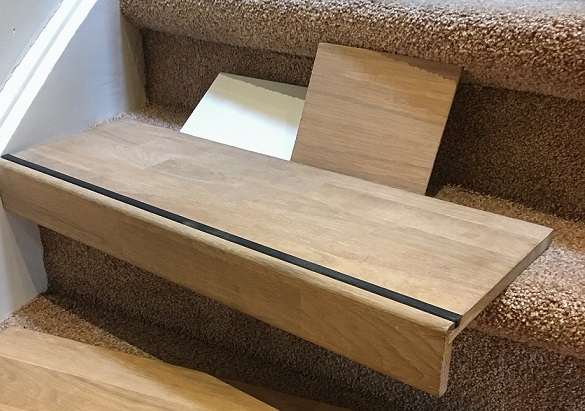
The stair nose is the most important trim piece. It protects the edge, adds grip, and finishes the look.
Types Of Stair Nose
- Overlap: Sits over the edge of the tread.
- Flush mount: Sits even with the tread for a seamless look.
Check your vinyl plank brand—some only work with their matching nose.
How To Install
- Measure and cut the stair nose to the exact width.
- Dry fit to check the alignment.
- Apply adhesive to the back and the edge of the tread.
- Press the stair nose into place, making sure it’s snug with the tread and riser.
- Use painters tape to hold while it dries.
If your stair nose has predrilled holes, use the included fasteners. Cover screw heads with color-matched filler for a clean finish.
Common Mistakes To Avoid
- Using the wrong stair nose profile
- Not allowing adhesive to set fully before use
- Not aligning the nose perfectly with the tread

Credit: www.flooringinc.com
Finishing Touches And Caulking
After all pieces are installed, inspect every step. Look for gaps, loose edges, or sharp corners.
Caulking
Use color-matched caulk (from your vinyl plank brand, if available) to fill any gaps between planks, nose, and wall. This keeps dirt and water out and gives a pro finish.
- Apply caulk in a thin, even bead.
- Smooth with a damp finger or caulk tool.
- Wipe away excess with a damp cloth.
Cleaning Up
Remove all painters tape after the adhesive sets (usually 24 hours). Vacuum the stairs to pick up dust and scraps. Test each step for any movement—if a plank shifts, add more adhesive underneath.
Let Adhesive Cure
Don’t walk on your new stairs for at least 24 hours, unless the adhesive says otherwise. Full cure can take 48–72 hours for some products.
Comparing Vinyl Plank To Other Stair Materials
Is vinyl plank the best choice for your stairs? Here’s a quick comparison:
| Material | Durability | Water Resistance | Ease of Installation | Cost |
|---|---|---|---|---|
| Vinyl Plank | High | Excellent | Moderate | $$ |
| Hardwood | Medium-High | Poor | Difficult | $$$$ |
| Laminate | Medium | Fair | Moderate | $$ |
| Carpet | Low | Poor | Easy | $ |
| Tile | High | Excellent | Difficult | $$$ |
Vinyl plank often wins for cost and water resistance. Hardwood is classic but expensive and slippery. Laminate is cheaper but less tough. Carpet is affordable but wears out faster. Tile is strong but tricky on stairs.
Maintenance And Safety Tips
Once your stairs are finished, a few simple steps will keep them looking new:
- Sweep or vacuum often to remove grit that can scratch the surface.
- Wipe up spills right away—while vinyl is water-resistant, standing water can hurt adhesive.
- Use gentle cleaners. Avoid wax, ammonia, or harsh chemicals. Use a vinyl-safe cleaner.
- Check stair noses every few months. If any piece becomes loose, re-glue or fasten it.
- Add anti-slip pads if stairs are slippery, especially if children or elderly will use them.
Non-obvious insight: Some homeowners forget that shoes with hard heels (like stilettos) can dent even tough vinyl. It’s smart to set a “no high heels” rule for your new stairs.
Common Mistakes And How To Avoid Them
Even careful DIYers run into problems with stair projects. Here are the top mistakes and how to avoid them:
1. Not Planning Enough Material
Many first-timers underestimate waste on stairs. With all the small cuts, you’ll use more planks than you think. Always buy extra—returns are better than running out mid-project.
2. Using The Wrong Adhesive
Some adhesives react with vinyl and can cause planks to bubble or shift. Double-check the label: it must say “safe for vinyl” or be recommended by your flooring brand.
3. Skipping Subfloor Repairs
Loose treads, squeaks, and uneven risers will show through and can even make your stairs unsafe. Fix all issues before installing planks.
4. Poor Stair Nose Fit
If the stair nose doesn’t fit flush, you’ll have a trip hazard. Dry fit and adjust until it’s perfect.
5. Not Letting Adhesive Cure
Walking on new stairs too soon can ruin your hard work. Always wait the full cure time, even if it’s inconvenient.

Credit: www.youtube.com
Sample Step-by-step Process For One Stair
Let’s walk through the process for a single step, so you see how all the pieces fit together:
- Cut the riser plank to exact width and height.
- Apply adhesive on the back of the riser plank.
- Press riser into place, check with level, and tape if needed.
- Cut tread plank to fit the depth and width of the step.
- Apply adhesive on the subfloor of the tread.
- Press tread plank down tightly against the riser.
- Cut and fit stair nose to the width of the step.
- Apply adhesive to the stair nose and edge of tread.
- Press stair nose into place, tape to hold if needed.
- Fill small gaps with color-matched caulk.
- Clean up and let the adhesive cure.
Repeat for each step, working from bottom to top.
Hidden Challenges Beginners Miss
Some obstacles catch beginners off guard:
- Uneven stairs: Older homes rarely have perfectly sized steps. Each one may need custom cuts.
- Open sides or spindles: Cutting around railings or posts takes more time and care.
- Transitions at top and bottom: Blending your new steps with old flooring or a landing often needs extra trim or creative cuts.
Pro tip: If you’re nervous about the first step, practice your cuts and adhesive on the bottom step, where mistakes are less visible.
How Long Does It Take To Install Vinyl Plank On Stairs?
A typical 12-step staircase takes a skilled DIYer about 6–10 hours (spread over two days to allow for adhesive drying). Beginners may take longer—plan for a full weekend. Don’t rush. Quality matters more than speed.
Here’s a quick time estimate:
| Task | Time Needed (per step) | Total (12 steps) |
|---|---|---|
| Remove old flooring | 10 min | 2 hrs |
| Prep and clean | 5 min | 1 hr |
| Cut and dry fit | 10 min | 2 hrs |
| Install riser | 5 min | 1 hr |
| Install tread | 10 min | 2 hrs |
| Install stair nose | 5 min | 1 hr |
| Caulk, clean, inspect | 5 min | 1 hr |
| Total | 10 hrs |
If you have complex stairs, landings, or posts, add extra time.
When To Call A Pro
DIY is rewarding, but not always practical. Call a professional if:
- Stairs are badly damaged or very uneven
- You have curved or winding stairs
- You want a perfect finish but lack tools
Hiring a pro costs more (around $40–$80 per step in the US), but can save you frustration and prevent safety issues.
Where To Find Help And More Resources
If you need extra advice, check your vinyl plank manufacturer’s website for installation videos and guides. Community forums and YouTube tutorials can also help, but always follow the instructions for your specific brand.
For building codes and stair safety, see the official National Association of Home Builders page.
Frequently Asked Questions
How Do I Make Vinyl Plank Stairs Less Slippery?
Vinyl can be slippery, especially with socks. Add anti-slip stair treads or strips to each step. Choose clear or color-matched types for a discreet look. Some vinyl brands offer textured stair noses for extra grip.
Can You Use Click-lock Vinyl Planks On Stairs?
Most stair installations use glue-down vinyl, not floating or click-lock. Click-lock planks can move or shift on stairs. Always check your flooring brand’s instructions—some have special stair nose pieces for click-lock.
What’s The Best Way To Cut Vinyl Planks For Stairs?
For straight cuts, a utility knife works well—score and snap. For curves or notches, use a jigsaw with a fine-tooth blade. Always measure twice and cut once to avoid waste.
Do I Need Underlayment On Stairs With Vinyl Plank?
Usually, no. Underlayment is for flat floors to add cushion and reduce sound. On stairs, it can make the planks unstable. Install directly on the subfloor for best results.
How Do I Finish The Sides Of Open Stairs With Vinyl Plank?
Use matching stair trim or bullnose pieces for exposed sides. Cut planks to fit tightly against the edge, then cover with trim for a clean look. Some brands make special pieces for open-sided stairs.
Bringing vinyl plank flooring up your stairs is a smart way to create a modern, seamless look throughout your home. With careful planning, attention to detail, and the right tools, you can achieve a professional finish—even as a DIYer. Tackle one step at a time, and soon you’ll have stairs that look great and last for years.