
Cleaning a cast iron BBQ griddle is not just about removing food bits and grease. It’s about protecting your investment, keeping food safe, and making sure every meal tastes great. Many people feel unsure about how to clean cast iron because it’s different from other cookware.
Some worry about rust, losing seasoning, or even damaging the griddle. The truth is, with the right steps, cleaning a cast iron BBQ griddle is simple and rewarding.
In this complete guide, you’ll discover everything you need to know to clean your cast iron BBQ griddle properly. This includes step-by-step instructions, tips to avoid common mistakes, and expert advice for both new and experienced grillers. Whether your griddle is lightly used or covered in burnt-on food, you’ll learn how to restore it to its best condition.
Why Proper Cleaning Matters
A cast iron BBQ griddle is special because of its ability to hold heat and create unique flavors. But cast iron also needs care. If you don’t clean it the right way, you might face problems like:
- Rust forming on the surface
- Loss of seasoning (the natural non-stick layer)
- Off flavors in your food
- Shortened lifespan of the griddle
Seasoning is a natural layer of fat baked onto the iron. It prevents food from sticking and protects from rust. Cleaning with the wrong method can strip this layer away, making the griddle harder to use.
Many beginners think all they need is soap and water, but that can do more harm than good. Let’s look at how to clean your griddle without ruining its best qualities.
Tools And Materials You’ll Need
Before you start, gather the right tools. Having everything ready makes the process smooth and avoids mistakes.
- Stiff-bristled brush or scraper (nylon or stainless steel)
- Chainmail scrubber (for tough residue)
- Paper towels or clean cloths
- Coarse salt (like kosher salt)
- Hot water
- Vegetable oil (or canola, flaxseed oil)
- Tongs (to hold towels for wiping)
- Heat-resistant gloves
- Plastic scraper (safe for seasoning)
You do not need harsh chemicals or scouring pads. In fact, they can damage your griddle’s seasoning.

Credit: www.youtube.com
Step-by-step Cleaning Process
Cleaning your cast iron BBQ griddle can be broken into a simple routine. Let’s walk through each step in detail.
1. Cool Down, But Not Completely
Let the griddle cool for about 10-15 minutes after cooking. It should be warm, not hot. Cleaning while warm helps remove food more easily. If it’s cold, stuck-on food is harder to remove.
2. Scrape Off Food Bits
Use a stiff-bristled brush or a plastic scraper to gently remove any food pieces. Hold the griddle steady and scrape in one direction. Avoid metal brushes if you want to keep the seasoning.
For tough spots, a chainmail scrubber works well. It’s gentle on seasoning but tough on stuck food.
3. Use Hot Water (no Soap)
Rinse the griddle under hot water. The heat helps loosen grease and food. Use your brush or chainmail to scrub the surface. Do not soak the griddle in water, as it can cause rust.
If you feel you must use soap, choose a very mild one and use only a small amount. Most of the time, it’s better to avoid soap completely.
4. Salt Scrub For Stubborn Stains
Sometimes, bits of burnt food stay on. Pour a tablespoon of coarse salt onto the griddle. Use a paper towel or cloth to scrub the salt around. The salt acts like a gentle abrasive, lifting off food without harming the seasoning.
Wipe away the dirty salt with a clean towel.
5. Dry Thoroughly
After cleaning, dry the griddle right away. Water can cause rust within minutes on bare iron. Use paper towels or a clean cloth to dry it completely.
For best results, place the griddle back on low heat for 5 minutes. This evaporates any hidden moisture.
6. Oil The Surface
When dry and warm, add a thin layer of vegetable oil. Use a clean paper towel to spread the oil evenly over the entire surface, including the sides and corners. This restores the seasoning and protects against rust.
Be careful not to use too much oil. The surface should look shiny, not greasy.
7. Store Properly
Let the griddle cool down fully, then store it in a dry place. If stacking with other cookware, place a paper towel between items to avoid scratching the surface.
Special Cleaning Scenarios
Sometimes, you’ll face cleaning challenges that need extra care. Here’s how to handle them.
Removing Heavy Rust
If your griddle has heavy rust, don’t panic. Rust can usually be removed, but you’ll need to re-season the griddle afterward.
- Scrub the rusted area with a steel wool pad or chainmail.
- Rinse with hot water and dry thoroughly.
- If rust remains, sprinkle with coarse salt and scrub again.
- Rinse, dry, and apply a thin coat of oil.
- Place the griddle in a hot oven (450°F) for 1 hour to bake on the new seasoning.
Repeat the oiling and heating step 2-3 times for deep rust.
Tackling Stuck-on Grease
For thick, sticky grease:
- Heat the griddle until warm.
- Scrape off as much as possible.
- Sprinkle coarse salt, then scrub with a paper towel.
- Rinse with hot water and dry.
Grease can build up if the griddle is not cleaned after every use.
Burnt-on Food
If food is badly burnt, try this trick:
- Pour a small amount of water onto the warm (not hot) griddle.
- Let it sit for 2-3 minutes.
- Scrape gently with a plastic scraper.
- Dry and oil as usual.
Do not use vinegar or acidic cleaners. They can damage the seasoning.
How Often Should You Clean A Cast Iron Bbq Griddle?
Clean your griddle after every use. Even if it looks clean, small bits of food and oil can build up and cause problems later.
For heavy use, deep clean once a month. Deep cleaning means removing all food and oil, checking for rust, and applying a fresh layer of seasoning.
Frequent cleaning keeps your griddle in top shape and prevents rust and odors.
What To Avoid When Cleaning Cast Iron
Many common cleaning habits can harm your griddle. Here’s what not to do:
- Never soak in water: It causes fast rusting.
- No dishwasher: The detergent and water ruin seasoning.
- Avoid harsh soaps: They strip the non-stick layer.
- Don’t use steel scouring pads often: They scratch the surface.
- No acidic cleaners: Vinegar or lemon juice eats away seasoning.
- Don’t air dry: Water droplets lead to rust.
Remember, cast iron is tough but needs gentle, smart care.
Comparison: Cast Iron Vs. Other Bbq Griddle Materials
Understanding how cast iron compares to other materials helps you appreciate its strengths and unique cleaning needs.
| Feature | Cast Iron | Stainless Steel | Non-Stick Aluminum |
|---|---|---|---|
| Heat Retention | Excellent | Moderate | Low |
| Seasoning Required | Yes | No | No |
| Dishwasher Safe | No | Yes | Yes |
| Rust Risk | High if wet | Low | Low |
| Durability | Very High | High | Moderate |
| Cleaning Difficulty | Medium | Easy | Easy |
Cast iron needs more care but rewards you with better cooking results and long life.
How To Restore Lost Seasoning
If your griddle looks dull, sticky, or has bare spots, you’ve lost some seasoning. Here’s how to bring it back.
- Clean the griddle thoroughly using the steps above.
- Dry completely and rub a very thin layer of oil over all surfaces.
- Place the griddle upside down in an oven set to 450°F.
- Bake for one hour. Place foil on a lower rack to catch drips.
- Turn off the oven and let the griddle cool inside.
You may need to repeat this process 2-3 times for a smooth, shiny surface.
Pro tip: Use flaxseed oil for the first layer of seasoning. It creates a strong, durable finish.
Tips For Preventing Rust
Rust is the main enemy of cast iron. Here’s how to keep it away:
- Always dry your griddle right after washing.
- Oil the surface after every use.
- Store in a dry place, never outdoors.
- Use your griddle often. The more you cook, the better the seasoning.
If you live in a humid area, add a packet of silica gel nearby to absorb moisture.
Deep Cleaning: When And How
Deep cleaning is needed if your griddle is:
- Sticky or gummy
- Covered in black flakes
- Has a metallic smell
- Food sticks badly
To deep clean:
- Scrub with a chainmail or steel wool to remove old seasoning.
- Rinse and dry completely.
- Re-season as described above.
Deep cleaning is not needed after every use. Once every few months is enough for most users.

Credit: www.amazon.com
Common Beginner Mistakes And How To Avoid Them
Many people new to cast iron make the same errors. Here’s what to watch out for:
- Using too much oil: Leaves a sticky surface. Always wipe off excess.
- Not drying right away: Causes rust. Always heat-dry.
- Scrubbing with harsh pads: Damages the non-stick layer.
- Using strong soap: Strips seasoning, making food stick.
- Ignoring small rust spots: They grow quickly. Remove immediately.
Expert tip: If you see rust, don’t wait. Scrub it off, dry, and oil right away.
Cleaning After Cooking Different Foods
Certain foods leave more residue and odors. Here’s how to handle them:
After Cooking Fish
Fish oils and smells can remain. Scrub with salt and rinse well. Oil lightly after drying.
After Cooking Acidic Foods
Tomato-based dishes or BBQ sauce can strip seasoning. Clean quickly and re-oil. If seasoning looks dull, re-season in the oven.
After Cooking Sugary Foods
Sugar can burn and stick. Use the water and scraper method while the griddle is still warm. Avoid letting sugar sit for long.
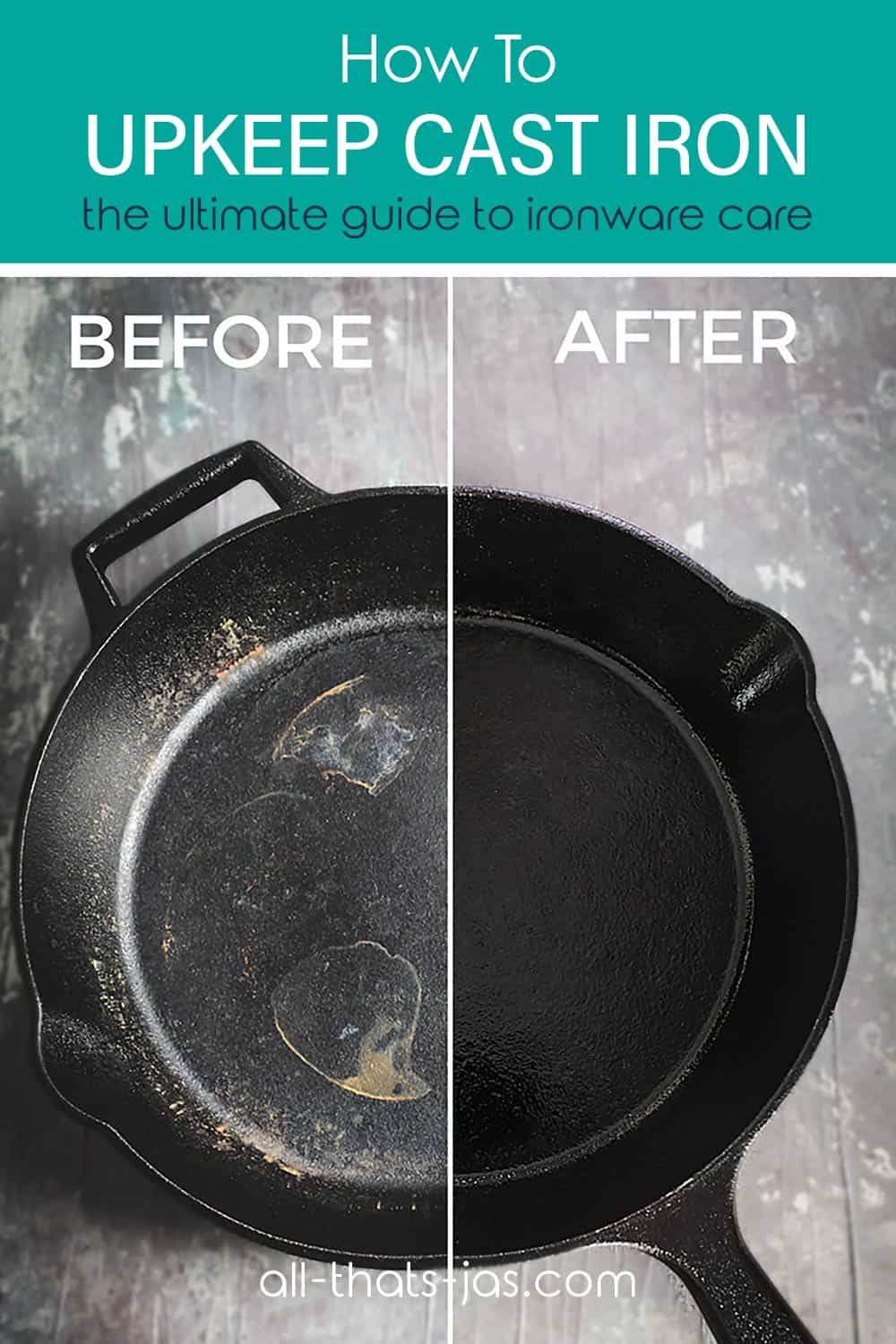
Credit: www.all-thats-jas.com
Storage Tips For Cast Iron Bbq Griddles
Proper storage extends the life of your griddle.
- Store in a dry cupboard or on a rack.
- Place a paper towel inside to absorb moisture.
- Never leave outside, even under a grill cover.
- If stacking, place cloth or paper between items.
For long-term storage, oil the griddle slightly before putting away.
Maintaining A Cast Iron Bbq Griddle In Humid Or Coastal Areas
Humidity and salty air speed up rust. Take extra precautions:
- Dry with heat after every use.
- Oil the surface more often.
- Store in a sealed container if possible.
- Use silica gel packs to absorb moisture.
If rust appears, act quickly to remove it.
How To Clean A Cast Iron Griddle After Outdoor Bbq Parties
After a big BBQ, your griddle may be especially dirty. Here’s a fast, effective routine:
- Scrape off food bits while the griddle is still warm.
- Sprinkle coarse salt and scrub with a paper towel.
- Rinse briefly with hot water.
- Dry with a towel, then heat for 5 minutes.
- Oil the surface and let cool before storing.
If you need to clean more than one griddle, set up a cleaning station with brushes, salt, and towels.
Table: Best Oils For Seasoning Cast Iron
Choosing the right oil helps your griddle last longer and stay non-stick.
| Oil Type | Smoke Point (°F) | Recommended For |
|---|---|---|
| Flaxseed Oil | 225 | Best for initial seasoning |
| Canola Oil | 400 | Everyday use |
| Vegetable Oil | 400 | Everyday use |
| Grapeseed Oil | 420 | High-heat cooking |
| Crisco (Shortening) | 360 | Budget option |
Flaxseed oil is perfect for building the first layers of seasoning. For daily care, canola or vegetable oil works well.
How To Clean A Cast Iron Bbq Griddle On The Grill
Sometimes, you can clean your griddle right on the BBQ.
- After cooking, turn the grill to high with the griddle on top.
- Close the lid and let heat burn off food bits for 10 minutes.
- Use a grill brush to scrape off residue.
- Let cool, then oil as usual.
This method is quick but don’t use it for deep cleaning.
How To Tell If Your Griddle Needs Re-seasoning
Signs your griddle needs new seasoning:
- Food sticks easily
- Dull, gray patches
- Surface feels rough
- Rust spots appear
If you see these, clean and re-season as soon as possible.
Essential Maintenance Habits
Here are simple habits to keep your cast iron BBQ griddle in perfect shape:
- Clean after every use, even if it looks clean.
- Oil lightly after each cleaning.
- Store in a dry place.
- Use often; regular cooking improves seasoning.
Avoid long periods without use. If storing for months, oil and wrap in paper.
How To Clean A Cast Iron Griddle While Camping
When outdoors, resources are limited. Here’s a camping-friendly routine:
- Scrape with a wooden spatula after cooking.
- Sprinkle sand or clean dirt to scrub, then wipe clean.
- Rinse with hot water from the kettle if available.
- Dry over the campfire.
- Rub with oil using a paper towel or cloth.
Never leave the griddle wet or dirty overnight in the wild.
Environmental Impact: Cast Iron Vs. Non-stick Griddles
Cast iron is a sustainable choice. It lasts for decades with proper care. Non-stick surfaces wear out and end up in landfills. Cast iron can be recycled or restored.
A well-maintained cast iron griddle often becomes a family heirloom. With good care, it’s possible for your griddle to last over 100 years.
Key Takeaways For Beginners
- Clean with hot water, not soap.
- Use salt for tough spots.
- Dry immediately and oil after each use.
- Store dry and protected from humidity.
- Re-season if food starts sticking.
These habits make cast iron care easy and effective.
Non-obvious Insights Most Beginners Miss
First insight: If your cast iron griddle develops a sticky surface, it’s usually from too much oil, not too little. Always use a thin layer and wipe off excess before heating.
Second insight: Cooking fatty foods (like bacon) can actually help build seasoning. Don’t be afraid to cook with oil-rich foods in a new or freshly cleaned griddle.
Frequently Asked Questions
How Do I Remove Sticky Residue From My Cast Iron Bbq Griddle?
Sticky residue is often leftover oil that hasn’t bonded to the iron. Scrub with coarse salt and hot water. If it remains, heat the griddle in the oven at 450°F for an hour to burn off excess oil, then wipe clean and re-season.
Can I Use Soap To Clean My Cast Iron Griddle?
It’s best to avoid soap, but a small amount of mild soap is okay if absolutely needed. Rinse thoroughly, dry, and re-oil right away. Frequent soap use can strip seasoning.
What Should I Do If My Griddle Starts To Rust?
Remove rust with a chainmail scrubber or steel wool. Rinse, dry, and re-season in the oven. Rust is common but easy to fix if caught early.
Is It Safe To Cook On A Rusty Cast Iron Griddle?
No. Cooking on rust can cause off flavors and is not healthy. Clean off all rust, dry, and season before using again.
Where Can I Learn More About Cast Iron Care?
For more in-depth information and tips, visit the official Lodge Cast Iron care guide.
Taking care of your cast iron BBQ griddle may seem like extra work, but it rewards you with great cooking and a tool that lasts for generations. With these steps and tips, your griddle will always be ready for the next BBQ.