
Baking a two-tier cake is exciting but can feel challenging if you’re not sure about the right pan sizes. The size of each cake tier matters for baking even layers, creating a stable structure, and making a cake that looks beautiful at any party. Whether you’re making a birthday cake, wedding cake, or a special dessert, choosing the correct cake pan size for a two tier cake is the first step to success. In this guide, you’ll find everything you need to know—from standard pan sizes and servings to expert tips that help your cake look and taste amazing.
Why Cake Pan Size Matters For A Two Tier Cake
If you’re new to tiered cakes, you might wonder why pan size is such a big deal. The answer is simple: pan size controls the look, structure, and serving size of your cake. If tiers are too close in size, the cake may look odd or unstable. If they’re too far apart, serving becomes difficult and the cake may not look balanced.
For example, a classic two-tier cake usually has a 2-inch to 4-inch difference between the bottom and top tiers. This difference helps each tier stand out. The right pan size also ensures your cake layers bake evenly, so you don’t end up with raw centers or burnt edges. Using the wrong pan can lead to wasted ingredients and a cake that’s hard to assemble.
Standard Two Tier Cake Sizes And Servings
Most two-tier cakes are made for small to medium gatherings—think birthdays, anniversaries, or intimate weddings. The two most popular combinations are:
- 6-inch top tier and 8-inch bottom tier
- 8-inch top tier and 10-inch bottom tier
Why these sizes? They’re easy to handle, look visually pleasing, and fit most oven sizes. Here’s a quick look at how many servings you get from each:
| Top Tier Size | Bottom Tier Size | Total Servings | Best For |
|---|---|---|---|
| 6-inch | 8-inch | 24-30 | Small parties |
| 8-inch | 10-inch | 38-45 | Medium gatherings |
| 5-inch | 7-inch | 18-22 | Intimate events |
Non-obvious insight: Many home bakers forget to include the cake’s height when planning servings. Standard cake layers are about 2 inches tall. If you make taller layers (like 3 or 4 inches), you can get more servings from each tier by cutting thinner slices.
How To Choose The Right Pan Sizes For Your Two Tier Cake
1. Decide How Many People You Need To Serve
Start by knowing your guest count. A 6”/8” two-tier cake serves about 24-30 people with party-size slices. If you need more, consider an 8”/10” combo or add more tiers.
2. Maintain A 2-inch Difference Between Tiers
For the best look and stability, use a 2-inch difference between each tier. For example, if your bottom tier is 8 inches, the top should be 6 inches.
Expert tip: Avoid using pans that are only 1 inch apart; the cake will look odd, and stacking will be tricky.
3. Consider Cake Height
Most bakers use pans that are 2 inches high. If you want a taller, elegant cake, choose pans that are 3 or 4 inches deep. Just remember: deeper cakes need longer baking times.
4. Match Serving Size To Occasion
- For a birthday party (15-20 people): 5” and 7” tiers are perfect.
- For a wedding (40-50 people): 8” and 10” tiers work well.
- For a small family event: Consider smaller combos like 4” and 6”.
5. Pan Shape Makes A Difference
Round pans are the most common, but square pans give more servings per size. For the same diameter, a square pan yields about 25% more cake than a round one.
Non-obvious insight: If you want more servings without making your cake look much bigger, switch to square pans for one or both tiers.
Common Pan Size Combinations For Two Tier Cakes
Below are some tried-and-true combinations that bakers use around the world. Each has its own look and number of servings.
Classic Combination: 6” And 8” Round Pans
- Servings: 24-30
- Why choose this? It’s easy to handle, fits most ovens, and gives a balanced look.
Small Party: 5” And 7” Pans
- Servings: 18-22
- Best for: Small family gatherings or when you want a petite cake.
Medium Gathering: 8” And 10” Pans
- Servings: 38-45
- Why choose this? Great for weddings, larger birthdays, or corporate events.
For More Height: 4” And 6” Tall Pans
- Servings: 12-16 (but with tall, dramatic layers)
- Best for: When you want a small cake that really stands out.
Square Pan Combo: 6” And 8” Squares
- Servings: 36-42
- Why choose this? Maximizes servings with the same footprint.
Heart Or Specialty Shape: 6” And 8” Heart Pans
- Servings: 22-28
- When to use: Anniversaries, Valentine’s Day, or themed events.
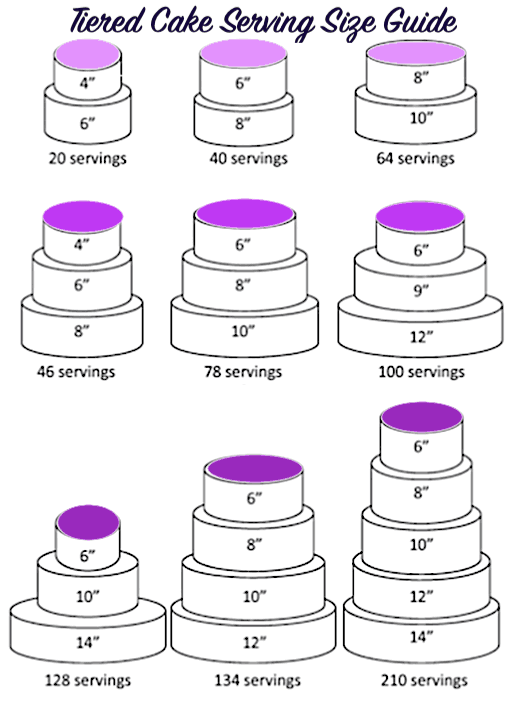
Credit: chelsweets.com
Comparing Different Pan Sizes And Servings
To help you see the differences clearly, here’s a comparison of common two-tier cake pan combinations:
| Top Tier | Bottom Tier | Shape | Estimated Servings |
|---|---|---|---|
| 6-inch | 8-inch | Round | 24-30 |
| 8-inch | 10-inch | Round | 38-45 |
| 6-inch | 8-inch | Square | 36-42 |
| 5-inch | 7-inch | Round | 18-22 |
| 4-inch | 6-inch | Round (Tall) | 12-16 |
Note: The servings above are for standard party-size slices (about 1.5” x 2”).
The Science Behind Pan Size And Baking
Choosing the right cake pan size isn’t just about looks—it’s also about how the cake bakes. If your batter is too deep or too shallow, you’ll end up with uneven baking.
Why Depth Matters
- Shallow pans (2-inch deep): Bake faster but dry out easily.
- Deep pans (3-4 inches): Bake slower but give tall, moist layers.
If you use a deep pan, reduce the oven temperature by 25°F and bake longer. This prevents burning the outside before the inside is done.
Batter Quantity For Each Pan
One beginner mistake is using the same batter amount for all pans. Here’s a simple guide for a 2-inch tall pan:
- 6-inch round pan: 3 cups batter
- 8-inch round pan: 5 cups batter
- 10-inch round pan: 7 cups batter
Fill your pan about 2/3 full for the best rise. Overfilling causes overflow, and underfilling makes flat, dense layers.
Baking Time And Temperature
- Smaller pans (6-inch): 25-30 minutes at 350°F
- Larger pans (8-10 inch): 35-45 minutes at 350°F
Check for doneness with a toothpick—if it comes out clean, your cake is ready.
Practical tip: If you’re baking both tiers together, put the smaller pan on the lower rack and remove it first, since it bakes faster.
How To Stack And Support Two Tier Cakes
The beauty of a two-tier cake is the height and elegance it brings. But to keep your cake safe and stable, you need the right support system.
Using Cake Boards
- Place each tier on a cake board that matches the size of the cake.
- Boards help you move tiers easily and keep the bottom cake from getting squished.
Adding Dowels For Structure
- Insert dowels (wooden or plastic sticks) into the bottom tier before stacking.
- Use at least three dowels for a 6-inch cake and four for an 8-inch or larger.
- Cut dowels so they are level with the cake’s surface.
Stacking The Tiers
- Gently lift the top tier (on its board) and set it on the doweled bottom tier.
- Press lightly to secure.
Expert guidance: Never stack a tiered cake without dowels and boards, even if your cake seems firm. Without support, the bottom tier can collapse.
Adapting Recipes For Different Pan Sizes
Many cake recipes are written for one pan size. If you want to make a two-tier cake, you’ll need to adjust the recipe.
How To Scale Your Recipe
- Calculate the area of each pan. For a round pan, area = π × radius².
- Divide the area of your new pan by the area in the original recipe.
- Multiply all ingredients by this number.
Example: Your recipe is for an 8-inch round (about 50 square inches). You want to bake a 6-inch tier (about 28 square inches). 28 ÷ 50 = 0.56. Multiply all ingredients by 0.56 for the smaller tier.
Non-obvious insight: Scaling recipes is not always perfect for baking powder/soda—err on the lower side, as too much can make cakes sink.
Adjusting Baking Times
- Smaller pans: Reduce baking time by 5-10 minutes.
- Larger pans: Increase by 10-15 minutes.
- Always check a few minutes before the timer ends.

Credit: mikroklimat.com.pl
Mistakes To Avoid When Choosing Cake Pan Sizes
Even experienced bakers can make mistakes that ruin a tiered cake. Here are the most common:
- Choosing pans too close in size: A 7” and 8” pan makes tiers look uneven and unstable.
- Not checking oven space: Two large pans might not fit side by side.
- Ignoring serving size: You may end up with too much or too little cake.
- Using the wrong pan shape: Switching from round to square changes serving numbers.
- Forgetting support: No boards or dowels mean a high risk of collapse.
Practical tip: Make a cardboard mock-up of your cake tiers before baking. Stack them to see if the sizes look balanced.
Matching Cake Pan Size With Event Type
Selecting the right pan size depends on your event. Here’s a quick guide:
- Birthday parties: 6”/8” round for up to 30 guests.
- Weddings: 8”/10” for up to 45 guests, or go bigger for more.
- Kids’ parties: Square pans for more slices per tier.
- Small celebrations: 5”/7” for a cute, manageable cake.
Tools And Accessories For Perfect Two Tier Cakes
The right tools make stacking and serving easier. Here’s what you’ll need:
- Cake pans in your chosen sizes
- Cake boards (one for each tier)
- Dowels or straws for support
- Offset spatula for smooth frosting
- Bench scraper for sharp edges
- Turntable for even icing
- Ruler or measuring tape to check tier height
Pro tip: Buy pans from the same brand for even baking. Some brands vary slightly in true size.
How To Cut And Serve A Two Tier Cake
Serving a two-tier cake is different from serving a single-layer cake. Here’s how to do it right:
- Remove the top tier by lifting the cake board.
- Cut and serve the top tier first.
- Remove dowels from the bottom tier before cutting.
- Cut slices about 1 inch wide for the best shape.
Advanced tip: For large events, cut the bottom tier into squares for more even servings.
Two Tier Cakes For Special Diets
If you need to make a gluten-free or vegan two-tier cake, you can use the same pan sizes. Just be aware:
- Gluten-free cakes are often more fragile, so use extra support (more dowels).
- Vegan cakes can be denser, so avoid overfilling pans to prevent sinking.
Non-obvious insight: For allergy-friendly cakes, bake and cool each tier completely before stacking to avoid breakage.
Common Questions About Two Tier Cake Pan Sizes
Many bakers have questions when planning their first two-tier cake. Here are some of the most common:
- Can I use the same recipe for both tiers?
- Yes, but scale the ingredients based on pan size.
- How much batter do I need?
- Use about 3 cups for a 6-inch pan, 5 cups for an 8-inch.
- Can I mix pan shapes (round and square)?
- Yes, but the look will be less traditional.
- What if I want more than two tiers?
- Add tiers in 2-inch increments (e.g., 6”, 8”, 10”).
- How do I transport a two-tier cake?
- Chill it first, use dowels, and carry in a sturdy box.
Advanced Tips For A Professional Look
- Use parchment circles under each cake to help with removal.
- Freeze cake layers before stacking to make them firmer.
- Apply a thin “crumb coat” of frosting before the final layer for a smooth finish.
- Use a level to check each tier as you stack.
Expert tip: Let your cake come to room temperature before serving for the best flavor.
Real-world Example: Planning A Two Tier Birthday Cake
Imagine you’re making a two-tier birthday cake for 25 guests. You choose a 6” and 8” round pan combo. You’ll need:
- About 3 cups of batter for the 6-inch tier (bake for 25-30 minutes).
- About 5 cups for the 8-inch tier (bake for 35-40 minutes).
You bake each tier, let them cool, trim the tops flat, and add a cake board under the 6-inch tier. Insert 3 dowels into the 8-inch tier for support. Frost, stack, and decorate. At the party, you serve the top tier first, then cut the bottom into neat slices.
Result: Everyone gets a good piece, and the cake looks beautiful on the table.
Where To Find More Cake Pan Size Information
If you want more detailed charts or specialty pan guides, the Wilton Cake Serving Guide is a trusted source for professional bakers.
Frequently Asked Questions
What Is The Most Popular Cake Pan Size For A Two Tier Cake?
The 6-inch and 8-inch round pans are the most popular for two-tier cakes. This combo is perfect for small to medium events and gives 24-30 servings. It’s also easy to decorate and fits most home ovens.
How Do I Calculate How Much Batter I Need For Different Pan Sizes?
First, check your recipe’s pan size. Then, calculate the area of your pan and scale the ingredients. For a quick shortcut: 3 cups of batter for a 6-inch pan, 5 cups for an 8-inch, and 7 cups for a 10-inch pan. Always fill pans about two-thirds full.
Can I Use Different Heights For Each Cake Tier?
Yes. You can use taller pans (3 or 4 inches deep) for a dramatic look. Just remember to bake longer and lower the oven temperature a bit to prevent burning. Keep the height difference between tiers small for a balanced look.
How Do I Stack And Support A Two Tier Cake Safely?
Place each tier on a cake board, insert dowels in the bottom tier, and gently stack the top tier. For extra safety, chill the cakes before stacking and transport in a sturdy box. Never skip dowels, even for small cakes.
What’s The Best Way To Cut And Serve A Two Tier Cake?
Remove the top tier first, then cut and serve it. Take out the dowels, then slice the bottom tier. For neat servings, use a sharp knife and cut slices about 1 inch wide.
Baking a two-tier cake is a rewarding project when you choose the right pan sizes. With the tips and data in this guide, you’ll have the confidence to bake, stack, and serve a cake that’s both beautiful and delicious—no matter the occasion.

Credit: pinvi.net