
Butane vs Propane: Understanding the Key Differences, Uses, and Practical Advice
If you have ever used a portable stove, backyard grill, or camping lantern, you have probably heard of butane and propane. These two gases are everywhere in our daily lives, even if we don’t always notice them. But what exactly is the difference between butane and propane? Is one better for cooking, heating, or camping? And how do you decide which one to use?
These questions are more important than many people think. Choosing the right gas can affect safety, cost, and how well your devices work. Many beginners assume butane and propane are basically the same, but there are big differences that matter. This article will clear up the confusion and give you detailed, practical advice so you can make informed decisions in your home, outdoor adventures, or business.
What Are Butane And Propane?
Butane and propane are both part of a group called liquefied petroleum gases (LPG). They are made from natural gas processing and crude oil refining. Both are colorless, odorless gases, but a special smell is added so people can detect leaks. Let’s look closer at each one:
Butane (C4H10):
- Slightly heavier than air
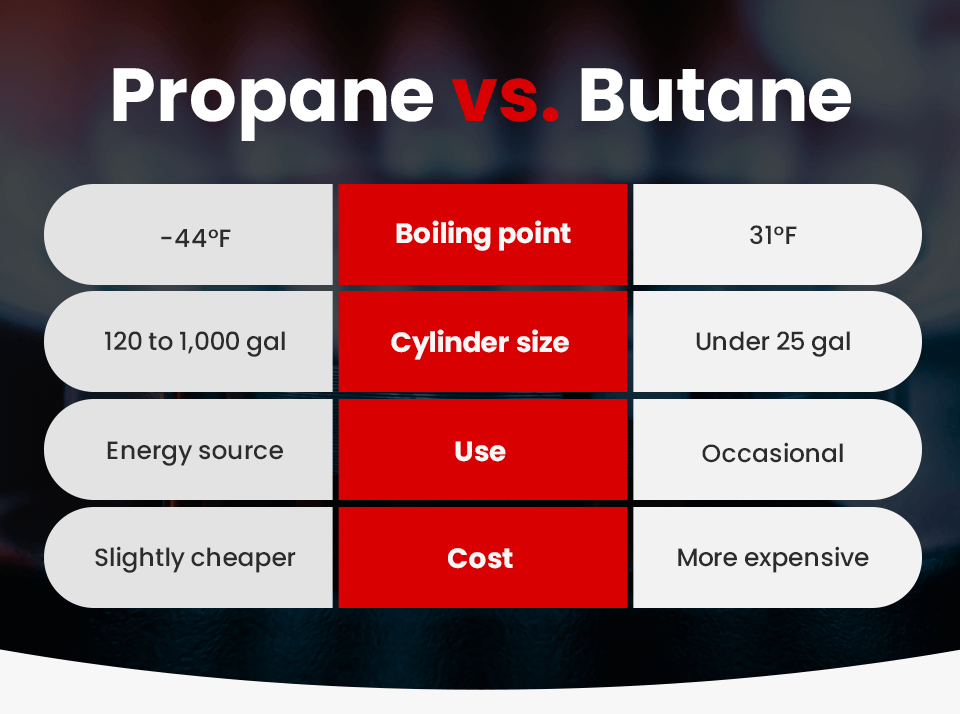
- Boiling point: 31°F (-0.5°C)
- Stored as a liquid under pressure
- Turns to gas at room temperature
Propane (C3H8):
- Heavier than air, but lighter than butane
- Boiling point: -44°F (-42°C)
- Also stored as a liquid under pressure
- Turns to gas even at very low temperatures
Both are commonly used as fuel, but they behave differently in various conditions. One extra detail: the reason both gases are stored as liquids is that this makes them much more compact and easier to transport. When released from the tank, they quickly turn into gas, which is what burns in your stove or grill.
Chemical And Physical Properties Compared
A clear understanding of the chemical and physical properties helps you see why butane and propane are used for different things. Here’s a direct comparison:
| Property | Butane | Propane |
|---|---|---|
| Chemical formula | C4H10 | C3H8 |
| Boiling point | 31°F (-0.5°C) | -44°F (-42°C) |
| Vapor pressure at 70°F (21°C) | ~31 psi | ~110 psi |
| Energy content (per kg) | 49.5 MJ | 50.3 MJ |
| Density (liquid) | 0.58 kg/L | 0.51 kg/L |
| Odor | Odorless (odorant added) | Odorless (odorant added) |
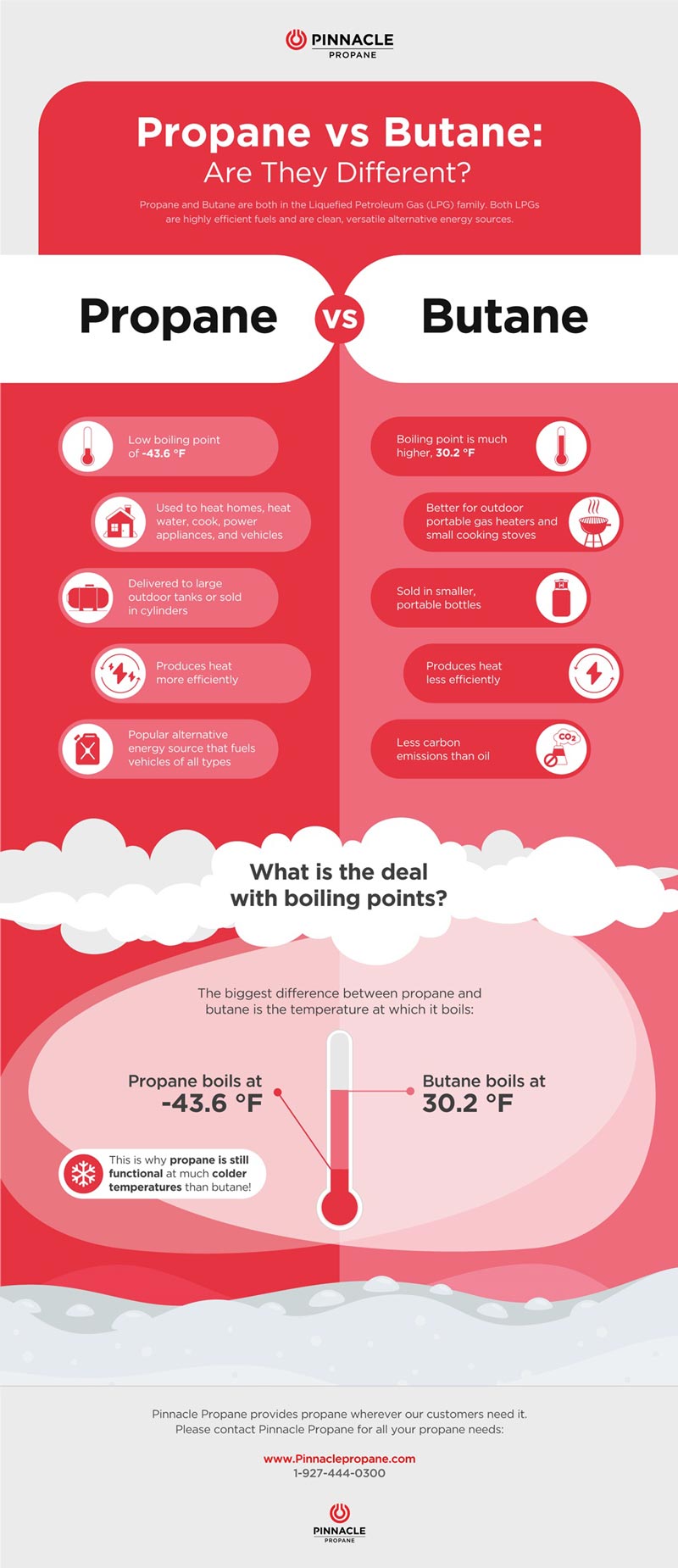
One non-obvious insight: propane’s much lower boiling point means it turns to gas in much colder weather than butane. This is why propane is reliable for winter camping or in cold climates, while butane can stop working.
Another detail: The higher vapor pressure of propane means that it pushes itself out of the tank more forcefully, which is important for devices that need a strong, steady flame, like large grills or heaters. Butane’s lower pressure makes it better for small devices like lighters, where too much pressure could be dangerous.
Credit: cheaprvliving.com
Storage And Transportation
How you store and transport these gases is important for safety and performance.
- Propane is usually kept in steel cylinders that are very strong. These cylinders are often used for home heating, barbecues, and campers. Because propane has a high vapor pressure, the tanks must be built to handle that pressure.
- Butane is typically sold in smaller, lightweight canisters. These are popular for portable stoves, lighters, and small heaters.
Another detail: propane tanks are often filled only to about 80% capacity. This gives space for the liquid to expand, which is very important for safety. Butane canisters are also filled with room for expansion, but because butane’s vapor pressure is lower, the tanks do not need to be as strong as propane tanks.
A real-world example: If you’ve ever seen the small, blue butane canisters used for table-top stoves at picnics, you’ll notice they’re much lighter than a standard propane BBQ tank. This is not just for convenience—it’s because the lower pressure of butane allows for lighter construction. However, this also means butane canisters are more easily damaged, so handle them carefully, especially when traveling.
Another practical insight: In many countries, propane tanks are exchanged rather than refilled on the spot. You bring your empty tank and swap it for a full one. Butane canisters, on the other hand, are almost always disposable and can be thrown away (safely and empty) after use. This difference affects both cost and convenience.
Energy Content And Efficiency
When you use gas for heating, cooking, or other uses, how much energy does it provide?
- Propane gives about 50.3 megajoules (MJ) per kilogram
- Butane gives about 49.5 MJ per kilogram
This means propane and butane are almost the same in energy per kilogram. However, because butane is denser as a liquid, you can fit more energy in the same size canister. In simple terms: butane packs more energy into a small space, but propane is slightly more efficient per pound.
A subtle point many people miss: Because butane is denser, a small canister can last longer than you expect, making it a favorite for travelers and people who need to save space. However, always remember that the small size comes with a trade-off in cold weather performance.
Another practical example: If you are cooking a meal for a large group on a camping trip, you might use less butane by volume, but if the temperature drops, that butane canister might stop working before your meal is done. In that case, the higher cold weather performance of propane is more valuable than butane’s density.
Performance In Cold Weather
One of the most important differences is how these gases behave in the cold.
- Propane works in very cold weather. Even at -40°F (-40°C), it will still turn to gas and burn.
- Butane stops working when it gets cold. Below 31°F (-0.5°C), butane stays as a liquid and will not vaporize well.
What does this mean in real life? If you try to use a butane stove for winter camping, it may not light at all, or the flame will be very weak. Propane stoves work in freezing temperatures, which is why they are used for outdoor activities in winter.
A common mistake is buying butane canisters for camping trips in cold places. Always check the expected temperature and choose propane for reliable performance outdoors.
Another non-obvious tip: Even in cool autumn weather, butane canisters can lose pressure fast, especially as they empty. If you notice your stove flame getting weak and the canister feels cold, try warming the canister (safely, with body heat or in your pocket) to get a bit more use. But never use direct heat, as this is dangerous.
Common Uses
Butane and propane are used for many similar things, but some uses are better for one or the other.
Butane
- Lighters: Most pocket lighters use butane because it is easy to compress into a small canister.
- Portable stoves: Many indoor and picnic stoves use butane canisters. These are convenient and lightweight.
- Aerosol propellant: Butane is sometimes used in spray cans.
- Refilling torches: Small kitchen torches often use butane.
Butane is also used in laboratory settings for some portable Bunsen burners, where the clean flame and easy control are important.
Propane
- Barbecue grills: Most backyard grills use propane tanks.
- Home heating: Propane is common for heating homes, water, and even refrigerators in RVs.
- Camping stoves: Any stove or lantern that needs to work in cold weather will likely use propane.
- Industrial uses: Propane is used in forklifts, blowtorches, and large heaters.
Propane is also the main fuel for some rural homes that are “off the grid” and not connected to a city gas line.
Some gas mixtures combine both butane and propane, especially for portable stoves. These mixes aim to balance cold weather performance and convenience. For example, a 70/30 mix (butane/propane) is common in high-end camping canisters and gives better performance in spring and autumn.
Safety Considerations
Both butane and propane are highly flammable. Safe handling is critical.
Key safety points:
- Store canisters and tanks in a cool, dry place—never in direct sunlight or near heat.
- Never use these gases indoors without proper ventilation; both can cause carbon monoxide poisoning.
- Always check for leaks before connecting any device.
- Use the right canister or tank for the device—never try to refill or modify containers.
An important detail: butane is heavier than air, so if it leaks, it can collect in low places and create a fire risk. Propane is also heavier than air but disperses a bit more easily.
When using butane or propane devices indoors, always have a working carbon monoxide detector. This small step can save lives.
Here’s an extra tip: If you smell gas, turn off the device immediately, open windows, and do not use electrical switches or flames until the area is safe. Leak detection sprays or soapy water can be used to check for small leaks at connections.
Cost And Availability
The price and where you can find these gases depend on location and the size of the tank or canister.
- Propane is widely available in hardware stores, gas stations, and supermarkets, especially in the U.S. and Canada.
- Butane is common in convenience stores, camping shops, and supermarkets, usually in smaller cans.
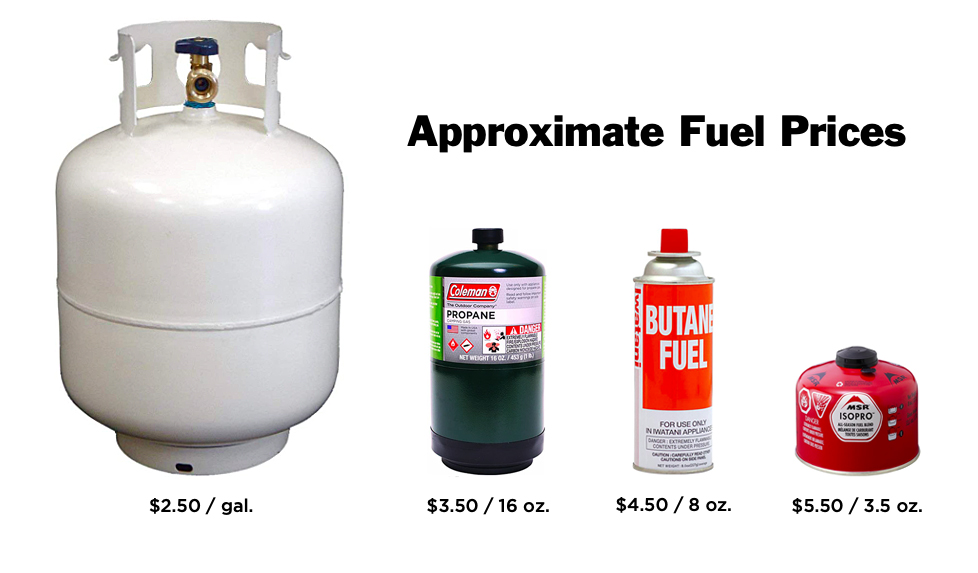
In general, propane is cheaper per unit of energy, especially when bought in large tanks. Butane tends to be more expensive because it is sold in small, convenient canisters.
A practical tip: If you use a lot of gas, a large propane tank is usually more cost-effective than buying many small butane canisters.
An extra example: For a summer’s worth of weekend barbecues, a single large propane tank can save you a lot of money and trips to the store, compared to buying individual butane cans.
Credit: www.pinnaclepropane.com
Environmental Impact
Both butane and propane are fossil fuels, but they are cleaner than coal or gasoline.
- They burn with few pollutants if devices are working properly.
- Both release carbon dioxide (CO2) when burned, contributing to greenhouse gases.
- Propane is considered a clean fuel in the U.S. Clean Air Act.
Neither gas produces much soot or smoke, making them cleaner for cooking and heating. However, leaks can be dangerous to the environment, as both are greenhouse gases before burning.
One insight: propane leaks are more likely to evaporate and disperse, while butane can stay low to the ground longer, increasing risks in poorly ventilated areas.
A detail beginners often miss: Even though these gases are “cleaner,” their production and transport still have an environmental cost. Reducing leaks, using efficient devices, and recycling canisters where possible all help to lower your impact.
Refilling And Disposal
Refilling and disposing of butane and propane containers must be done safely.
- Propane tanks (such as the 20 lb. Tanks for grills) can be refilled at gas stations or exchange centers. They must be inspected regularly for safety.
- Butane canisters are usually disposable and not refilled. Some specialty canisters can be refilled, but this should only be done with proper equipment.
Never throw full or partly full canisters in the trash. Many cities have special collection points for gas canisters.
A practical tip: Before disposing of any canister, make sure it is completely empty by following the manufacturer’s instructions. Some recycling centers require you to puncture empty canisters, but only do this if it is safe and allowed in your area.
Credit: fosterfuels.com
Advantages And Disadvantages
Here’s a direct comparison of the main advantages and disadvantages of each gas:
| Factor | Butane | Propane |
|---|---|---|
| Cold weather use | Poor | Excellent |
| Energy per volume | Higher | Lower |
| Energy per weight | Slightly lower | Slightly higher |
| Storage pressure | Lower | Higher |
| Canister/tank size | Small, portable | Small to large tanks |
| Price | Higher per unit | Lower per unit |
| Availability | Common in small cans | Very common everywhere |
| Refillable | Rarely | Often |
How To Choose: Practical Scenarios
Let’s look at some real-life situations and which gas is the better choice.
1. Camping In Cold Weather
Choose propane. It will work when temperatures drop below freezing, while butane will not vaporize and your stove may fail.
2. Backpacking In Warm Weather
Butane is lightweight and convenient. If temperatures stay above 32°F (0°C), butane is a good choice for short trips.
3. Home Barbecue
Propane is the standard for grills because tanks are easy to swap or refill, and it works in all weather.
4. Emergency Heating
Propane is best for portable heaters in winter or power outages. It’s safe, reliable, and available in larger tanks.
5. Small Kitchen Torches Or Lighters
Butane is ideal for refillable lighters and small torches, as it is easy to store in small, pressurized cans.
Another scenario: If you’re hosting a picnic in spring or early autumn, and the weather is unpredictable, a propane stove provides peace of mind—no worrying if a cold snap will ruin your plans. For city apartment living, where space is limited and temperatures are always mild, butane is a top choice for compact cooking devices.
Myths And Common Mistakes
Many people believe that butane and propane can always be swapped. This is not true. Devices are designed for one type, and using the wrong gas can be dangerous.
Another myth is that butane is always safer because the pressure is lower. In fact, butane leaks can be more dangerous in unventilated spaces because the gas stays low to the ground.
Also, don’t assume butane is “bad” just because it doesn’t work in the cold. It’s perfect for indoor use, summer camping, or when you want a compact, easy-to-carry option.
One more beginner mistake: Some people try to refill disposable butane cans or modify adapters to fit different gases. This is not only unsafe but also illegal in many places. Always use containers and adapters exactly as designed.
Regulations And Standards
Both gases are regulated for safety. In the U.S., the Department of Transportation and Occupational Safety and Health Administration (OSHA) set standards for how they can be stored, transported, and used. There are similar agencies in other countries.
Devices that use butane or propane must also meet design standards so they operate safely and prevent leaks. Always check for certification marks when buying stoves, heaters, or tanks.
A practical example: Look for symbols like UL (Underwriters Laboratories) or CE (Conformité Européenne) on your gas devices. These marks show that the product meets important safety standards, reducing the risk of accidents.
Innovations And Future Trends
In recent years, there have been new developments in gas canister design and hybrid mixtures. Some companies now sell canisters with a mix of propane and butane, often in a ratio like 70% butane and 30% propane. These mixes offer better cold weather performance than pure butane and are still portable.
There are also “isobutane” canisters. Isobutane is a special form of butane that works better at lower temperatures than normal butane, but not as well as propane. It’s popular for high-end backpacking stoves.
Another innovation: Some new stoves can automatically adjust their pressure for different gases, making them more flexible for travelers. There are also efforts to make refillable butane canisters more common, to reduce waste and lower costs over time.
Which Is Right For You? A Quick Guide
If you are still unsure, use this quick checklist for common uses:
- Winter camping, emergency backup, outdoor work in cold: Use propane
- Lightweight travel, indoor cooking, lighters: Use butane (above freezing)
- Regular grilling or home use: Propane is the standard
- Short summer hiking trips: Butane is convenient
- All-weather reliability needed: Always go with propane
If you need more details, the Wikipedia page on LPG has useful technical information.
Frequently Asked Questions
What Happens If I Use Butane Instead Of Propane In My Grill?
Most grills are designed for propane. If you use butane, it might not vaporize well, especially in cool weather, and your grill may not get hot enough. Also, the connectors and pressure may not be the same, so it can be unsafe to swap gases unless the device is designed for both.
Can I Refill A Butane Canister With Propane?
Do not try this. Butane and propane canisters are made for different pressures. Filling a butane canister with propane can cause leaks or explosions. Always use the right gas for the right container.
Why Does My Butane Stove Stop Working When It’s Cold?
Butane turns to gas only above 31°F (-0. 5°C). In cold weather, it stays liquid and does not flow to your burner. This is why butane stoves often fail in cold weather, while propane keeps working.
Is Butane Or Propane Safer For Indoor Use?
Neither should be used indoors without proper ventilation. Both can cause carbon monoxide poisoning. If you must use gas indoors, make sure the device is rated for indoor use and always have good ventilation and a carbon monoxide detector.
Which Gas Is Better For The Environment?
Both are cleaner than coal or gasoline, but they still produce CO2. Propane is sometimes considered “greener” because it is often a byproduct of natural gas processing. However, the environmental difference is small, so proper use and avoiding leaks are more important.
Choosing between butane and propane may seem simple, but the right decision can improve safety, performance, and cost. With the facts in this guide, you can choose wisely for any situation, whether it’s cooking at home, camping in the mountains, or preparing for emergencies. Understanding these differences also helps you avoid common mistakes and get the best results from your devices.