
A loose kitchen faucet can make daily tasks more frustrating. When your Moen single handle kitchen faucet starts to wobble or move, it not only feels unstable but can also lead to leaks or damage over time. Many homeowners notice their faucet feels loose but are unsure how to fix it. The good news is, you don’t need special skills or expensive tools to tighten a Moen faucet. With some basic steps and the right guidance, you can restore your faucet to its original stability and prevent further issues.
Moen is one of the most popular faucet brands in the US, known for durability and style. However, like all mechanical items, even the best faucets can loosen after years of use. Ignoring a loose faucet may cause water to leak under your sink, which can damage cabinets and create mold.
Taking action early is key.
This article will walk you through every part of the process. We’ll cover why faucets get loose, the tools you need, step-by-step instructions, troubleshooting tricky problems, and how to keep your faucet tight for years. You’ll find clear explanations, real-life tips, and even common mistakes to avoid.
Whether you are a first-time DIYer or have fixed things before, this guide will make the task simple and stress-free.
Why Does A Moen Single Handle Kitchen Faucet Get Loose?
Understanding why your faucet gets loose helps you fix it right and prevent it from happening again. Several reasons can cause a Moen single handle kitchen faucet to wobble or shift.
- Regular use: Every time you turn the handle or move the spout, you apply force. Over months and years, this can slowly loosen the mounting hardware under the sink.
- Improper installation: If the faucet was not tightened enough during installation, it may not stay secure. Sometimes, the installer can’t reach the mounting nut properly or doesn’t use the right tool.
- Vibration and water pressure: Water running through the pipes creates vibration. High water pressure or frequent on-off cycles can also shake the faucet, loosening the hardware.
- Worn parts: Some Moen models use plastic or rubber washers under the sink. These can wear out or compress over time, causing the faucet to feel loose.
- Sink material: Thin stainless steel sinks bend more than thick granite or porcelain, making faucets more likely to come loose.
Many people think a loose faucet means something is broken. In most cases, it’s just a simple fix.
Tools And Materials Needed
Before you start, gather the right tools. Having everything nearby saves time and prevents frustration. Most of these items are probably already in your toolbox or kitchen drawer.
- Adjustable wrench or basin wrench (for hard-to-reach nuts)
- Phillips and flathead screwdriver
- Flashlight (to see under the sink)
- Towel or small bucket (to catch any drips)
- Work gloves (optional, for comfort)
- Small mirror (helpful for tight spaces)
- Pen and paper (for notes or diagrams)
Some Moen faucets require a special mounting tool that comes with the faucet. If you don’t have it, a basin wrench usually works.
Comparison: Adjustable Wrench Vs. Basin Wrench
Here’s how two common wrenches compare for this job:
| Tool | Best For | Pros | Cons |
|---|---|---|---|
| Adjustable Wrench | Easy-to-reach mounting nuts | Common tool, simple to use | Hard to fit in tight spaces |
| Basin Wrench | Nuts behind sink or in narrow spots | Reaches awkward places, grips well | Can take practice to use |
If your sink is deep or the area is crowded, a basin wrench is usually your best bet.
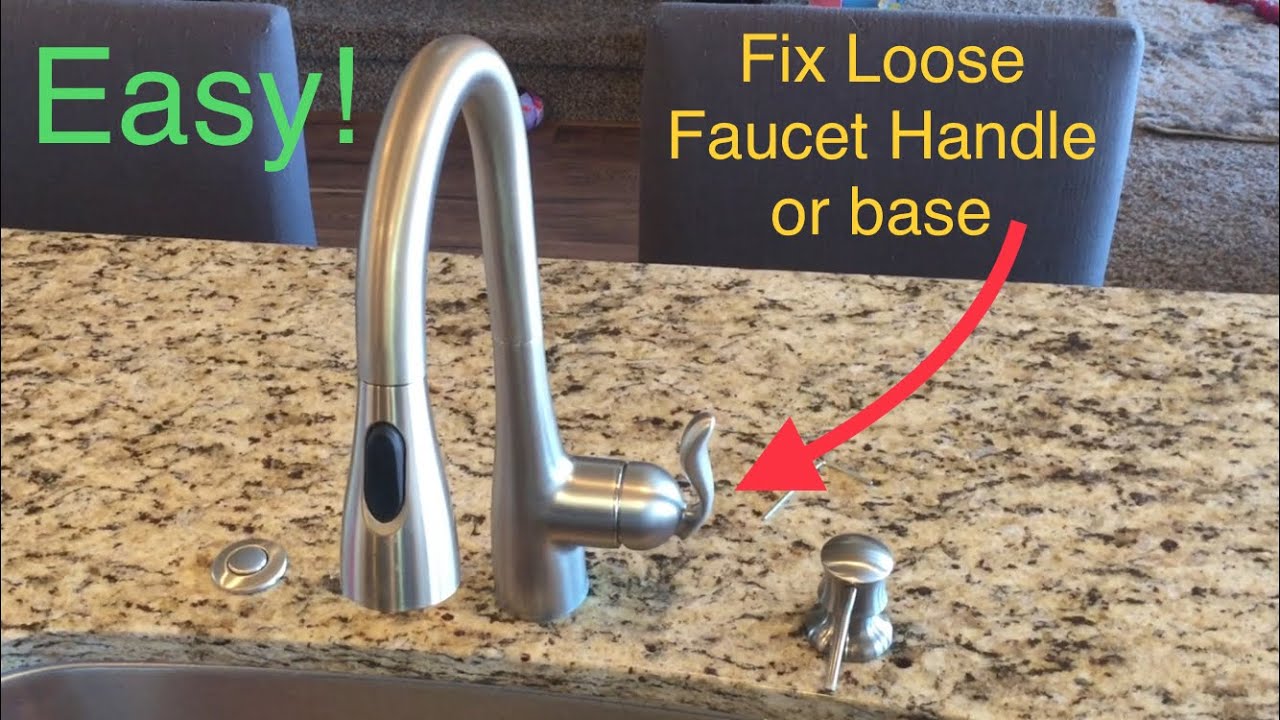
Credit: www.youtube.com
Step-by-step: How To Tighten A Loose Moen Single Handle Kitchen Faucet
Let’s break down the tightening process so you can follow each part easily.
1. Clear The Area Under Your Sink
Start by removing everything stored under your kitchen sink. This gives you space to move and prevents items from getting wet or dirty. Lay down an old towel to protect your back and catch any water drops.
2. Turn Off The Water Supply
Look for two valves under the sink—one for hot and one for cold water. Turn them clockwise to close. Test the faucet by turning it on to make sure water flow stops. This is important for your safety and to avoid leaks.
3. Identify The Loose Part
Not all faucet wobbles are the same. Try gently moving both the handle and the spout. If the whole faucet moves at the base, the mounting nut is likely loose. If only the handle is loose, you may need to tighten the handle screw instead.
4. Locate The Mounting Nut
Most Moen single handle kitchen faucets are held to the sink with a large mounting nut under the countertop. Use your flashlight to find it. Sometimes, you’ll see one big nut; in other models, there may be a metal bracket with screws.
5. Tighten The Mounting Nut
Fit your adjustable wrench or basin wrench onto the nut. Turn clockwise to tighten. Don’t over-tighten—this can crack the sink or strip threads. Tighten until the faucet feels stable but not forced.
If the area is very tight, use a small mirror to see what you’re doing. Some people find it easier to have a helper hold the faucet steady above while they tighten below.
6. Check The Faucet Alignment
Before fully tightening, make sure the faucet is straight and facing the right direction. Small adjustments are easier now than after everything is tight.
7. Secure The Handle (if Needed)
If the handle itself is loose, look for a small screw at the base of the handle. You may need to pop off a decorative cap to reach it. Use the right screwdriver to tighten, turning clockwise. Be gentle so you don’t damage the finish.
8. Test For Stability
Wiggle the faucet and handle gently to see if they still move. If everything feels solid, you’re done with the tightening part.
9. Turn Water Back On
Slowly open the hot and cold water valves. Check for any leaks under the sink. If you see drips, tighten the nut a little more, but again, do not over-tighten.
10. Clean Up
Remove your tools, wipe up any water, and put items back under the sink. Give the faucet a final wipe to remove fingerprints.
Understanding Moen Faucet Mounting Styles
Not all Moen single handle faucets are installed the same way. Knowing your mounting style helps you find the right nut or screw to tighten.
- Single-hole mount: The faucet sits in one hole. The mounting nut is usually easy to access.
- Three-hole mount with base plate: The faucet covers three holes with a metal plate. The main mounting nut is still under the center hole.
- Pull-down or pull-out models: These have a hose that extends. You may need to move the hose aside to reach the nut.
Some newer Moen faucets use a “Duralock” or quick-connect system for the water lines. The method for tightening the faucet body is still similar, but you may see plastic tabs instead of a big nut.
Faucet Mounting Types And Their Difficulty
Here’s a look at how different mounting types compare for DIY tightening:
| Mounting Type | Ease of Access | Typical Tool Needed | Special Notes |
|---|---|---|---|
| Single-hole | Easy | Adjustable or basin wrench | Most common in new homes |
| Three-hole with base plate | Moderate | Basin wrench | Plate may need cleaning under edges |
| Pull-down/pull-out | Challenging | Basin wrench, flashlight | Hose may block nut, be patient |
Common Problems And How To Solve Them
Sometimes, tightening a loose faucet isn’t as simple as turning a nut. Here are some problems you might face, and how to handle them.
Rusted Or Stuck Mounting Nut
In older homes or with leaks, the mounting nut may be rusted. Spraying a little penetrating oil and waiting 10–15 minutes can help. If the nut still won’t move, tap it gently with a rubber mallet or use a nut splitter tool.
Worn Or Damaged Washers
If tightening the nut doesn’t help, check for a worn washer or gasket. These parts sit between the faucet and the sink. If they are cracked or flattened, water can leak and the faucet stays loose. Replacement washers are sold at hardware stores, often for less than $5.
Hard-to-reach Spaces
Kitchen sinks are often crowded with pipes, garbage disposals, and water filters. If you can’t fit a wrench onto the nut, try a faucet tightening tool (sold at most hardware stores). These are designed for tough spots.
Leaks After Tightening
If you see water leaking from the base after you tighten, the problem may be a worn O-ring or gasket inside the faucet. Turn the water off again, remove the faucet, and check the rubber seals. Replace as needed.
Faucet Still Wobbles
Sometimes, the sink itself is too thin or bent. Adding a faucet stabilizer plate under the sink can help distribute pressure and make the faucet more stable.
Tips For Success
Making this repair smooth and stress-free comes down to a few practical strategies:
- Take a photo under the sink before you start. It’s easy to forget where everything goes.
- Use a headlamp so both hands are free.
- Place a small towel over the drain to avoid dropping screws or nuts.
- If the water lines are stiff, gently move them aside. Never force them.
- Don’t rush. Take breaks if your arms get tired—working in tight spaces can be exhausting.
Preventing A Loose Faucet In The Future
After fixing your Moen single handle kitchen faucet, you want it to stay tight as long as possible. Here are some proven ways to keep things secure:
- Check every six months: Quickly wiggle the faucet and feel under the sink. Early detection means easier fixes.
- Don’t overtighten: Too much force can damage threads and make future repairs harder.
- Use a stabilizer plate: If your sink is thin, a metal or plastic plate under the faucet spreads out pressure.
- Fix leaks quickly: Even small drips can rust parts and loosen hardware.
- Install with care: If you ever replace the faucet, follow Moen’s instructions closely.
Real-life Example: Fixing A Loose Moen Faucet
Jessica, a homeowner in Ohio, noticed her Moen faucet was wobbly after six years of use. She followed these steps:
- Cleared out the area under her sink.
- Turned off the water supply.
- Used her phone’s camera to see the mounting nut, since space was tight.
- Sprayed a little lubricant on the nut, waited, and then used a basin wrench.
- Tightened the nut while her husband kept the faucet straight above.
- Turned the water back on and checked for leaks.
It took her less than 30 minutes. The faucet felt brand new, and she saved over $150 by not calling a plumber.

Credit: diy.stackexchange.com
Cost And Time Comparison: Diy Vs. Hiring A Plumber
Is it worth doing this yourself? Most people can tighten a loose Moen faucet in less than an hour. Here’s how the costs compare:
| Option | Typical Cost | Time Needed | Pros | Cons |
|---|---|---|---|---|
| DIY Repair | $0–$20 (tools/parts) | 30–60 minutes | Save money, learn a new skill | Can be uncomfortable, tight space |
| Hire a Plumber | $100–$200+ | Less than 1 hour (for pro) | No work for you, guaranteed fix | Higher cost, must schedule |
Unless your faucet is severely damaged or you have mobility issues, DIY is often the best choice.
Mistakes To Avoid When Tightening Your Faucet
Even simple repairs can go wrong if you rush or skip steps. Here are mistakes that often cause trouble:
- Forgetting to turn off water: This can cause a mess or even flooding.
- Using the wrong tool: Pliers can slip and damage the nut or faucet finish.
- Over-tightening: This may crack the sink or strip threads, making future repairs harder.
- Not checking for leaks: Always test the faucet after tightening to avoid hidden problems.
- Ignoring alignment: Tightening before checking the faucet direction can leave it crooked.

Credit: www.reddit.com
How To Tell If You Need To Replace Instead Of Tighten
Sometimes, tightening is not enough. Watch for these signs:
- Cracked faucet base: If the metal or plastic is broken, tightening will not help.
- Severe leaks: Water coming from inside the faucet body usually means a damaged cartridge or seal.
- Corroded mounting hardware: If the nut or bracket is rusted through, it is safer to replace the part.
Moen offers replacement parts for most models. Check your faucet’s model number (often on the underside or in the manual) before buying new hardware.
Special Situations: Dealing With Pull-out And Pull-down Faucets
Moen’s pull-out and pull-down kitchen faucets are popular but can be a little more challenging to tighten. The mounting nut may be blocked by the pull-out hose and weight.
- Slide the hose weight down the hose before tightening.
- Ask a friend to hold the faucet steady above while you work below.
- Check the quick-connect fittings to make sure they didn’t loosen during the process.
If you see any plastic tabs or clips, make sure they are snapped in before you finish.
When To Call A Professional
Most loose Moen single handle kitchen faucets can be tightened at home. However, call a plumber if:
- You see water damage or mold under the sink.
- The mounting hardware is rusted solid or broken.
- The faucet wobbles even after tightening and replacing washers.
- You feel uncomfortable working in tight spaces.
A professional can often fix the issue quickly and check for hidden damage.
Resources For Finding Moen Faucet Parts And Manuals
Moen provides excellent support for DIYers. Visit their official site for manuals, diagrams, and part numbers. You can also find video tutorials and customer service contacts.
For more guidance and technical details, visit Moen’s official FAQ page.
Frequently Asked Questions
What If I Can’t Reach The Mounting Nut Under My Sink?
If space is too tight for your hand or a standard wrench, try a basin wrench. This tool is designed for hard-to-reach faucet nuts. If you still can’t fit a tool, consider removing the sink’s drain pipe temporarily for better access.
How Do I Know If My Moen Faucet Model Needs A Special Tool?
Check your faucet’s manual or search the model number on Moen’s website. Some models come with a plastic mounting tool, but most can be tightened with an adjustable or basin wrench.
Can I Use Wd-40 On A Stuck Faucet Nut?
Yes, WD-40 or another penetrating oil can help loosen a rusted or stuck nut. Spray it on, wait about 10–15 minutes, then try again. Wipe away any extra oil to avoid getting it on other parts.
Should I Use Plumber’s Putty Or Silicone When Tightening?
Moen faucets usually don’t need plumber’s putty for tightening, but a thin bead of silicone around the base can help prevent leaks in some cases, especially with stainless steel sinks.
How Often Should I Check My Kitchen Faucet For Looseness?
It’s smart to check every 6–12 months. Just wiggle the faucet gently and look under the sink for leaks or movement. Early checks can prevent bigger problems later.
A secure kitchen faucet makes cooking and cleaning much easier. With the right tools and careful steps, tightening your Moen single handle kitchen faucet is a project most homeowners can complete in less than an hour. Remember to check for leaks, avoid over-tightening, and keep an eye on your faucet each year. Fixing a loose faucet now saves you money and trouble in the future. If you ever feel stuck, Moen customer support and professional plumbers are always an option. Your kitchen deserves a faucet that’s as steady and reliable as you are.