
Stainless Steel Cookware Without Aluminum: The Complete Guide
Choosing the right cookware is more important than many people realize. The pots and pans you use can affect your health, the taste of your food, and even how much time you spend cleaning up. For many home cooks and health-conscious buyers, stainless steel cookware is a favorite. But a new question is getting attention: can you find the best stainless steel cookware without aluminum?
Most stainless steel cookware on the market has an aluminum core or base. Aluminum is great for even heating, but not everyone wants it touching their food, even if it’s sandwiched between layers of steel. Some people are sensitive to aluminum, worry about long-term health risks, or simply prefer the purity of all-stainless steel.
The good news? There are excellent options for stainless steel cookware without aluminum, and this guide will help you find them.
You’ll discover what makes stainless steel cookware without aluminum unique, why people choose it, how it compares to regular stainless steel cookware, and which brands truly deliver on quality. We’ll look at the science, debunk myths, and offer practical advice so you can buy with confidence.
Why Choose Stainless Steel Cookware Without Aluminum?
Many people use regular stainless steel pans every day and never think twice. So, why look for cookware without aluminum? The answer depends on your priorities, but here are the main reasons people make this choice.
Health Concerns
Some studies have suggested that cooking with aluminum, especially with acidic foods, can cause tiny amounts to leach into food. While the science isn’t clear on how much is absorbed or if it’s harmful, some people prefer to avoid any risk, especially if they have kidney issues or are sensitive to metals. Stainless steel without aluminum offers peace of mind for these cooks.
Pure Cooking Experience
Some home chefs feel that all-stainless steel cookware gives a cleaner taste, especially for delicate dishes. There’s no aluminum layer to react, even at high heat or with acidic ingredients like tomatoes and vinegar.
Durability And Longevity
Cookware made only from stainless steel is often more durable, especially at the base where warping can happen with other materials. These pans can also last for decades with proper care and are often dishwasher safe.
Induction Compatibility
Some people want cookware that works with induction cooktops. All-stainless steel cookware (especially 18/0 grade) is often induction-ready, while aluminum-based cookware sometimes is not unless it has a special magnetic base.
Recycling And Sustainability
Stainless steel is one of the easiest metals to recycle. If you’re trying to reduce your environmental impact, all-stainless steel cookware is a smart choice.
Understanding Stainless Steel Grades
Not all stainless steel is the same. When you shop for cookware, you’ll see numbers like 18/10, 18/8, and 18/0. These numbers show the mix of chromium and nickel in the steel.
- 18/10: 18% chromium, 10% nickel. Very resistant to rust and corrosion. Shiny, durable, and common in high-end cookware.
- 18/8: 18% chromium, 8% nickel. Still very good quality, slightly less resistant to corrosion.
- 18/0: 18% chromium, 0% nickel. Less shiny, sometimes magnetic, but still strong and safe.
For those sensitive to nickel, 18/0 is a good choice. But for most people, 18/10 is the standard for performance and durability.
How Is Stainless Steel Cookware Without Aluminum Constructed?
Cookware without aluminum is usually made in one of two ways:
- Single-ply (solid stainless steel): The whole pot or pan is made from one thick layer of stainless steel. These are very durable but may heat unevenly. They are great for boiling water, steaming, or cooking non-delicate foods.
- Multi-ply without aluminum: Some brands use layers of different types of stainless steel (for example, a magnetic outer layer for induction and a non-magnetic inner layer for strength and shine). These can offer better heat distribution than single-ply.
An important point: pure stainless steel does not conduct heat as well as aluminum or copper. So, cooking with these pans requires some skill and patience, especially to avoid hot spots.
The Top Stainless Steel Cookware Without Aluminum (2024)
Finding stainless steel cookware with no aluminum at all is not always easy. Many brands use at least a thin layer for even heating. But several companies do make pure stainless steel cookware, and these are the best options available today.
1. All-clad D3 Stainless Steel (solid Stainless Steel Options)
All-Clad is a leader in stainless steel cookware. While many of their lines use aluminum, they also offer solid stainless steel pans, especially in their D3 collection. Look for their single-ply items, like stockpots and boiling pans, which are made from thick, high-quality 18/10 stainless steel.
- Best for: Boiling, steaming, making soups, and pasta
- Pros: Extremely durable, easy to clean, professional quality
- Cons: Heavier, less even heating than tri-ply options
2. Cuisinart Chef’s Classic Stainless Collection
Cuisinart’s Chef’s Classic line includes several pans made from pure stainless steel, especially their stockpots and saucepans. These are affordable, widely available, and made from 18/10 stainless steel.
- Best for: Everyday cooking, especially boiling and steaming
- Pros: Affordable, dishwasher safe, induction compatible
- Cons: Not ideal for delicate frying or sautéing
3. 360 Cookware
360 Cookware makes its pots and pans in the USA using only stainless steel—no aluminum core or base. They use a “waterless” cooking design, which allows you to cook with little to no added fat or water.
- Best for: Healthy cooking, slow cooking, simmering
- Pros: Non-toxic, eco-friendly, lifetime warranty
- Cons: Expensive, takes time to learn the waterless method
4. Saladmaster Stainless Steel Cookware
Saladmaster is known for its high-quality, surgical-grade stainless steel cookware. Their “316Ti” stainless steel is extremely pure and contains no aluminum. These are investment pieces that last a lifetime.
- Best for: Health-conscious cooks, all-purpose cooking
- Pros: Very safe, non-reactive, stays shiny, easy to clean
- Cons: High price, sold through direct sales (not in regular stores)
5. Vollrath Optio Stainless Steel Stock Pots
Vollrath is famous in the restaurant industry for its durable, all-stainless steel cookware. The Optio line, in particular, uses solid stainless steel, making it a favorite for commercial kitchens and serious home cooks.
- Best for: Large-batch cooking, soups, stews, pasta
- Pros: Professional-grade, affordable, induction ready
- Cons: Heavy, not nonstick
6. Ikea 365+ Stainless Steel Series
IKEA’s 365+ line is popular for its budget-friendly, all-stainless steel construction. The pots and pans are made from 18/8 stainless steel and are surprisingly durable for the price.
- Best for: Beginners, students, everyday family use
- Pros: Inexpensive, lightweight, easy to replace
- Cons: Basic design, thinner steel, not as long-lasting as premium brands
7. Farberware Classic Stainless Steel Cookware
Farberware has been making cookware for over 100 years. Their classic series includes several pots and pans made entirely from stainless steel, with no aluminum core.
- Best for: Boiling, steaming, general kitchen tasks
- Pros: Reliable, widely available, affordable
- Cons: Not for advanced cooking techniques
8. Heritage Steel Cookware
Heritage Steel uses only stainless steel and titanium in their cookware. Their pots and pans are made in the USA and are known for their purity and quality.
- Best for: Health-focused cooks, slow simmering, high-heat searing
- Pros: Non-toxic, lifetime warranty, easy to maintain
- Cons: High price, limited designs
9. Demeyere Industry 5 Stainless Steel
Demeyere, a Belgian brand, is respected for its high-performance, pure stainless steel cookware. The Industry 5 line uses multiple layers of stainless steel for even heating, without aluminum.
- Best for: Searing, sautéing, all-purpose cooking
- Pros: Even heating, durable, professional look
- Cons: Heavy, expensive
10. Cristel Strate Stainless Steel Cookware
Cristel is a French company known for its modular, stackable cookware. The Strate line uses only stainless steel (no aluminum), and the handles are removable.
- Best for: Small kitchens, cooks who want flexibility
- Pros: Space-saving, easy to clean, stylish
- Cons: Pricey, handles sold separately
Comparing Stainless Steel Cookware Without Aluminum
It helps to see the differences between these brands and types side by side. Here’s a quick comparison of some key features:
| Brand | Steel Grade | Construction | Price Range | Best For |
|---|---|---|---|---|
| All-Clad D3 | 18/10 | Single-ply | High | Boiling, steaming |
| Cuisinart Chef’s Classic | 18/10 | Single-ply | Low-Mid | Everyday cooking |
| 360 Cookware | 316Ti | Single-ply | High | Healthy, waterless cooking |
| Saladmaster | 316Ti | Single-ply | Very High | Health-focused |
| IKEA 365+ | 18/8 | Single-ply | Low | Budget cooking |
What To Look For When Buying Stainless Steel Cookware Without Aluminum
Finding the right cookware is easier when you know what matters most. Here are the top factors to consider:
1. Steel Grade
For most home cooks, 18/10 stainless steel is ideal. It’s resistant to rust and stains, easy to clean, and food-safe. For those with nickel allergies, 18/0 is better.
2. Thickness
The thicker the steel, the more evenly it will heat and the less likely it is to warp. Look for pans with at least 2. 5mm thickness for good durability.
3. Handles And Lids
Welded or riveted handles are best because they don’t loosen over time. Lids should fit tightly to keep in moisture and flavor.
4. Dishwasher And Oven Safety
Most all-stainless steel cookware is dishwasher safe, but always check the label. Some handles can get hot in the oven, so make sure your cookware can handle at least 400°F (204°C).
5. Induction Compatibility
If you have an induction cooktop, look for cookware with a magnetic base (often 18/0 grade). Most pure stainless steel pans will work, but always double-check before buying.
6. Price And Warranty
Good stainless steel cookware is an investment. Look for brands with a lifetime warranty and strong customer support.
How Does Cooking Differ Without Aluminum?
When you switch to stainless steel cookware with no aluminum, you may notice some differences in how your food cooks. Stainless steel is not as good a heat conductor as aluminum or copper. This means:
- Longer preheating: Allow the pan to heat up more slowly for even cooking.
- Hot spots: Move food around and use a lower heat to avoid burning.
- More oil or water: Stainless steel needs a little more fat or liquid to prevent sticking, especially for eggs or fish.
But for boiling, steaming, soups, and sauces, these pans work perfectly. Many professional chefs use all-stainless steel for these tasks because of the durability and non-reactivity.
Common Mistakes To Avoid
Even experienced cooks can make errors when switching to stainless steel cookware without aluminum. Here are some mistakes and how to avoid them:
- Overheating the pan: Stainless steel can warp if heated too quickly. Preheat slowly and add oil before food to prevent sticking.
- Using metal utensils: While stainless steel is tough, rough metal tools can scratch the surface. Use wooden or silicone utensils when possible.
- Ignoring the grade: Not all stainless steel is food-safe. Avoid cookware with unknown grades or very low nickel content unless you have allergies.
- Dishwasher overuse: While most pans are dishwasher safe, frequent washing can dull the shine. Hand-wash for the best look.
- Buying too thin: Thin pans heat unevenly and warp easily. Always choose thicker steel for better results.
Stainless Steel Vs. Other Cookware Materials
It’s useful to compare all-stainless steel cookware to other types you might see in stores:
| Material | Heat Distribution | Reactivity | Care | Durability |
|---|---|---|---|---|
| Stainless Steel (no aluminum) | Moderate | Non-reactive | Easy | Very high |
| Stainless Steel (with aluminum) | Excellent | Non-reactive | Easy | High |
| Nonstick | Good | Low (can leach at high heat) | Delicate | Moderate |
| Cast Iron | Poor without seasoning | Reactive | High (needs seasoning) | Very high |
| Copper | Excellent | Very reactive | High (needs polishing) | Moderate |
Cleaning And Caring For Your Stainless Steel Cookware
One of the biggest benefits of all-stainless steel cookware is easy cleaning. Here are some tips for keeping your pans looking and working like new:
- Soak after use: If food sticks, fill the pan with warm water and let it soak before washing.
- Use baking soda: For tough stains or discoloration, sprinkle baking soda and scrub with a soft sponge.
- Polish with vinegar: A splash of white vinegar can restore shine and remove water spots.
- Dry immediately: To avoid streaks, dry pans right after washing.
- Avoid harsh cleaners: Steel wool can scratch the surface. Use only non-abrasive pads.
Many brands offer a lifetime warranty, but you must follow their care instructions to keep coverage.

Credit: www.reddit.com
Non-obvious Insights Beginners Often Miss
Buying and using stainless steel cookware without aluminum isn’t just about the health benefits. Here are two key insights that many beginners overlook:
- Even pure stainless steel can stick: Many people expect food to slide right off stainless steel pans. In reality, these pans need proper preheating and a bit of oil to keep food from sticking. This is especially true for proteins like eggs and fish. If you want a true nonstick experience, stainless steel may not be the best choice for every meal.
- Waterless cooking is a game-changer: Some cookware brands (like 360 Cookware and Saladmaster) are designed for “waterless” cooking. This method uses the pan’s tight-fitting lid to trap steam and cook food with its natural juices. It’s healthier and preserves nutrients, but it takes a little practice to master. Most people don’t realize how much flavor and nutrition they lose with regular boiling or frying.
Stainless Steel Cookware Without Aluminum For Special Diets
If you follow a special diet—such as low-acid, low-nickel, or allergen-free—pure stainless steel cookware can be a smart choice. There’s no risk of aluminum, nonstick coatings, or copper leaching into your food.
For families with allergies, look for 18/0 stainless steel (nickel-free). For vegan or plant-based cooks, all-stainless steel is perfect for steaming, sautéing, and making soups.
Where To Buy Stainless Steel Cookware Without Aluminum
You can find pure stainless steel cookware at major kitchen stores, online retailers, and sometimes even large supermarkets. Here are some trusted places to start:
- Amazon: Wide selection, easy price comparison, customer reviews
- Williams-Sonoma: Carries All-Clad, Demeyere, and other high-end brands
- IKEA: Budget-friendly, simple designs
- Specialty brands: Buy direct from 360 Cookware, Saladmaster, or Heritage Steel for the widest selection
Always check the product description for “no aluminum” or “solid stainless steel” before buying.
Real-world Example: The All-stainless Steel Stockpot
Many home cooks use a large stockpot for boiling pasta, making soup, or canning. This is a perfect place to start with all-stainless steel cookware.
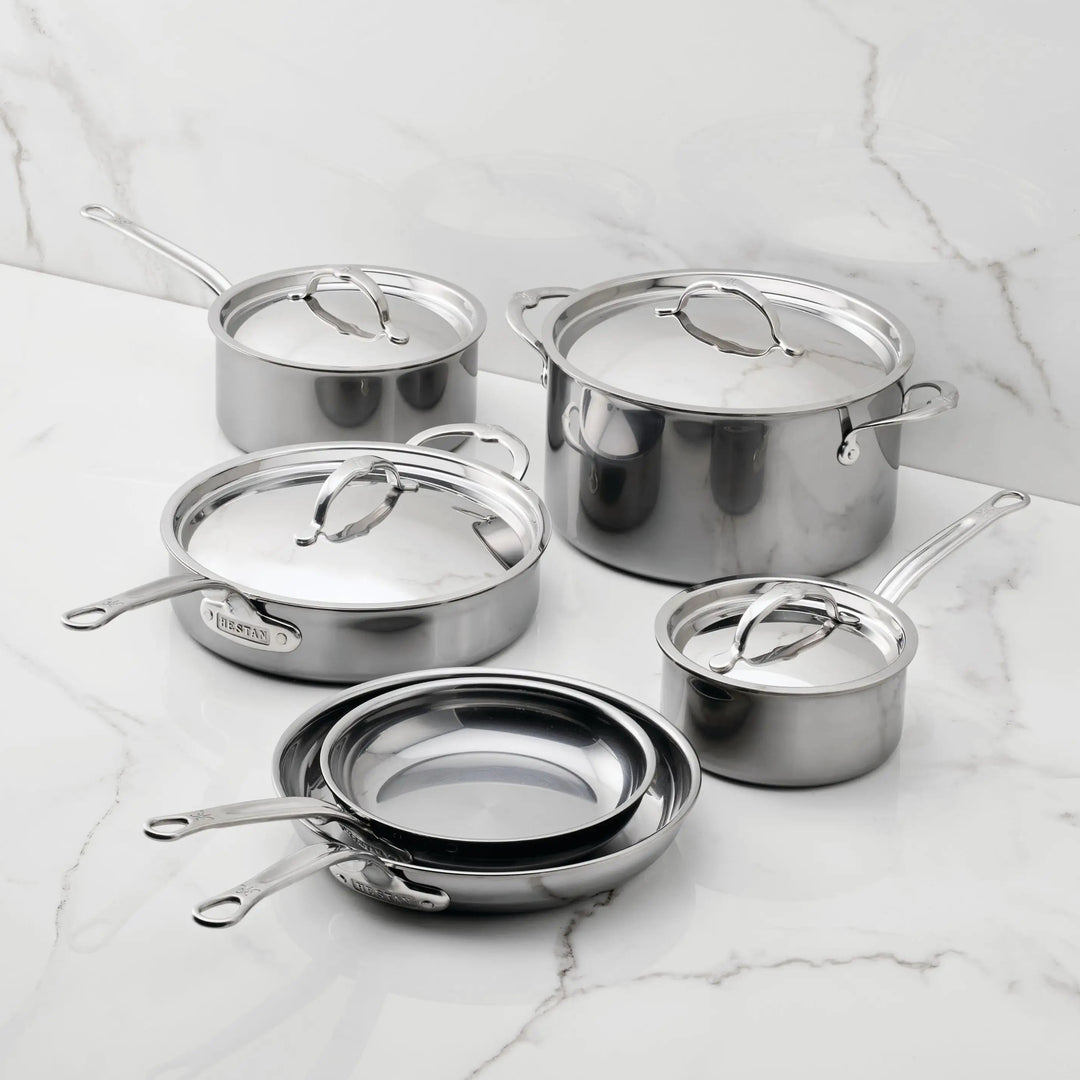
For example, the All-Clad D3 Stainless Steel Stockpot is made from a thick layer of 18/10 stainless steel, with no aluminum. It’s heavy, heats evenly, and can last a lifetime. For large families or people who cook in batches, investing in a solid stainless steel stockpot is a smart move.
Another great example is the IKEA 365+ stockpot. It’s much cheaper but still gets the job done for most basic kitchen tasks.
Credit: hestanculinary.com
Stainless Steel Cookware Without Aluminum: Myths And Facts
There are many myths about cookware materials. Let’s clear up a few common ones:
- Myth: All stainless steel cookware has aluminum.
Fact: Many do, but solid stainless steel cookware is widely available.
- Myth: Stainless steel is always nonstick.
Fact: Stainless steel needs proper preheating and oil to prevent sticking.
- Myth: Aluminum in cookware is dangerous for everyone.
Fact: Most studies show that small amounts of aluminum from cookware are not harmful, but some people prefer to avoid it.
- Myth: Stainless steel can rust.
Fact: High-quality stainless steel is resistant to rust, especially 18/10 and 316Ti grades.
Expert Tips For Getting The Most Out Of Stainless Steel Cookware
- Preheat your pan: Always heat the pan for a few minutes before adding food. This helps prevent sticking and ensures even cooking.
- Use the water test: To check if your pan is hot enough, sprinkle a few drops of water on the surface. If they dance and evaporate quickly, the pan is ready.
- Let food release naturally: Don’t try to flip or move food too soon. Proteins will release from the pan when they’re ready.
- Lower the heat: Stainless steel retains heat well. You usually don’t need to cook on high.
- Season your pan: For extra nonstick power, try seasoning your stainless steel pan—heat oil until it smokes, wipe it out, and let the pan cool.
When Should You Avoid Stainless Steel Without Aluminum?
All-stainless steel cookware is not perfect for every task. For frying eggs, pancakes, or delicate fish, you may prefer a nonstick pan for the best results. Stainless steel also heats up more slowly, so if you need super-fast cooking, it’s not always ideal.
But for boiling, steaming, browning, and making sauces, all-stainless steel is hard to beat.
What Do The Experts Say?
Most professional chefs and food safety experts agree that stainless steel is one of the safest, most reliable cookware materials available. The American Cancer Society and other health organizations say there’s no strong evidence that using aluminum cookware is dangerous for most people, but those who want to avoid any risk can confidently choose all-stainless steel.
For more on cookware safety, see the Stainless Steel Wikipedia page.
Credit: www.solidteknics.com
Frequently Asked Questions
What Is The Best Grade Of Stainless Steel For Cookware Without Aluminum?
The best grade for most people is 18/10 stainless steel. It’s highly resistant to rust and corrosion, safe for food, and easy to clean. If you have a nickel allergy, choose 18/0 stainless steel.
Does Stainless Steel Cookware Without Aluminum Work On Induction Cooktops?
Yes, most all-stainless steel cookware (especially 18/0 grade) is induction compatible. To be sure, check the product label for the induction symbol, or use a magnet—if it sticks, it will work.
How Do I Keep Food From Sticking To My Stainless Steel Pans?
Preheat the pan, add a small amount of oil, and let food sear before moving it. For tricky foods like eggs, consider using more oil or a nonstick pan.
Is Stainless Steel Cookware Without Aluminum Dishwasher Safe?
Most brands are dishwasher safe, but hand-washing helps keep the shine and avoid water spots. Always check the manufacturer’s instructions.
Are There Any Foods I Should Avoid Cooking In Stainless Steel?
Highly acidic foods (like tomato sauce) are safe in high-quality stainless steel, but may cause discoloration in lower grades. Avoid leaving salty or acidic foods in the pan for long periods to keep your cookware looking new.
Choosing stainless steel cookware without aluminum is a smart, safe, and sustainable choice for many home cooks. With the right information and a little practice, you can enjoy a lifetime of healthy cooking and delicious meals.