
Testing your toilet for leaks might not be the most exciting home task, but it can save you money, water, and prevent bigger problems later. Many toilet leaks are silent—meaning you won’t see water on the floor or hear it running. In fact, the Environmental Protection Agency (EPA) estimates that household leaks can waste nearly 10,000 gallons of water every year. A leaking toilet is often the main culprit. Learning how to test your toilet for leaks is easy, doesn’t require special tools, and helps you keep your home efficient and safe.
You don’t have to be a plumber to spot a leak. With a few simple steps and a little attention, you’ll be able to catch problems early, fix them yourself, or know when to call a professional. This guide walks you through everything: why leaks happen, how to check for them, the tools you might use, and what to do if you find a problem. Along the way, you’ll also learn some tips that even experienced homeowners sometimes miss.
Why Toilet Leaks Matter
A leaking toilet is more than just a plumbing problem. It can:
- Raise your water bill quickly, sometimes doubling your costs without warning.
- Lead to water damage in your floors or walls if not noticed early.
- Create mold and mildew, which can be a health risk.
- Waste natural resources, especially in areas with water shortages.
Most leaks are easy to fix, but only if you catch them early. Some leaks are obvious—a puddle on the floor, or the sound of running water. But many are hidden inside the tank or under the base.
Common Causes Of Toilet Leaks
Understanding where leaks usually happen makes finding them much easier. Here are the most common sources:
- Worn-out flapper: The flapper is a rubber part at the bottom of the tank. When it gets old or dirty, it doesn’t seal well, letting water leak into the bowl.
- Faulty fill valve: The fill valve controls water flow into the tank. If it’s not working, water may run constantly.
- Cracked tank or bowl: Cracks can develop due to age or impact. Even small cracks can leak.
- Loose or worn tank bolts: The bolts holding the tank to the bowl can rust or loosen, causing leaks between the tank and bowl.
- Damaged wax ring: The wax ring at the toilet’s base can wear out, leading to leaks at the floor.
- Supply line issues: The line that brings water to your toilet can loosen or its washers can fail, causing leaks at the connection.
These problems can occur in any home, new or old. Checking each area is the best way to spot trouble before it gets expensive.

Credit: www.youtube.com
Signs Your Toilet Might Be Leaking
Many leaks go unnoticed. Here are some signs to watch for:
- Constant running water noise from the tank, even when not flushed.
- The toilet refills on its own (also called “phantom flushes”).
- Water stains or dampness around the toilet base.
- Mold or musty smell near the toilet.
- Unusually high water bills with no other explanation.
If you notice any of these, it’s time to test for leaks.
Essential Tools And Supplies
Most leak tests need just a few simple items:
- Food coloring or dye tablets (can also use Kool-Aid powder or instant coffee for color)
- Flashlight
- Paper towels or tissue
- Adjustable wrench
- Bucket or small container
- Gloves (optional for messy jobs)
You don’t need expensive tools. The most important tool is patience—some leaks take a few minutes to reveal themselves.
Step-by-step: How To Test Toilet For Leaks
Let’s walk through several methods. Each targets a different leak type.
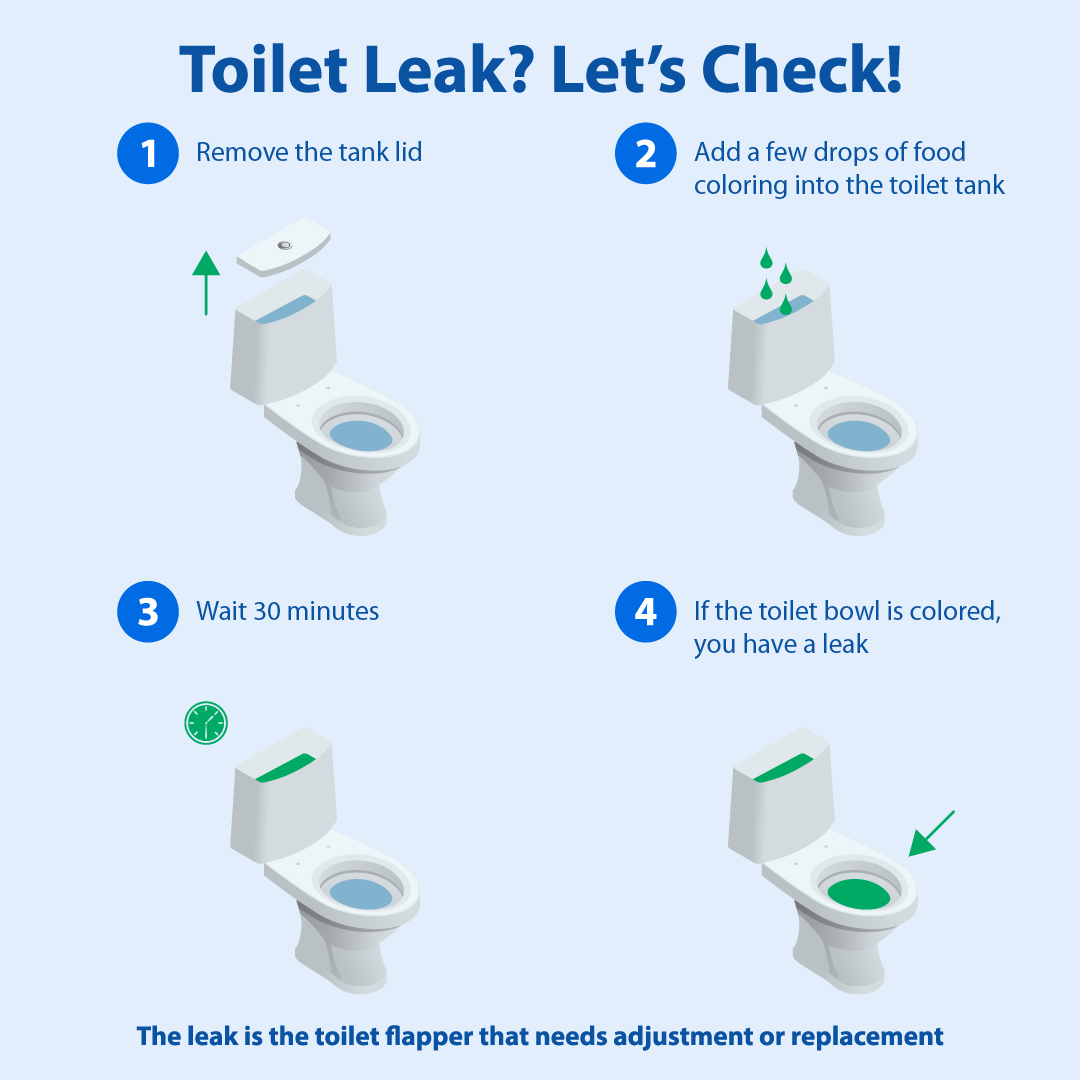
1. Dye Test For Tank-to-bowl Leaks
This is the most common leak, where water leaks from the tank into the bowl.
- Remove the tank lid. Place it safely on a towel.
- Add dye: Put 5-10 drops of food coloring, or a dye tablet, into the tank water. Do not flush.
- Wait 15-30 minutes. Do not use the toilet during this time.
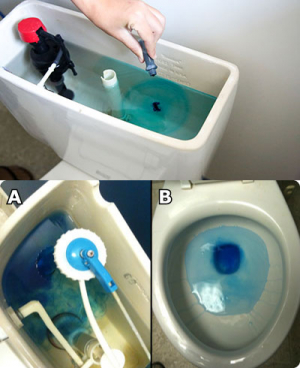
- Check the bowl: If you see colored water in the toilet bowl, you have a leak.
This test checks if the flapper or flush valve is letting water leak into the bowl. If color appears, that’s your problem.
Practical Tip: If you don’t have food coloring, instant coffee or a colored drink powder can work too.
2. Listen And Look For Refill Sounds
After flushing, the tank should refill, and the sound should stop. If you hear water refilling on its own every few minutes, or constantly, water is leaking from the tank—likely due to a faulty flapper or fill valve.
- Check for “phantom flushes”: Listen for the sound of the toilet refilling when no one has used it.
- Check the overflow tube: If water is running into the overflow tube, the fill valve may be set too high or is faulty.
3. Check For Leaks At The Toilet Base
Leaks at the base can damage your floor and lead to bad smells.
- Dry the area around the base of the toilet with a towel.
- Flush the toilet and watch closely.
- Look for water seepage: If water appears at the base, the wax ring may be bad, or the toilet may be loose.
Insight: Sometimes leaks at the base show up only when someone sits on the toilet, due to shifting. Press down gently on the toilet after flushing to see if water appears.
4. Inspect The Supply Line And Shutoff Valve
The supply line brings water from the wall to your toilet.
- Use a dry paper towel to wipe the supply line, especially around the connectors and shutoff valve.
- Look for drips or dampness: Even a slow drip means a leak.
- Check the floor under the line for water spots.
Non-obvious tip: Sometimes, leaks here only happen when the toilet is refilling, so check while the tank is filling after a flush.
5. Tank-to-bowl Bolt Leak Test
Water can leak between the tank and the bowl through worn bolts or gaskets.
- Flush the toilet and look under the tank, where it joins the bowl.
- Dry the area first, then check for new drips after flushing.
- Run your fingers under the tank edge—a wet finger means a leak.
6. Food Coloring Test For Cracks
Cracks in the tank or bowl can cause slow leaks.
- Dry the outside of the tank and bowl.
- Add colored water to the tank.
- Look for colored drips on the outside after 15-30 minutes.
Cracks can be hard to spot, especially hairline cracks. Good lighting helps.
7. Water Meter Test For Hidden Leaks
This test checks for leaks anywhere in your toilet, even very small ones.
- Turn off all water-using devices in the house (no dishwashers, showers, etc. ).
- Write down your water meter reading.
- Wait 1-2 hours without using any water.
- Check the meter again. If the reading has changed, you have a leak. If you suspect the toilet, turn off its supply and repeat. If the leak stops, the toilet is the problem.
Extra insight: Some meters have a small triangle or wheel that moves with even tiny leaks—watch it for a few minutes.
Understanding Test Results
Not all leaks are the same. Here’s how to interpret what you find.
- Color in the bowl after dye test: The tank is leaking into the bowl. Likely a flapper or flush valve problem.
- Water at the base after flushing: The wax ring or toilet bolts may be failing.
- Drips from supply line or shutoff: Tighten connections or replace washers.
- Cracks with colored water outside: The tank or bowl may need replacing.
- Meter shows leak but can’t find source: Call a plumber—could be a hidden leak.
How To Fix The Most Common Toilet Leaks
Testing is the first step. Fixing most leaks is often a simple DIY job.
Replacing A Worn Flapper
- Turn off water supply to the toilet.
- Flush to empty the tank.
- Remove the old flapper (it usually unclips from the overflow tube).
- Take the old flapper to the hardware store for a match.
- Install the new flapper and turn the water back on.
- Test with the dye test again to confirm the leak is fixed.
Adjusting Or Replacing The Fill Valve
- Check the water level: If it’s above the overflow tube, lower the float.
- If adjusting doesn’t help, replace the fill valve (follow instructions on the new part).
- Test for leaks after replacing.
Tightening Or Replacing The Supply Line
- Gently tighten the connection nuts with a wrench.
- If leaking continues, replace the supply line (inexpensive and simple to install).
Replacing The Wax Ring
This is a more advanced DIY fix.
- Turn off water and drain the toilet.
- Remove the toilet (unscrew bolts, lift carefully).
- Scrape away the old wax ring.
- Install a new ring and reset the toilet.
- Tighten bolts evenly and reconnect water supply.
Caution: The toilet is heavy—get help if needed.
Dealing With Cracks
- Small hairline cracks: Some can be sealed with waterproof epoxy, but most mean the toilet or tank should be replaced.
- Large cracks or leaks: Replace the toilet or tank for safety.
How Often Should You Test Your Toilet For Leaks?
Checking your toilet for leaks at least twice a year is a good habit. Always test if:
- You notice higher water bills.
- You hear running water.
- You see water near the toilet base.
Rental properties and older homes should be checked more often.
Credit: www.tohowater.com
Table: Most Common Toilet Leak Locations And Fixes
Here’s a quick reference for where leaks happen and how they’re usually fixed.
| Leak Location | How to Test | Common Fix |
|---|---|---|
| Tank to Bowl | Dye Test | Replace Flapper |
| Base of Toilet | Visual/Flush Test | Replace Wax Ring |
| Supply Line | Paper Towel Test | Tighten/Replace Line |
| Tank or Bowl (Cracks) | Dye/Visual Test | Repair/Replace Toilet |
| Tank Bolts | Check After Flush | Tighten/Replace Gasket |
Table: Cost Comparison Of Diy Vs. Professional Leak Repair
Knowing what you might spend can help you decide whether to DIY or call a plumber.
| Repair Type | DIY Cost (USD) | Pro Cost (USD) |
|---|---|---|
| Replace Flapper | $5 – $15 | $75 – $150 |
| Replace Fill Valve | $10 – $25 | $90 – $200 |
| Replace Wax Ring | $10 – $20 | $150 – $300 |
| Replace Supply Line | $5 – $15 | $60 – $120 |
| Replace Toilet | $100 – $400 | $300 – $800 |
Tip: Many repairs are simple and can be done in under an hour with basic tools.
Table: Water Waste From Common Toilet Leaks
Toilet leaks can waste a surprising amount of water each day. Here’s what different types can cost you.
| Leak Type | Gallons Wasted/Day | Annual Water Cost (approx.) |
|---|---|---|
| Slow Flapper Leak | 30 | $40 |
| Constant Running | 200 | $250 |
| Base Leak (small) | 20 | $25 |
| Supply Line Leak | 10 | $12 |
*Estimates based on average US water costs. Leaks can waste much more if severe. *
When To Call A Plumber
Most toilet leaks are easy to fix with a little guidance. However, call a professional if:
- You can’t find the leak source after testing.
- The tank or bowl is cracked.
- The toilet is loose or rocks when you sit on it.
- There is sewage smell or water damage to the floor.
- You are uncomfortable with DIY plumbing.
A professional can diagnose complex problems and help prevent future issues.
Preventing Future Toilet Leaks
Prevention is easier than repair. Here’s how to keep your toilet leak-free:
- Check your toilet parts every six months. Replace worn flappers and seals.
- Don’t use harsh chemicals in the tank—they can damage rubber parts.
- Tighten bolts gently. Overtightening can crack the tank.
- Fix small leaks quickly. Waiting can make repairs more expensive.
- Avoid flushing non-flushable items. They can damage your toilet’s seals.
Non-obvious tip: If your toilet is over 20 years old, consider replacing it with a newer, more efficient model. Modern toilets use less water and have better leak resistance.
Environmental Impact Of Toilet Leaks
Toilet leaks are not just a personal financial issue. In the US, trillions of gallons of water are lost each year to household leaks. Water conservation is important for communities, especially in drought-prone areas. Even a small leak adds up over time.
By checking your toilet regularly and fixing leaks, you help save water for everyone.
Credit: www.corinthtx.gov
Trusted Resources For More Information
If you want to learn more, the EPA WaterSense program has guides on saving water at home. You can find more info at their official website.
Frequently Asked Questions
How Do I Know If My Toilet Is Leaking Without Removing The Tank Lid?
Listen for running water or “phantom flushes. ” You can also try the dye test by adding food coloring to the tank, even without removing the lid, if it has an opening. If color appears in the bowl after 15-30 minutes without flushing, you have a leak.
Is A Slow Toilet Leak Really A Big Problem?
Yes. Even a slow leak can waste thousands of gallons each year, raising your water bill and putting stress on plumbing. Slow leaks can also lead to mold and floor damage over time.
Can I Use Any Kind Of Dye For The Leak Test?
Any safe, non-toxic colorant works—food coloring is best. Avoid using chemicals that could damage rubber parts. Some hardware stores sell special dye tablets for toilets.
What If My Toilet Only Leaks When Flushed?
This often means the wax ring at the base is failing, or the bolts are loose. Water escapes only under pressure. Check for water around the base after flushing and consider replacing the wax ring.
Should I Replace My Old Toilet To Prevent Leaks?
If your toilet is over 20 years old, replacement can improve efficiency and reliability. New toilets use less water, saving money and reducing leak risks. However, most leaks can be fixed without full replacement unless the tank or bowl is cracked.
—
Testing your toilet for leaks is a simple but important job. Small leaks can turn into big expenses, but most are easy to spot and fix if you know what to look for. With regular checks, you can save water, money, and avoid headaches down the road.
Don’t wait for a problem—test your toilet today and enjoy peace of mind in your home.