
Moving a glass table top is not as simple as shifting any regular piece of furniture. Glass is fragile, heavy, and expensive to replace if broken. One mistake can mean shattered glass, scratched surfaces, or even personal injury. If you’re planning to move a glass table top—whether within your house, into storage, or to a new home—knowing the right techniques will protect both the glass and yourself.
This guide will walk you through every detail, from preparation to transportation, using simple language and practical advice. Even if you’ve never moved something so delicate before, you’ll finish reading with confidence.
Understanding The Risks Of Moving A Glass Table Top
Before you start, it’s important to realize why glass table tops require special handling. These surfaces are usually made from tempered glass, which is stronger than regular glass but still vulnerable to impacts at the edges or uneven pressure. A small crack or chip can quickly become a large break. Glass is also slippery and heavy, making it hard to grip and control. Moving without preparation or the right equipment puts both the table top and people at risk.
Many people make the mistake of thinking two people can just “pick it up and go. ” This often leads to accidents. According to the US Consumer Product Safety Commission, glass injuries send thousands of people to the emergency room each year.
Most of these could be avoided with careful planning.
Supplies And Tools You Need
Success starts with the right materials. Do not improvise with towels or bed sheets—they don’t provide real protection.
You will need:
- Thick moving blankets or specialized glass packing blankets (2–3, depending on size)
- Packing tape (heavy-duty, at least 2 inches wide)
- Bubble wrap (large rolls for full coverage)
- Corner protectors (foam or rubber, designed for glass)
- Cardboard sheets (large enough to cover both sides)
- Suction cup handles (for safe lifting, especially for heavy glass)
- Gloves (cut-resistant, to protect hands)
- Measuring tape
- Permanent marker (for labeling)
- Dolly or hand truck (with a flat surface, for easier movement)
- Straps or ropes (to secure during transit)
If you’re missing any of these, get them before you start. Moving glass without proper padding or secure grip is a shortcut you’ll regret.
Credit: www.youtube.com
Measuring And Planning Your Route
One of the most overlooked steps is measuring. Before you even touch the glass, check the dimensions of the table top and all doorways, hallways, and staircases on your planned path.
- Measure the length, width, and thickness of your glass top.
- Measure all spaces the glass must pass through—door frames, elevator openings, tight corners.
- Note any obstacles such as narrow stairs, low ceilings, or sharp turns.
If you find a tight spot, plan a different route. Always have a “Plan B” in case the main path is blocked or turns out to be too small. Removing a door from its hinges can sometimes give you the extra inch needed.
Non-obvious insight: Many people forget to measure the thickness of the glass, but this affects both weight and the type of corner protectors you’ll need.
Preparing The Glass Table Top
Cleaning Before Packing
Start by cleaning both sides of the glass with a streak-free glass cleaner. Dirt or grit trapped under moving blankets can cause scratches during transport. Use a soft microfiber cloth—never a rough towel.
Removing The Glass From Its Base
If your table top is attached to a base:
- Clear the table of any objects.
- Check for screws or adhesive attaching the glass to the frame.
- If screws are present, unscrew them carefully and keep them in a labeled bag.
- If adhesive is used, gently slide a thin, plastic putty knife around the edge to loosen it. Do not force it, or you may crack the glass.
Tip: Do not attempt to move the glass while attached to its base. This adds extra weight and makes it harder to protect.
Placing The Table Top On A Safe Surface
Move the glass onto a soft, flat surface for packing. A carpeted floor works well, or lay down thick blankets on hardwood. Never pack glass on concrete or tile.
Packing The Glass Table Top For Safe Transport
Proper packing is the key to avoiding disaster. Here’s how to do it right:
- Apply Corner Protectors: Place foam or rubber protectors on all corners. The corners are the weakest points and most likely to chip or crack.
- Wrap with Bubble Wrap: Cover the entire surface on both sides with two layers of bubble wrap. Secure with packing tape, but avoid letting tape touch the glass directly.
- Add Cardboard Sheets: Place a large piece of cardboard on each side of the glass. This adds a rigid layer to absorb bumps and prevent piercing.
- Wrap with Moving Blankets: Lay the wrapped glass on a moving blanket. Fold the blanket tightly around the glass, then tape it securely so it won’t shift.
- Double-Check Protection: Press gently on the corners and edges—there should be padding everywhere. If any area feels thin, add extra material.
Comparing Packing Materials
Here’s a quick look at how different materials protect your glass table top:
| Material | Protection Level | Cost | Best Use |
|---|---|---|---|
| Moving blankets | High | Medium | Full coverage, shock absorption |
| Bubble wrap | Medium | Low | Surface scratch prevention |
| Cardboard sheets | Medium | Low | Rigidity, puncture resistance |
| Towels/Sheets | Low | None | Last resort only |
Practical advice: Use at least two types of protection for best results. For example, bubble wrap plus a moving blanket.
How To Lift And Carry A Glass Table Top
Teamwork Is Essential
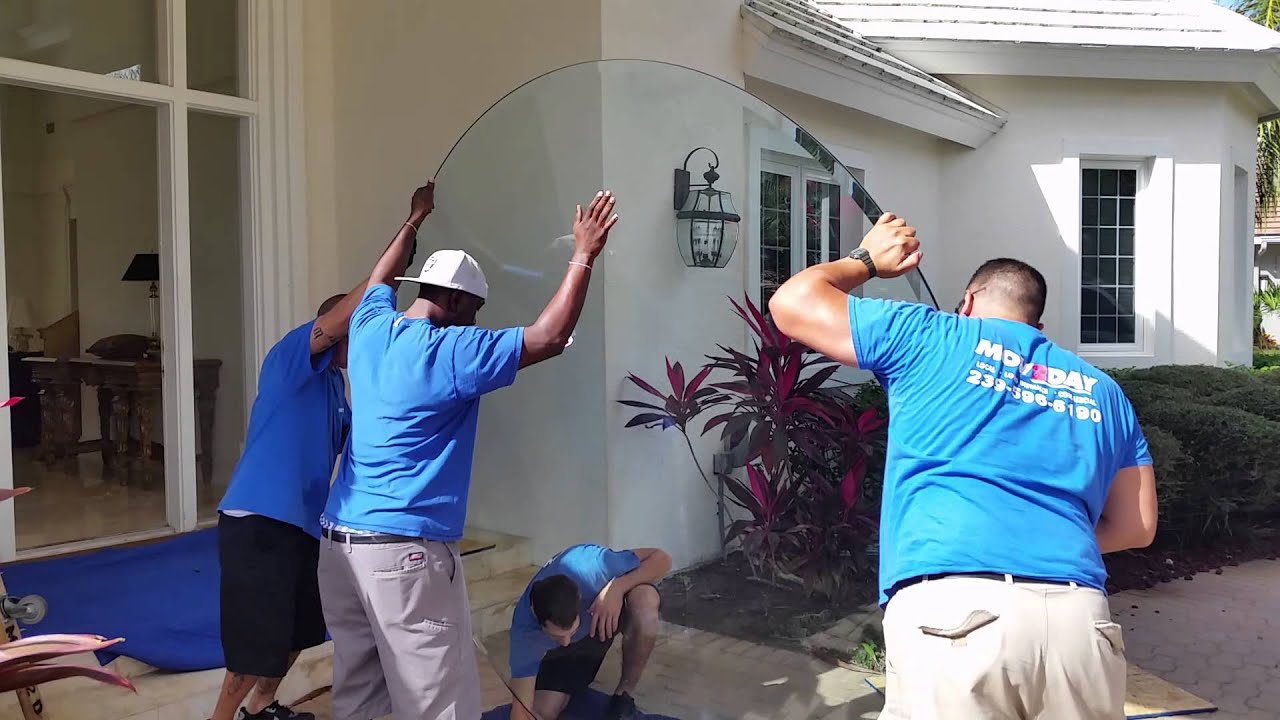
Never try to move a heavy glass table top alone. Even smaller pieces are awkward and slippery. At least two people are needed—three or four for very large tops.
Using Suction Cup Handles
Suction cup handles give you a strong, steady grip on the glass without touching the surface. They also reduce the risk of dropping the table top. Test each handle to make sure it’s firmly attached before lifting.
Lifting Safely
- Stand on opposite sides of the glass.
- Keep your back straight and bend your knees to lift.
- Lift slowly and in sync with your partner. Communicate clearly (“Ready? Lift on three!”).
- Hold the glass vertically, not flat. Glass is much stronger on its edge than its face.
Moving Through Tight Spaces
Move slowly and watch both ends. If the path is narrow, one person should guide from the front, and another from the back. If you must turn a corner, tilt the glass slightly to fit, but never twist or force it.
Common mistake: Carrying glass horizontally makes it much more likely to flex and break. Always keep it upright.
Loading The Glass Table Top Into A Vehicle
Choosing The Right Vehicle
A van or box truck is best. The table top should fit upright against a wall, not flat on the floor. If you only have a car, fold down the seats and measure first—most glass tops are too large for cars.
Preparing The Vehicle
- Lay down moving blankets where the glass will rest.
- Make sure the surface is flat and clean.
- Plan to keep the glass upright and secure during the drive.
Placing The Table Top
- Lift the glass into the vehicle with at least two people.
- Slide it gently to the padded area.
- Position it on its long edge, never flat.
Securing The Glass
- Use straps or ropes to hold the glass in place. Attach these to anchor points in the van or truck.
- Add extra padding around the glass to prevent shifting during turns or sudden stops.
Table: Vehicle Suitability For Moving Glass Table Tops
| Vehicle Type | Suitability | Notes |
|---|---|---|
| Box truck | Excellent | Upright storage, plenty of space |
| Minivan/SUV | Good | Seats fold down, check opening size |
| Pickup truck | Fair | Only with padding and vertical support |
| Passenger car | Poor | Usually too small for large tops |
Non-obvious insight: The safest spot for glass is near the cab or front wall of a van, not near the back where it could shift with sudden stops.
Unloading And Reinstalling The Glass Table Top
Preparing The New Space
Before unloading, check the path again for obstacles. Make sure the final location is clean and ready—dust and debris can scratch the glass.
Lifting Out Safely
Repeat the same teamwork and lifting techniques you used before. Always carry the glass upright.
Unpacking The Glass
- Place the glass on a soft surface.
- Carefully remove all tape, blankets, and cardboard.
- Inspect for any chips or cracks before reinstalling.
Reattaching To The Base
If the table top was screwed or glued in place, reattach it with the original hardware. Never use new glue or screws unless you are sure they are compatible.
Tip: If the glass is especially heavy, consider using suction cup handles during installation to avoid fingerprints and smudges.
Tips For Moving Large Or Heavy Glass Table Tops
- Hire professionals if the table top is too large or heavy for safe handling. Damage or injury is more expensive than hiring help.
- For glass thicker than 1/2 inch, use commercial-grade suction handles.
- Always wear cut-resistant gloves—even a small chip can create a sharp edge.
- If moving up or down stairs, go slowly and use extra helpers for stability.
- Never stack heavy items on top of the glass, even if it’s well-padded.
What To Do If The Glass Breaks
Even with the best precautions, accidents happen. Here’s what to do:
- Do not touch sharp pieces with bare hands.
- Put on gloves and carefully pick up large pieces first.
- Use a broom and dustpan for smaller shards.
- Wrap broken glass in thick paper or cardboard and tape it closed before disposal.
- Vacuum the area to catch tiny fragments.
- If the glass was tempered, it will break into small, blunt pieces; regular glass creates sharp shards.
If someone is cut, clean the wound and seek medical help if needed.
Storing A Glass Table Top
If you’re not reinstalling the table top immediately, store it upright, not flat. Place it against a wall on a padded surface and use foam spacers to keep it from touching the wall directly. Never leave it where it could be bumped or knocked over.
Example: Moving A Glass Table Top In An Apartment Building
Imagine you live on the third floor of an apartment building. The elevator is small, and the hallways are narrow. Here’s how you might handle this:
- Measure the elevator and stairwell before moving day.
- If the elevator is too small, plan for stairs and recruit two strong helpers.
- Use moving blankets and corner protectors to avoid wall and glass damage.
- Move slowly and communicate at every turn.
- In the apartment, set the glass upright near a wall until you’re ready to assemble the table.
Real-life tip: Some apartment buildings require advance notice for large moves. Check with your management before starting.
Credit: appleglasscompany.com
Common Mistakes To Avoid
- Skipping the measurement step. Even a half-inch difference can stop your move.
- Using only one layer of protection. Always double up with bubble wrap and blankets.
- Trying to move glass horizontally. This greatly increases the risk of breaking.
- Placing glass flat on a truck floor. Road bumps can crack it.
- Not securing in the vehicle. Glass will move and break if not strapped tightly.
- Forgetting to label the package. Movers may not realize there’s glass inside if it’s not marked.
Cost Of Moving A Glass Table Top
The cost varies depending on size, distance, and whether you hire help. Here’s a rough breakdown:
- Do-it-yourself: $30–$80 for supplies (blankets, tape, bubble wrap, etc.)
- Professional movers: $100–$300, depending on the job
- Suction cup handles: $20–$50 to rent or buy
Spending a little more on proper supplies is always cheaper than replacing a broken table top.

Credit: www.cbdglass.com
Environmental Impact And Recycling
Broken glass should never go in regular recycling bins unless your local authority accepts it. Many cities have special rules for large glass items. If you must dispose of a broken glass top, check local regulations or visit your city’s waste management site.
For more on recycling and disposal of glass, see the EPA’s official guidance.
Table: Comparing Glass Table Top Thickness
How thick is your glass? The thicker it is, the heavier and stronger—but also harder to move.
| Thickness (inches) | Weight (per sq ft) | Strength | Moving Difficulty |
|---|---|---|---|
| 1/4″ | ~3 lbs | Low | Easy |
| 3/8″ | ~5 lbs | Medium | Moderate |
| 1/2″ | ~6.5 lbs | High | Hard |
| 3/4″ | ~10 lbs | Very High | Very Hard |
Practical insight: If your glass top is thicker than 1/2 inch, always use extra hands and strong lifting equipment.
When To Hire A Professional
Some situations call for expert help:
- The table top is larger than 5 feet in any direction.
- The glass is especially thick or unusually shaped.
- The path includes many stairs or tight corners.
- You do not have enough people to help.
- The value of the glass is very high or sentimental.
Professional movers have the training and equipment to handle tricky situations, and many offer insurance in case of damage.
Frequently Asked Questions
How Do I Know If My Glass Table Top Is Tempered Glass?
Tempered glass usually has a small etched mark in one corner. It may say “Tempered” or “Safety Glass. ” If you can’t find this, tap the edge gently—tempered glass sounds dull, while regular glass sounds sharper. Tempered glass also breaks into small pieces, not sharp shards.
Can I Move A Glass Table Top By Myself?
It’s not recommended. Even small glass tops can slip and break easily when handled alone. Always ask for help from at least one other person. For heavy or large tops, three or four people may be needed.
What Should I Do If The Glass Top Is Glued To The Table Base?
Try to soften the glue with a hair dryer or heat gun (on low). Gently slide a plastic putty knife under the edge. Do not force the glass—if it resists, consult a furniture expert to avoid cracks.
Is It Safe To Move A Glass Table Top In A Pickup Truck?
It can be done with extra care. Stand the glass upright near the cab, pad it well, and secure with straps. Cover it to protect from road debris and weather. Avoid moving glass flat in a truck bed.
How Do I Protect The Glass From Scratches During The Move?
Use at least two layers of soft material, such as bubble wrap plus a moving blanket. Never let tape, cardboard, or rope touch the glass directly. Clean both glass and packing materials before use.
Moving a glass table top is a careful process, but not impossible. With the right supplies, good planning, and a bit of patience, you can protect your valuable furniture and avoid costly mistakes. Take your time, follow these steps, and your glass table top will arrive safely in its new home.