
Moving a sofa can be a tough job. Sofas are heavy, awkward, and hard to maneuver through tight spaces. But with the right tools and careful steps, you can move a sofa safely and efficiently. One of the best tools for this job is a dolly—a simple wheeled platform that can save your back, protect your furniture, and make the process much smoother. In this guide, you’ll learn exactly how to move a sofa with a dolly, from planning the move to finishing up without damage to your furniture or home.
Whether you’re moving to a new apartment, rearranging your living room, or helping a friend, this complete walkthrough will help you avoid common mistakes and injuries. You’ll also pick up expert tips that even many professional movers sometimes overlook.
Why Use A Dolly To Move A Sofa?
Moving a sofa without any equipment is risky. Sofas can weigh between 150 and 250 pounds (68–113 kg) on average. Larger sectionals or sleeper sofas can weigh even more. Lifting this much weight puts a lot of strain on your back, shoulders, and knees.
A dolly takes most of this weight off your body and lets you roll the sofa instead of carrying it.
Here are some major benefits of using a dolly:
- Reduces risk of injury: Proper use of a dolly means you’re less likely to hurt yourself.
- Protects your sofa and home: Rolling a sofa is smoother than dragging or carrying, so there’s less chance of scraping floors or damaging doorways.
- Saves time and energy: You’ll need fewer rest breaks and can move more efficiently.
- Allows for solo moves: With the right dolly and technique, one person can sometimes move a small sofa alone.
Many people try to save money by skipping equipment, but the cost of a dolly rental (often $10–$20 per day) is much less than potential repair costs for broken furniture or injuries.
Types Of Dollies For Moving Sofas
Not all dollies are the same. Choosing the right type is important for safety and ease. The two main types are furniture dollies and appliance dollies.
| Type | Features | Best For | Weight Limit |
|---|---|---|---|
| Furniture Dolly | Flat platform, 4 wheels, no handle | Sofas, dressers, tables | 600–1000 lbs |
| Appliance Dolly | Upright frame, 2 wheels, straps, handle | Refrigerators, tall items | 600–800 lbs |
For most sofas, a furniture dolly is best. It has a large, flat surface—usually padded—and four wheels that swivel. This design is perfect for wide, bulky objects. An appliance dolly is better for tall, heavy items that need to stay upright.
Before renting or buying, check the weight capacity of your dolly. Never overload a dolly, as this can cause the wheels to break or the sofa to tip.
Tools And Supplies You’ll Need
To move a sofa with a dolly safely, you need a few other items besides the dolly:
- Moving blankets or pads: Protects the sofa’s fabric and prevents scratches on walls and doors.
- Stretch wrap or plastic wrap: Keeps cushions, pillows, and moving blankets in place.
- Moving straps or rope: Secures the sofa to the dolly.
- Measuring tape: Checks doorways, hallways, and elevators for clearance.
- Work gloves: Improves grip and protects your hands.
- Screwdriver or wrench: For removing sofa legs or arms, if needed.
- Furniture sliders: Helps move the sofa onto the dolly with less friction.
Having all these supplies ready before you start saves time and helps avoid accidents.
Preparing The Sofa For Moving
A big mistake people make is trying to move a sofa as-is. Preparation is key to a smooth move.
Remove All Cushions And Pillows
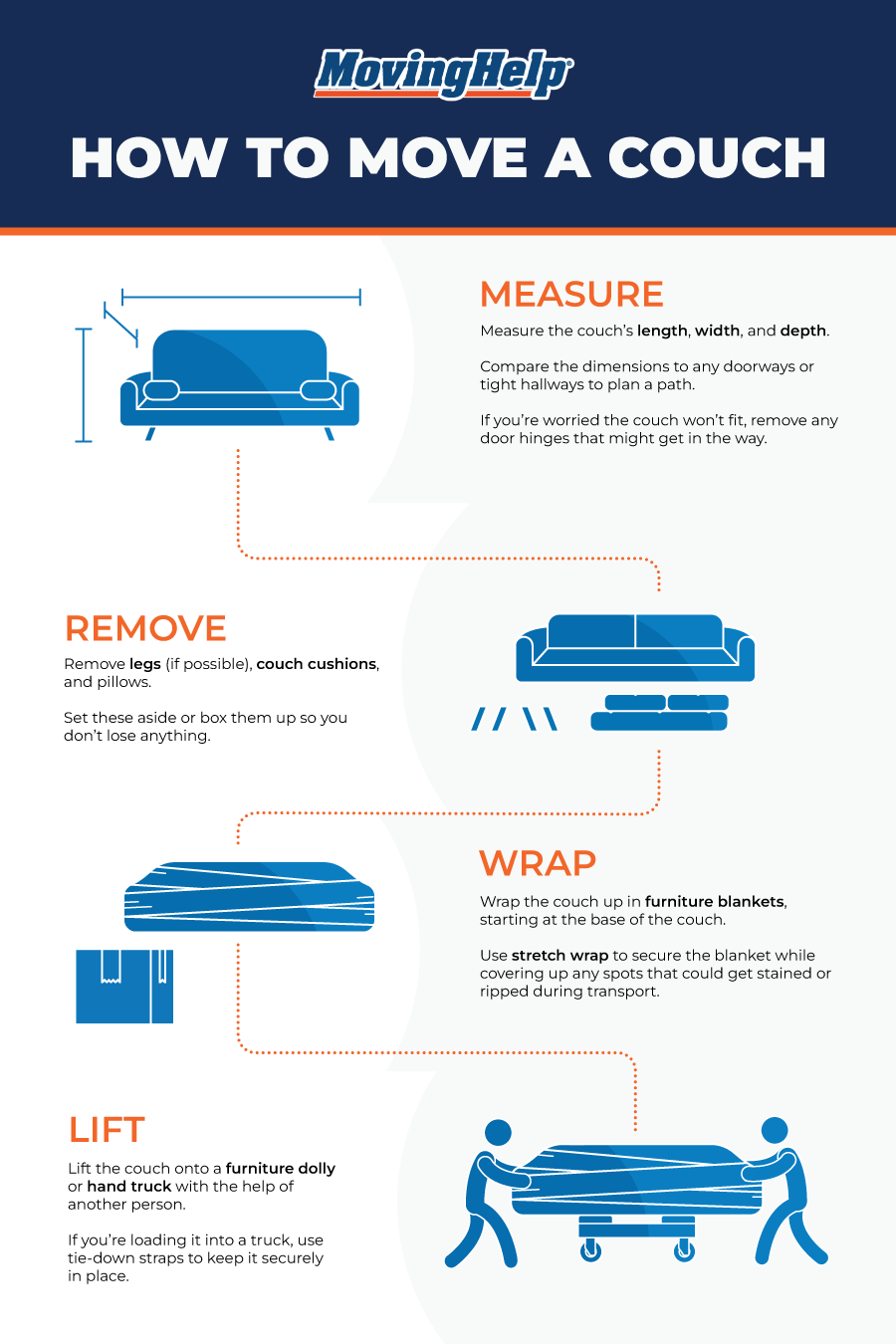
Take off any loose cushions, pillows, or throws. Pack them separately in bags or boxes. This makes the sofa lighter and prevents items from falling during the move.
Disassemble If Possible
If your sofa has removable legs, arms, or a fold-out bed, take these parts off. Check the manufacturer’s instructions or look for screws or bolts underneath. Removing legs can make it much easier to fit through doorways and tight corners.
- Tip: Put all screws and small parts in a labeled zip bag and tape it to the sofa frame.
Wrap The Sofa
Use moving blankets or pads to cover the entire sofa, especially the corners and arms. Secure these with stretch wrap or tape (never stick tape directly to the upholstery). This protects against scratches and dirt.
- Pro insight: Double-wrap leather sofas or delicate fabrics to avoid tears.
Measure Doorways And Pathways
Use a measuring tape to check the width, height, and depth of the sofa, then measure all doorways, hallways, and stairs along your planned path. Make sure the sofa will fit through every space. If not, plan a new route or further disassemble the sofa.
- Non-obvious tip: Don’t forget to measure elevator doors and turns in apartment buildings.
Credit: www.phsinc.com
Planning The Route
A successful move starts with a clear plan.
- Clear the path: Remove rugs, small furniture, and anything on the floor that could trip you or block the dolly.
- Prop open doors: Use door stops or wedges so you can move through without stopping.
- Check for steps or uneven surfaces: If you must go up or down stairs, plan how you’ll handle this (see below).
- Warn others: Let family members or roommates know you’ll be moving a large item. Keep kids and pets out of the way.
- Expert advice: Take a few minutes to walk the entire path before you start. Look for low ceilings, hanging lights, or tight corners that could cause problems.
Moving The Sofa Onto The Dolly
This step requires patience and teamwork. Don’t rush—injuries often happen when people try to lift too quickly.
Teamwork And Lifting Techniques
If possible, have at least one helper. Moving a heavy sofa alone is risky. Use proper lifting techniques:
- Bend at your knees, not your back.
- Lift with your legs, keeping your back straight.
- Keep the sofa close to your body.
If you must move the sofa alone, use furniture sliders under each leg or corner. Push the sofa gently onto the sliders, then slide it toward the dolly.
Placing The Sofa On The Dolly
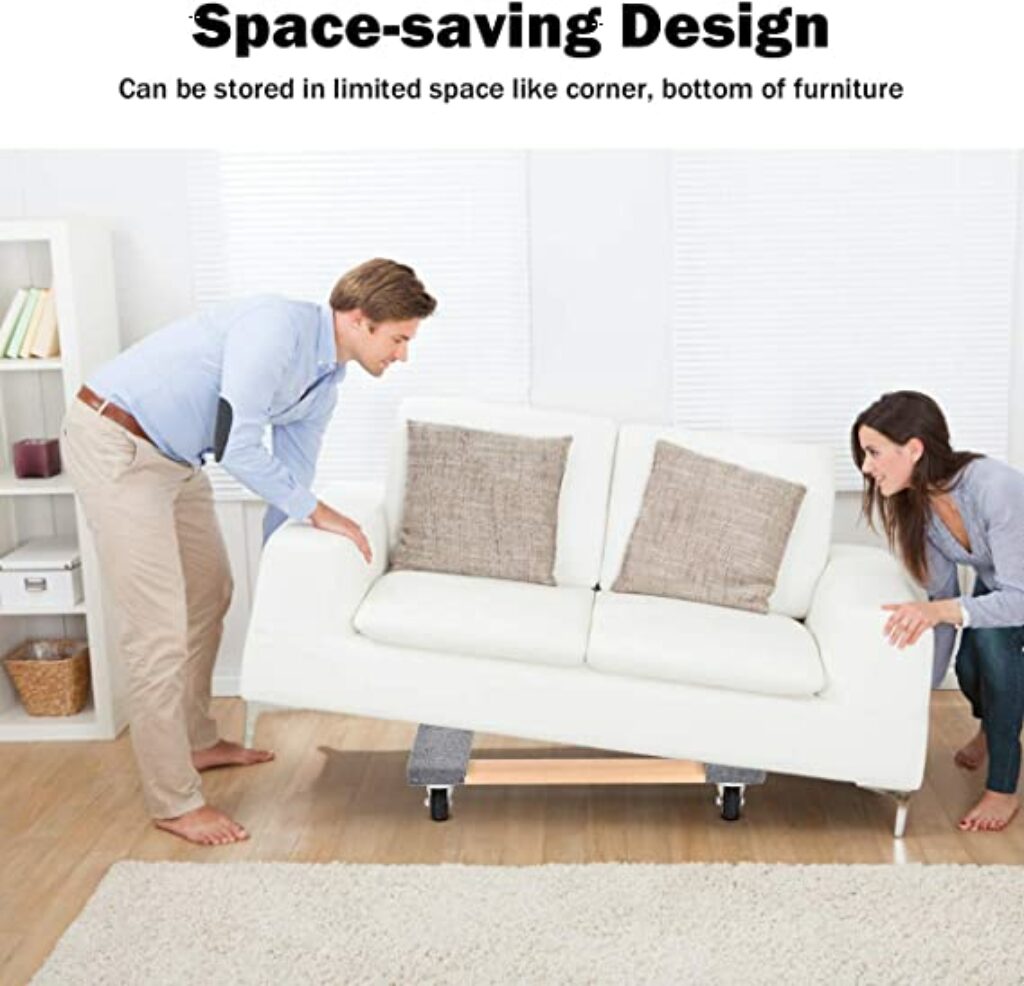
Position the dolly as close as possible to the sofa. Tilt the sofa slightly to one side while your helper slides the dolly underneath. The sofa should be centered on the dolly for balance. If it’s too far off-center, it may tip over.
- For large sectionals, move one piece at a time.
- For long sofas, place the dolly under the heaviest part (often the center).
Secure the sofa to the dolly with moving straps or rope. Tighten the straps so the sofa doesn’t shift as you roll.
- Non-obvious insight: If your sofa is unusually deep or bottom-heavy, use two dollies—one under each end. This provides better stability and makes turning easier.
Credit: www.movinghelp.com
Navigating Through Doorways, Hallways, And Stairs
Moving the sofa from one room to another is often the hardest part. Tight spaces and turns are tricky.
Getting Through Doorways
- Angle the sofa: Sometimes, tilting the sofa vertically (“standing it on end”) helps it fit through narrow doors.
- Remove doors: If the sofa barely fits, take the door off its hinges for extra space.
- Protect walls: Use extra moving pads on door frames and walls to prevent scrapes.
Hallways And Corners
- Move slowly and turn carefully. Dollies with swivel wheels are easier to maneuver.
- If you hit a tight turn, stop and adjust the sofa’s angle. Sometimes, lifting one end slightly helps.
- Watch overhead for light fixtures and low ceilings.
Going Up Or Down Stairs
- If possible, avoid using a dolly on stairs. Most dollies are not designed for stairs and can tip easily.
- If you must use a dolly on a few steps, move very slowly. One person should guide from above, and another should lift from below.
- For more than a few steps, remove the sofa from the dolly and carry it up or down using proper lifting technique.
Important: Never rush on stairs. Most moving injuries happen here.
Loading The Sofa Into A Vehicle
The next challenge is getting the sofa into a moving truck or van. Here’s how to do it safely:
- Use a ramp: Most moving trucks have a loading ramp. Position the dolly at the base of the ramp.
- Push, don’t pull: Always push the dolly up the ramp. Pulling increases the risk of losing control.
- Secure inside the vehicle: Once inside, place the sofa against a wall and use straps to secure it. Prevent it from sliding during transport.
If your sofa is too large for the ramp, remove it from the dolly and carefully lift it inside the truck.
- Pro tip: Place the sofa on its side or back to maximize space, but make sure it won’t shift during transit.
Unloading And Placing The Sofa
At your destination, reverse the steps above.
- Roll the sofa down the ramp, always keeping a firm grip.
- Move slowly through hallways and doors, using the same protective measures.
- Once in the right room, remove the straps and moving blankets.
- Reattach legs, arms, or cushions as needed.
Check the sofa for damage. If you notice any scratches or dents, deal with them quickly to prevent further harm.
Safety Tips For Moving A Sofa With A Dolly
Safety is the top priority. Here are some rules to follow:
- Wear proper shoes: Closed-toe shoes with good grip prevent slips.
- Don’t overload the dolly: Check weight ratings and never exceed them.
- Communicate with your helper: Use clear signals, especially on stairs or tight turns.
- Take breaks: Don’t rush. If you feel tired, stop and rest.
- Keep fingers clear: Don’t let your hands get pinched between the dolly and furniture.
- Use gloves: This improves your grip and protects against sharp edges.
Common Mistakes To Avoid
Even with the right tools, it’s easy to make mistakes that can damage your sofa or home—or worse, cause injuries.
- Skipping measurements: Always check the size of the sofa and all passageways before moving.
- Not securing the sofa to the dolly: If the sofa slides off, it can cause injury or break something.
- Dragging instead of rolling: This can damage floors and wear out the dolly’s wheels.
- Forgetting to remove legs or arms: This makes moving harder than it needs to be.
- Trying to move a sofa solo: Always get help for heavy or awkward items.
- Ignoring weight limits: Overloading a dolly can lead to disaster.
Comparison: Moving A Sofa With And Without A Dolly
Let’s compare moving a sofa with a dolly versus without one.
| Aspect | With Dolly | Without Dolly |
|---|---|---|
| Effort | Low | High |
| Risk of Injury | Low | High |
| Floor Damage | Unlikely | Possible |
| Speed | Faster | Slower |
| Need for Helpers | 1–2 | 2–4 |
As you can see, using a dolly saves you time, effort, and risk.

Credit: www.youtube.com
Cost Of Renting Or Buying A Dolly
You can rent a furniture dolly from most hardware stores or moving companies for about $10–$20 per day. Buying a basic model costs around $30–$50, while heavy-duty versions can cost over $100.
If you move often or want to help friends, buying a dolly may be a smart investment. For a one-time move, renting is more cost-effective.
- Savings tip: Some truck rental companies include a dolly for free if you rent a moving van.
When Not To Use A Dolly
While a dolly is useful, there are situations where it’s not the best choice:
- Narrow, winding staircases: Carrying by hand is sometimes safer.
- Extremely soft ground: Dollies can get stuck on grass, mud, or gravel.
- Very fragile or antique sofas: Extra care is needed; consult a professional.
If you’re unsure, talk to a moving specialist or check advice from trusted sources like Consumer Reports.
Pro Tips For Moving Sofas With A Dolly
- Practice maneuvering the dolly: Before loading the sofa, practice turning, stopping, and starting with the empty dolly.
- Check wheel condition: Worn or sticky wheels make moving harder and less safe.
- Use ramps for door thresholds: Small ramps or boards can help you roll over raised door frames.
- Lift, don’t drag: When you must lift the sofa, always use good posture and ask for help.
- Keep pets away: Curious animals can get underfoot and cause accidents.
- Don’t forget insurance: If you’re hiring movers, check that their insurance covers any damage.
How To Choose The Right Dolly For Your Sofa
Not all sofas or moves are the same. Here’s how to select the best dolly for your needs:
| Sofa Type | Best Dolly Type | Why? |
|---|---|---|
| Standard Sofa | Furniture Dolly | Flat surface suits most shapes |
| Sectional Sofa | Two Furniture Dollies | Better for multiple pieces |
| Sleeper Sofa | Heavy-Duty Furniture Dolly | Extra weight capacity needed |
| Antique/Delicate Sofa | Padded Furniture Dolly | Extra cushioning for protection |
- Double-check the dolly’s weight rating before you rent or buy.
Cleaning Up After The Move
Once your sofa is in place, there’s still work to do:
- Unwrap and inspect the sofa for any damage.
- Clean up all packing materials, sliders, and tools.
- If you removed doors or hardware, put them back.
- Vacuum or mop any areas where dirt or debris collected.
- Return rented equipment on time to avoid extra fees.
Frequently Asked Questions
How Many People Do I Need To Move A Sofa With A Dolly?
For most sofas, two people are best—one to guide and one to push or pull. For small loveseats, one strong person might manage alone with a dolly. For large sectionals, three or more helpers are safest.
Can I Move A Sofa Up Or Down Stairs With A Dolly?
You can use a dolly for a few steps, but it’s not safe for full flights of stairs. Remove the sofa from the dolly and carry it carefully with at least two people, using proper lifting technique.
What If My Sofa Is Too Big For The Door?
If your sofa is too large, remove the legs, arms, or cushions to reduce the size. Sometimes tilting the sofa vertically or removing the door from its hinges will help. If it still won’t fit, you may need to disassemble it further or consult a moving professional.
Should I Rent Or Buy A Dolly?
If you move often, buying a dolly is a good investment. For a single move, renting is usually cheaper. Consider your budget and how often you’ll use the dolly.
How Do I Protect My Floors And Walls During The Move?
Use moving blankets on the sofa and furniture sliders on the floor. Lay down cardboard or mats in high-traffic areas, and use extra padding on door frames and corners to prevent damage.
Moving a sofa with a dolly may seem like a big job, but with the right tools, good planning, and safe techniques, it becomes much easier. Take your time, work with a helper, and always put safety first. In the end, you’ll protect your furniture, your home, and yourself—making move day a lot less stressful.