
Keeping terracotta floors beautiful isn’t just about regular sweeping. These classic clay tiles bring warmth and character to any space, but their unique surface needs special care. Many people love terracotta floors for their rustic look and earthy tones, but cleaning them wrong can cause damage, dullness, or stubborn stains. If you want your terracotta to look great for decades, you need the right cleaning methods and a bit of knowledge.
This guide covers everything you need to know about cleaning terracotta floors—step by step. Whether you have new tiles or historic ones, you’ll learn how to keep them clean, protect their surface, and avoid common mistakes. You’ll also discover which products to use, how to fix dull or stained spots, and how to keep your floors looking their best all year.
If you want easy-to-follow advice and expert tips, you’re in the right place.
What Makes Terracotta Floors Unique
Terracotta, which means “baked earth” in Italian, is a natural clay tile. These tiles are fired at lower temperatures than porcelain or ceramic, leaving them slightly porous. This means they absorb water and stains more easily.
Some terracotta tiles are handmade, while others are machine-pressed. Handmade tiles often have uneven edges and a more rustic finish. Machine-made tiles are smoother and more uniform. Both types need regular cleaning and protection, but handmade tiles can be even more delicate.
Unlike glazed tiles, terracotta usually has a matte finish. Some are sealed to protect against stains, while others are left unsealed for a more natural appearance. Knowing if your tiles are sealed or unsealed is key before you start cleaning.
Why Proper Cleaning Is Important
Terracotta floors are tough but not indestructible. Because they are porous, they can absorb spills, dirt, and even cleaning chemicals. Over time, these can lead to:
- Permanent stains
- Dull patches
- Surface erosion
- Mold or mildew
Incorrect cleaning—especially with harsh chemicals—can also strip away protective sealants. This makes your floors more vulnerable to damage.
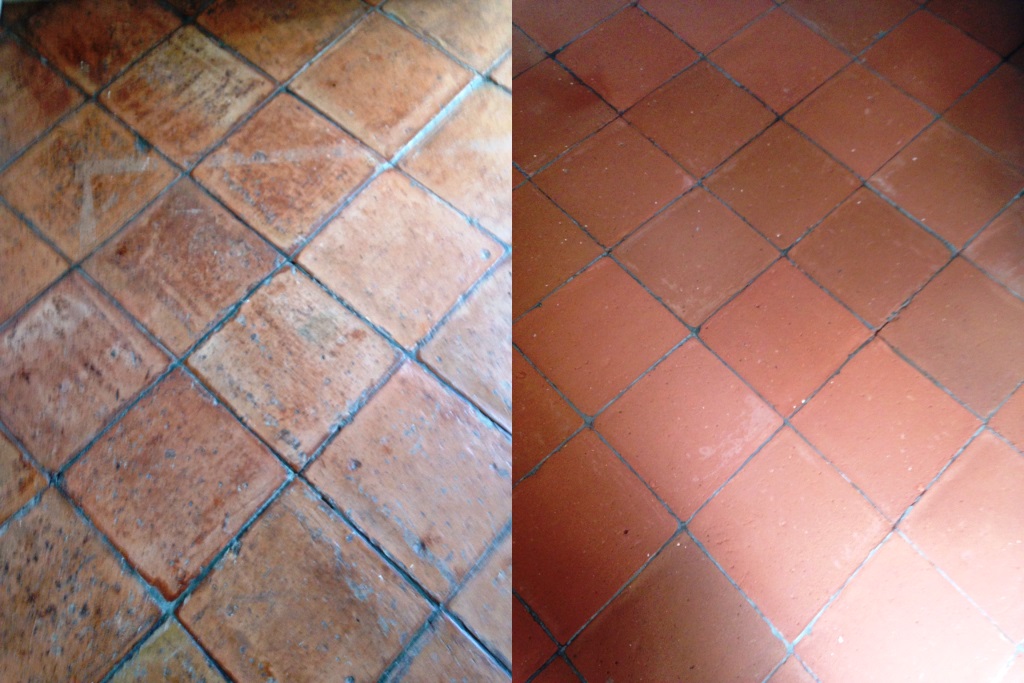
Proper cleaning not only keeps your floors looking good but also helps preserve their value. Well-cared-for terracotta can last generations and even increase the appeal of your home.
Credit: terracotta.tilecleaning.co.uk
Tools And Supplies You’ll Need
Before you start, gather the right tools and products. Using the correct equipment makes the job easier and safer for your floors.
Essential Tools
- Soft broom or dust mop – For daily dirt removal.
- Vacuum with brush attachment – To pick up fine debris (no hard wheels that could scratch).
- Mop (preferably microfiber) – Gentle on the tile.
- Buckets – Separate ones for clean and dirty water.
- Soft cloths or sponges – Non-abrasive.
- Scrub brush (soft bristle) – For stubborn stains or grout lines.
- Spray bottle – For spot cleaning.
Safe Cleaning Products
- PH-neutral floor cleaner – Designed for natural stone or terracotta.
- Warm water – The safest solvent for regular cleaning.
- White vinegar (very diluted) – For hard water stains (only on sealed tiles).
- Baking soda – For gentle scrubbing.
- Stone or tile sealant – If resealing is needed.
- Stain remover (for terracotta) – Choose a product made for clay tiles.
Avoid: Acidic cleaners (like lemon or pure vinegar), bleach, ammonia, or harsh detergents. These can etch or discolor terracotta.
Pre-cleaning: Check Sealing And Condition
Before you wet your terracotta floor, check if it’s sealed or unsealed. Here’s how:
- Water drop test: Put a few drops of water on a clean tile. If the water beads up, the tile is sealed. If it soaks in, it’s unsealed or needs resealing.
- Look for shine: Sealed tiles often have a slight sheen; unsealed are usually matte and rougher.
- Check grout lines: Grout may also need sealing. If it absorbs water or stains easily, it’s unsealed.
Cleaning methods differ depending on the sealing. Unsealed tiles need extra care to avoid water absorption, which can cause stains or even cracks.
Daily And Weekly Cleaning Routine
Terracotta floors don’t need fancy products for everyday cleaning—just the right technique.
Daily: Sweep Or Vacuum
Dust and grit can scratch the soft surface. Sweep with a soft broom or use a vacuum with a brush attachment. Do this daily or every other day, especially in high-traffic areas.
Weekly: Damp Mop
- Fill a bucket with warm water and a few drops of pH-neutral cleaner.
- Dampen (not soak) your mop. Too much water can seep into the tiles and grout, especially if unsealed.
- Mop gently, rinsing the mop often in clean water.
- Dry the floor with a soft towel or let it air dry. Don’t leave water standing.
This regular routine removes dust and mild dirt before it becomes a problem. It’s also the best way to keep your tiles’ color bright.
Deep Cleaning Terracotta Floors
Every few months, or when your floor looks dull, a deeper clean is needed. Here’s how to do it safely:
- Clear the area. Remove rugs, furniture, and any breakables.
- Sweep or vacuum as usual.
- Mix a stronger solution of pH-neutral cleaner and warm water. Never use pure soap or strong chemicals.
- Apply with a mop or sponge. Work in sections so you don’t let water sit on the tiles.
- Scrub problem spots with a soft-bristled brush—especially grout lines or stained areas.
- Wipe up excess moisture right away with dry towels.
- Let the floor dry completely before walking or replacing furniture.
For Unsealed Tiles
Be extra careful with water. Use a damp (almost dry) mop and work in small sections. Wipe up spills immediately.
For Sealed Tiles
You have a bit more protection, but don’t flood the floor. Sealed tiles still absorb water if the sealant is old or thin.
Expert tip: If you notice a white, powdery residue after mopping, it could be leftover cleaner or hard water minerals. Buff with a dry cloth to restore shine.
Removing Stains From Terracotta
Terracotta’s porous nature means stains can be stubborn. Here are proven ways to handle the most common ones.
Organic Stains (coffee, Wine, Food)
- Blot spills immediately with a dry cloth.
- Mix a paste of baking soda and water (thick, but not gritty).
- Apply paste to the stain, cover with plastic wrap, and let it sit for 30–60 minutes.
- Wipe away the paste with a damp cloth.
- Repeat if necessary.
Oil-based Stains (grease, Cooking Oil)
- Use a mild degreaser made for stone or terracotta. Apply as directed, then rinse thoroughly.
Rust Or Mineral Stains
- Use a stone-safe rust remover. Test in a hidden spot first.
- Never use harsh acids, as these can ruin your tiles.
Mold Or Mildew
- Mix one part hydrogen peroxide with two parts water.
- Dab on the moldy spot, let sit for 10 minutes, then wipe clean.
Pro tip: For tough stains, avoid metal scrubbers. They can scratch the tile and make future stains worse.
Cleaning Grout Between Terracotta Tiles
Dirty grout can make clean tiles look dull. Here’s the safe way to restore it:
- Sweep or vacuum first.
- Mix a paste of baking soda and water.
- Apply to grout lines with an old toothbrush.
- Let sit for 10–15 minutes.
- Scrub gently, then wipe away with a damp cloth.
- Rinse thoroughly.
For sealed grout, you can use a diluted pH-neutral cleaner. Avoid bleach or ammonia, which can erode grout and discolor your tiles.
How To Restore Dull Or Faded Terracotta
Over time, terracotta can lose its shine or look faded. Here’s how to bring back its warmth:
- Clean the floor thoroughly as described above.
- Apply a terracotta polish or wax (choose a product made for clay floors).
- Buff by hand with a soft cloth, or use a low-speed buffer.
- Let dry completely. Avoid walking on the floor until it’s set.
If your floor is still dull, it may need resealing (see next section).
Insight: Many beginners think more cleaning will restore shine, but often it’s a lack of sealant or polish, not dirt.
Sealing And Resealing Terracotta Floors
Sealing is the most important step to protect your terracotta. It blocks stains, makes cleaning easier, and can add a gentle gloss.
How Often To Seal
- High-traffic areas: Every 1–2 years
- Low-traffic areas: Every 3–4 years
Check your floor every year with the water drop test (see above).
How To Seal Terracotta
- Clean the floor and let dry for 24 hours.
- Choose the right sealer: Penetrating sealers go into the tile for invisible protection. Surface sealers add shine but need more maintenance.
- Apply with a clean mop or brush. Work in sections.
- Wipe up excess with a dry cloth.
- Let dry as directed (usually 2–6 hours between coats).
- Apply a second coat if needed.
Expert tip: Seal both tile and grout for full protection.
Table: Penetrating Vs. Surface Sealers
| Type | Appearance | Protection Level | Maintenance |
|---|---|---|---|
| Penetrating | Matte/Natural | High (inside tile) | Low |
| Surface | Gloss/Satin | Medium (surface only) | Moderate (needs reapplication) |
Common Mistakes To Avoid
Many terracotta floors are damaged by well-meaning but incorrect cleaning. Avoid these pitfalls:
- Using too much water: Flooding the floor can cause stains, cracks, or mold.
- Harsh chemicals: Acidic or alkaline cleaners erode the tile and strip sealant.
- Scrubbing with steel wool: This scratches the surface and opens pores.
- Skipping regular maintenance: Dirt buildup is much harder to remove later.
- Not resealing on schedule: Exposed tile absorbs stains quickly.
Insight: Some people use wax meant for wood or vinyl, which leaves a sticky film and attracts dirt. Always use products made for terracotta.
Seasonal And Annual Maintenance
Terracotta floors need a little extra attention at certain times of the year.
Spring And Fall
- Inspect for cracks or chips.
- Reseal if needed.
- Deep clean to remove winter salt or summer dust.
Before Holidays Or Events
- Polish the floor for extra shine.
- Touch up grout if it looks dirty.
Table: Maintenance Tasks By Season
| Season | Key Tasks | Purpose |
|---|---|---|
| Spring | Deep clean, check for cracks, reseal | Remove winter residue, prep for humid weather |
| Fall | Deep clean, reseal, polish | Protect against rain and mud |
| All year | Sweep, mop, spot clean | Prevent scratches, maintain color |
Caring For Old Or Historic Terracotta Floors
Older terracotta floors, especially in historic homes, need extra care.
- Test cleaners in a hidden spot first—old clay may react differently.
- Avoid machine buffers unless you know the tile can handle it.
- Repair cracks with matching grout or a professional touch-up kit.
- Use mats or rugs in high-traffic areas to reduce wear.
Real-world example: Many historic buildings in Italy and Spain have terracotta floors over 100 years old. Their caretakers use only water and mild soap, with regular resealing, to keep them in good shape.
Eco-friendly And Diy Cleaning Options
If you want to avoid strong chemicals, there are safe, eco-friendly ways to clean terracotta floors:
- Use warm water and a dash of olive oil soap for shine.
- Try a baking soda paste for stains.
- Clean with a microfiber mop—it picks up dirt without chemicals.
Caution: Even with natural products, always spot test first. Some homemade solutions (like pure vinegar) are too acidic.
How To Prevent Damage And Stains
Prevention is always easier than repair. Here’s how to keep your terracotta looking new:
- Wipe up spills immediately.
- Use doormats at entrances to catch dirt and grit.
- Place felt pads under furniture to prevent scratches.
- Rotate rugs occasionally to avoid uneven fading.
- Reseal regularly as part of your routine.
Insight: Many people forget that plant pots can leak and stain terracotta. Always use saucers and check for moisture.
When To Call A Professional
Some situations need expert help:
- Deep stains that won’t lift with home cleaning
- Cracked or broken tiles
- Floors that haven’t been sealed in years
- Historic or valuable terracotta (to avoid accidental damage)
A professional can strip, clean, and reseal your floor, restoring its natural color and protecting it for years to come.

Credit: terracotta.tilecleaning.co.uk
Real-life Case Study: Restoring A Faded Terracotta Kitchen
A homeowner in Santa Fe had a 30-year-old terracotta kitchen floor. It was dull, stained, and the grout was dark. Here’s what they did:
- Swept and vacuumed to remove loose dirt.
- Deep cleaned with warm water and stone-safe cleaner.
- Scrubbed stains with a baking soda paste.
- Used a stone-safe degreaser on greasy areas near the stove.
- Let the floor dry fully for 48 hours.
- Applied two coats of penetrating sealer.
- Buffed with a soft cloth to restore warmth and color.
Afterward, the floor looked almost new, with a rich, warm tone and no visible stains. The homeowner now follows a simple sweep-and-mop routine and reseals every two years.
Common Myths About Terracotta Floor Cleaning
Many people believe myths that can harm their terracotta floors. Here are three of the most common:
- “More water cleans better.” In fact, flooding terracotta can cause stains or cracks.
- “Any floor cleaner is fine.” Only pH-neutral products are truly safe.
- “Waxing makes terracotta shine.” Only special terracotta wax should be used; others attract dirt and can turn floors sticky.
For more on clay and tile care, the Wikipedia page on Terracotta is a good resource.

Credit: www.reddit.com
Frequently Asked Questions
Can I Use A Steam Mop On Terracotta Floors?
No, steam mops can force water into the tile’s pores, especially if unsealed. This can cause stains or even cracks. Stick to a damp (not wet) mop with a pH-neutral cleaner for best results.
How Do I Know When It’s Time To Reseal My Terracotta Floor?
If water no longer beads up on the surface or stains appear more easily, it’s time to reseal. Most floors need resealing every 1–3 years, depending on foot traffic and cleaning habits.
Are There Any Safe Homemade Cleaners For Terracotta?
Yes, you can use warm water with a little olive oil soap for routine cleaning. For stains, a baking soda paste is gentle and effective. Avoid vinegar or lemon juice, which are too acidic.
What Should I Do If My Terracotta Floor Gets Scratched?
Minor scratches can often be buffed out with a soft cloth and a little terracotta polish. For deeper scratches, you may need to touch up with colored grout or call a professional.
Can I Use Rugs Or Mats On Terracotta Floors?
Yes, but choose mats with a breathable backing to prevent moisture buildup. Avoid rubber-backed rugs, which can trap moisture and cause discoloration.
Terracotta floors bring beauty and warmth to any home, but they need the right cleaning and care. With gentle methods, the correct products, and regular maintenance, your terracotta will last for generations—always looking as inviting as the day it was installed.