
Baking is both art and science. Every detail can make or break your result. One important detail many home bakers overlook is the height of the baking pan. You might think all pans work the same, but shallow and deep baking pans are quite different. Choosing the right one can be the difference between a perfect cake and a disappointing mess.
In this article, you’ll learn exactly how shallow and deep baking pans affect your baking. We’ll break down their impact on cakes, breads, brownies, and more. You’ll find practical tips, examples, and side-by-side comparisons—so you can bake with confidence every time.
What Makes A Pan Shallow Or Deep?
Let’s start with the basics. The main difference is the height of the sides.
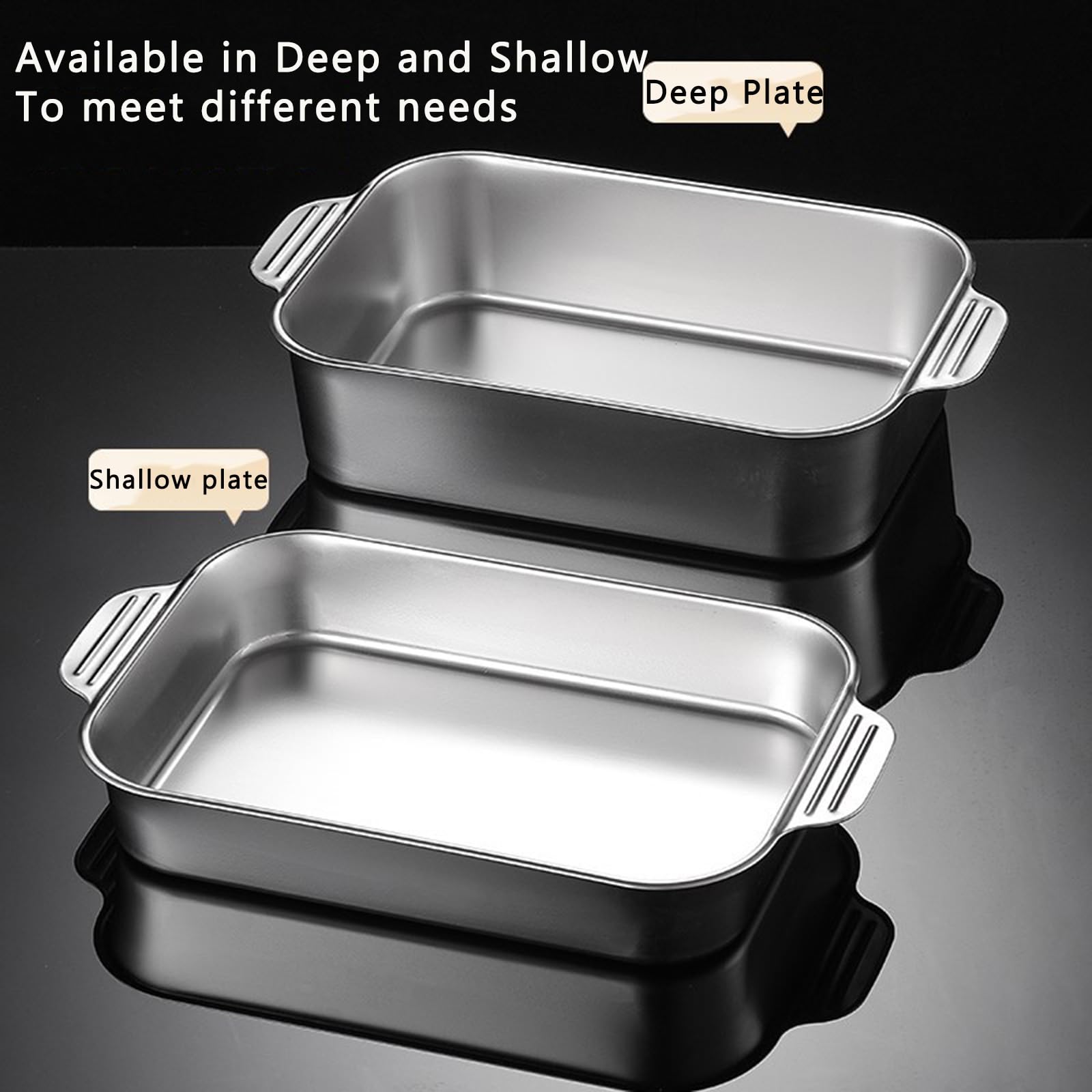
- Shallow baking pans: Sides are usually 1 to 2 inches tall.
- Deep baking pans: Sides are generally 2.5 inches or higher.
You will find shallow pans in cookie sheets, jelly roll pans, and many tart pans. Deep pans are common in layer cakes, loaf pans, and lasagna pans. There are also “medium” pans, but for most baking, you’ll be choosing between shallow and deep.
Why does this matter? The height of the sides changes how heat moves through your batter or dough. This affects browning, rise, baking time, and even flavor.
How Pan Depth Affects Baking
The depth of your pan does more than just hold your batter. It changes the way heat flows and moisture escapes. Here’s how:
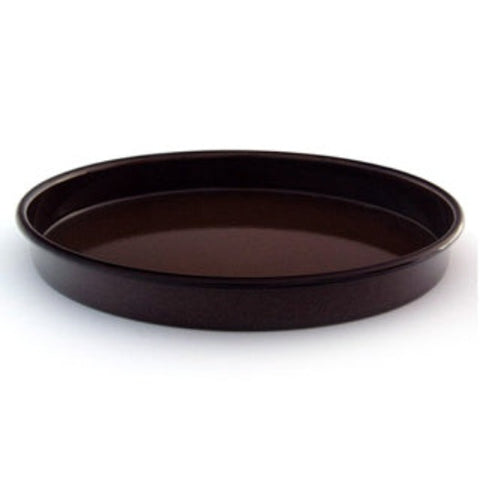
- Shallow pans expose more surface to heat and air. This leads to quicker browning and sometimes drier results.
- Deep pans keep heat closer to the center, so the outside may cook faster than the inside. This often leads to longer baking times and softer, moister textures.
Let’s see how these effects play out in real baking.
Credit: www.parthenonfoods.com
Cakes: Shallow Vs Deep Pans
When baking cakes, pan depth can make a dramatic difference. Here’s what happens:
- Shallow cake pans produce thin layers that bake quickly. The edges can become crisp, and the top browns faster. This is good for sponge cakes or thin layered cakes.
- Deep cake pans are ideal for tall, fluffy cakes. Heat takes longer to reach the center, so the cake stays moist and rises evenly. Most classic birthday cakes use deep pans.
Example: Baking A Chocolate Cake
Suppose you use the same amount of batter in a 9-inch shallow pan and a 9-inch deep pan:
- In the shallow pan: The cake will be wider and thinner. It bakes in 20–25 minutes.
- In the deep pan: The cake is taller and denser. It takes 35–40 minutes. You may need to lower the oven temperature slightly to prevent burning the edges.
Many beginners don’t realize that switching pan depth requires adjusting baking time and sometimes temperature. Not doing so can lead to undercooked centers or burnt edges.
Cookies And Bars: Why Shallow Pans Win
Cookies and bars need lots of surface area for even baking.
- Shallow pans (like cookie sheets or jelly roll pans) let heat reach all the dough quickly. This gives you crispy edges and even browning.
- Deep pans are rarely used for cookies. The sides block airflow and can create uneven results. For bars, deep pans can make thick, underbaked centers.
If you want chewy brownies or blondies with crisp edges, use a shallow pan. For gooey, fudge-like centers, a slightly deeper pan can help, but watch the baking time closely.
Breads: Why Depth Matters More Than You Think
Breads need room to rise. Most bread recipes call for deep pans (like 9×5-inch loaf pans).
- Deep pans support tall, high-rising loaves. The sides guide the dough upward and prevent spreading.
- Shallow pans make flat, wide loaves. These are good for focaccia or flatbreads, not sandwich bread.
Some bakers try to bake bread in shallow pans and wonder why it comes out flat. The answer is simple: the dough spreads instead of rising.
Roasting And Sheet Pan Meals
Roasting vegetables or meats is another area where pan depth changes the result.
- Shallow roasting pans (like rimmed baking sheets) allow moisture to escape, giving you crispy, caramelized edges.
- Deep roasting pans trap steam, which can make food soggy. However, they’re better for dishes with sauces (like lasagna) or for catching drippings from large cuts of meat.
For sheet pan dinners, always use shallow pans unless the recipe says otherwise.
Baking Time And Temperature Adjustments
Switching between shallow and deep pans isn’t just about the look. It changes how long you bake and at what temperature.
- Shallow pans: Shorter baking time, may need higher temperatures for browning.
- Deep pans: Longer baking time, sometimes lower temperatures to prevent burning.
Here’s a simple rule: the deeper the pan, the longer it takes for heat to reach the center. If you don’t adjust, the outside may overbake before the inside is done.
Practical Example
If a brownie recipe calls for a 9×13-inch shallow pan (2-inch sides), but you use a 9×13-inch deep pan (3-inch sides), add 10–20% more baking time. Check the center with a toothpick to avoid underbaking.
Table: Pan Depth And Typical Baking Uses
Here’s a quick comparison of popular baking pans and their common uses.
| Pan Type | Depth (inches) | Best For |
|---|---|---|
| Cookie Sheet | 0.5 – 1 | Cookies, roasting vegetables |
| Jelly Roll Pan | 1 | Bar cookies, Swiss rolls |
| Round Cake Pan | 2 – 3 | Layer cakes |
| Loaf Pan | 2.5 – 4 | Breads, pound cakes |
| Brownie Pan | 1.5 – 2 | Brownies, bars |
| Lasagna Pan | 3 – 4 | Lasagna, casseroles |
Materials: Does It Change The Depth Impact?
Baking pans come in many materials: metal, glass, ceramic, and silicone. The material affects heat flow, but pan depth still matters most.
- Metal pans heat up fast and give crisp edges. Shallow metal pans are perfect for cookies and bars.
- Glass and ceramic pans heat slowly and hold heat longer. In deep pans, this can lead to overbaking if you don’t reduce the temperature.
- Silicone pans often have flexible sides. They’re usually deep, and can lead to softer, paler baked goods.
Many beginners forget to adjust baking times for glass or ceramic, especially with deep pans.
Table: Heat Flow By Pan Material And Depth
To help you see how material and depth work together, here’s a summary.
| Material | Shallow Pan Effect | Deep Pan Effect |
|---|---|---|
| Metal | Quick browning, crisp edges | Even heating, good rise |
| Glass | Slow to brown, soft texture | Retains heat, risk of overbaking |
| Ceramic | Gentle baking, less browning | Holds heat, slow to cool |
| Silicone | Pale color, flexible release | Soft edges, even but slow baking |
Non-obvious Insights Most Bakers Miss
Let’s go deeper. Here are two things many home bakers overlook:
- Evaporation and Moisture Loss: Shallow pans lose moisture faster because more surface is exposed. This leads to crispier textures (good for cookies, bad for cakes that should be moist). In deep pans, moisture stays trapped, making cakes and breads softer.
- Pan Color and Reflection: Dark pans absorb heat. In shallow, dark pans, the bottom can burn before the center is cooked. In deep, light pans, the center may stay underdone. Always adjust baking times and check early when using a new pan.
Many recipes don’t mention these details, but they can change the outcome more than you think.
Common Mistakes When Switching Pan Depths
Bakers often make these errors:
- Not adjusting baking time: If you swap a shallow pan for a deep one (or vice versa), your cake or bread may be raw in the center or burnt on the edges.
- Overfilling deep pans: Too much batter can overflow or create dense, gummy centers.
- Ignoring the recipe’s pan size: A “9-inch pan” isn’t always the same if one is 1.5 inches deep and another is 3 inches deep. Always check both diameter and height.
It’s smart to fill pans only halfway to two-thirds full, especially with deep pans, to allow room for rising.
Table: Adjusting Recipes For Different Pan Depths
If you have to use a pan that’s deeper or shallower than called for, here’s a quick guide.
| Original Pan | New Pan | What to Do |
|---|---|---|
| Shallow | Deep | Add 10-25% baking time, lower temp by 10-15°F |
| Deep | Shallow | Reduce baking time by 10-20%, check for doneness early |
| 9×13″ (2″ deep) | 9×13″ (3″ deep) | Test center with toothpick, add 5-10 mins as needed |
Shallow Pans: Best Uses And Tips
You should reach for a shallow baking pan when:
- Baking cookies, scones, or biscuits
- Making thin cakes or bars that need even baking
- Roasting vegetables or small cuts of meat for crispiness
- Toasting nuts, seeds, or coconut
Tips for success with shallow pans:
- Line with parchment for easy release and cleanup.
- Rotate the pan halfway through for even browning.
- Watch closely near the end of baking—things cook fast.
Many professional bakers keep several shallow pans on hand because they’re so versatile.
Deep Pans: Best Uses And Tips
Deep pans shine when you’re baking:
- Tall cakes that need room to rise
- Yeasted breads and pound cakes
- Casseroles, lasagna, and baked pasta dishes
- Puddings and soufflés
Tips for deep pans:
- Grease and flour the sides well to prevent sticking.
- If baking tall cakes, consider using a “cake strip” to ensure even baking.
- Check for doneness with a skewer or long toothpick, not just the edges.
For cheesecakes, a deep springform pan is essential to hold the thick batter.
Adjusting Recipes For Different Pan Depths
Sometimes, you don’t have the pan the recipe calls for. Here’s how to adjust without ruining your bake:
- Calculate the volume: If you’re switching pans, fill each with water to see how much they hold. Only pour in as much batter as you need to match the original recipe.
- Monitor baking time: For deeper pans, add time in 5-minute increments and check often. For shallower pans, check at the earliest baking time.
- Lower the oven temperature: When using deep pans, lower the oven temp by 10–15°F to prevent burning the edges.
- Don’t overfill: Leave at least 1 inch from the top to prevent overflow.
Example: If you have a batter for a 9×2-inch pan and only a 9×3-inch pan, fill the deeper pan only two-thirds full. Use any leftover batter in a muffin tin.

Credit: mezehub.com
When Pan Depth Doesn’t Matter
Some baked goods are more forgiving. For example:
- Crumbles and crisps: Can be made in almost any pan, as long as the fruit and topping are spread evenly.
- Bread puddings: Will adapt to the pan, but baking time may change.
- Sheet cakes for parties: Sometimes, extra depth just means more servings.
Still, always watch for changes in baking time and texture.
Pan Substitutions: What Works And What Fails
You might need to substitute a pan if you don’t have the exact size.
Works well:
- Making two shallow cakes instead of one deep cake (divide the batter).
- Using a large roasting pan for a big batch of brownies (just check early).
Often fails:
- Pouring all batter into a pan that’s much deeper than the recipe calls for. This can cause raw centers and domed tops.
- Using a shallow pan for bread or angel food cake. These need deep sides for support.
When in doubt, split the batter or dough into multiple pans.
Cleaning And Storage Differences
Shallow pans are easier to wash and fit in most dishwashers. They also stack neatly. Deep pans often need soaking if batter bakes onto the sides, and can be harder to store.
If space is tight, buy one or two deep pans and more shallow pans. They handle most jobs and store easily.
When To Invest In Specialty Pans
Most home bakers can do 90% of recipes with 2–3 shallow pans and one or two deep pans. But if you love a certain style of baking, consider specialty pans:
- Springform pans (deep, with removable sides) for cheesecakes and tortes.
- Bundt pans (deep, with a tube in the middle) for decorative cakes.
- Angel food cake pans (tall and deep with removable bottoms) for airy cakes.
Special pans make some recipes easier and more beautiful, but you can often adapt with what you have.
Credit: www.amazon.com
How Professional Bakers Choose Pan Depth
In bakeries, pan depth is chosen for speed and consistency.
- Shallow pans are used for high-volume items like cookies and bars. They cook quickly and are easy to turn over.
- Deep pans are for specialty cakes and breads that need to rise tall.
Professionals also rotate pans during baking and use convection ovens to even out heat. At home, rotate your pans halfway through for better results.
Health And Nutrition: Does Pan Depth Matter?
The pan itself doesn’t change nutrition, but shallow pans can reduce oil or fat in some recipes. For example, roasted vegetables lose more fat in a shallow pan as it drips away. Deep pans keep sauces and juices in, which can add calories but also flavor.
For low-fat baking, use shallow pans for crisp, oil-free results.
Environmental Impact: Shallow Vs Deep Pans
Shallow pans use less material and energy to make and clean. They heat up faster, so you may use less oven energy. Deep pans, especially glass or ceramic, hold heat longer, which can be good for slow-cooking but less efficient for quick bakes.
If you bake often, investing in a few high-quality shallow pans can be more eco-friendly.
When To Replace Your Baking Pans
Check your pans for warping, rust, or scratches. Shallow pans can warp in high heat, causing uneven baking. Deep pans may crack if dropped or exposed to sudden temperature changes.
Replace pans if:
- The surface is scratched or peeling (especially nonstick coatings).
- The pan is warped and won’t sit flat.
- Food sticks even with proper greasing.
Well-cared-for pans can last years, but even the best will wear out eventually.
Expert Tips For Better Baking With Any Pan
- Always preheat your oven before baking.
- Use a light-colored pan for cakes and a dark pan for crispy cookies.
- Line pans with parchment for easy removal and cleaning.
- Fill deep pans only 1/2 to 2/3 full.
- Check doneness with a toothpick or skewer near the end of baking time.
External Resource
For more details on baking pan types, materials, and adjustments, check this comprehensive guide from King Arthur Baking.
Frequently Asked Questions
What Happens If I Use A Deep Pan Instead Of A Shallow Pan?
If you use a deep pan for a recipe meant for a shallow one, baking will take longer. The center may stay raw while the outside overbakes. Always lower the oven temperature by 10–15°F and add baking time. Check for doneness in the center.
Can I Bake Bread In A Shallow Pan?
It’s possible, but not recommended. Shallow pans make flat, wide loaves without much rise. For classic sandwich bread, use a deep loaf pan. Shallow pans are better for flatbreads or focaccia.
How Do I Adjust Recipes For Different Pan Depths?
Calculate the pan’s volume and fill only to the level the recipe intends. For deeper pans, add baking time and lower the temperature slightly. For shallower pans, reduce baking time and check for doneness early.
Is It Okay To Use Glass Pans Instead Of Metal?
Yes, but adjust the baking time. Glass heats slowly but stays hot longer. In deep glass pans, lower the oven temperature by 25°F and expect longer baking times. Check often to avoid overbaking.
Why Are My Brownies Dry At The Edges But Gooey In The Middle?
This often happens when using a deep pan or a dark pan without adjusting time and temperature. Try using a shallow metal pan, line with parchment, and rotate halfway through baking for even results.
Baking is more than just following a recipe. The depth of your pan shapes how your food turns out. Now that you know the difference between shallow and deep baking pans, you can choose the right one for any recipe—and bake with more confidence and better results every time.